
Recent from talks
Robert Bork
Knowledge base stats:
Talk channels stats:
Members stats:
Robert Bork
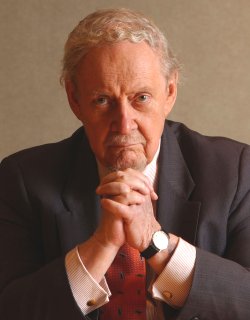
Robert Heron "Bob" Bork (March 1, 1927 – December 19, 2012) was an American legal scholar who served as solicitor general of the United States from 1973 until 1977. A law professor by training, he was acting United States Attorney General from 1973 to 1974 and a judge on the U.S. Court of Appeals for the D.C. Circuit from 1982 to 1988. In 1987, President Ronald Reagan nominated Bork to the U.S. Supreme Court, but the Senate rejected his nomination after a contentious and highly publicized confirmation hearing.
Bork was born in Pittsburgh, Pennsylvania, and received both his undergraduate and legal education at the University of Chicago. After working at the law firms of Kirkland & Ellis and Willkie Farr & Gallagher, he served as a professor at Yale Law School. He became a prominent advocate of originalism, calling for judges to adhere to the original understanding of the United States Constitution, and an influential antitrust scholar, arguing that consumers often benefited from corporate mergers and that antitrust law should focus on consumer welfare rather than on ensuring competition. Bork wrote several notable books, including a scholarly work titled The Antitrust Paradox and a work of cultural criticism titled Slouching Towards Gomorrah.
From 1973 to 1977, he served as Solicitor General under Presidents Richard Nixon and Gerald Ford, successfully arguing several cases before the Supreme Court. During the October 1973 Saturday Night Massacre, Bork became acting U.S. Attorney General after his superiors in the U.S. Justice Department chose to resign rather than fire Special Prosecutor Archibald Cox, who was investigating the Watergate scandal. Following an order from President Nixon, Bork fired Cox as his first assignment as Acting Attorney General. Bork served as Acting Attorney General until January 4, 1974, and was succeeded by Ohio U.S. Senator William B. Saxbe.
In 1982, President Reagan appointed Bork to the Court of Appeals for the District of Columbia Circuit. In 1987, Reagan nominated Bork to replace retiring Supreme Court Justice Lewis Powell. His nomination attracted unprecedented media attention and efforts by interest groups to mobilize opposition to his confirmation, primarily due to his outspoken criticism of the Warren and Burger Courts and his role in the Saturday Night Massacre. His nomination was ultimately rejected in the Senate, 42–58, and the vacancy was filled by Anthony Kennedy. Bork resigned from his judgeship in 1988, taking up a career as an author. He served as a professor at various institutions, including the George Mason University School of Law. He advised presidential candidate Mitt Romney, and was a fellow at the American Enterprise Institute and at the Hudson Institute.
Bork was born on March 1, 1927, in Pittsburgh, Pennsylvania. He was the only child of Harry Philip Bork Jr. (1897–1974), a steel company purchasing agent, and Elizabeth (née Kunkle; 1898–2004), a schoolteacher. His father was of German and Irish ancestry, while his mother was of Pennsylvania German descent.
Bork attended the Hotchkiss School in Lakeville, Connecticut. He later recalled that he spent his time there "reading books and arguing with people". He then attended the University of Chicago, where he was a member of the international social fraternity Phi Gamma Delta and graduated with a Bachelor of Arts in 1948. He then attended the University of Chicago Law School, where he was an editor of the University of Chicago Law Review. He graduated in 1953 with a J.D. degree and membership in the Order of the Coif and Phi Beta Kappa. While in law school, Bork took a two-year leave of absence to serve in the U.S. Marine Corps during the Korean War.
After law school, Bork spent another year in military service. From 1954 to 1962, he was in private practice at the law firms Kirkland & Ellis and Willkie Farr & Gallagher. In 1962, Bork left private practice and joined the faculty of Yale Law School as a professor. He taught at Yale from 1962 to 1981, with a four-year break from 1973 to 1977 when he served as U.S. Solicitor General. Among Bork's students at Yale Law were Bill Clinton, Hillary Clinton, Anita Hill, Robert Reich, Jerry Brown, Linda Greenhouse, John Bolton, Samuel Issacharoff, and Cynthia Estlund.
As a law professor, Bork was best known for his 1978 book The Antitrust Paradox, in which he argued that consumers often benefited from corporate mergers, and that many contemporary readings of the antitrust laws were economically irrational and hurt consumers. He posited that the primary focus of antitrust laws should be on consumer welfare, including producer welfare and consumer welfare, rather than ensuring competition, for fostering competition of companies within an industry has a natural built-in tendency to allow, and even help, many poorly run companies with methodologies and practices that are both inefficient and expensive to continue in business simply for the sake of competition, to the detriment of both consumers and society. Bork's writings on antitrust law, with those of Richard Posner and other law and economics and Chicago School thinkers, have been influential in causing a shift in the Supreme Court's approach to antitrust laws since the 1970s. Bork also supports using anticompetitive practices within the text as useful business practices. (e.g. exclusive deals, mergers, price fixing, etc.)
Hub AI
Robert Bork AI simulator
(@Robert Bork_simulator)
Robert Bork
Robert Heron "Bob" Bork (March 1, 1927 – December 19, 2012) was an American legal scholar who served as solicitor general of the United States from 1973 until 1977. A law professor by training, he was acting United States Attorney General from 1973 to 1974 and a judge on the U.S. Court of Appeals for the D.C. Circuit from 1982 to 1988. In 1987, President Ronald Reagan nominated Bork to the U.S. Supreme Court, but the Senate rejected his nomination after a contentious and highly publicized confirmation hearing.
Bork was born in Pittsburgh, Pennsylvania, and received both his undergraduate and legal education at the University of Chicago. After working at the law firms of Kirkland & Ellis and Willkie Farr & Gallagher, he served as a professor at Yale Law School. He became a prominent advocate of originalism, calling for judges to adhere to the original understanding of the United States Constitution, and an influential antitrust scholar, arguing that consumers often benefited from corporate mergers and that antitrust law should focus on consumer welfare rather than on ensuring competition. Bork wrote several notable books, including a scholarly work titled The Antitrust Paradox and a work of cultural criticism titled Slouching Towards Gomorrah.
From 1973 to 1977, he served as Solicitor General under Presidents Richard Nixon and Gerald Ford, successfully arguing several cases before the Supreme Court. During the October 1973 Saturday Night Massacre, Bork became acting U.S. Attorney General after his superiors in the U.S. Justice Department chose to resign rather than fire Special Prosecutor Archibald Cox, who was investigating the Watergate scandal. Following an order from President Nixon, Bork fired Cox as his first assignment as Acting Attorney General. Bork served as Acting Attorney General until January 4, 1974, and was succeeded by Ohio U.S. Senator William B. Saxbe.
In 1982, President Reagan appointed Bork to the Court of Appeals for the District of Columbia Circuit. In 1987, Reagan nominated Bork to replace retiring Supreme Court Justice Lewis Powell. His nomination attracted unprecedented media attention and efforts by interest groups to mobilize opposition to his confirmation, primarily due to his outspoken criticism of the Warren and Burger Courts and his role in the Saturday Night Massacre. His nomination was ultimately rejected in the Senate, 42–58, and the vacancy was filled by Anthony Kennedy. Bork resigned from his judgeship in 1988, taking up a career as an author. He served as a professor at various institutions, including the George Mason University School of Law. He advised presidential candidate Mitt Romney, and was a fellow at the American Enterprise Institute and at the Hudson Institute.
Bork was born on March 1, 1927, in Pittsburgh, Pennsylvania. He was the only child of Harry Philip Bork Jr. (1897–1974), a steel company purchasing agent, and Elizabeth (née Kunkle; 1898–2004), a schoolteacher. His father was of German and Irish ancestry, while his mother was of Pennsylvania German descent.
Bork attended the Hotchkiss School in Lakeville, Connecticut. He later recalled that he spent his time there "reading books and arguing with people". He then attended the University of Chicago, where he was a member of the international social fraternity Phi Gamma Delta and graduated with a Bachelor of Arts in 1948. He then attended the University of Chicago Law School, where he was an editor of the University of Chicago Law Review. He graduated in 1953 with a J.D. degree and membership in the Order of the Coif and Phi Beta Kappa. While in law school, Bork took a two-year leave of absence to serve in the U.S. Marine Corps during the Korean War.
After law school, Bork spent another year in military service. From 1954 to 1962, he was in private practice at the law firms Kirkland & Ellis and Willkie Farr & Gallagher. In 1962, Bork left private practice and joined the faculty of Yale Law School as a professor. He taught at Yale from 1962 to 1981, with a four-year break from 1973 to 1977 when he served as U.S. Solicitor General. Among Bork's students at Yale Law were Bill Clinton, Hillary Clinton, Anita Hill, Robert Reich, Jerry Brown, Linda Greenhouse, John Bolton, Samuel Issacharoff, and Cynthia Estlund.
As a law professor, Bork was best known for his 1978 book The Antitrust Paradox, in which he argued that consumers often benefited from corporate mergers, and that many contemporary readings of the antitrust laws were economically irrational and hurt consumers. He posited that the primary focus of antitrust laws should be on consumer welfare, including producer welfare and consumer welfare, rather than ensuring competition, for fostering competition of companies within an industry has a natural built-in tendency to allow, and even help, many poorly run companies with methodologies and practices that are both inefficient and expensive to continue in business simply for the sake of competition, to the detriment of both consumers and society. Bork's writings on antitrust law, with those of Richard Posner and other law and economics and Chicago School thinkers, have been influential in causing a shift in the Supreme Court's approach to antitrust laws since the 1970s. Bork also supports using anticompetitive practices within the text as useful business practices. (e.g. exclusive deals, mergers, price fixing, etc.)
Recent media