


Community hub
Recent from talks
Contribute something
Nothing was collected or created yet.
Paul Hawken
View on Wikipedia
Paul Gerard Hawken (born February 8, 1946) is an American environmentalist, entrepreneur, author, economist, and activist.[1]
Key Information


Biography
[edit]Hawken was born in San Mateo, California, and grew up in the San Francisco Bay Area, where his father worked at UC Berkeley in library sciences.[2] He attended UC Berkeley and San Francisco State University. Hawken's work includes founding ecological businesses, writing about impacts of commerce on living systems, and consulting with corporations and governments on economic development, industrial ecology, and environmental policy.[1]
Hawken was the co-founder and executive director of Project Drawdown, a non-profit that describes how global warming can be reversed.[3]
Hawken was active in the civil rights movement.[4] He currently lives in the San Francisco Bay Area.
Career
[edit]Writing
[edit]Hawken has authored articles, op-eds, and peer-reviewed papers, and seven books, including: The Next Economy (Ballantine 1983), Growing a Business (Simon and Schuster 1987), The Ecology of Commerce (HarperCollins 1993), and Blessed Unrest (Viking 2007).[5]
The Ecology of Commerce was voted the #1 college text on business and the environment by professors in 67 business schools.[6] The businessman and environmentalist Ray Anderson of Interface, Inc. credited The Ecology of Commerce with his environmental awakening. He described reading it as a "spear in the chest experience", after which Anderson started crisscrossing the country with a near-evangelical fervor, telling fellow executives about the need to reduce waste and carbon emissions.[7]
Natural Capitalism: Creating the Next Industrial Revolution, co-authored with Amory Lovins, wrote about the idea of natural capital[8] and direct accounting for ecosystem services.[9] Natural Capitalism has been translated into 14 other languages. Together with The Ecology of Commerce these books have been described as being "among the first to point the way towards a sustainable global economy".[10]
Blessed Unrest, How the Largest Movement in the World Came into Being and Why No One Saw It Coming, published in 2007, argues that a vast "movement with no name" is forming involving environmental, social justice, and indigenous rights organizations. Hawken conceives of this "movement" as developing not by ideology but rather through the identification of what is and is not humane, and has compared it to humanity's collective immune system.[11]
Growing a Business became the basis of a 17-part PBS series, which Hawken hosted and produced. The program, which explored the challenges and pitfalls of starting and operating socially responsible companies, appeared on television in 115 countries and reached more than 100 million people.[2]
Hawken co-created Project Drawdown in 2013 with Amanda Joy Ravenhill, and was the co-creator, author, and editor of Drawdown: The Most Comprehensive Plan Ever Proposed to Reverse Global Warming, published in 2017. It was collaborative effort involving 200 researchers and advisors who came together to model the most substantive solutions to reverse global warming.
In 2021, Hawken published the New York Times Bestseller,[12] Regeneration: Ending the Climate Crisis in One Generation.[13]
Hawken's books have been published in more than 50 countries in 30 languages.[14]
Business
[edit]Hawken founded several companies, starting when he took over a small retail store in Boston in 1967 called Erewhon (after Samuel Butler's 1872 utopian novel) and turned it into the Erewhon Trading Company, a natural-foods wholesaler, and one of the first in the US that relied solely on sustainable agricultural methods.[15] When he left the company in the 1970s, it had over 30,000 acres of organically grown food under contract. Hawken co-founded the Smith & Hawken garden supply company in 1979, a retail and catalog business.[16] In 2009, he founded OneSun, an energy company focused on ultra low-cost solar based on green chemistry and biomimicry.[17]
From 1994 to 1998, Hawken founded and headed up The Natural Step USA. From 1996 to 1998, Hawken was co-chairman of The Natural Step International.[18] The Natural Step was founded in 1989 by Swedish scientist and medical doctor Karl-Henrik Robèrt in order to create shared frameworks for understanding sustainable development. Its purpose is to teach and support environmental systems thinking in corporations, cities, governments, unions, and academic institutions through a dialogue process rooted in basic science.[19]
In 1998, Hawken created the Natural Capital Institute located in Sausalito, California. Its main focus was wiser.org, an open-source database of activists and civil society organizations focused on environmental and social justice.[20]
Hawken was previously the executive director of Project Drawdown, which is working towards the drawdown of greenhouse gases to reduce climate change.[21]
Activism
[edit]In 1965, Hawken worked with Martin Luther King Jr.'s staff in Selma, Alabama, preparing for the Selma to Montgomery marches. As press coordinator, he registered members of the press, issued credentials, gave dozens of updates and interviews on national radio, and acted as marshal for the final, March, 21, March to Montgomery. That same year, Hawken worked in New Orleans as a staff photographer for the Congress of Racial Equality, focusing on voter registration drives in Bogalusa, Louisiana, and the panhandle of Florida, and photographing the Ku Klux Klan in Meridian, Mississippi, after three civil rights workers were tortured and killed. In Meridian, Hawken was assaulted and seized by Ku Klux Klan members, but escaped due to Federal Bureau of Investigation surveillance and intervention.[22]
Speaking
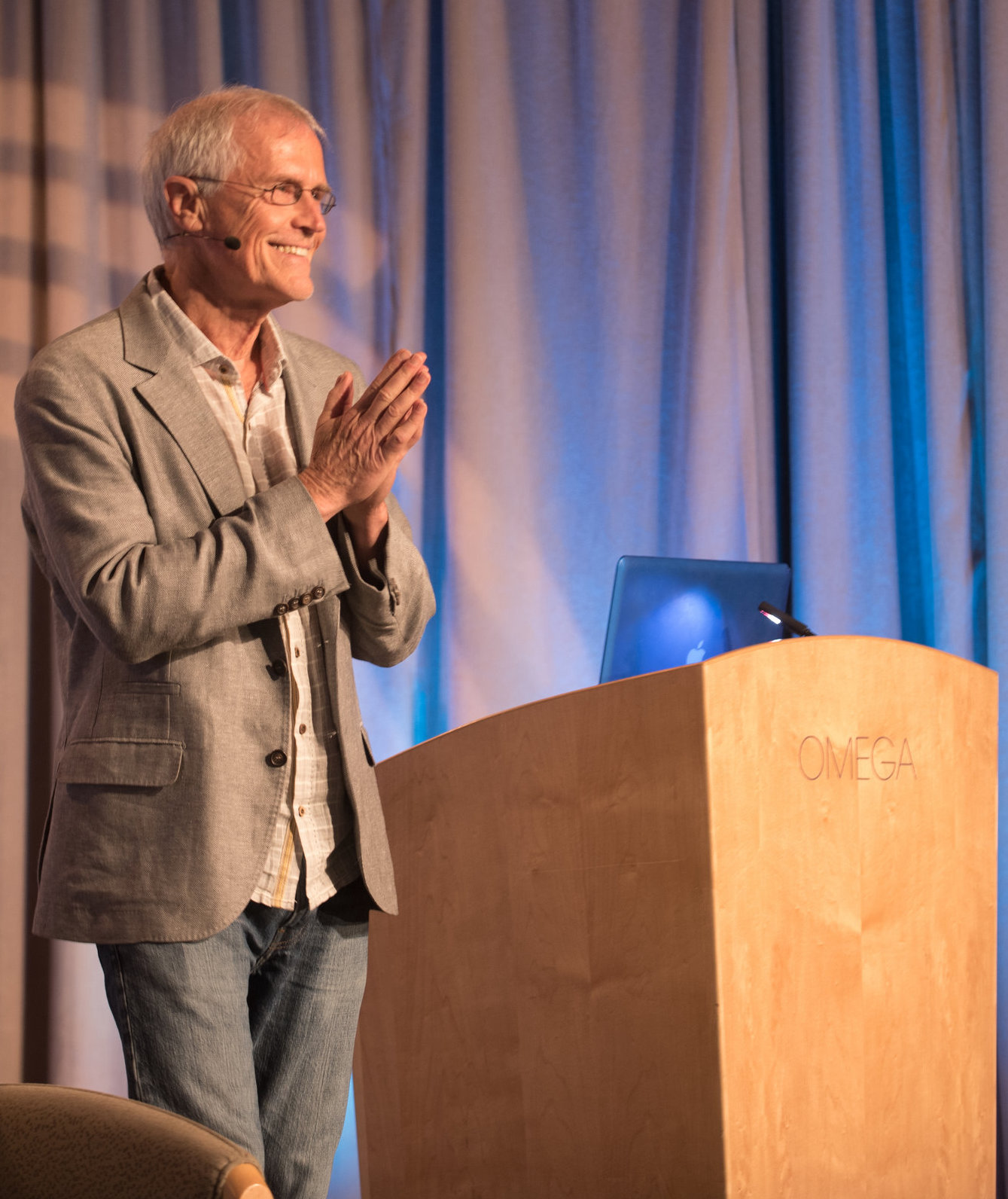
[edit]As a speaker, Hawken has given several hundred talks, including keynote addresses to major associations, companies, government agencies. His University commencement addresses have included:
- University of California, Berkeley commencement[23]
- University of Portland 2009 commencement speech ("You Are Brilliant and the Earth Is Hiring")[24]
- Urban Land Institute[25]
- Yale University and Yale University commencement[23]
Recognition
[edit]Hawken has been awarded six honorary doctorates,[23] and received the Green Cross Millennium Award for Individual Environmental Leadership presented by Mikhail Gorbachev in 2003.[26]
Bibliography
[edit]- Carbon: The Book of Life (2025)
- Regeneration: Ending the Climate Crisis in One Generation (2021)[27]
- Drawdown: The Most Comprehensive Plan Ever Proposed to Reverse Global Warming / edited by Paul Hawken (2017)[28]
- Blessed Unrest: How the Largest Social Movement in History Is Restoring Grace, Justice, and Beauty to the World (2007)[29]
- Natural Capitalism: Creating the Next Industrial Revolution (1999, Co-authored with Amory Lovins and L. Hunter Lovins)[30]
- The Ecology of Commerce: A Declaration of Sustainability (1993)[31]
- Growing a Business (1987)[32]
- The Next Economy (1983)[33]
- Seven Tomorrows (1980, Co-authored with Peter Schwartz and James Ogilvy)[34]
- The Magic of Findhorn (1975)
- Sustainable World Sourcebook (2014)
- Economy Que Viene (1983)
- Negocio y Ecologia (2004)
References
[edit]- ^ a b Epstein-Reeves, James; Weinreb, Ellen. "Pioneers of Sustainability: Lessons from the Trailblazers" (PDF). Weinreb Group. Retrieved September 8, 2016.
- ^ a b Makower, Joel (July 11, 2013). "Why Paul Hawken is teaching MBAs". GreenBiz. Retrieved June 15, 2016.
- ^ "Project Drawdown". Project Drawdown. Retrieved June 15, 2016.
- ^ "Paul Hawken Part II: Cultivating Progress". Sea Change. November 11, 2014. Retrieved June 15, 2016.
- ^ "Paul Hawken". Sustainable Brands. 2016. Archived from the original on November 12, 2018. Retrieved June 15, 2016.
- ^ "Solutions Summit Event". Archived from the original on September 12, 2015. Retrieved December 10, 2015.
- ^ Vitello, Paul (August 10, 2011). "Ray Anderson, Businessman Turned Environmentalist, Dies at 77". The New York Times.
- ^ Berghoff, Hartmut; Rome, Adam (May 2, 2017). Green Capitalism?: Business and the Environment in the Twentieth Century. University of Pennsylvania Press. ISBN 978-0-8122-4901-9.
- ^ Hawken, Paul (1997). Natural Capitalism: Creating the Next Industrial Revolution. Little Brown. ISBN 978-0-316-35300-7.
- ^ Gunther, Marc (October 22, 2014). "First look: environmental entrepreneur Paul Hawken's long-awaited new book". The Guardian. Retrieved June 15, 2016.
- ^ Hawken, Paul (2007). Blessed Unrest: How the Largest Movement in the World Came into Being and Why No One Saw It Coming. New York: Viking. ISBN 978-0-670-03852-7.
- ^ "Paperback Books - Bestseller". The New York Times. October 17, 2021.
- ^ Hawken, Paul (2021). Regeneration: Ending the Climate Crisis in One Generation. Penguin Books. ISBN 978-0143136972.
Ending the climate crisis in one generation
- ^ "Paul Hawken". No. Transition to a Low-Carbon World. University of Notre Dame Mendoza College of Business. Archived from the original on August 8, 2016. Retrieved June 15, 2016.
- ^ "Heritage of Health Foods: Erewhon History". Attune Foods. Archived from the original on June 20, 2016. Retrieved June 15, 2016.
- ^ Welte, Jim (July 9, 2009). "Smith & Hawken to close; going-out-of-business sales started Thursday". The Mercury News. Retrieved June 15, 2016.
- ^ Gunther, Marc (February 11, 2010). "Paul Hawken's Winning Investment Strategy". GreenBiz. Retrieved June 15, 2016.
- ^ "Bio Paul Hawken" (PDF). The Rocky Mountain Institute.
- ^ "The Natural Step About Us". The Natural Step. September 17, 2014. Retrieved June 15, 2016.
- ^ Grover, Sami (June 21, 2007). "WISER Earth: User Created Directory of 'the Largest Movement on Earth'". Treehugger. Retrieved June 15, 2016.
- ^ "Our Team". Project Drawdown. Archived from the original on June 29, 2016. Retrieved June 15, 2016.
- ^ Stephens, James C. Climate Change: An Encyclopedia of Science and History (Volume 1 ed.). p. 849.
- ^ a b c EW (September 15, 2011). "Paul Hawken". www.ecowatch.com. EcoWatch. Archived from the original on September 15, 2016. Retrieved September 8, 2016.
- ^ Loeb, Paul (May 2, 2014). "Best Environmental Commencement Speech Ever?". The Huffington Post: The Blog. The Huffington Post. Retrieved September 8, 2016.
- ^ Means, John (September 18, 2014). "The Human and Social Dimensions of Resilience".
- ^ "Global Green USA Millennium Awards". Global Green. Retrieved October 1, 2015.
- ^ Mainwaring, Simon (September 15, 2021). "Purpose At Work: Paul Hawken's 'Regeneration' Reveals A Critical Roadmap To End The Climate Crisis". Forbes. Retrieved September 21, 2021.
- ^ Hawken, Paul (2017). Drawdown: The most comprehensive plan ever proposed to reverse global warming / edited by Paul Hawken. New York, NY: Penguin Books. ISBN 9780143130444.
- ^ Hawken, Paul (2007). Blessed Unrest: How the Largest Movement in the World Came Into Being, and Why No One Saw It Coming (1 ed.). New York, NY: Penguin Group. ISBN 978-0-67003852-7. Retrieved September 21, 2016.
- ^ Hawken, Paul; Lovins, Amory; Lovins, L. Hunter (1999). Natural Capitalism: Creating the Next Industrial Revolution. New York, NY: The Hachette Book Group Publishing. ISBN 978-0-316-03153-0. Retrieved September 21, 2016.
- ^ Hawken, Paul (1993). The Ecology of Commerce: A Declaration of Sustainability. New York, NY: HarperCollinsPublishers. ISBN 0-88730-655-1. Retrieved September 21, 2016.
the ecology of commerce.
- ^ Hawken, Paul (1987). Growing a Business. New York, NY: Simon & Schuster Paperbacks. ISBN 978-0671-64457-4. Retrieved September 21, 2016.
growing a business.
- ^ Hawken, Paul (1983). The Next Economy. New York, NY: Henry Holt and Company. ISBN 9780207149313.
- ^ Hawken, Paul; Ogilvy, James; Schwartz, Peter (1980). Seven Tomorrows. New York, NY: Bantam Books. ISBN 9780553014754.
External links
[edit] Media related to Paul Hawken at Wikimedia Commons
 Quotations related to Paul Hawken at Wikiquote
- Official website
- Project Drawdown official website
- Project Regeneration website
- Interview on Sea Change Radio in 2014
- Interview with CMCC in October 2022
- Interview with One Planet Podcast March 2025


| International | |
|---|---|
| National | |
| Artists | |
| People | |
| Other | |

Paul Hawken
View on GrokipediaHawken co-founded Erewhon Trading Company, an early natural foods wholesaler, and Smith & Hawken in 1979, a catalog and retail business specializing in durable garden tools that emphasized sustainable sourcing.[2][3] In 2009, he established OneSun, a solar energy firm innovating low-cost photovoltaic solutions inspired by biomimicry and green chemistry.[4] These ventures demonstrated his approach to embedding environmental principles into commercial operations, influencing corporate sustainability efforts.[5]
His authorship includes nine books, several becoming national and New York Times bestsellers, such as The Ecology of Commerce (1993), which critiqued industrial impacts on natural systems and called for commerce to become restorative, and Growing a Business (1987), offering practical guidance for entrepreneurs.[1] Later works like Drawdown (2017) and Regeneration (2021) outline evidence-based solutions prioritizing soil regeneration, biodiversity, and holistic ecosystem repair over isolated carbon reductions.[1]
Hawken initiated Project Drawdown to catalog and accelerate climate solutions with potential to reduce net emissions, followed by Project Regeneration, which networks practices for healing land and food systems.[1] He has consulted with corporations and governments on these topics, earning recognition including a 2019 Lifetime Achievement Award from the National Council for Science and the Environment for advancing sustainability through science and leadership.[6] While his optimistic, solutions-oriented framework has inspired reforms, skeptics have questioned the feasibility and timelines for scaling proposed interventions like widespread regenerative agriculture to achieve net drawdown of atmospheric carbon.[7]
Early Life and Education
Upbringing and Early Influences
Paul Hawken was born on February 8, 1946.[8] His parents divorced when he was eight years old, amid reported family difficulties including his father's alcoholism, which some observers have linked to Hawken's subsequent personal drive and entrepreneurial ambition.[9] In 1965, at age 19, Hawken worked as press coordinator for Martin Luther King Jr.'s staff in Selma, Alabama, assisting preparations for the Selma to Montgomery marches.[8] [10] This involvement in civil rights efforts represented an early commitment to social justice, reflecting influences from a family environment that emphasized broader human concerns, as Hawken later recalled his parents discussing ideas of humanity and survival.[11] Such experiences preceded his immersion in natural foods and commerce, fostering a worldview that connected ethical action with practical enterprise.Formal Education and Initial Career Steps
Hawken's formal education followed a non-traditional trajectory, with biographical sources providing scant details on completed degrees or extended university attendance, instead emphasizing his early immersion in activism and self-reliant learning. Born in 1946, he engaged in practical endeavors from a young age, including serving as press coordinator for the Martin Luther King, Jr., March on Montgomery in Alabama in 1965 at age 19, an experience that highlighted his initial foray into organized social efforts without reliance on academic credentials.[8] Transitioning to professional life, Hawken entered the nascent natural foods sector in the mid-1960s, taking over management of a small Boston retail store named Erewhon in August 1967 from founder Evan Root and reorienting it as Erewhon Trading Company, a wholesaling operation focused on organically sourced products.[12] This move represented his first significant business step, distributing natural foods at a time when sustainable agriculture was marginal, and predated his later expansions into retail and catalog enterprises.[13] Hawken's approach underscored a preference for hands-on experimentation over institutional training, aligning with emerging countercultural interests in ecology and ethical commerce during the late 1960s.[10] Later in life, Hawken received six honorary doctorates, including recognition from institutions such as the University of Portland, acknowledging his contributions without reference to undergraduate completion.[10] This pattern reflects a career trajectory prioritizing empirical engagement and entrepreneurial initiative from the outset.Entrepreneurial Ventures
Founding of Natural Foods and Retail Businesses
In 1967, Paul Hawken, then 21 years old, assumed management of Erewhon, a small macrobiotic retail store originally opened in Boston in April 1966 by Aveline and Michio Kushi.[14] Under Hawken's direction, the business rebranded as Erewhon Trading Company and shifted toward wholesale distribution, incorporating in May 1968 with Hawken holding 50% ownership alongside Aveline Kushi.[15] Initial monthly sales rose from $1,000 in 1967 to $9,000 by 1968, reflecting early adaptation to niche consumer demand for imported Japanese macrobiotic products like miso and shoyu, sourced amid limited domestic organic availability.[14] This pivot capitalized on countercultural interest in natural foods, enabling the company to stock bulk grains and serve a growing base of health-conscious buyers through mail-order and expanded retail space at 342 Newbury Street.[14] By the early 1970s, Erewhon had scaled nationally, opening a Los Angeles outpost in 1969 and securing contracts with 57 organic farms across 35 states by 1973, alongside continued imports from Japan.[16] Annual revenues grew from $491,546 in 1970 to $3.16 million in 1972, with wholesale distribution reaching 500 stores and product lines expanding to thousands of items, driven by verifiable increases in order volumes for staples like rice and wheat—shipping 2 million pounds each in 1971 alone.[14] These metrics stemmed from supply chain innovations, such as basement wholesaling in 1969 and warehouse relocations to 20,000-square-foot facilities in Boston and Los Angeles by 1970-1971, which addressed fulfillment rates hovering at 40-50% due to sourcing constraints.[14] Consumer data from the era indicated demand surges tied to health trends, prompting adaptations like premium pricing for certified organics despite inconsistent availability, which laid empirical groundwork for the broader U.S. organic retail sector without relying on unsubstantiated ideological narratives.[16] Growth challenges emerged from rapid scaling, including supplier disputes—such as payment delays to Japanese importers like Muso and Mitoku totaling hundreds of thousands of dollars—and overreliance on niche macrobiotic supply, which disrupted inventory amid rising volumes.[14] Hawken departed in 1973 amid ownership conflicts with the Kushis and operational strains, after which revenues peaked at around $10 million in the late 1970s before the company's 1981 bankruptcy filing under Chapter 11 with $4.3 million in debts.[14] [12] These factors highlight causal limits of early organic ventures: empirical successes in revenue from demand validation contrasted with vulnerabilities in fragmented supply networks and capital-intensive expansion, informing subsequent natural foods economics.[16]Smith & Hawken and Later Enterprises
In 1979, Paul Hawken co-founded Smith & Hawken with Dave Smith as a mail-order catalog business specializing in high-quality, durable garden tools imported primarily from traditional English manufacturers, targeting organic gardeners who valued longevity and craftsmanship over disposable alternatives.[17][18] The company's product selection emphasized hand-forged implements like spades and pruners designed to withstand repeated use, which supported practical waste reduction by minimizing the need for frequent replacements—a market-driven outcome evidenced by customer loyalty and catalog growth rather than mandated environmental policies.[3] Ethical sourcing from established European artisans ensured consistent quality, contributing to annual revenues that justified expansion without relying on short-term cost-cutting.[19] The venture opened its first retail store in Mill Valley, California, in 1982, transitioning from pure catalog sales to a hybrid model that by the early 1990s included multiple locations and broader distribution.[3] Hawken exited active management in 1992, after which the company was acquired by the CML Group in 1993, followed by sales to DDJ Capital in 1999 and Scotts Miracle-Gro in 2004 for $58 million.[3][19] Under larger corporate ownership, operational scalability proved challenging; the brand ceased operations in 2009, with Hawken later stating that the acquisition squandered the original opportunity to sustain a niche model prioritizing durable goods, as mass-market pressures eroded the focus on premium, low-waste products.[20] Following his departure from Smith & Hawken, Hawken pursued other ventures, including the founding of OneSun in 2009, an energy company developing ultra-low-cost solar technologies through innovations in green chemistry and biomimicry to enable scalable, market-competitive clean energy production.[4] This enterprise aimed to address energy access via cost reductions driven by technological efficiency, reflecting Hawken's pattern of leveraging profit incentives and consumer demand for reliable, affordable solutions over subsidized or regulatory-dependent models.[10]Integration of Sustainability in Business Practices
In his early venture, Erewhon Trading Company, founded in 1966, Hawken embedded sustainability by sourcing products exclusively from organic agricultural suppliers, at a time when such methods represented a small fraction of U.S. farming and involved higher costs due to limited scale and yields compared to conventional practices.[10][12] This first-principles approach prioritized reduced chemical runoff and soil preservation over short-term efficiency, yielding ecological benefits like lower pesticide residues in supply chains, but causal trade-offs emerged in operational challenges: organic sourcing led to inconsistent availability and elevated prices—often 20-50% above conventional equivalents in the era—forcing compromises such as selective supplier partnerships to maintain viability amid profitability pressures.[12] With Smith & Hawken, co-founded in 1979 as a catalog retailer of gardening tools, Hawken applied similar reasoning by curating durable, high-quality implements—often hand-forged with wooden handles from sustainable timber sources—to promote longevity and discourage wasteful replacement cycles, potentially cutting long-term material demands by extending product lifespans beyond typical disposable alternatives.[21][22] Efficiency gains included customer retention through perceived value, contributing to the company's growth to over $100 million in annual sales by the 1990s, yet economic constraints limited fuller integration: reliance on imported European tools increased shipping emissions, and scaling required broader inventory that occasionally included less ecologically vetted items to meet demand and margins.[23] These practices underscored inherent tensions, as Hawken later acknowledged that superficial sustainability measures, like minor waste reductions, fail to offset systemic extraction in profit-driven models, with his enterprises illustrating how market forces often necessitate dilutions—such as Erewhon's eventual merger in 1973 amid competitive strains—for survival.[24] No large-scale corporate adoptions directly traceable to these specific operational tactics are documented, though Erewhon's organic focus helped normalize supplier networks for later natural foods firms, demonstrating niche feasibility without widespread replication due to persistent cost barriers.[25] Hawken's experience highlighted that while targeted integrations can yield localized gains, such as Erewhon's role in expanding U.S. organic distribution from obscurity to a multi-billion-dollar sector by the 1980s, full ecological alignment remains constrained by profitability imperatives absent regulatory mandates.[12]Authorship and Intellectual Contributions
Major Books and Publications
Growing a Business (1987) draws from Hawken's entrepreneurial experience to offer actionable strategies for small business owners, asserting that success depends on the proprietor's direct engagement and intuitive grasp of operations rather than reliance on capital, education, or rapid scaling. Hawken details case studies from his ventures, recommending frugality, self-funding, and incremental expansion to ensure alignment with market realities and preserve founder control, warning that forced growth often leads to inefficiencies and loss of vision.[26][27] The Ecology of Commerce (1993) critiques industrial practices for causing systemic environmental decline, with Hawken citing evidence that habitat loss and biodiversity erosion are accelerating across all natural systems due to unchecked resource extraction and waste generation. He quantifies the scale of impacts, such as the annual release of 150 billion tons of material into the atmosphere and oceans from human activity, and advocates for businesses to pioneer restorative models that restore rather than deplete ecosystems, projecting economic incentives like reduced costs through biomimicry and closed-loop production.[23][28] Blessed Unrest (2007) catalogs a vast, decentralized array of non-governmental organizations addressing social and ecological challenges, which Hawken estimates number over one million worldwide, operating without central coordination akin to an immune response to global dysfunction. The book compiles data on these entities' scope, from grassroots initiatives to international networks, highlighting their focus on root causes like poverty and pollution, with Hawken arguing their collective efforts represent humanity's largest unnamed movement, amassing resources equivalent to major economies despite fragmented structure.[29]Core Themes: Business, Ecology, and Regeneration
Hawken's writings consistently advocate for a restorative economic model that integrates ecological principles into business operations, contrasting it with the prevailing extractive paradigm of linear resource use and waste generation. In The Ecology of Commerce (1993), he posits that industrial commerce mimics natural processes through closed-loop systems, eliminating waste by design rather than regulation, as nature produces no refuse.[30] This approach critiques extractive models for depleting natural capital—such as soils, forests, and water cycles—without replenishment, leading to systemic ecological degradation that undermines long-term profitability.[31] Hawken argues that businesses can achieve higher returns by prioritizing resource productivity, drawing on causal mechanisms where efficient material flows reduce costs and enhance resilience, as seen in industrial ecology examples like zero-waste manufacturing.[32] Central to this framework is "natural capitalism," elaborated in the 1999 book co-authored with Amory and Hunter Lovins, which outlines four shifts: radically increasing the productivity of natural resources, biomimicry in production redesign, full-cost accounting for environmental externalities, and reinvestment in natural capital.[33] Hawken contends that ecology drives profit through market incentives, such as energy efficiency yielding immediate savings—evidenced by case studies of firms like Interface, Inc., where redesigning carpet production cut material use by 66% and generated positive ROI via reduced virgin inputs and disposal costs.[32] He critiques regulatory overreach as inefficient, favoring voluntary business innovations that align incentives with ecological limits, supported by data showing resource conservation often exceeds compliance costs in competitive markets.[34] Over time, Hawken evolved from sustainability—defined as harm minimization—to regeneration, viewing the former as insufficient for reversing degradation. In Regeneration (2021), he emphasizes biological mimicry and ecosystem services valuation, arguing that regenerative models restore life at every scale by prioritizing soil health, biodiversity, and circular flows over extraction.[35] This shift reflects causal realism in recognizing extractive economies' zero-sum dynamics, where resource depletion concentrates wealth but erodes biophysical foundations; regenerative alternatives, by contrast, leverage nature's regenerative capacities, such as photosynthesis-driven carbon sequestration, to yield compounding returns. Empirical validations include business cases where regenerative agriculture practices, like cover cropping, improved yields and soil carbon by 20-30% in trials, demonstrating ROI through enhanced productivity without synthetic inputs.[36] Challenges to these themes arise from scalability: while micro-level efficiencies show positive returns, systemic adoption faces barriers like upfront capital and market distortions from subsidies favoring extractives. Hawken counters with evidence from enterprise-led transitions, asserting that regenerative economics aligns causal chains—input efficiency to output resilience—outperforming extractive models in volatile environments, as quantified in lifecycle assessments revealing hidden costs of depletion exceeding short-term gains.[37]Advocacy and Public Engagement
Activism in Environmental Causes
Hawken's environmental activism emphasized organizational frameworks to enforce corporate accountability rather than mass protests or litigation. In 1994, he founded and led The Natural Step USA, a nonprofit adapting Sweden's consensus-based sustainability principles to guide U.S. businesses, governments, and institutions toward practices compatible with ecological boundaries.[2] The framework outlined four system conditions rooted in thermodynamics and ecology: avoiding systematic buildup of synthetic substances, persistent natural compounds, degradation of ecosystems, and ensuring equitable resource use for human needs.[38] Under Hawken's direction through 1998, the group established a scientific advisory council, developed training seminars for executives, and built a database of sustainability resources, engaging early corporate participants in redesigning processes to eliminate hazardous materials like CFCs in manufacturing.[38] While The Natural Step influenced select firms—such as IKEA and McDonald's Sweden, which phased out PVC packaging and expanded waste-reduction protocols into the U.S. market—the initiative's voluntary approach yielded anecdotal efficiencies in resource use but lacked rigorous, attributable metrics for broader environmental outcomes, like verifiable reductions in pollution or habitat preservation.[38] From 1996 to 1998, Hawken co-chaired The Natural Step International, coordinating cross-border coalitions to standardize sustainability audits, yet adoption stalled amid resistance from profit-driven models, underscoring causal limitations without binding regulations or economic penalties.[2] These efforts highlighted potential for incremental corporate shifts but failed to drive systemic policy changes, as evidenced by persistent industrial emissions growth in the 1990s despite framework endorsements.[39] Hawken also advanced coalitions for grassroots accountability via the Natural Capital Institute, which he established to network civil society groups focused on environmental justice, culminating in directories of over 100,000 organizations by the early 2000s.[40] This mapping effort aimed to amplify decentralized activism against corporate externalities, such as resource privatization, but empirical assessments reveal indirect influence at best, with no clear causal links to halted deforestation or emissions caps, as structural factors like global trade incentives overshadowed voluntary networks.[39] His board service with the Center for Plant Conservation in the 1990s supported ex-situ preservation of endangered species, preserving genetic material for over 600 U.S. plants, though critics note such measures address symptoms rather than root drivers like habitat loss from development.[41] Overall, Hawken's activism prioritized regenerative principles over confrontational tactics, achieving niche corporate reforms but limited verifiable reversal of ecological decline.Speaking Engagements and Consulting Roles
Hawken has delivered keynote speeches at major environmental and business forums, including TED conferences, the annual Bioneers conference, the Aspen Ideas Festival, and the Commonwealth Club, where he addresses the transformation of commercial practices to incorporate ecological restoration.[42][43][44][45] These engagements often draw audiences from corporate, policy, and activist sectors, with his presentations at events like the 2019 Bioneers conference and the 2022 Sustainability Symposium emphasizing regenerative models for industry.[46][47] Attendance at such summits typically ranges from hundreds to thousands, though exact figures vary by event, and his talks have received positive feedback in sustainability circles for challenging conventional business paradigms without relying on alarmism.[48] In consulting roles, Hawken has advised heads of state, CEOs, and major corporations on integrating sustainability into economic development and industrial ecology, drawing on his background in ecologically oriented enterprises.[1][49] These efforts focus on policy recommendations for environmental reform, such as aligning corporate operations with natural capital principles, though verifiable case studies of implemented changes and measurable results from specific clients are limited in public records.[10] His advisory work, spanning decades since the 1970s, has been cited in biographical profiles as influencing shifts toward eco-conscious strategies in select firms, but lacks detailed attribution to particular outcomes beyond general endorsements.[50] Hawken's speaking style has evolved from early emphases on systemic environmental disruptions in 2004 Bioneers addresses to more actionable frameworks for business regeneration in later keynotes, such as those promoting commerce-nature alignment over mere mitigation.[51][52] This progression reflects a solution-oriented pivot, evidenced in transcripts where he critiques extractive models while proposing verifiable pathways like closed-loop production systems. Substantive critiques of his talks, primarily from environmental analysts, argue that his optimism on business-led reforms overlooks entrenched economic incentives, though these remain marginal compared to acclaim in progressive forums.Project Drawdown
Origins and Research Methodology
Project Drawdown was founded by environmental entrepreneur Paul Hawken in 2014 to systematically evaluate and rank existing technologies and practices capable of reversing atmospheric greenhouse gas concentrations, marking a shift from descriptive accounts of activism in his 2007 book Blessed Unrest—which cataloged millions of grassroots environmental initiatives—to quantitative modeling of actionable interventions.[53][54] Hawken, in collaboration with co-creator Amanda Joy Ravenhill, convened over 200 researchers, including scientists, graduate students, PhDs, post-docs, and policy experts, to assess more than 100 solutions by their projected gigaton-scale reductions in CO2-equivalent emissions.[55] The project's inception addressed a perceived gap in climate discourse, focusing on "drawdown"—the future point of net GHG decline—rather than indefinite mitigation, with initial efforts culminating in the 2017 publication Drawdown.[56] The core methodology involved life-cycle analyses to quantify each solution's GHG impacts, including emissions reductions, avoidances, and carbon sequestration, alongside financial costs and savings, projected from 2020 to 2050 under three adoption scenarios: realistically vigorous (aligning with ~2°C warming limits), ambitious (~1.5°C), and maximum potential.[57] Data sources comprised peer-reviewed journals, reports from international organizations, and national government statistics, vetted by domain-specific fellows, with simulation models in Python and Excel to integrate solutions and mitigate double-counting of benefits through adjusted interaction effects.[57][58] Transparency was emphasized via public GitHub repositories for models and over 5,000 accumulated references, alongside conservative assumptions such as higher costs and lower benefits to temper projections; however, the reliance on optimistic adoption rates—assuming rapid global scaling without detailing enforcement mechanisms—introduces potential overestimation, as historical diffusion of technologies like renewables has often lagged modeled ideals due to economic and political frictions.[59][57] As a 501(c)(3) nonprofit, Project Drawdown's operations were funded primarily through grants, individual donations, and contributions from foundations and corporations, enabling a multidisciplinary team that expanded to include figures like climatologist Jonathan Foley and economist Elizabeth Bagley.[60][61] While the approach discloses data gaps, such as incomplete geospatial coverage or uncertain long-term storage permanence, the sourcing from academia-heavy institutions may embed systemic tendencies toward solutionist optimism, underweighting causal barriers like population dynamics or geopolitical resistance, though these are noted as areas for future refinement rather than core flaws.[57][58]Ranked Climate Solutions and Projected Impacts
Project Drawdown evaluates and ranks climate solutions based on their modeled potential to avoid or sequester greenhouse gas emissions relative to business-as-usual scenarios, with projections spanning 2020 to 2050. Leading interventions include reduced food loss and waste, projected to avoid 88.5 to 102.2 gigatons (Gt) of CO2-equivalent emissions through efficiency gains across supply chains, yielding net financial savings due to lower production needs.[62] Refrigerant management ranks highly, with potential reductions of approximately 90 Gt by capturing and destroying high-global-warming-potential hydrofluorocarbons, though at a net cost of around $900 billion owing to technological and regulatory requirements.[63] Onshore wind and utility-scale solar power follow, each capable of avoiding tens of Gt through displacement of fossil fuels, with adoption rates accelerating globally but constrained by intermittency and infrastructure demands.[64]| Solution | Projected Gt CO2-eq Avoided (2020-2050) | Net Financial Impact | Key Implementation Barriers |
|---|---|---|---|
| Reduced Food Waste | 88.5–102.2 | Savings (~$100B+) | Supply chain inefficiencies, consumer habits, lack of policy incentives[65] |
| Refrigerant Management | ~89.7 | Cost (~$900B) | Regulatory enforcement, technology access in developing countries[63] |
| Educating Girls | ~59.6 | Savings (via demographic shifts) | Cultural norms, economic access in low-income regions[66] |
| Onshore Wind | ~84 (2017 baseline, updated similarly) | Savings post-deployment | Grid integration, land use conflicts[64] |