Hubbry Logo
Paul MarcoPaul MarcoMain
Open search
Paul Marco
Community hub
Paul Marco
logo
8 pages, 0 posts
0 subscribers
Be the first to start a discussion here.
Paul Marco
Paul Marco
from Wikipedia

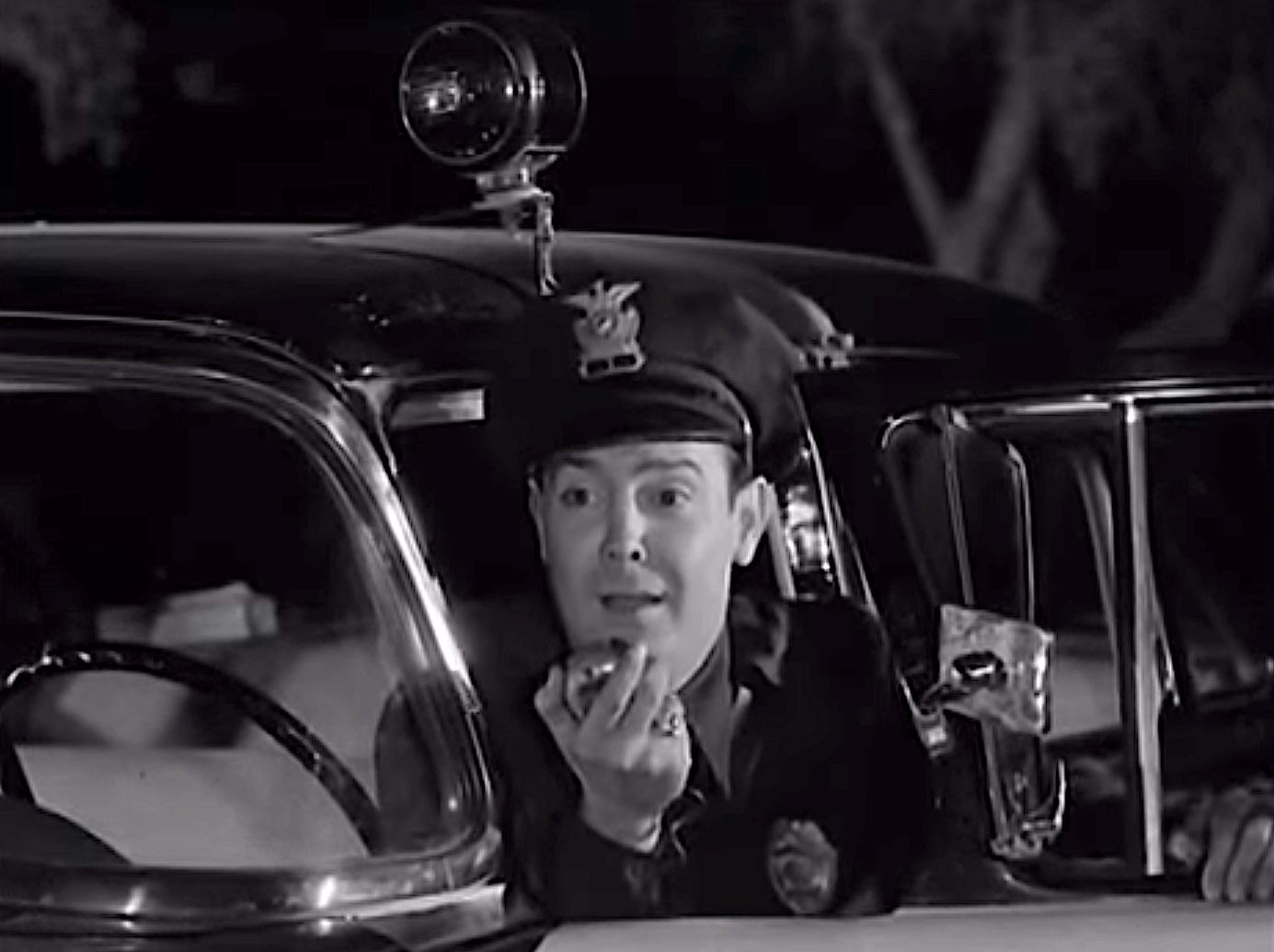
Paul Marco (June 10, 1927 – May 14, 2006) was an American actor who often appeared in movies made by Ed Wood, including the "Kelton Trilogy" of Bride of the Monster, Night of the Ghouls and Plan 9 from Outer Space, in which he played a bumbling, fearful policeman named Kelton.[1]

Key Information

Career

[edit]

Born in Los Angeles, Marco started taking lessons in drama, singing and dancing at an early age. After graduating from Hollywood High School, he served in the Navy during World War II. His first known movie role was a small part in the 1944 film Sweet and Low-Down with Benny Goodman, Jo Stafford, and The Pied Pipers.[1]

In the early 1950s, The Amazing Criswell predicted on national television that Paul Marco would go far in the motion picture business. Criswell introduced Marco to Ed Wood shortly thereafter. In turn, Marco introduced Wood to Bunny Breckinridge, a flamboyantly gay Shakespearean actor who lived with Marco for a time and co-starred in Wood's Plan 9 from Outer Space.[1]

Marco depended on Wood for parts, and he more or less retired as an actor as Wood's movies shifted more and more towards pornography for the last twenty years of his life.

In Tim Burton's 1994 movie Ed Wood, Marco was portrayed by actor Max Casella.

Later life and death

[edit]

In 1995, Marco recorded a 45, "Home on the Strange", in which he reprised his Kelton character for Dionysus Records. He revived Kelton once more in the 2005 science fiction satire/tribute film The Naked Monster, which also featured actors from Creature from the Black Lagoon, The Thing from Another World, The War of the Worlds, Beyond the Time Barrier, and The Indestructible Man, all reprising the roles they had played in the cited earlier films.

Marco hoped for a career revival with the "Dark Corner" series of shorts. He completed the first, entitled Kelton's Dark Corner (by Vasily Shumov), and was planning to shoot several scenes for the second before his death.

On May 14, 2006, Paul Marco died after a battle with hip problems and chronic illness, at the age of 78.[1]

Filmography

[edit]
Film
Year Film Role Notes
1944 Sweet and Low-Down Uncredited
1952 Hiawatha
1955 Bride of the Monster Officer Kelton Alternative title: Bride of the Atom
1957 Plan 9 from Outer Space Officer Kelton Alternative title: Graverobbers from Outer Space
1959 Night of the Ghouls Patrolman Paul Kelton Alternative title: Revenge of the Dead
1961 The Young Savages Uncredited
1965 Rat Fink
1989 Horror Talk
2005 The Naked Monster Kelton the Cop
2009 Kelton's Dark Corner: Trilogy One Direct-to-DVD release
Television
Year Title Role Notes
1960 The Donna Reed Show Plumber #3 1 episode
77 Sunset Strip Jeep Driver 1 episode

Further reading

[edit]

References

[edit]
[edit]
Revisions and contributorsEdit on WikipediaRead on Wikipedia
from Grokipedia
Paul Marco (June 10, 1927 – May 14, 2006) was an American actor best remembered for portraying the hapless police officer Kelton in three low-budget and horror films directed by Edward D. Wood Jr.: (1955), (1959), and (1959). Born in to Italian immigrant parents as the youngest of thirteen children, Marco developed an early interest in , joining the renowned Meglin Kiddies troupe alongside child stars such as , , and . After graduating from , Marco served in the U.S. Navy during and subsequently pursued through little theater productions before making his film debut in an uncredited role in the 1944 musical . His association with Wood began in the mid-1950s, where he became part of the director's informal stock company of performers, contributing to the idiosyncratic charm of Wood's notoriously unconventional cinema. Beyond , Marco worked for decades as a at Paramount Studios, handling props for television series like One Day at a Time and various commercials. In the , amid a revival of interest in Wood's work, Marco embraced his cult status by attending autograph conventions and reprising the Kelton character in the independent short film Kelton's Dark Corner (2006). He was also portrayed by actor in Tim Burton's 1994 biopic , which celebrated the filmmaker's legacy. He passed away in Hollywood at age 78 following complications from chronic illness and hip problems, just one day after giving an interview for a book on his career.

Early life

Childhood and education

Paul Marco was born Angelo Inzalaco on June 10, 1927, in , , to Italian immigrant parents as the youngest of thirteen children. Raised in the heart of Hollywood, he was immersed from an early age in the vibrant entertainment industry that defined the city, fostering his lifelong passion for performing. Marco's interest in acting emerged during his childhood, when he joined the Meglin Kiddies, a renowned troupe of young performers that trained child in dance, singing, and stagecraft, alongside future stars like . This early exposure solidified his aspirations to pursue a career on stage and screen. He graduated from , where the local theater scene continued to influence his development as a performer. These formative experiences were interrupted by his enlistment in the military, marking a temporary pause in his artistic pursuits.

Military service

Paul Marco enlisted in the United States Navy shortly after graduating from . His service occurred during the final months of , interrupting the performing ambitions he had begun as a child. Specific details regarding his duties or experiences in the Navy, including any potential involvement in entertainment activities, remain undocumented in available records. Following his discharge at the war's end in , Marco resumed his pursuit of a career, leveraging the discipline gained from military life to channel his energies into theater and film work.

Career

Early acting roles

Paul Marco began his professional acting career as a child performer in the renowned Meglin Kiddies troupe, which included future stars such as , , and . After graduating from and serving in the U.S. Navy during , he transitioned to film work, making his screen debut in an uncredited bit role in the 1944 musical Sweet and Low-Down, directed by and starring and . In the late 1940s and early 1950s, Marco continued to seek opportunities in Hollywood, appearing uncredited as an extra in the 1952 adventure film , a low-budget production featuring and based on the poem. These minor roles, alongside performances in local little theater productions, represented his initial efforts to build a resume in an industry where aspiring actors often started with supporting or background parts in mainstream features. Such work highlighted the challenges of breaking into Hollywood, where young performers like Marco were frequently typecast in small, non-speaking capacities while honing their craft.

Collaboration with Ed Wood

Paul Marco joined Edward D. Wood Jr.'s stock company in the mid-1950s after being introduced to the director by his agent, Marge Usher, during the preproduction of (1955). This marked the beginning of a close professional and personal relationship that lasted until Wood's death in 1978, with Marco becoming a recurring presence in Wood's low-budget productions known for their enthusiastic yet haphazard filmmaking process. Marco's most iconic contribution to Wood's oeuvre was his portrayal of the bumbling, cowardly Patrolman Kelton in the so-called "Kelton Trilogy," a loose series of films centered on the character's comic misadventures amid supernatural chaos. In Bride of the Monster (1955), Kelton debuted as a dim-witted officer partnering with another patrolman to investigate suspicious activities near Dr. Erich von Frankenstein's island laboratory, providing relief through his ineptitude and fear of the unknown. The role was tailored to Marco's energetic, everyman persona, allowing him to inject into Wood's script-heavy scenes of mad science and atomic experimentation. , Wood's directing style emphasized speed and due to the film's budget of approximately $70,000 and limited resources, with Marco recalling the chaotic energy of shooting on rented sets and outdoor locations where actors doubled as crew to keep production moving. Kelton's character evolved in (1959), Wood's infamous science-fiction epic, where Marco's patrolman is thrust into an interstellar conspiracy involving flying saucers and reanimated corpses. In a memorable sequence, Kelton and his partner stumble upon disturbed graves during a "spook detail," only for Kelton to be ambushed and knocked unconscious by the Ghoul Man (Tom Keene), a resurrected ; upon revival, he gripes about the absurdity of battling monsters and flying objects, underscoring his perpetual reluctance and fear. This arc highlighted Kelton's growth from mere comic foil to a hapless confronting the film's outlandish threats, with Marco's performance amplified by Wood's improvisational approach—actors often ad-libbed lines to cover continuity errors caused by the production's use of and minimal takes. The surname "Kelton" itself was derived from the street where Marco's agent lived, a quirky detail reflecting Wood's informal, personal touch in assembling his troupe. The trilogy culminated in Night of the Ghouls (1959), explicitly written as a starring vehicle for Marco's Kelton, expanding the character's role amid a tale of fraudulent spiritualists and vengeful spirits at a haunted mansion. Kelton arrives nervously at Willows Lake to probe Lt. Dan Bradford's abandoned car, firing wildly at apparitions like the Woman in White before radioing for backup and crashing a , where he boldly arrests the impostor medium Dr. Acula (). Later knocked out by the hulking Lobo (Tor Johnson) and discovered in a casket, Kelton revives to assist in the climax, shooting Lobo and helping expose the scam—marking a rare arc of tentative bravery for the otherwise timid cop. Production anecdotes reveal Wood's low-budget ingenuity, with the film shot over weekends using donated props and volunteer actors, including Marco contributing uncredited assistance in props and coordination to stretch the meager funding; improvisations were common, as Wood encouraged performers like Marco to amplify physical gags and dialogue for energy despite technical limitations like visible microphone shadows and continuity lapses. Beyond the trilogy, Marco took on minor roles and behind-the-camera duties in Wood's circle, including bit parts as security guards or extras in unfinished projects, and occasional credits to support the director's resource-strapped endeavors—tasks that involved scavenging costumes and sets from thrift stores and friends' garages. These collaborations exemplified the collaborative spirit of Wood's "stock company," where loyalty and multitasking were essential in an environment of financial improvisation and unyielding creative passion.

Post-Wood career and retirement

Following the end of his primary collaboration with , whose directing career declined into and in the , Paul Marco's on-screen opportunities became markedly sparse. With few roles available outside Wood's circle, Marco appeared in only isolated projects during this era, including an uncredited minor role in the 1961 crime drama starring , and his minor part in the 1965 low-budget crime drama , a film produced and starring Schuyler Hayden that explored themes of Hollywood ambition and downfall. No further credits are documented for Marco in the late or . Marco also expanded into producing, co-founding Marwell Productions and producing the psychic-themed television program Criswell Predicts, for which he earned a Golden Scroll Award and the Jeanie Emerald Angel Award for contributions to genre entertainment. By the mid-1970s, Marco transitioned primarily to behind-the-scenes roles, working as a at Paramount Studios on the One Day at a Time (1975–1984) and numerous commercials. This shift marked a focus away from regular pursuits, though he made sporadic on-camera appearances later in his , influenced by the scarcity of suitable parts and his established alternative career path in the industry.

Later years and death

Revival of roles

In the mid-1990s, Paul Marco experienced a resurgence of interest in his association with 's films, particularly his portrayal of the bumbling patrolman Kelton from the original trilogy. This revival was fueled by growing fandom, leading Marco to reprise the character in novelty projects. In 1995, he recorded the single "Home on the Strange" b/w "Someone Walked Over My Grave" for Dionysus Records, performing as Kelton in a surf-rock style track that paid homage to Wood's science-fiction themes. Marco continued this revival into the 2000s with on-screen returns to the Kelton role in fan-produced works. He appeared as Kelton the Cop in the 2005 ultra-low-budget science-fiction satire , a tribute that assembled surviving actors from B-movies to reenact iconic scenes in a comedic crossover narrative. Later, in 2006, Marco starred as Kelton in the short- series Kelton's Dark Corner: Trilogy One, a noir-inspired project directed by Vasily Shumov that was planned as a 12-episode web or TV series exploring the character's misadventures; the first trilogy was released posthumously in 2009. Throughout the 1990s and early 2000s, Marco actively engaged with enthusiasts through appearances in documentaries and fan events. He provided interviews as himself in Flying Saucers Over Hollywood: The 'Plan 9' Companion (1992), which examined the production of , and The Haunted World of Edward D. Wood, Jr. (1995), a comprehensive look at Wood's career featuring cast recollections. Marco also attended conventions and midnight screenings of Wood's films, often in character as Kelton, fostering a dedicated fan community around his legacy.

Death

Paul Marco died on May 14, 2006, in , , at the age of 78 from complications of a prolonged illness. He passed away at home during this period of declining health. Marco was interred at in . At the time, he was actively involved in late-career revivals, filming the second episode of the DVD series Kelton's Dark Corner, which reprised his iconic role as Officer Kelton. He died one day after giving an for a book on his career. His death elicited immediate tributes in Hollywood trade publications, where colleagues and fans in the Ed Wood enthusiast community mourned the loss of a cinema staple. Marco was survived by several nieces and nephews.

Legacy

Cultural significance

Paul Marco's portrayal of the hapless Patrolman Kelton across Ed Wood's Bride of the Monster (1955), (1959), and (1959)—collectively known as the Kelton Trilogy—played a pivotal role in elevating these films to enduring status within low-budget cinema. The character's recurring appearances foster intertextual connections, such as Kelton's frantic references to past encounters with "monsters" and "space people," which unify Wood's disparate productions and amplify their appeal to dedicated fans. This linkage has helped transform Wood's oeuvre from dismissed oddities into celebrated artifacts of outsider filmmaking. Marco's energetic, comically inept performance as Kelton exemplifies the "so bad it's good" aesthetic that defines much of Ed Wood's work, particularly in , long hailed as the pinnacle of unintentionally hilarious . Fan analyses frequently dissect Kelton's jittery stakeout scenes—such as his wide-eyed paranoia in —as quintessential examples of Wood's chaotic charm, where amateurish delivery inadvertently generates absurd humor and emotional resonance. These interpretations, explored in cult media scholarship, underscore how Marco's contributions sustain appreciation for the genre's embrace of failure as a form of authentic . In badfilm studies, Marco's Kelton serves as a key example of performative incompetence that enriches discussions of cult cinema's fascination with directorial and acting missteps. His influence extends to homages in modern media, including documentaries that recreate Wood-era antics and festival tributes that highlight recurring characters like Kelton to illustrate the evolution of "worst film" admiration. Retrospective screenings have further honored Marco's legacy; for instance, the 2012 Slamdance Film Festival presentation of Wood's rediscovered short Final Curtain (1957), located by Marco's great-nephew Jason Insalaco, highlighted ties to Wood's stock company including Marco. Similarly, the American Cinematheque's 2024 Ed Wood centennial series featured family introductions tied to Marco, affirming his place in the ongoing revival of Wood's films. In 2025, Will Sloan's biography Ed Wood: Made in Hollywood USA further examined Marco's role as Kelton, contributing to renewed scholarly interest in his place within Wood's cult legacy. Paul Marco was portrayed by actor Max Casella in Tim Burton's 1994 biographical comedy-drama film Ed Wood, which chronicles the life and career of director Edward D. Wood Jr. In the movie, Casella's character serves as one of Wood's dedicated production assistants and a frequent performer in his low-budget productions, capturing Marco's real-life loyalty and recurring on-screen presence. Marco himself contributed to the cultural documentation of Wood's circle through interviews featured in Rudolph Grey's 1992 oral biography Nightmare of Ecstasy: The Life and Art of Edward D. Wood, Jr., where he shared personal anecdotes about his collaborations and the chaotic filmmaking process. His character, the bumbling Patrolman Kelton, has been referenced in several documentaries exploring Wood's legacy, including appearances by Marco in Flying Saucers Over Hollywood: The 'Plan 9' Companion (1992) and The Haunted World of Edward D. Wood Jr. (1995), both of which highlight Kelton's role in films like Plan 9 from Outer Space. Additionally, Marco was interviewed for the 1989 episode of The Incredibly Strange Film Show dedicated to Ed Wood, discussing his experiences as Kelton. In the 2005 parody film , a homage to sci-fi and horror tropes, Marco reprised his iconic role as Kelton the Cop, integrating the character into a mock crossover with other classic alumni. Posthumously, following Marco's death in 2006, the series (released in ) honored his legacy by featuring footage of his final performance as Kelton in the inaugural episode, a noir-style vignette that extended the character's comedic misadventures.

Filmography

Film roles

Paul Marco appeared in a variety of feature films, often in uncredited or minor roles early in his career, before gaining recognition for his portrayals of the bumbling policeman Kelton in Edward D. Wood Jr.'s "Kelton Trilogy"—Bride of the Monster (1955), Plan 9 from Outer Space (1959), and Night of the Ghouls (1959)—which highlighted his comedic timing and became emblematic of Wood's low-budget science fiction and horror style. Later, he reprised the Kelton character in revival projects, while also taking on behind-the-scenes roles such as property master in several Wood productions. His credited and uncredited acting appearances in feature films, listed chronologically, are as follows:
  • 1944: Sweet and Low-Down – Undetermined secondary role (uncredited); directed by Benjamin Stoloff. An early bit part in this musical comedy starring .
  • 1952: Hiawatha – Uncredited role; directed by Kurt Neumann. A minor appearance in this adventure film based on the poem.
  • 1955: Bride of the Monster – Officer Kelton; directed by Edward D. Wood Jr. Marco also served as . The first installment of the Kelton , where his character provides amid the film's plot.
  • 1959: Plan 9 from Outer Space – Patrolman Kelton; directed by Edward D. Wood Jr. Marco also contributed as . The second Kelton film, widely regarded as Wood's most infamous work and a for its enthusiastic ineptitude.
  • 1959: Night of the Ghouls – Patrolman Kelton (also known as Revenge of the Dead); directed by Edward D. Wood Jr. Marco also served as . Completing the Kelton , this low-budget horror features Kelton investigating supernatural occurrences.
  • 1961: The Young Savages – Minor role (uncredited); directed by . A small part in this crime drama starring , exploring gang violence in .
  • 1965: Rat Fink – Role unspecified (credited cast member); directed by James R. Brice. An appearance in this about a racer turned criminal.
  • 2005: The Naked Monster – Kelton the Cop; directed by Wayne Berwick and Ted Newsom. A revival homage to 1950s monster movies, reuniting Marco with other alumni like .
  • 2009: Kelton's Dark Corner: Trilogy One – Kelton the Cop; directed by Vasily Shumov. Marco's final performance, a short feature-length video project reimagining Kelton in a noir detective story (filmed 2006, released 2009).
Beyond acting, Marco worked as assistant on Blue City (1986), directed by Michelle Manning, during his time at Paramount Studios.

Television appearances

Paul Marco's television appearances were sparse compared to his film work, primarily consisting of minor guest roles and later self appearances in documentary-style programs focused on cult cinema. These credits reflect his occasional forays into episodic television during the late 1950s and a revival in the late tied to interest in Ed Wood's films. Unlike his of Kelton the Cop in movies, his TV roles were one-off bit parts or interview segments, often leveraging his association with low-budget horror. His known television credits include:
  • 77 Sunset Strip (1960): Jeep Driver in the episode "Trouble in the Middle East," a guest role in this series.
  • The Donna Reed Show (1960): Played Painter #2 in the episode "Donna Decorates," a comedic bit role involving home renovation antics alongside the Stone family.
  • Horror Talk (1989): Appeared as himself in this talk-show episode dedicated to history, discussing his career and collaborations.
  • The Incredibly Strange Film Show (1989): Featured as himself in the episode "Ed Wood Jr.," providing insights into Wood's productions and his role as Officer Kelton during interviews with other Wood alumni.
  • Flying Saucers Over Hollywood: The 'Plan 9' Companion (1992): Appeared as himself, contributing to this documentary on 's career and .
  • The Haunted World of Edward D. Wood Jr. (1995): Featured as himself, sharing memories of working with Wood.
  • Ed Wood: Look Back in Angora (1996): Appeared as himself in this retrospective on Wood's films.
  • E! Mysteries & Scandals (1998): Appeared as himself in the episode "Ed Wood," discussing his experiences.
These appearances highlight Marco's in supporting or novelty roles on television, with no evidence of commitments.

References

Add your contribution
Related Hubs
User Avatar
No comments yet.