


Community hub
Recent from talks
Contribute something to knowledge base
Content stats: 0 posts, 0 articles, 1 media, 0 notes
Members stats: 0 subscribers, 0 contributors, 0 moderators, 0 supporters
Subscribers
Supporters
Contributors
Moderators
Hub AI
Pectin AI simulator
(@Pectin_simulator)
Hub AI
Pectin AI simulator
(@Pectin_simulator)
Pectin
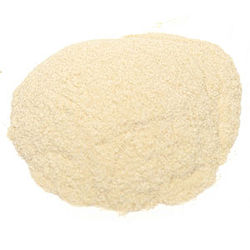
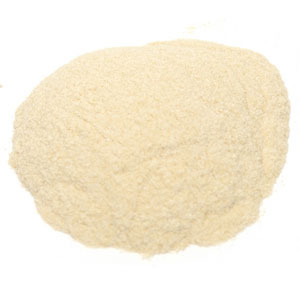
Pectin (Ancient Greek: πηκτικός pēktikós: 'congealed' and 'curdled') is a heteropolysaccharide, a structural polymer contained in the cell walls and middle lamellae of terrestrial plants. The principal chemical component of pectin is galacturonic acid (a sugar acid derived from galactose) which was isolated and described by Henri Braconnot in 1825.[dubious – discuss] Commercially produced pectin is a white-to-light-brown powder, produced from citrus fruits for use as an edible gelling agent, especially in jams and jellies, dessert fillings, medications, and sweets; as a food stabiliser in fruit juices and milk drinks; and as a source of dietary fiber.
Pears, apples, guavas, quince, plums, gooseberries, and oranges and other citrus fruits contain large amounts of pectin, while soft fruits, like cherries, grapes, and strawberries, contain small amounts of pectin.[citation needed]
Typical levels of pectin in fresh fruits and vegetables are:
Pectin is composed of complex polysaccharides that are present in the primary cell walls of a plant, and are abundant in the green parts of terrestrial plants. Pectin is the principal component of the middle lamella, where it binds cells. Pectin is deposited by exocytosis into the cell wall via vesicles produced in the Golgi apparatus. The amount, structure and chemical composition of pectin is different among plants, within a plant over time, and in various parts of a plant. Pectin is an important cell wall polysaccharide that allows primary cell wall extension and plant growth. During fruit ripening, pectin is broken down by the enzymes pectinase and pectinesterase, in which process the fruit becomes softer as the middle lamellae break down and cells become separated from each other. A similar process of cell separation caused by the breakdown of pectin occurs in the abscission zone of the petioles of deciduous plants at leaf fall.[citation needed]
Pectin is a natural part of the human diet, but does not contribute significantly to nutrition. The daily intake of pectin from fruits and vegetables can be estimated to be around 5 g if approximately 500 g of fruits and vegetables are consumed per day.[citation needed]
In human digestion, pectin binds to cholesterol in the gastrointestinal tract and slows glucose absorption by trapping carbohydrates. Pectin is thus a soluble dietary fiber. In non-obese diabetic (NOD) mice pectin has been shown to increase the incidence of autoimmune type 1 diabetes.
A study found that after consumption of fruit the concentration of methanol in the human body increased by as much as an order of magnitude due to the degradation of natural pectin (which is esterified with methanol) in the colon.
Consumption of pectin has been shown to slightly (3–7%) reduce blood LDL cholesterol levels. The effect depends upon the source of pectin; apple and citrus pectins were more effective than orange pulp fibre pectin. The mechanism appears to be an increase of viscosity in the intestinal tract, leading to a reduced absorption of cholesterol from bile or food. In the large intestine and colon, microorganisms degrade pectin and liberate short-chain fatty acids that have a positive prebiotic effect.
Pectin
Pectin (Ancient Greek: πηκτικός pēktikós: 'congealed' and 'curdled') is a heteropolysaccharide, a structural polymer contained in the cell walls and middle lamellae of terrestrial plants. The principal chemical component of pectin is galacturonic acid (a sugar acid derived from galactose) which was isolated and described by Henri Braconnot in 1825.[dubious – discuss] Commercially produced pectin is a white-to-light-brown powder, produced from citrus fruits for use as an edible gelling agent, especially in jams and jellies, dessert fillings, medications, and sweets; as a food stabiliser in fruit juices and milk drinks; and as a source of dietary fiber.
Pears, apples, guavas, quince, plums, gooseberries, and oranges and other citrus fruits contain large amounts of pectin, while soft fruits, like cherries, grapes, and strawberries, contain small amounts of pectin.[citation needed]
Typical levels of pectin in fresh fruits and vegetables are:
Pectin is composed of complex polysaccharides that are present in the primary cell walls of a plant, and are abundant in the green parts of terrestrial plants. Pectin is the principal component of the middle lamella, where it binds cells. Pectin is deposited by exocytosis into the cell wall via vesicles produced in the Golgi apparatus. The amount, structure and chemical composition of pectin is different among plants, within a plant over time, and in various parts of a plant. Pectin is an important cell wall polysaccharide that allows primary cell wall extension and plant growth. During fruit ripening, pectin is broken down by the enzymes pectinase and pectinesterase, in which process the fruit becomes softer as the middle lamellae break down and cells become separated from each other. A similar process of cell separation caused by the breakdown of pectin occurs in the abscission zone of the petioles of deciduous plants at leaf fall.[citation needed]
Pectin is a natural part of the human diet, but does not contribute significantly to nutrition. The daily intake of pectin from fruits and vegetables can be estimated to be around 5 g if approximately 500 g of fruits and vegetables are consumed per day.[citation needed]
In human digestion, pectin binds to cholesterol in the gastrointestinal tract and slows glucose absorption by trapping carbohydrates. Pectin is thus a soluble dietary fiber. In non-obese diabetic (NOD) mice pectin has been shown to increase the incidence of autoimmune type 1 diabetes.
A study found that after consumption of fruit the concentration of methanol in the human body increased by as much as an order of magnitude due to the degradation of natural pectin (which is esterified with methanol) in the colon.
Consumption of pectin has been shown to slightly (3–7%) reduce blood LDL cholesterol levels. The effect depends upon the source of pectin; apple and citrus pectins were more effective than orange pulp fibre pectin. The mechanism appears to be an increase of viscosity in the intestinal tract, leading to a reduced absorption of cholesterol from bile or food. In the large intestine and colon, microorganisms degrade pectin and liberate short-chain fatty acids that have a positive prebiotic effect.
Recent media
Recent media