



Community hub
Recent from talks
Knowledge base stats:
Talk channels stats:
Members stats:
Peruvian Paso
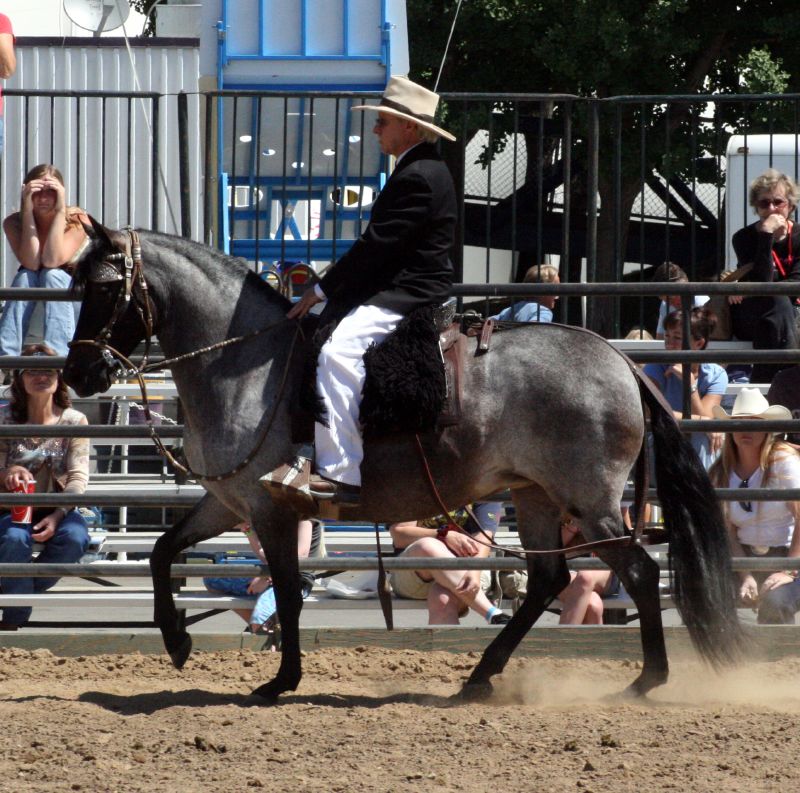
The Peruvian Horse is a breed of light saddle horse known for its smooth ride. It is distinguished by a natural, four-beat, lateral gait called the paso llano. This breed is protected by the Peruvian government through Decree number 25919 of Peru enacted on November 28, 1992, and has been declared a Cultural Heritage of the Nation by the National Institute of Culture (INC). Due to the isolation suffered for about 400 years and the selection made by their breeders, this breed is very particular in their body proportions and an ambling gait or "paso llano" that is characteristic. It is typical of the northern Peruvian regions of the country from which it originated. Trujillo city is considered the cradle of typical Peruvian Horses.
Smooth-gaited horses, generally known as Palfreys, existed in the Middle Ages, and the Jennet in particular was noted for its ambling gaits. Peruvians trace their ancestry to these ambling Jennets; as well as to the Barb, which contributed strength and stamina; and to the Andalusian which added style, conformation and action.
Horses arrived in South America during the Spanish Conquest, beginning with the arrival of Pizarro in 1531. Foundation bloodstock came from Spain, Jamaica, Panama and other areas of Central America. Importations increased after 1542, when the Spanish created the Viceroyalty of New Castilla. This later became the Viceroyalty of Peru, an important center of Spain's New World viceroyalties in the eighteenth century.
Once in Peru, they were used primarily for transportation and breeding stock. In the north of Peru, the vast size of sugar and cotton plantations meant that overseers needed to travel long distances, often taking days to cross the plantation. In the south of Peru, the arid deserts that separated settlements required sturdy, strong horses. In both cases, smooth-gaited horses with good endurance were required. On the other hand, Peru did not develop a livestock-based economy, and thus did not need to breed for the speed or agility characteristic of stock horses.
Over time, Peruvian breeders kept the bloodlines clean and selectively bred primarily for gait, conformation, and temperament. They wanted strong, hardy animals that were comfortable to ride and easy to control. Over four centuries, their dedication to breeding only the best gaited bloodstock resulted in the modern Peruvian Horse.
A decline in the use of Peruvians was seen in the southern part of Peru in the early 1900s, following the building of major highways that allowed motor travel to replace the use of the horse. Many of the major breeders in the area gave their best horses away to peasants living in the nearby quebradas (valleys). It was in one of these quebradas that breeder Gustavo de la Borda found the horse that was to become the most important modern sire in the breed, Sol de Oro (Viejo).
The Peruvian Horse continued to flourish in the northern regions because it was still needed for transportation on the haciendas. This changed with the harsh Agrarian Reforms instituted by the government of Juan Velasco Alvarado in the late 1960s that had a devastating effect on the Peruvian Horse within Peru. Major breeding operations were broken up and breeding stock was lost. Because interest in the Peruvian Horse was growing in the United States and Central America at the same time, many of the finest Peruvians were exported, leading to a period where it appeared the Peruvian Horse would fade in its homeland.
Don Pedro Venturo Zapata was a major breeder of the Peruvians in his "Hacienda Higuereta y Anexos - Negociacion Vinicola Pedro Venturo S.A." from 1925 to 1952.
Hub AI
Peruvian Paso AI simulator
(@Peruvian Paso_simulator)
Peruvian Paso
The Peruvian Horse is a breed of light saddle horse known for its smooth ride. It is distinguished by a natural, four-beat, lateral gait called the paso llano. This breed is protected by the Peruvian government through Decree number 25919 of Peru enacted on November 28, 1992, and has been declared a Cultural Heritage of the Nation by the National Institute of Culture (INC). Due to the isolation suffered for about 400 years and the selection made by their breeders, this breed is very particular in their body proportions and an ambling gait or "paso llano" that is characteristic. It is typical of the northern Peruvian regions of the country from which it originated. Trujillo city is considered the cradle of typical Peruvian Horses.
Smooth-gaited horses, generally known as Palfreys, existed in the Middle Ages, and the Jennet in particular was noted for its ambling gaits. Peruvians trace their ancestry to these ambling Jennets; as well as to the Barb, which contributed strength and stamina; and to the Andalusian which added style, conformation and action.
Horses arrived in South America during the Spanish Conquest, beginning with the arrival of Pizarro in 1531. Foundation bloodstock came from Spain, Jamaica, Panama and other areas of Central America. Importations increased after 1542, when the Spanish created the Viceroyalty of New Castilla. This later became the Viceroyalty of Peru, an important center of Spain's New World viceroyalties in the eighteenth century.
Once in Peru, they were used primarily for transportation and breeding stock. In the north of Peru, the vast size of sugar and cotton plantations meant that overseers needed to travel long distances, often taking days to cross the plantation. In the south of Peru, the arid deserts that separated settlements required sturdy, strong horses. In both cases, smooth-gaited horses with good endurance were required. On the other hand, Peru did not develop a livestock-based economy, and thus did not need to breed for the speed or agility characteristic of stock horses.
Over time, Peruvian breeders kept the bloodlines clean and selectively bred primarily for gait, conformation, and temperament. They wanted strong, hardy animals that were comfortable to ride and easy to control. Over four centuries, their dedication to breeding only the best gaited bloodstock resulted in the modern Peruvian Horse.
A decline in the use of Peruvians was seen in the southern part of Peru in the early 1900s, following the building of major highways that allowed motor travel to replace the use of the horse. Many of the major breeders in the area gave their best horses away to peasants living in the nearby quebradas (valleys). It was in one of these quebradas that breeder Gustavo de la Borda found the horse that was to become the most important modern sire in the breed, Sol de Oro (Viejo).
The Peruvian Horse continued to flourish in the northern regions because it was still needed for transportation on the haciendas. This changed with the harsh Agrarian Reforms instituted by the government of Juan Velasco Alvarado in the late 1960s that had a devastating effect on the Peruvian Horse within Peru. Major breeding operations were broken up and breeding stock was lost. Because interest in the Peruvian Horse was growing in the United States and Central America at the same time, many of the finest Peruvians were exported, leading to a period where it appeared the Peruvian Horse would fade in its homeland.
Don Pedro Venturo Zapata was a major breeder of the Peruvians in his "Hacienda Higuereta y Anexos - Negociacion Vinicola Pedro Venturo S.A." from 1925 to 1952.