Hubbry Logo
PalfreyPalfreyMain
Open search
Palfrey
Community hub
Palfrey
logo
8 pages, 0 posts
0 subscribers
Be the first to start a discussion here.
Palfrey
Palfrey
from Wikipedia
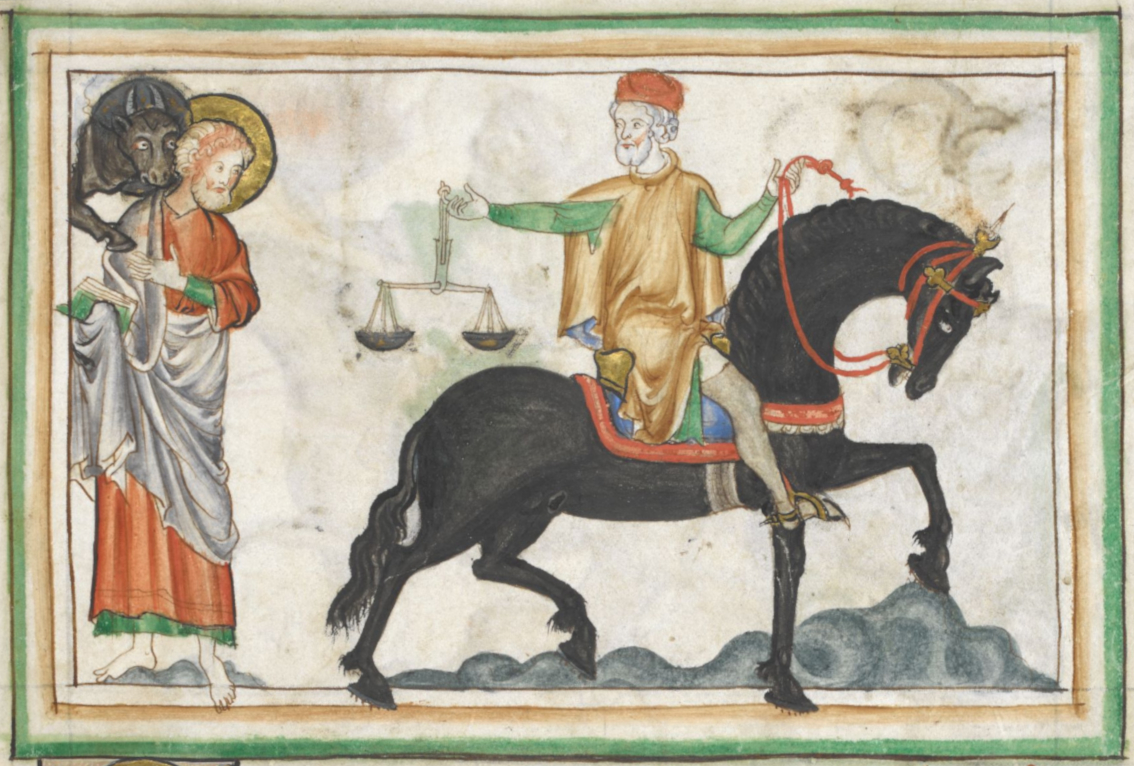
A medieval painting of a palfrey

A palfrey is a type of horse that was highly valued as a riding horse in the Middle Ages. It was a lighter-weight horse, usually a smooth gaited one that could amble, suitable for riding over long distances. Palfreys were not a specific breed as horse breeds are understood today.

Etymology

[edit]

The word "palfrey" is cognate with Pferd (German for 'horse' of any type); both words descend from paraveredus (Latin for 'post horse' / 'courier horse'), itself deriving from Gaulish vorēdos.

Meanwhile, the German term for a palfrey is Zelter (lit.'ambler'), cognate with Icelandic tölt.

Breeding

[edit]

A palfrey usually was the most expensive and highly bred type of riding horse during the Middle Ages,[1] sometimes equalling the knight's destrier in price. Consequently, it was popular with nobles, ladies, and highly ranked knights for riding, hunting, and ceremonial use.[2] Knights would ride palfreys to battle so that their heavier warhorses wouldn't be fatigued during combat.[3]

Gait

[edit]
The palfrey was considered an appropriate mount for women

The significant characteristic of the palfrey was that, rather than trotting, it usually possessed a smooth, ambling gait.[4] The amble was the name given to a group of smooth, four-beat gaits faster than a walk, but slower than a canter or gallop. The trot is a two-beat gait, about 8 mph, suitable for covering a lot of ground relatively quickly. However, the horse also has a bit of a spring in its motion as it switches diagonal pairs of legs with each beat, and thus can be rough for a rider, and the trot also jostles about packs or weaponry to a considerable degree. The amble is about as fast as the trot, not tiring for a horse that performs it naturally, and much smoother for the rider. Thus, because much ground transportation in the Middle Ages was on horseback, with long distances to be covered, a smooth-gaited horse was much desired.

An amble is achieved by the horse when it moves with a four-step rhythm, either derived from the two-beat lateral gait known as the pace or from the diagonal trot, with the two beats broken up so there are four. There are several variations, but most either have a lateral sequence of footfalls (left hind, left front, right hind, right front), or a diagonal sequence (left hind, right front, right hind, left front). In either case, only one foot is all the way off the ground at a time. Such a gait can be maintained for long distances, and sometimes at considerable speed. Modern genetic studies have verified that ambling ability is linked to a specific genetic mechanism.

Image of a palfrey in ambling gait

Ambling horses are now uncommon in Europe. They were effectively replaced by trotting horses for several reasons: The first was that as roads improved, travel by carriage became more common, and trotting horse breeds were generally larger and stronger, more suited to the job at hand. Another reason was the rise of the Thoroughbred and other breeds developed for horse racing and for light cavalry, both of which required horses able to gallop for substantial periods of time. Breeds swift at the gallop also tend to trot rather than pace or amble. In the Americas, ambling horses continued to be bred, both in the southern United States and in Latin America.

The smooth ambling gaits today have many names, including the single-foot, the stepping pace, the tolt, the rack, the paso corto, and the fox trot (see ambling). There are still many ambling breeds, particularly in North America where today they are referred to as gaited horses. Some of these breeds include the Missouri Fox Trotter, Tennessee Walking Horse, Icelandic horse and a sub-group within the American Saddlebred. The Paso Fino and the Peruvian Paso, breeds developed in Latin America, perform two or three different ambling gaits of varying speed, and are probably the closest modern descendants of the medieval palfrey.

See also

[edit]

References

[edit]
Revisions and contributorsEdit on WikipediaRead on Wikipedia
from Grokipedia
A palfrey is a light, smooth-gaited saddle , distinct from warhorses, that was highly valued in medieval as a comfortable mount for ordinary riding, especially by noblewomen, , and high-status travelers. These horses were prized for their refinement and ability to cover long distances without fatiguing the rider, often serving as secondary mounts for knights en route to battle to preserve more powerful destriers. The term "palfrey" entered English around 1200 from palefroi, derived from palafredus, a variant of paraveredus meaning a "post horse" or spare mount for secondary routes. This etymology traces back to Greek para- ("beside" or "subsidiary") combined with a word for a light , veredus, reflecting its origins as an auxiliary riding animal in before evolving into a symbol of prestige by the . By the , palfreys appeared in epic literature like La Chanson de Roland as gifts denoting wealth and alliance, underscoring their integration into feudal social structures. Palfreys were typically smaller and more agile than warhorses, bred for elegant conformation, including refined heads, flowing manes, and sometimes unusual coat colors, often through selective imports from regions like Iberia or the Near East. Their defining feature was the amble, a four-beat lateral gait faster than a walk but smoother than a trot, which provided exceptional comfort for sidesaddle riding or extended journeys; this gait, linked genetically to variations like the DMRT3 allele, was trained from a young age and could be maintained over long periods without jarring the rider. High-quality examples, such as the "zeldenere" type, commanded prices rivaling destriers—up to 16 gulden in some markets—and were adorned with elaborate tack featuring jewels or embroidery to display the owner's status. In medieval society, palfreys embodied class distinctions, with ownership restricted by sumptuary laws after 1250, such as the 1265 French Royal Ordinance under Louis IX, which limited the price of rounseys that squires could buy to prevent vanity and social pretense. They facilitated , , and ceremonial processions, as seen in Welsh legal codes valuing a palfrey at 120 pence—double that of a working —and in accounts like John Barbour's , where King rode a "litill palfray" at the in 1314 for its maneuverability. By the , palfreys influenced modern breeds like the through their gaited legacy, though their prominence waned with the rise of specialized rouncy and hackney types for broader use.

Definition and Etymology

Definition

A palfrey is a lightweight riding that was highly valued during the for its smooth, , which provided comfort during extended travel and daily use. This type of horse was bred for agility and refinement rather than brute strength, distinguishing it from heavier breeds suited to other purposes. In contrast to the powerful , a warhorse designed for armored and charging into battle, the palfrey served as a versatile mount for non-military activities, emphasizing endurance and ease over battlefield prowess. It differed from the more utilitarian rouncy, which was often employed for pack work or general labor, by prioritizing a balanced, elegant form ideal for leisurely or practical riding. The palfrey's gentle nature and comfortable motion made it especially suitable for women, , and other non-combatants who required a reliable yet undemanding for transportation and ceremonial occasions.

The word "palfrey" entered the English language in the period, around the early , borrowed from palefrei or palefroi, which denoted a light suitable for . This term itself derives from paraveredus, a compound meaning "extra post horse" or "spare horse for couriers," combining the Greek prefix para- ("beside" or "secondary") with veredus (a or Germanic word for a post horse or light mount used by messengers). The term originally referred to a horse provided for riders on secondary routes, emphasizing its role in transportation rather than warfare. Linguistically, "palfrey" shares roots with broader Germanic equine terminology, reflecting Indo-European influences on horse-related vocabulary. The paraveredus was adopted into as pfarifrid, evolving into the modern German Pferd, the standard word for "" of any kind, thus establishing a direct link between the English term and continental . Similarly, the German Zelter, meaning an ambling or pacing akin to the palfrey, connects through shared Indo-European substrates for horse types, though Zelter specifically derives from zelter (related to stepping or ), highlighting regional variations in terminology for smooth-riding mounts. These connections underscore how the word's evolution intertwined with cultural exchanges along trade and postal routes in medieval . In , "palfrey" has largely become an archaic or historical term, retained primarily in and historical references to evoke medieval riding s, while everyday equine vocabulary shifted toward more general terms like "" or "." Its persistence in this context preserves the original connotations of and utility in travel.

Historical Development

Origins and Early Use

The origins of the palfrey trace back to the Roman Empire's , a state-run relay system for official couriers established under in the 1st century BCE, where paraveredi—light post horses suited for secondary roads—facilitated rapid message delivery by allowing riders to change mounts at stations spaced about 15-20 miles apart. These horses, derived from Celtic and local breeds, were valued for their and manageability rather than speed or battle prowess, forming the foundational type for later riding horses in . The system's influence extended into the , where similar relay networks persisted for imperial communications, adapting Roman practices to maintain administrative control across vast territories. In the early medieval period, particularly during the Carolingian era (8th-9th centuries), the paraveredus obligation endured as a duty for free persons to supply horses for messengers, reflecting the continuity of Roman courier traditions amid improving road infrastructure and expanding trade networks under Charlemagne's reforms. As European economies revived with increased commerce along revived and new routes, these light saddle horses gained prominence for practical travel, evolving from mere relays into preferred mounts for and by the 10th century. Initial breeding influences for the palfrey emerged in the following the Umayyad conquest in 711 CE, when North African Berber (Barb) and Arabian horses were introduced, interbreeding with local Iberian stock to produce gaited types like the , an early ancestor of the palfrey known for its smooth ambling motion. This fusion, documented in medieval Spanish records by the 9th century, enhanced the horse's suitability for long-distance riding, spreading northward through trade and conquest to shape the palfrey's development across .

Role in the Middle Ages

During the 11th to 15th centuries, the palfrey served as a primary across medieval , favored by the , ladies, knights, and for everyday travel, expeditions, and ceremonial processions. Its smooth made it ideal for long-distance journeys, allowing riders to cover considerable ground comfortably without the strain associated with other mounts. Knights often rode palfreys to tournaments or battlefields, reserving their more powerful destriers for , while ladies and high-ranking clergy used them for processions and hunts that underscored social hierarchies. A key functional role of the palfrey was to preserve the stamina and value of warhorses like the , which were too valuable and physically demanding for routine non-battle activities. By serving as secondary mounts, palfreys enabled knights to travel efficiently to engagements without fatiguating their primary battle steeds, a practice evident in depictions of Norman knights leading destriers while mounted on lighter palfreys. This distinction highlighted the palfrey's practicality in supporting the demands of chivalric life, where conserving elite warhorses was essential for success in warfare and tournaments. Economically, palfreys held significant value as status symbols, often rivaling destriers in and frequently exchanged as gifts in marriages or included in ransoms to demonstrate wealth and alliance. Well-bred palfreys, prized for their refinement, were bestowed upon brides like Matilda, daughter of , where records note payments for a palfrey specifically for her use in , symbolizing both utility and prestige in marital unions. Their prominence in historical records, such as the Bayeux Tapestry's detailed embroidery of palfreys alongside destriers in the 11th-century scenes, underscores their role in conveying social power and equine diversity in elite society.

Decline and Transition

By the , the palfrey's prominence as a preferred began to wane in , primarily due to infrastructural and technological advancements that favored alternative equine types. Improved road networks across and enabled faster trotting gaits, which proved more efficient for sustained compared to the ambling motion of palfreys, reducing the demand for smooth-gaited mounts suited to rough . Concurrently, the increasing adoption of horse-drawn carriages for long-distance shifted breeding priorities toward sturdy trotting horses capable of pulling heavier loads at higher speeds, further marginalizing the lighter, ambling palfrey. The development of the breed in 17th- and 18th-century , emphasizing speed and racing performance through selective crossing of imported Arabians and local stock, accelerated this trend by promoting galloping and trotting over ambling traits. As palfreys declined in mainstream use, their ambling characteristics transitioned into the broader category of early modern riding horses, where they influenced specialized regional breeds that preserved the for niche purposes. In , for instance, the smooth, four-beat persisted in Icelandic horses, which trace their gaited ancestry to medieval imports from Britain and , allowing riders to cover distances comfortably without the jarring motion of a trot.30752-7) This evolution reflected a broader adaptation, where palfrey-derived traits blended into versatile saddle horses for leisure, , and light travel, though no distinct "palfrey" type remained unchanged.30752-7) Palfrey-like qualities also extended beyond through colonial exports to the , where ambling horses adapted to rugged colonial landscapes and contributed to new regional types. English and Spanish settlers introduced gaited riding horses—reminiscent of palfreys—in the , particularly to , where they interbred to form breeds like the , valued for their smooth gaits in traversing uneven terrain during settlement and trade. These imports, prized for endurance over long journeys, helped establish foundational equine populations in the , evolving to meet demands for versatile mounts in diverse environments from plantations to frontier trails.

Breeding and Physical Characteristics

Breeding Practices

Breeding of palfreys was primarily undertaken by and larger monasteries, who invested significant resources in producing high-quality riding horses suited for long-distance travel and ceremonial use. These institutions maintained dedicated studs and employed specialized handlers to oversee the process, reflecting the status of palfreys, which often commanded prices comparable to warhorses. Selective breeding emphasized stocks from Iberian origins, such as the Spanish jennet, North African Barb influences, and native European lines to achieve desired traits like docility, , and a smooth . Iberian and Barb horses were prized for their natural aptitude in lateral gaits, while European stock contributed to hardiness in varied terrains; crosses were common to balance speed, temperament, and stamina for noble riders. To enhance ambling , breeders practiced line breeding, repeatedly mating individuals exhibiting the trait to propagate consistent and calm temperament. This approach capitalized on the DMRT3 gene mutation associated with ambling, which genetic analysis of medieval remains traces to early selection in around 850–900 AD, likely introduced by Norse settlers and refined over centuries for reliable performance. Historical document extensive royal studs in 14th-century , such as those at Woodstock (with 4 stallions, 23 mares, and 41 foals), Cornbury, Risborough, Odiham, Rayleigh, Windsor, and sites, where palfreys formed part of the royal household alongside warhorses. These operations incurred high costs, totaling over £210 for southern studs alone in 1322–1323, underscoring the economic investment in elite breeding. In , intensive palfrey production centered in regions like , , and Anjou from the onward, with royal and noble establishments mirroring English practices in scale and focus on quality stock. While direct are sparse, palfreys were traded through specialized markets and gifts among elites, maintaining their prestige.

Physical Traits

The palfrey was characterized by a build optimized for and rider comfort during extended journeys. Typically standing 14 to 15 hands high at the , these horses featured a slender frame that allowed for without excessive bulk, making them distinct from heavier warhorses like the . Their conformation included a refined head with elegant proportions, a well-arched neck, and strong yet not bulky legs that supported swift, efficient movement over long distances. This build emphasized refinement over raw power, with a deep chest providing ample capacity and a compact body that reduced fatigue under . Coat colors of the palfrey varied but were often selected for aesthetic appeal, with , , and gray being prevalent among high-quality specimens. These shades contributed to the horse's elegant appearance, sometimes enhanced by lighter variations like dappled gray to signify status among . Unlike draft breeds, palfreys were not bred primarily for uniformity in color but for overall grace, where the complemented their refined rather than dominating selection criteria. In temperament, palfreys were noted for their gentle and trainable nature, qualities essential for serving as reliable mounts for riders of varying skill levels, including women and non-combatants. This docility, combined with inherent stamina, enabled them to endure long hours under saddle without undue stress, fostering a bond of trust with handlers. Their calm disposition contrasted with more spirited warhorses, prioritizing composure and responsiveness in daily use.

Gait and Movement

The Ambling Gait

The , which characterized the palfrey, is a lateral four-beat movement known variably as the single-foot, tolt, or rack, featuring a smooth, even rhythm that distinguishes it from standard . In this , the sequence follows a precise lateral : the left hind leg, followed by the left foreleg, then the right hind leg, and finally the right foreleg, ensuring one foot remains in contact with the ground at all times for stability and fluidity. This gait operates at speeds faster than a typical walk, ranging from approximately 8 to 13 km/h, while providing a notably smoother ride than the two-beat by reducing vertical bounce and lateral sway for the rider. The amble's intermediate pace allows sustained travel without the jarring motion associated with trotting, making it an efficient mode of locomotion for extended distances. The ability to perform the is an inherited trait governed by a specific in the DMRT3 , known as the "gait keeper" , which is present in certain bloodlines and enables the extension of lateral sequences beyond the walk into higher speeds. This genetic variant, a (Ser301STOP), disrupts normal spinal circuit function to permit four-beat ambling rather than transitioning to the three-beat canter or two-beat , and it occurs at high frequency in historically gaited equine lineages.

Performance Advantages

The palfrey's provided superior comfort for long-distance travel, enabling riders to cover approximately 50-60 km per day with minimal jolting, in contrast to the fatiguing up-and-down motion of a standard that could displace the rider's center by 5-13 cm vertically. This smoothness reduced physical strain on both horse and rider, making palfreys particularly suitable for extended journeys where sustained riding was essential. The amble's energy efficiency further enhanced the palfrey's suitability for prolonged travel, as its intermediate speed of 2.2-4.0 m/s maintained a lower (26-27 breaths per minute) compared to the trot's 75-80 breaths at similar paces, conserving the horse's stamina for days-long routes favored by medieval pilgrims and envoys. By distributing weight more evenly through collected movements, palfreys minimized overall energy expenditure, allowing them to sustain performance without the rapid exhaustion seen in less efficient gaits. Palfreys demonstrated versatility across varied terrains, from forested paths to rudimentary roads, where their sure-footed —retaining ground contact at all times—outperformed bulkier warhorses like destriers in non-combat scenarios by navigating uneven or slippery surfaces with greater agility and speed. This adaptability stemmed from their lighter build and mechanics, which prioritized over the combat-focused power of heavier mounts, enabling reliable progress in diverse medieval landscapes.

Usage and Cultural Role

Practical Applications

Palfreys served as the primary mounts for personal transport in medieval Europe, particularly suited to non-combatants due to their smooth ambling gait that minimized fatigue on long journeys. They were especially favored by women, who often rode sidesaddle, as seen in Geoffrey Chaucer's The Canterbury Tales, where the Prioress rides an "amblynge" palfrey during the pilgrimage to Canterbury, reflecting the horse's comfort for extended travel. Clergy also relied on palfreys for processions and diplomatic missions. In literature mirroring historical practice, Chrétien de Troyes depicts noblewomen like Enide riding palfreys on journeys, underscoring their role in elite female mobility. In and , palfreys were prized for their reliable pace and gentle temperament, enabling riders to maintain control and attention on the pursuit rather than the mount's behavior. Elite women frequently used them in these activities; Queen Guinevere, in ' Erec et Enide, rides a white Norse palfrey during a hunt, highlighting the horse's calm responsiveness in dynamic settings like deer chases. Their endurance supported prolonged outings, as evidenced in Luxembourg account books from 1388–1795, which record palfrey use in noble hunts and related tournaments, covering terrains that demanded agility without excess speed. For trade and roles, palfreys facilitated the carriage of and dispatches over extended routes, leveraging their speed and stamina to cover distances exceeding 120 kilometers per day. In records, 750 entries detail their employment in messenger services (47.1% of logs) and 264 in diplomatic transports (16.6%), often carrying official correspondence or trade items between cities. Pilgrimage paths, such as those to , saw merchants and pilgrims using palfreys for practical conveyance, as illustrated in Chaucer's depiction of diverse travelers on horseback, where the horses' reliability supported commerce and communication along these vital networks. Welsh laws further permitted palfrey use for urgent errands, like summoning aid or priests, emphasizing their versatility in everyday .

Depictions in Culture

Palfreys frequently appear in medieval chivalric romances as mounts for noblewomen, symbolizing grace and femininity through their smooth and elegant form. This association underscores the palfrey's role in Arthurian narratives as an extension of female refinement and social status, often gifted or described in detail to emphasize courtly ideals. In , palfreys are depicted in illuminated manuscripts, particularly alongside ladies to convey and decorum. For instance, the Taymouth Hours (c. 1325–1335) illustrates aristocratic women riding ambling palfreys, their sidesaddles and flowing drapery accentuating themes of gentle movement and virtue. Similarly, 13th-century French psalters, such as those produced in , feature noblewomen on palfreys in marginal scenes, portraying them as pious travelers or participants in devotional processions. These visual motifs extend to religious , where the Virgin Mary occasionally rides a palfrey during the , evoking maternal piety and divine protection. Palfreys also featured in ceremonial processions, such as royal entries and tournaments, where they carried in displays of status. Symbolically, the palfrey embodied and in medieval culture, serving as a refined counterpart to the aggressive of epic tales. While the represented martial valor and knightly aggression in romances like those of , the palfrey signified moral elevation and feminine restraint, often linked to ladies' roles in courtly and spiritual contexts. In , palfreys appeared as motifs denoting high-born status, their stylized forms on shields or banners reinforcing ideals of graceful among the elite.

Modern Legacy

Surviving Breeds

Several modern horse breeds in the preserve characteristics of the medieval palfrey, particularly its smooth , through descent from colonial-era imports of Spanish gaited horses such as the . The , originating in during the , directly traces its lineage to these Iberian imports, maintaining a lateral known as the paso llano that echoes the palfrey's comfortable riding qualities. This breed's development involved of Spanish horses brought by conquistadors, emphasizing endurance and smoothness for long-distance travel. Similarly, the , developed in the Ozark Mountains of the in the 19th century, incorporates Spanish ancestry from gaited colonial stock, including influences, resulting in its signature fox —a four-beat suitable for . Settlers from , , and introduced these versatile horses, blending them with local strains to produce a breed valued for its sure-footedness and rhythmic movement. The also retains the palfrey's ambling heritage, with its tölt gait—a smooth, four-beat intermediate pace—stemming from Viking-era imports around the 9th–10th centuries that carried the DMRT3 gene for gaitedness. Genetic analysis of medieval remains confirms this mutation first appeared in between 850 and 900 AD, likely spreading northward via Norse traders who favored such horses for extended journeys. In , remnants of palfrey traits appear in breeds like the Andalusian and Lipizzaner, both rooted in Iberian and Baroque lineages that include bloodlines, though these modern varieties emphasize trotting over ambling. The Andalusian, bred continuously in since medieval times, shares foundational genetics with gaited Iberian types, contributing to its elegant carriage and versatility as a . The Lipizzaner, developed in the 16th century from and Andalusian stock at the Lipica stud in , exhibits refined movement and stamina traceable to the same ancestral pool, despite for classical that prioritizes collected trots. Mitochondrial DNA studies support shared ancestry between these surviving breeds and medieval horse populations, revealing ancient haplogroups that link modern Iberian-derived lines—such as those in the Peruvian Paso and Andalusian—to prehistoric and early domestic Eurasian maternal lineages. Analysis of over 1,900 horse sequences, including ancient samples from the Pleistocene to the medieval period, identifies persistent haplotypes in contemporary breeds, indicating multiple waves of introgression rather than a single domestication event. For instance, haplogroup H1, common in Iberian and South American gaited breeds, aligns with mtDNA profiles from Iron Age and medieval European horses, confirming genetic continuity with palfrey-like riding types. These findings underscore how selective preservation of gaited traits in isolated populations has sustained palfrey characteristics into the present day.

Contemporary Relevance

In contemporary contexts, the palfrey's legacy endures through the revival of gaited horse types in historical reenactments and medieval fairs, where organizations like the North American Destrier Horse Registry (NADHR) promote the North American Palfrey—a crossbred designed to emulate the medieval palfrey's smooth for authentic representations of noble transportation and leisurely rides. These efforts emphasize the horse's historical role in long-distance travel, allowing participants to experience the comfort that made palfreys prized in the . While specific productions rarely document using exact palfrey replicas, gaited horses resembling them appear in media depictions of medieval settings to convey smooth, elegant movement for characters on extended journeys. The smooth ambling gaits of modern palfrey-like breeds have found renewed appeal in equestrian activities, particularly , where their reduced jarring motion enables riders to cover rough terrain comfortably over extended periods. For instance, the Peruvian Paso, a surviving ambling , is favored for competitive events and recreational outings due to its natural four-beat that minimizes . In equine therapy, these are also utilized in some programs for their gentle, stable ride, which benefits participants with physical disabilities or mobility challenges by providing rhythmic support without the bounce of a . Academic interest in the palfrey persists among equine historians, who examine its cultural and practical significance through interdisciplinary studies, such as roundtable discussions on premodern European horse use that highlight the palfrey's role as a and travel mount. Preservation initiatives by breed registries, including NADHR's focus on type standards for ambling crosses, actively promote palfrey heritage by encouraging breeding and registration to sustain these traits in contemporary populations. Such efforts ensure that breeds like the and , which carry forward the , continue to embody the palfrey's enduring influence.

References

Add your contribution
Related Hubs
User Avatar
No comments yet.