
Recent from talks
Peter Gammond
Knowledge base stats:
Talk channels stats:
Members stats:
Peter Gammond
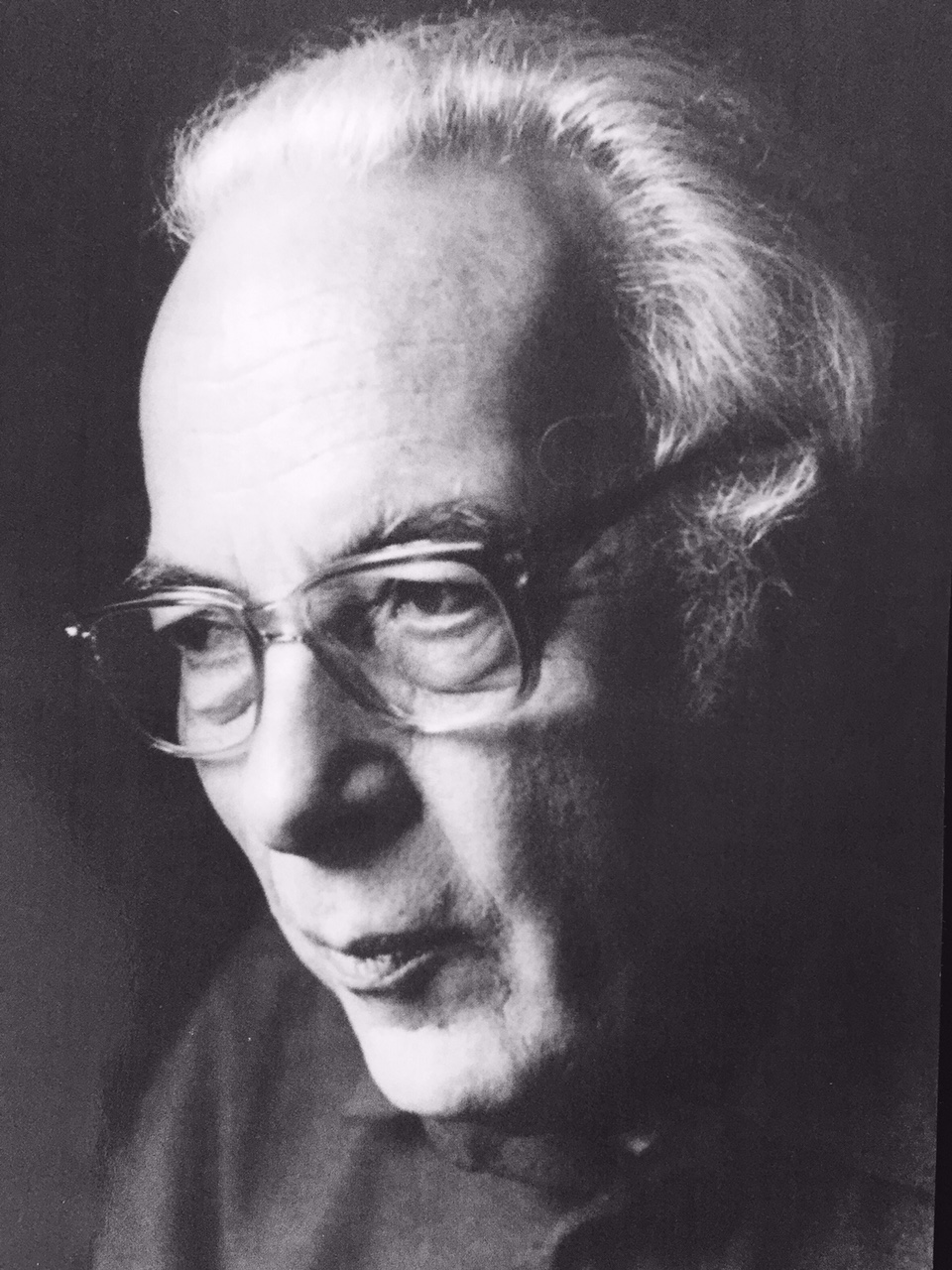
Peter Gammond (30 September 1925 – 6 May 2019) was a British music critic, writer, journalist, musician, poet, and artist.
Peter Gammond was born in Winnington, Northwich, Cheshire. The son of John Thomas Gammond (1892–1970), a clerk, and Margaret Heald (1898–1985), Gammond inherited his musical interests from his father, who was a skilful and well-known amateur cellist and instrument repairer.
After early preparatory school in Weaverham, where he lived from 1930 to 1950, he was educated at Sir John Deane's Grammar School, where he attained distinctions in English and Art in the Higher School Certificate examinations. He won a scholarship to Manchester College of Art, having at the time an ambition to be a cartoonist, but at the age of 18 in 1943 was called up and served in the Royal Armoured Corps as a tank driver mainly in the Far East and India, ending with the 25th Dragoons, which was involved in the Hindu-Muslim conflict prior to Indian independence in 1947.
Upon returning to civilian life in 1947 Gammond continued his studies at Wadham College, Oxford, until 1950, where he read English. While at Oxford, he became well known in literary circles as a poet, appearing in three editions of Oxford Poetry, and as a cartoonist and writer with Cherwell. As poetry editor of the university magazine, The ISIS, Gammond worked under editors R. J. Harvey, Alan Brien, Robert Robinson, and Derrick Cooper. Gammond appeared in Oxford Viewpoint, where a study of his poetry by Irving Wardle was also published. During his time at Oxford, he composed and produced an operetta, Love and Learning, and played trombone in a university jazz band led by John Postgate.
On leaving Oxford, Gammond worked for a time in a West Country pub and as a rates assessor in Willesden, before joining the publicity department of the Decca Record Company in 1952, as an editor and sleeve-note writer, which led to his liaising closely with some of the leading classical and operatic performers of the time. He left the company in 1960 to become a freelance writer, critic and author. From 1964, Gammond edited Gramophone Record Review, later known as Audio Record Review, and remained as Music Editor when this was later incorporated into Hi-Fi News, until 1980. He died in May 2019 at the age of 93.
Gammond's publications number over forty books, among them studies of Schubert, Mozart, Offenbach and record collecting. His oeuvre also includes volumes on jazz, ragtime and music hall, with biographical studies of Duke Ellington and Scott Joplin, and the Oxford Companion to Popular Music. Record sleevenotes, for virtually every record company of the day, accounted for a large percentage of his freelance work and total over three hundred. Gammond is particularly well known for his six contributions to the Bluffer’s Guides, including the best-selling Bluff Your Way in Music, which launched the series in 1966. So influential was his contribution in this area that The Times dedicated a leading article to Gammond on his death, celebrating the way in which 'the pioneer of talking off the top of your head enriched the national conversation'.
As editor of Audio Record Review, Gammond instigated the annual 'Audio Awards', later the Hi-Fi News & Record Review Audio Awards', for 'services to the gramophone', which were the first of their kind for many years; recipients included Sir Neville Marriner, Sir Peter Pears, Dame Joan Sutherland, and Dame Janet Baker. Gammond was a regular broadcaster for BBC Radio, contributing criticism to programmes on jazz, providing interval talks (for instance on Gilbert and Sullivan), and featuring in the BBC Radio 3 'Building a Library' in Record Review on Saturday mornings, for instance with his choice of recordings of operetta and Johann Strauss. He also had an extended slot on the BBC Radio 2 arts programme, Round Midnight and on Forces Broadcasting. Gammond served as the British representative on the annual panel of adjudicators for the Grand Prix du Disque at Montreux in the 1970s and 1980s.
Gammond was a prolific poet. He was long an admirer of John Betjeman and was a past Chairman (1997-2002) and a Vice-President (from 2010 to 2019) of The Betjeman Society, the journal of which (The Betjemanian) he edited from 1996 to 2006. Gammond's publications include a number of volumes and bibliographic studies on Betjeman, and he scripted and appeared in the award-winning video Betjeman's Britain and its sequel Betjeman's London.
Hub AI
Peter Gammond AI simulator
(@Peter Gammond_simulator)
Peter Gammond
Peter Gammond (30 September 1925 – 6 May 2019) was a British music critic, writer, journalist, musician, poet, and artist.
Peter Gammond was born in Winnington, Northwich, Cheshire. The son of John Thomas Gammond (1892–1970), a clerk, and Margaret Heald (1898–1985), Gammond inherited his musical interests from his father, who was a skilful and well-known amateur cellist and instrument repairer.
After early preparatory school in Weaverham, where he lived from 1930 to 1950, he was educated at Sir John Deane's Grammar School, where he attained distinctions in English and Art in the Higher School Certificate examinations. He won a scholarship to Manchester College of Art, having at the time an ambition to be a cartoonist, but at the age of 18 in 1943 was called up and served in the Royal Armoured Corps as a tank driver mainly in the Far East and India, ending with the 25th Dragoons, which was involved in the Hindu-Muslim conflict prior to Indian independence in 1947.
Upon returning to civilian life in 1947 Gammond continued his studies at Wadham College, Oxford, until 1950, where he read English. While at Oxford, he became well known in literary circles as a poet, appearing in three editions of Oxford Poetry, and as a cartoonist and writer with Cherwell. As poetry editor of the university magazine, The ISIS, Gammond worked under editors R. J. Harvey, Alan Brien, Robert Robinson, and Derrick Cooper. Gammond appeared in Oxford Viewpoint, where a study of his poetry by Irving Wardle was also published. During his time at Oxford, he composed and produced an operetta, Love and Learning, and played trombone in a university jazz band led by John Postgate.
On leaving Oxford, Gammond worked for a time in a West Country pub and as a rates assessor in Willesden, before joining the publicity department of the Decca Record Company in 1952, as an editor and sleeve-note writer, which led to his liaising closely with some of the leading classical and operatic performers of the time. He left the company in 1960 to become a freelance writer, critic and author. From 1964, Gammond edited Gramophone Record Review, later known as Audio Record Review, and remained as Music Editor when this was later incorporated into Hi-Fi News, until 1980. He died in May 2019 at the age of 93.
Gammond's publications number over forty books, among them studies of Schubert, Mozart, Offenbach and record collecting. His oeuvre also includes volumes on jazz, ragtime and music hall, with biographical studies of Duke Ellington and Scott Joplin, and the Oxford Companion to Popular Music. Record sleevenotes, for virtually every record company of the day, accounted for a large percentage of his freelance work and total over three hundred. Gammond is particularly well known for his six contributions to the Bluffer’s Guides, including the best-selling Bluff Your Way in Music, which launched the series in 1966. So influential was his contribution in this area that The Times dedicated a leading article to Gammond on his death, celebrating the way in which 'the pioneer of talking off the top of your head enriched the national conversation'.
As editor of Audio Record Review, Gammond instigated the annual 'Audio Awards', later the Hi-Fi News & Record Review Audio Awards', for 'services to the gramophone', which were the first of their kind for many years; recipients included Sir Neville Marriner, Sir Peter Pears, Dame Joan Sutherland, and Dame Janet Baker. Gammond was a regular broadcaster for BBC Radio, contributing criticism to programmes on jazz, providing interval talks (for instance on Gilbert and Sullivan), and featuring in the BBC Radio 3 'Building a Library' in Record Review on Saturday mornings, for instance with his choice of recordings of operetta and Johann Strauss. He also had an extended slot on the BBC Radio 2 arts programme, Round Midnight and on Forces Broadcasting. Gammond served as the British representative on the annual panel of adjudicators for the Grand Prix du Disque at Montreux in the 1970s and 1980s.
Gammond was a prolific poet. He was long an admirer of John Betjeman and was a past Chairman (1997-2002) and a Vice-President (from 2010 to 2019) of The Betjeman Society, the journal of which (The Betjemanian) he edited from 1996 to 2006. Gammond's publications include a number of volumes and bibliographic studies on Betjeman, and he scripted and appeared in the award-winning video Betjeman's Britain and its sequel Betjeman's London.
Recent media