Hubbry Logo
Peter PearsPeter PearsMain
Open search
Peter Pears
Community hub
Peter Pears
logo
8 pages, 0 posts
0 subscribers
Be the first to start a discussion here.
Peter Pears
Peter Pears
from Wikipedia

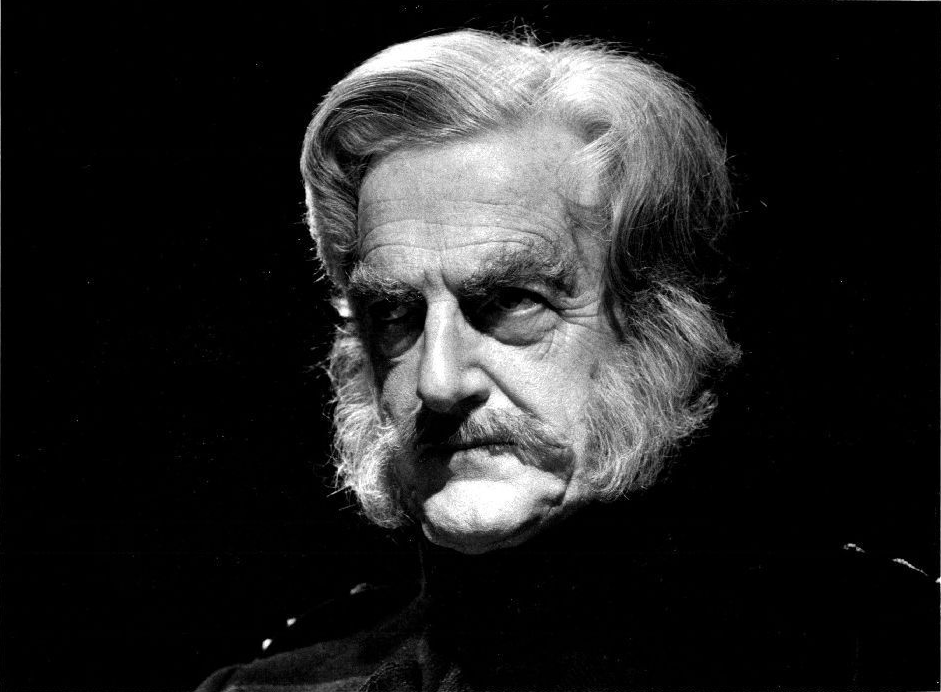
Sir Peter Neville Luard Pears CBE (/ˈpɪərz/ PEERZ; 22 June 1910 – 3 April 1986) was an English tenor. His career was closely associated with the composer Benjamin Britten, his personal and professional partner for nearly forty years.

Key Information

Pears' musical career started slowly. He was at first unsure whether to concentrate on playing piano and organ, or singing; it was not until he met Britten in 1937 that he threw himself wholeheartedly into singing. Once he and Britten were established as a partnership, the composer wrote many concert and operatic works with Pears's voice in mind, and the singer played roles in more than ten operas by Britten. In the concert hall, Pears and Britten were celebrated recitalists, known in particular for their performances of lieder by Schubert and Schumann. Together they recorded most of the works written for Pears by Britten, as well as a wide range of music by other composers. Working with other musicians, Pears sang an extensive repertoire of music from four centuries, from the Tudor period to the most modern times.

With Britten, Pears was a co-founder of the Aldeburgh Festival in 1947 and the Britten-Pears School in 1972. After Britten died in 1976, Pears remained an active participant in the festival and the school, where he was director of singing. His voice had a distinctive timbre, not to all tastes; however, critics recognised its uniqueness and ability to express atmosphere and nuance.

Life and career

[edit]

Early years

[edit]

Pears was born in Farnham, Surrey, the youngest of the seven children of Arthur Grant Pears and his wife, Jessie Elizabeth de Visme, daughter of Richard Luard.[1] Arthur Pears was a civil engineer and successful businessman, who spent much of his time working overseas. The biographers Christopher Headington and Donald Mitchell both remark on two contrasting strands in Pears's heredity: the Luard family was notable for its naval and military connections, and on his father's side there was a strong religious tradition, both Anglican and Quaker, with Elizabeth Fry counted among his ancestors.[2] Mitchell comments that Pears's lifelong pacifism stemmed from the Quaker side of the family, and adds, "There was indeed something of the patrician Quaker in his looks, manners, and deeds. His habitual charm and courtesy rarely deserted him."[3]

Although his father, and sometimes his mother, were absent abroad for long periods, Pears evidently had a happy childhood.[3] He enjoyed his schooldays at his prep school, The Grange, and his public school, Lancing College, which he attended from 1923 to 1928. He showed considerable talent for music, both as a pianist and as a singer, playing leading roles in school productions of Gilbert and Sullivan operas.[4] He was a capable and enthusiastic cricketer, and remembered all his life the pride he felt in scoring 81 not out in a trial match against Surrey at the Oval.[5] Lancing had a strong Christian tradition; while there, Pears felt a sense of vocation for the priesthood, but increasingly found this impossible to reconcile with his growing awareness of his homosexuality.[6]

In 1928 Pears went to Keble College, Oxford, to study music. He was not at this stage sure whether his musical future was as a singer or as player; during his brief time at the university, he was appointed temporary assistant organist at Hertford College, which was useful practical experience.[7] Headington comments that a musical conservatoire such as the Royal College of Music would have suited Pears better than the Oxford course, but at the time it was seen as a natural progression for an English public school boy to continue his education at Oxford or Cambridge. In the event Pears did not take to Oxford's academic regime, which required him to study a range of subjects before specialising in music. He failed the first-year examinations (Moderations) and though he was entitled to resit them he decided against doing so, and went down from Oxford.[7]

Teacher and singer

[edit]

With no clear idea of his future, Pears took a teaching post at his old preparatory school in 1929.[8] Among his dearest friends were the twins Peter Burra and Nell Burra; Peter was a close friend from Lancing days, and Nell looked on Pears as almost another brother.[9] She urged him not to drift into a lifetime of schoolmastering, and he concluded that his future lay in singing. He later said that it was hearing the tenor Steuart Wilson (a distant cousin) singing the Evangelist in J S Bach's St Matthew Passion that "started me off".[10] He successfully applied for admission to the Royal College of Music in London, first as a part-time student and then, having been awarded a scholarship, studying full-time from 1934. He shared an apartment with Trevor Harvey and Basil Douglas.[11] He appeared in student productions of opera, finding himself wholly at home on the stage, and learning from the experience of singing Delius under Sir Thomas Beecham and roles in works by Mozart and Puccini.[12] But, as at Oxford, he failed to complete the course. He chafed at subsisting on a student's limited funds, and wanted a good, steady income. He auditioned for the BBC and was given a two-year contract as a member of the BBC Singers, a small vocal ensemble.[13]

In 1936 Pears made his first recording as a soloist, in Peter Warlock's "Corpus Christi Carol".[14] Headington comments on "a thoughtful word delivery and a sensitive moulding of quietly flowing phrases, but also a certain whiteness of tone ... a kind of English cathedral sound."[15] In the same year, after Peter Burra was given a long-term loan of a cottage on Bucklebury Common, Berkshire, Pears began to stay with him regularly, and it was through Burra that he got to be friendly with the rising young composer Benjamin Britten, who had become another good friend of Burra's. In 1937 Burra was killed in an air crash. Pears and Britten volunteered to clear his possessions from the cottage, and their daily contact during this period cemented their friendship.[16] Pears quickly became Britten's musical inspiration and close (though for the moment platonic) friend. Britten's first work for him was composed within weeks of their meeting, a setting of Emily Brontë's poem, "A thousand gleaming fires", for tenor and strings.[17]

Up to this point Pears had not pursued his career or his vocal training with any great determination. With the stimulus of Britten's music written for him he became much more focused. After their deaths John Amis wrote that Britten would have become a great composer without Pears, but that Pears would probably not have become a great singer without Britten.[18] Pears took vocal lessons from the eminent Lieder singer Elena Gerhardt, but they were of limited help to him, and it was some time before he found a wholly suitable voice coach.[19] In 1938 he had his first professional experience of opera, as an understudy and member of the chorus at Glyndebourne.[20]

America and wartime

[edit]
Britten, photographed in the 1960s

In April 1939, Pears accompanied Britten as he sailed to North America, going first to Canada and then to New York. Their relationship ceased to be platonic, and from then until Britten's death they were partners in both their professional and personal lives.[21] When the Second World War began, Britten and Pears turned for advice to the British embassy in Washington and were told that they should remain in the US as artistic ambassadors.[22] Pears was inclined to disregard the advice and go back to England; Britten also felt the urge to return, but accepted the embassy's counsel and persuaded Pears to do the same.[22]

In 1940 Britten composed Seven Sonnets of Michelangelo, the first of many song cycles for Pears.[23] The composer and biographer David Matthews described the cycle as Britten's "declaration of love for Peter".[24] The partners made a private recording of the work in New York shortly after it was completed, but the public premiere was not for a further two years.[25] In 1941, spurred by a magazine article by E M Forster about the Suffolk poet George Crabbe, Pears bought Britten a copy of Crabbe's collection of narrative poems The Borough. He suggested to Britten that the section about the fisherman Peter Grimes would make a good subject for an opera. Britten agreed, and, a Suffolk man himself, was struck with a deep nostalgia by the poem. He later said, "I suddenly realised where I belonged and what I lacked". He and Pears began to plan their return to England.[26] They made the perilous Atlantic crossing in April 1942.[27]

Having arrived in England, Britten and Pears successfully applied for official recognition as conscientious objectors, Pears's application running much more smoothly than Britten's.[28] One of their early performances together after their return was the public premiere of the Michelangelo cycle at the Wigmore Hall in September 1942.[29] Their recording of the work for HMV was released in February 1943.[30] Britten was by now so obsessed with the sound of Pears's "heavenly voice" that he went out of his way to discourage sopranos from singing his earlier song cycle, Les Illuminations, though it had been specifically composed for the soprano voice.[31] For Pears, Britten composed one of his most popular works, the Serenade for Tenor, Horn and Strings (1943).[32]

In early 1943 Pears joined Sadler's Wells Opera Company. His roles included Tamino in The Magic Flute, Rodolfo in La bohème, the Duke in Rigoletto, Alfredo in La traviata, Almaviva in The Barber of Seville, Ferrando in Così fan tutte and Vašek in The Bartered Bride.[33] His growing operatic experience and expertise affected the composition of Britten's opera Peter Grimes. The composer had envisaged the central figure, based on Crabbe's brutal fisherman, as a villainous baritone, but he began to rethink the character as "neither a hero nor a villain" and not a baritone but a tenor, written to fit Pears's voice. In January 1944 Britten and Pears began a long association with the Decca Record Company, recording four of Britten's folk song arrangements.[14] In May of the same year, with Dennis Brain and the Boyd Neel Orchestra, they recorded the Serenade.[14]

Peter Grimes and English Opera Group

[edit]

As the war was nearing its end, the artistic director of Sadler's Wells, the singer Joan Cross, announced her intention to re-open the company's home base in London with Britten's new opera Peter Grimes, casting herself and Pears in the leading roles.[n 1] There were complaints from company members about supposed favouritism and the "cacophony" of Britten's score, as well as some ill-suppressed homophobic remarks.[35] Peter Grimes opened in June 1945 and was hailed by public and critics.[36] Most of the extensive press coverage was to do with the work, but there was also high praise for the performances of Pears and Cross.[36] Dismayed by the in-fighting among the company, Cross, Britten and Pears severed their ties with Sadler's Wells in December 1945, going on to found what was to become the English Opera Group.[37]

Britten's next opera, The Rape of Lucretia, was presented at the first post-war Glyndebourne Festival, in 1946. It was a chamber piece for eight singers and an orchestra of twelve players. Pears and Cross were the Male and Female Chorus, with Kathleen Ferrier as Lucretia. After the festival, the work was taken on tour to provincial cities under the banner of the "Glyndebourne English Opera Company", an uneasy alliance of Britten and his associates with John Christie, the autocratic proprietor of Glyndebourne.[38] The tour lost money heavily, and Christie announced that he would underwrite no more tours.[39] Britten and his associates set up the English Opera Group; the librettist Eric Crozier and the designer John Piper joined Britten as artistic directors. The group's express purpose was to produce and commission new English operas and other works, presenting them throughout the country.[40] Britten wrote the comic opera Albert Herring for the group in 1947. Pears played the title role – one of his fairly rare excursions into comedy. Reviews of the opera were mixed, but Pears's performance as Albert, the mother's boy who kicks over the traces, received consistently good notices.[41]

Aldeburgh

[edit]

While on tour as Albert, Pears came up with the idea of mounting a festival in the small Suffolk seaside town of Aldeburgh. Britten had bought a house there, and the town was his principal residence for the rest of his life.[42] The Aldeburgh Festival was launched in June 1948, with Britten, Pears and Crozier directing it.[43] For the inaugural festival, Albert Herring played at the Jubilee Hall, and Britten's new cantata Saint Nicolas, was presented in the parish church, with Pears as the tenor soloist.[44] The festival was an immediate success and became an annual event that has continued into the 21st century.[45]

New works by Britten featured in almost every festival until his death in 1976. They included operas in which leading roles were created by Pears, and written with his voice in mind. They ranged from the comic (Flute in A Midsummer Night's Dream, 1960) to the deeply serious (Aschenbach in Death in Venice, 1973).[46] His other creations at Aldeburgh included the Madwoman in Curlew River (1964), Nebuchadnezzar in The Burning Fiery Furnace (1966) and the Tempter in The Prodigal Son (1968).[47]

For the English Opera Group during the 1950s, Pears also sang Macheath in Britten's radically revised version of The Beggar's Opera, Satyavān in Holst's Sāvitri, and the title role in Mozart's Idomeneo.[47] At Covent Garden he created roles in operas by Britten and Walton: Vere in Billy Budd (1951), Essex in Gloriana (1953), and Pandarus in Troilus and Cressida (1954). Among his roles in older operas were Tamino, Vašek, and David in Die Meistersinger von Nürnberg.[47]

Throughout the 1940s and 1950s Pears continually expanded his recital and concert repertoire. He sang his first Gerontius in 1944, and the tenor part in Das Lied von der Erde in the same year. From the late 1940s he gained an international reputation as the Evangelist in the St Matthew Passion.[48] The music critic David Cairns wrote, "Pears's interpretation of the evangelist's part in the Bach Passions seemed complete as no other singer's: it encompassed every turn in the drama, the pity, the anger, the despair, the resignation."[49] In Lieder by Schubert, Schumann and others he was almost always accompanied by Britten, a partnership that Headington calls "as nearly an artistic unity as could be imagined";[50] Cairns calls their Lieder performances "never to be forgotten".[49] They made recordings for Decca of Die schöne Müllerin, Winterreise and Dichterliebe that have remained in print since their first issue in the 1960s.[14]

Later years

[edit]

Among the highlights of Pears's career in the 1960s was the premiere of Britten's War Requiem in May 1962, marking the consecration of the new Coventry Cathedral. Britten composed it with the voices of Pears, Dietrich Fischer-Dieskau and Galina Vishnevskaya in mind. The Soviet authorities prevented Vishnevskaya from taking part (Heather Harper deputised) but in January 1963 all three intended soloists took part in a Decca recording conducted by Britten, which unexpectedly became a bestseller.[51] As well as his performing partnership with Britten, Pears established another with Julian Bream, who, as a lutenist, accompanied him in many works, most notably those of English composers of the Tudor period.[3]

Pears and Britten maintained an arduous international touring schedule, and made many broadcasts and gramophone recordings. In the 1970s Pears created roles in Britten's last two operas, playing General Wingrave in Owen Wingrave recorded at Aldeburgh for its premiere, which was on BBC television, and Aschenbach in Death in Venice (1973).[47] It was in the latter role that Pears made his debut at the Metropolitan Opera, New York, at the age of 64.[49]

Following Britten's death in 1976, Pears had the good fortune to find another accompanist with whom he could collaborate fruitfully. With Murray Perahia, Pears gave performances of such works as Britten's Michelangelo Sonnets and Schumann's Liederkreis to critical acclaim.[49] He continued to perform until a stroke ended his singing career in 1980 shortly after the celebrations marking his seventieth birthday. After that he remained an active director of the Aldeburgh Festival, and taught at the Britten-Pears School which he and his partner had set up in 1972.[3]

Pears's grave in St Peter and St Paul's Church, Aldeburgh, Suffolk

Pears died in Aldeburgh on 3 April 1986 at the age of 75. He was buried beside Britten in the churchyard of the parish church of St Peter and St Paul, Aldeburgh.[3]

Voice

[edit]

Pears's voice was both unmistakable and controversial. Some music-lovers found his characteristic timbre uncongenial.[3] The critic Alan Blyth described it thus:

Clear, reedy and almost instrumental in quality, it was capable of great expressive variety and flexibility, if no wide range of colour. Its inward, reflective timbre, tinged with poetry, was artfully exploited by Britten, from the role of Peter Grimes to that of Aschenbach, but the voice could also be commanding, almost heroic, as was shown in the more vehement sections of Captain Vere's role or in the part of the Madwoman in Curlew River.[47]

David Cairns broadly concurred, writing:

His voice … was not beautiful in itself; its reedy timbre was so idiosyncratic that for some people it came between them and the music. Even his countless admirers might have agreed that, objectively considered, it lacked warmth and variety of colour. But so great was his skill and so subtle and imaginative his musical sensitivity and mastery of inflection that it conveyed, together with his air of patrician authority, an extraordinary richness of atmosphere and feeling.[49]

Honours and awards

[edit]

Pears was awarded honorary degrees or fellowships by three music academies and nine universities in the UK and US.[52] He was appointed a Commander of the Order of the British Empire (CBE) in 1957, and knighted in 1978.[52] Other awards included the Queen's Jubilee Medal, 1977, Musician of the Year, Incorporated Society of Musicians, 1978, and the Royal Opera House's Long Service Medal, 1979.[52]

Recordings

[edit]

For Decca, Pears recorded almost all the music written for him by Britten. The major exception is the role of the Earl of Essex in Gloriana, which was not recorded until after Britten and Pears were dead.[14] Pears's other Decca recordings range from early music by Dowland, Schütz and their contemporaries to Walton's Façade, and include such varied repertory as the Emperor in Puccini's Turandot, the title role in Stravinsky's Oedipus Rex, and the tenor part in Berlioz's L'enfance du Christ.[14] His recordings for other companies include the role of the Evangelist in Bach's St Matthew Passion (Otto Klemperer's 1961 EMI version), the tenor part in the same composer's Mass in B minor and Fauré's La bonne chanson.[53]

Notes and references

[edit]

Sources

[edit]
[edit]
Revisions and contributorsEdit on WikipediaRead on Wikipedia
from Grokipedia

Sir Peter Pears (22 June 1910 – 3 April 1986) was an English whose vocal career was defined by his close collaboration with composer , creating the principal tenor roles in nearly all of Britten's operas and serving as the for much of his vocal output. Born in , , Pears studied at the Royal College of Music and met Britten in 1937, forming a partnership that lasted until Britten's death in 1976 and encompassed both artistic endeavors and personal companionship. Pears premiered roles such as the title character in (1945), Captain Vere in (1951), and Aschenbach in Death in Venice (1973), works composed expressly to suit his light, lyrical voice and precise diction. Beyond Britten's repertoire, he excelled in interpretations of Bach's Evangelist in the and Elizabethan songs, often partnering with guitarist . Knighted in 1978 for his contributions to music, Pears co-founded the in 1948 with Britten, where he performed annually until health issues curtailed his stage appearances in later years.

Early Life

Family and Childhood

Peter Pears was born Peter Neville Luard Pears on 22 June 1910 in , , . He was the youngest of seven children born to Arthur Grant Pears, a dental surgeon, and his wife Jessie Elizabeth De Visme Pears. The family was religiously devout, with Pears' upbringing influenced by Anglican traditions. Pears' siblings included sisters Dorothy Prudence Jessie Pears and Cecily Rosamond Pears, among others not fully documented in primary records. His early childhood was spent in , where family life centered on professional stability provided by his father's dental practice and domestic routines typical of middle-class Edwardian . From a young age, Pears participated in amateur theatrical performances within the family and local community, fostering an initial interest in performance arts. He attended preparatory school at The Grange near , , before entering , a public school in , around age 13. It was at Lancing that Pears' musical inclinations became evident, as he engaged in choral activities and organ playing, though his voice had not yet fully developed into its tenor range. These experiences laid the groundwork for his later professional pursuits, distinct from any formal family tradition in music.

Education and Musical Training

Pears developed an early interest in during his time at in . In 1928, he enrolled at , to pursue musical studies, initially uncertain whether to focus on singing or instrumental performance, but he departed after failing his first-year examinations. Following this, Pears taught , Latin, , and history at a boys' preparatory school while undertaking part-time vocal training. In 1934, he entered the Royal College of Music full-time on an scholarship, studying voice under Dawson Freer in a period of training that proved brief yet formative for his development. During his time there, Pears performed in student productions, including Frederick Delius's A Village and works by . He continued private study afterward with the German Elena Gerhardt, refining his lieder and operatic technique. These experiences equipped him with a versatile command of repertoire, emphasizing clarity and expressiveness suited to English art song and revival.

Professional Beginnings

Teaching Career

Pears briefly pursued teaching following his education at . In 1929, he accepted a position at his former preparatory school, The Grange in , where he instructed pupils in music, Latin, , and history. This role served as a provisional occupation amid uncertainty about his professional direction in music. His involvement in musical pedagogy commenced earlier than his primary performing commitments might suggest. As early as 1951, Pears delivered instruction at in , under the auspices of Imogen Holst's arts program, marking an initial foray into specialized music teaching. In his later career, following partial retirement from stage performances, Pears focused extensively on education through the institutions he co-established with . He co-founded the Britten Pears Young Artist Programme in 1972, aimed at early-career professionals, where he actively coached emerging singers in vocal technique and interpretation. This initiative, rooted at The Red House in , emphasized intensive masterclasses and mentorship, reflecting Pears's commitment to nurturing the next generation of musicians. He sustained this teaching activity at the Britten-Pears School for Advanced Music until his death, maintaining a rigorous schedule of guidance despite advancing age and health challenges.

Initial Singing Engagements

Pears commenced his professional singing career in 1934 as a tenor with the BBC Singers, a salaried choral ensemble dedicated to broadcasting performances of contemporary and classical vocal works for the BBC. He contributed to numerous radio concerts and recordings with the group until 1937, honing his ensemble skills in a cappella and accompanied repertoire. In 1936, Pears expanded his engagements by joining the New English Singers, a professional quartet specializing in unaccompanied English choral music, including madrigals and folk arrangements. That year, the ensemble undertook an extensive tour of the and , performing in major cities such as New York and presenting programs that showcased British vocal traditions to North American audiences. Also in 1936, on June 24, Pears recorded his first solo track at Decca's studios, singing Peter Warlock's alongside contralto , marking his entry into commercial discography with a focus on lyrical, introspective lieder-style interpretation. These early choral and recording commitments preceded Pears's shift toward solo recitals and , with his operatic debut occurring in 1942 as Hoffmann in Offenbach's Les contes d'Hoffmann at a theater, prior to his formal association with Sadler's Wells Opera Company in 1943.

Partnership with Benjamin Britten

Meeting and Wartime Exile

Pears and Britten first met in 1937 through their mutual friend Peter Burra, with their initial recorded encounter occurring at a dinner on 30 April hosted by Basil Douglas shortly after Burra's funeral. This introduction marked the beginning of a close personal and professional association, as Britten began accompanying Pears in performances and composing songs suited to his light, lyrical tenor voice. In May 1939, Pears joined Britten on a transatlantic voyage to aboard the SS Ausonia, departing for professional opportunities including a commission from the Broadcasting Corporation and connections with in New York. Arriving first in before relocating to the , they initially traveled as colleagues and friends, but their bond deepened into a romantic partnership during this period. Britain's declaration of war on on 3 September 1939 found them already abroad, and Britten—holding pacifist convictions and registering as a —opted to extend their stay rather than return amid escalating conflict. The pair settled in New York initially, sharing quarters with Auden and others in bohemian circles, before moving to quieter locales on , including Southold, where Britten immersed himself in American influences and composed early works for Pears, such as the Seven Sonnets of (1940), his first dedicated to the . Their American exile, lasting nearly three years, allowed Britten to experiment freely away from wartime disruptions in Britain, though it drew criticism back home for perceived avoidance of national duty. By early 1942, Britten, viewing newsreels of bombings devastating English cities like , experienced a profound shift, feeling drawn to return despite his opposition to war and contribute through anti-war compositions rooted in his . They departed the U.S. in April aboard the Axel Johnson, arriving in on 17 April 1942; during the crossing, Britten finalized , a work evoking themes of peace amid hardship. This reoriented their careers toward rebuilding British musical life, though Britten's experiences abroad had indelibly shaped his style and their collaborative dynamic.

Key Collaborations and Peter Grimes

Peter Pears' most significant collaborations with centered on vocal and operatic works composed specifically for his tenor voice, which featured a light, lyrical quality suited to Britten's intricate melodic lines and dramatic demands. Their partnership produced numerous song cycles, including the Seven Sonnets of (Op. 22, premiered 1942) and the Holy Sonnets of (Op. 35, 1945), where Pears' interpretive subtlety highlighted Britten's settings of introspective poetry. In orchestral song cycles like the Serenade for Tenor, Horn and Strings (1943), Pears premiered the tenor part, emphasizing Britten's fusion of Elizabethan texts with modern orchestration. The opera (1945) epitomized their creative synergy, with Britten crafting the title role for Pears following their wartime discussions on George Crabbe's poem The Borough. Pears premiered the character on June 7, 1945, at in , portraying the misunderstood fisherman as a tormented outsider whose psychological depth drew from Pears' own vocal agility and emotional range. The production, directed by Eric Crozier with by Montagu Slater, marked Britten's breakthrough in opera and established Pears as a leading interpreter of anti-heroic roles, influencing subsequent revivals. Beyond Grimes, Pears created principal tenor roles in Britten's operas such as Captain Vere in Billy Budd (1951 premiere) and Aschenbach in Death in Venice (1973), roles that exploited his ability to convey intellectual vulnerability and moral ambiguity. These collaborations extended to recordings and performances that preserved Britten's scores, with Pears' voice integral to their authentication and dissemination.

Aldeburgh Festival and English Opera Group

In 1948, Peter Pears and co-founded the of Music and the Arts in the coastal town of , establishing it as an annual event beginning on 5 June with a program of , choral works, lectures, and exhibitions held in local venues such as the Aldeburgh Cinema and Jubilee Hall. Pears served as joint alongside Britten, curating performances that emphasized contemporary British composition and international influences, while frequently taking principal roles in premieres and revivals of Britten's operas and song cycles. The festival's intimate scale and focus on high-quality, innovative programming distinguished it from larger events, with Pears' interpretations—such as in Britten's Serenade for Tenor, Horn and Strings (1943)—becoming hallmarks of its early seasons. Complementing the festival, Pears and Britten helped establish the English Opera Group in 1947 with librettist Eric Crozier and designer John Piper, forming a touring ensemble dedicated to producing chamber operas by British composers, starting with the 1946 premiere of Britten's , in which Pears sang the role of Male Chorus. The group, limited to eight singers and a reduced of 12 players, aimed to foster a native English tradition amid post-war cultural revival, staging works like Albert Herring (1947) and The Little Sweep (1949) with Pears in leading parts such as the Narrator and shut-in child rescuer respectively. Integrated into the from its inception, the English Opera Group's productions provided a core of accessible, site-specific performances that highlighted Pears' clear diction and interpretive depth in advancing Britten's dramatic archetypes. By the 1950s, these efforts had solidified the festival's reputation for nurturing opera innovation, with Pears continuing to perform annually until health constraints in the 1970s.

Later Career

International Tours and Roles

Pears and Britten undertook several international tours together, often featuring performances of Britten's compositions alongside works by Purcell and other English composers. These tours included visits to and , where they presented recitals and operatic excerpts tailored to Pears's voice. In 1947, during an English Opera Group tour of European festivals between the and festivals, Pears suggested establishing their own festival in , which materialized the following year. Pears's operatic roles abroad emphasized characters from Britten's operas, leveraging his interpretive depth in those parts. He debuted at the in New York on October 18, 1974, as Gustav von Aschenbach in Death in Venice, a role Britten had composed for him in ; this American premiere highlighted Pears's ability to convey the protagonist's introspective decline despite his advancing age of 64. Pears also appeared at the and other continental venues, performing Britten roles that showcased his clear, unforced tone and narrative phrasing. Throughout the and , Pears's travel records indicate ongoing European engagements and further North American visits, sustaining his global reputation through collaborations that prioritized Britten's vocal writing over traditional repertory. These activities, documented in Pears's diaries spanning 1936 to 1978, reflect a career arc focused on authentic interpretations rather than vocal , influencing international perceptions of British opera.

Final Performances and Retirement

Pears's final major operatic role was as Gustav von Aschenbach in Benjamin Britten's , which premiered at the on June 16, 1973, and which he reprised at the in New York from November 18 to December 20, 1974. This performance, conducted by Steuart Bedford, marked one of his last appearances on the operatic stage, as Pears, then aged 64, expressed intentions to reduce engagements while planning further recitals and sabbaticals for vocal preservation. Following Britten's death in 1976, Pears continued select concert and recital work into his late 60s and early 70s, including appearances at the and international venues, often featuring Britten's song cycles tailored to his light, lyrical tenor. By 1980, at age 70, he began contemplating retirement amid vocal strain and health concerns, though he remained ambivalent about fully ceasing performances. Pears effectively retired from public performing in 1980 after suffering a , which curtailed his career. Post-retirement, he directed singing studies at the Britten-Pears School in , mentoring young artists and promoting Britten's works until his death in 1986, thereby shifting focus from performance to education and legacy preservation.

Vocal Characteristics and Reception

Technical Qualities

Peter Pears's voice featured a distinctive, reedy often described as bright and idiosyncratic, setting it apart from more conventional operatic . This quality lent itself to nuanced expression in chamber and repertoire but limited its projection in larger theatrical settings, with critics noting a modest volume and amplitude that prioritized purity over dramatic heft. His tone remained consistently clear and unmarred by metallic even in the upper register, which was unusually strong relative to the rest of his range—a rarity among whose power typically resides lower. Technically, Pears demonstrated precise intonation and exceptional , enabling meticulous word-painting that emphasized textual intelligibility over vocal display. His passages employed a distinctive, agile approach suited to Britten's idiomatic writing, though lacking the robust flair of Italianate specialists. Vocal production evolved across his career, from a lighter, recital-oriented style in —honed through private study with teachers like Tiana Lemnitz—to greater dramatic adaptability by the , accommodating the exposed, high-lying lines Britten crafted specifically for his capabilities. However, sustained notes could occasionally waver, particularly as age advanced, reflecting a technique optimized for interpretive rather than unyielding stamina or breadth. This profile rendered his voice ill-suited to heavyweight Verdi or Puccini roles, confining its operatic viability to character parts requiring subtlety over sonic dominance.

Critical Evaluations and Influence

Critics have consistently evaluated Peter Pears' voice as possessing a modest but , characterized by flawless , true intonation, and exceptional musical intelligence, which elevated his interpretations beyond mere vocal prowess. While lacking the power, amplitude, and broader palette of more robust tenors, these attributes allowed him to excel in nuanced, character-driven roles, particularly those crafted by . Live performances highlighted a fresh, well-defined steadiness, as in his 1945 portrayal of Rodolfo in , but recordings often amplified perceived weaknesses, such as a pale and beat, leading some to question its conventional production. Pears was widely acknowledged as the pre-eminent English of the mid-20th century, with success extending to non-Britten , including Pandarus in William Walton's (1954 premiere) and David in Richard Wagner's . His recitals, such as Schubert's , demonstrated interpretive subtlety and naturalness, though his light, specialized timbre limited suitability for heroic roles beyond select character parts like the aged in Ferruccio Busoni's Doktor Faust. Pears profoundly influenced Britten's compositional output, inspiring vocal lines in works like the Seven Sonnets of (1940), (1945), and (1973), which were tailored to his reedy , range, and expressive style, often through direct collaboration on librettos and phrasing. As co-founder of the in 1948 alongside Britten and Eric Crozier, and later as its artistic director following Britten's death in 1976, he elevated British opera and song cycles on the global stage. His establishment of the Britten-Pears School for Advanced Music Studies in 1972 further extended his legacy, mentoring singers and setting interpretive benchmarks for Britten's oeuvre that remain authoritative.

Personal Life

Relationship with Britten

Peter Pears and consummated their romantic relationship in 1939 during their wartime stay , forming a committed partnership that lasted until Britten's death on December 4, 1976. This 37-year union was marked by profound personal devotion, with the two men sharing a and daily life, often referring to their bond as a private "marriage" in correspondence. Their homosexual relationship remained undisclosed publicly during Britten's lifetime, owing to the illegality of such acts in Britain until partial decriminalization via the , which applied only to men over 21 in . Surviving letters, totaling 365 and published posthumously in 2016 as My Beloved Man: The Letters of and Peter Pears, reveal intimate endearments such as "honey buns" and expressions of longing during separations caused by professional travel. Britten explicitly directed biographer Donald Mitchell to affirm the authenticity of their partnership, emphasizing a desire for historical clarity beyond professional collaboration. The partnership's endurance reflected mutual emotional and intellectual compatibility, sustained amid legal perils and societal stigma, with Pears continuing to honor Britten's memory at their shared home until his own death in 1986.

Health Issues and Death

In late 1980, shortly after celebrations for his seventieth birthday, Pears suffered a that ended his professional singing career. Despite this, he remained involved in musical education and administration, including teaching at the Britten-Pears School in . Pears died on 3 April 1986 at The Red House in , , at the age of 75, from a heart attack. He was buried in the churchyard of St Peter and St Paul's Church, , alongside .

Controversies and Criticisms

Associations with Britten's Personal Interests

Peter Pears demonstrated awareness and tolerance of Benjamin Britten's longstanding attraction to adolescent boys, a pattern documented through Britten's correspondence, diaries, and relationships with young male musicians and pupils spanning from onward. As Britten's partner from until the composer's in , Pears shared households in locations such as Snape and where these boys frequently visited or stayed, including figures like and Harry Morris in the 1950s and . Pears occasionally voiced discomfort, as noted in accounts of tensions over "younger house guests" disrupting their , yet he did not publicly challenge or seek to curtail Britten's pursuits, prioritizing the stability of their personal and professional bond. John Bridcut's 2006 analysis in Britten's Children, based on interviews with Britten's former young associates and archival materials, portrays Pears as complicit through acquiescence, with their relationship enduring strains from Britten's "fascination with teenage boys" despite Pears' reservations. Bridcut highlights instances where Pears was present during Britten's intimate interactions, such as shared vacations or rehearsals involving boys aged 11 to 17, but concludes no evidence of Pears' own sexual involvement, framing his role as one of resigned enablement amid mid-20th-century cultural reticence on such matters. Critics of this view, including some former associates, argue Pears' silence extended to potential cover-ups, as boys reported feeling groomed or emotionally manipulated under the couple's joint auspices, though Bridcut emphasizes Britten's actions as driven by emotional rather than predatory intent. Post-Britten, Pears' establishment of the Britten-Pears Foundation in 1977 perpetuated associations with individuals sympathetic to pedophilic interests, notably Peter Righton, a convicted and co-founder of the . Righton's diaries record social contacts with both Britten and Pears dating to the , including visits to their home, and he later advised on youth programs linked to the Foundation's educational initiatives at Snape Maltings. While Pears died in 1986 before Righton's 1980s conviction, the overlap underscores a broader network of tolerance within their circle for views normalizing adult-youth intimacies, as evidenced by Righton's unpublished writings praising Britten's affinity for boys.

Artistic and Ethical Critiques

Peter Pears' voice was often critiqued for its light lyric quality and limited dramatic power, which some reviewers found insufficient for broader operatic beyond roles composed specifically for him. His , described as distinctive yet not universally appealing, featured an uneven that recordings tended to exaggerate, alongside occasional acidic tones and strained projection, particularly in sustained notes or later career performances. Despite these technical shortcomings, critics acknowledged Pears' strengths in precise and nuanced phrasing, which aligned closely with Benjamin Britten's writing but raised questions about whether his prominence derived more from with the composer than independent vocal excellence. Ethically, Pears has faced retrospective scrutiny for his role in managing Britten's documented attractions to adolescent boys, functioning as both partner and chaperone in arrangements that permitted ongoing contact while imposing limits. Biographies detail how Pears oversaw these interactions, welcoming select youths into their circle but monitoring boundaries, a dynamic portrayed as enabling rather than deterring Britten's pursuits amid mid-20th-century social constraints on and pedophilic tendencies. This , evident in letters and accounts from the era, has been criticized as morally ambiguous, prioritizing personal loyalty and artistic collaboration over intervention, especially given Pears' awareness of Britten's early-life experiences potentially shaping such patterns. Such critiques, drawn from archival evidence rather than contemporary accusations, highlight tensions between private and public legacy in their intertwined lives.

Honours and Legacy

Awards and Recognitions

Pears was appointed Commander of the (CBE) in the 1957 for services to music. He received a knighthood in the 1978 , thereafter known as Sir Peter Pears, again recognizing his contributions to music. In addition to these official British honours, Pears was awarded honorary Doctor of Music degrees by multiple universities, including the in 1980, the in 1981, the , the , and the . He also received fellowships from three leading music academies and further honorary degrees from six other universities in the United Kingdom and the .

Enduring Impact and Recent Developments

Pears' interpretations of Benjamin Britten's tenor roles, including the title character in Peter Grimes (premiered 1945) and Aschenbach in Death in Venice (premiered 1973), established interpretive benchmarks that subsequent singers reference, with his recordings—such as the Serenade for Tenor, Horn and Strings with Dennis Brain and Barry Tuckwell—preserving vocal qualities of naturalness, clarity, and emotional depth tailored to Britten's writing. His advocacy for English-language opera and song recitals influenced the repertoire's integration into international stages, as evidenced by the global staging of Britten's works post-1945. As co-founder and artistic director of the from its inception in 1948 until 1986, Pears shaped its focus on , community engagement, and artist development, a model sustained by , which maintains The Red House (opened publicly in 1980) as a research center for Britten's manuscripts and Pears' papers. He co-established the Britten-Pears School for Advanced Music Studies in the 1970s, evolving into the Britten Pears Young Artist Programme, which has trained over 500 emerging musicians since 1972, fostering vocal and instrumental skills in Britten's oeuvre. In recent years, has digitized portions of the archive, including Pears' correspondence and scores, enhancing scholarly access to his interpretive process. The 76th in June 2025 utilized the Peter Pears Recital Room for performances by alumni of the Young Artist Programme, alongside world premieres echoing the festival's founding ethos of innovation and accessibility. Ongoing exhibitions at The Red House, such as those highlighting Pears' art collection amassed from the , underscore his broader cultural influence beyond performance.

References

Add your contribution
Related Hubs
User Avatar
No comments yet.