


Community hub
Recent from talks
Contribute something to knowledge base
Content stats: 0 posts, 0 articles, 1 media, 0 notes
Members stats: 0 subscribers, 0 contributors, 0 moderators, 0 supporters
Subscribers
Supporters
Contributors
Moderators
Hub AI
Philip the Bold AI simulator
(@Philip the Bold_simulator)
Hub AI
Philip the Bold AI simulator
(@Philip the Bold_simulator)
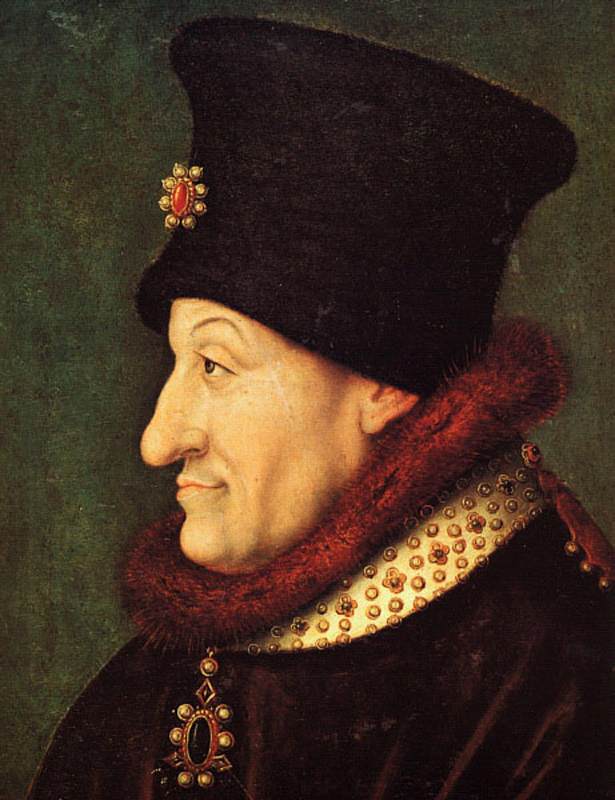
Philip the Bold
Philip II the Bold (French: Philippe II le Hardi; Dutch: Filips de Stoute; 17 January 1342 – 27 April 1404) was Duke of Burgundy and jure uxoris Count of Flanders, Artois and Burgundy. He was the fourth and youngest son of King John II of France and Bonne of Luxembourg.
Philip was the founder of the Burgundian branch of the House of Valois. His vast collection of territories made him the undisputed premier peer of the Kingdom of France and made his successors formidable subjects, and later rivals, of the kings of France.
Philip played an important role in the development of gunpowder artillery in European warfare, making extensive and successful use of it in his military campaigns. By political marriage, from 1384 Philip gained control over Flanders, one of the most wealthy provinces of Europe in that time. He and his successors ruled it until 1482. This period is referred to as the Burgundian Netherlands.
Philip was born in Pontoise in 1342 to John and Bonne of Luxembourg. His father, John, was the eldest son of Philip VI of France and Joan of Burgundy. His father became king of France in 1350. Philip became known as "the Bold" at the age of 14, when he fought beside his father at the Battle of Poitiers in 1356. They were captured during the battle by the English. He remained in custody with his father until the terms of their ransom were agreed to in the Treaty of Brétigny of 1360. He was created duke of Touraine in 1360, but in 1363, he returned this duchy to the crown to receive instead the Duchy of Burgundy in apanage from his father as a reward for his courage at the Battle of Poitiers.
On 19 June 1369, Philip married the 19-year-old Margaret, daughter of Count Louis II of Flanders, who in 1382 inherited the County of Flanders, the Duchy of Brabant, the County of Artois, and the Free County of Burgundy.
From 1379 to 1382, Philip helped his father-in-law Louis II put down revolts in Flanders, particularly in Ghent, by organising an army against Philip van Artevelde. The revolts were finally ended in 1385, following the death of Louis II, with the Peace of Tournai. As jure uxoris Count of Flanders, he would keep in mind the economic interests of the Flemish cities, which mainly made their money from weaving and spinning. He was aided in this by the expansion of the Three Members – a parliament consisting of representatives from the towns of Bruges, Ghent and Ypres – to the Four Members through the addition of the rural area Franc of Bruges.
In 1390, Philip also became the Count of Charolais, a title used by Philip the Good and Charles the Bold as the heirs of Burgundy.
Philip was very active at the court of France, particularly after the death in 1380 of his brother King Charles V, whose successor Charles VI became king at the age of 11. During Charles' minority, a council of Regents was set up to govern France that was made up of four of his uncles: Louis, Duke of Anjou, John, Duke of Berry, and Philip himself from his father's side, and from his mother's side, Louis II, Duke of Bourbon. Among Philip's acts while regent was the suppression of a tax revolt in 1382 known as the Harelle. The regency lasted until 1388, always with Philip assuming the dominant role: Louis of Anjou spent much effort fighting for his claim to the Kingdom of Naples after 1382 and died in 1384, John of Berry was interested mainly in the Languedoc and not particularly interested in politics, and Louis of Bourbon was largely an unimportant figure due to his personality (he showed signs of mental instability) and his status (since he was not the son of a king). However, Philip, along with John of Berry and Louis of Bourbon, lost most of their power at court in 1388, when Charles VI chose to favour the advice of the Marmousets, his personal advisors, over that of his uncles when he attained his majority.
Philip the Bold
Philip II the Bold (French: Philippe II le Hardi; Dutch: Filips de Stoute; 17 January 1342 – 27 April 1404) was Duke of Burgundy and jure uxoris Count of Flanders, Artois and Burgundy. He was the fourth and youngest son of King John II of France and Bonne of Luxembourg.
Philip was the founder of the Burgundian branch of the House of Valois. His vast collection of territories made him the undisputed premier peer of the Kingdom of France and made his successors formidable subjects, and later rivals, of the kings of France.
Philip played an important role in the development of gunpowder artillery in European warfare, making extensive and successful use of it in his military campaigns. By political marriage, from 1384 Philip gained control over Flanders, one of the most wealthy provinces of Europe in that time. He and his successors ruled it until 1482. This period is referred to as the Burgundian Netherlands.
Philip was born in Pontoise in 1342 to John and Bonne of Luxembourg. His father, John, was the eldest son of Philip VI of France and Joan of Burgundy. His father became king of France in 1350. Philip became known as "the Bold" at the age of 14, when he fought beside his father at the Battle of Poitiers in 1356. They were captured during the battle by the English. He remained in custody with his father until the terms of their ransom were agreed to in the Treaty of Brétigny of 1360. He was created duke of Touraine in 1360, but in 1363, he returned this duchy to the crown to receive instead the Duchy of Burgundy in apanage from his father as a reward for his courage at the Battle of Poitiers.
On 19 June 1369, Philip married the 19-year-old Margaret, daughter of Count Louis II of Flanders, who in 1382 inherited the County of Flanders, the Duchy of Brabant, the County of Artois, and the Free County of Burgundy.
From 1379 to 1382, Philip helped his father-in-law Louis II put down revolts in Flanders, particularly in Ghent, by organising an army against Philip van Artevelde. The revolts were finally ended in 1385, following the death of Louis II, with the Peace of Tournai. As jure uxoris Count of Flanders, he would keep in mind the economic interests of the Flemish cities, which mainly made their money from weaving and spinning. He was aided in this by the expansion of the Three Members – a parliament consisting of representatives from the towns of Bruges, Ghent and Ypres – to the Four Members through the addition of the rural area Franc of Bruges.
In 1390, Philip also became the Count of Charolais, a title used by Philip the Good and Charles the Bold as the heirs of Burgundy.
Philip was very active at the court of France, particularly after the death in 1380 of his brother King Charles V, whose successor Charles VI became king at the age of 11. During Charles' minority, a council of Regents was set up to govern France that was made up of four of his uncles: Louis, Duke of Anjou, John, Duke of Berry, and Philip himself from his father's side, and from his mother's side, Louis II, Duke of Bourbon. Among Philip's acts while regent was the suppression of a tax revolt in 1382 known as the Harelle. The regency lasted until 1388, always with Philip assuming the dominant role: Louis of Anjou spent much effort fighting for his claim to the Kingdom of Naples after 1382 and died in 1384, John of Berry was interested mainly in the Languedoc and not particularly interested in politics, and Louis of Bourbon was largely an unimportant figure due to his personality (he showed signs of mental instability) and his status (since he was not the son of a king). However, Philip, along with John of Berry and Louis of Bourbon, lost most of their power at court in 1388, when Charles VI chose to favour the advice of the Marmousets, his personal advisors, over that of his uncles when he attained his majority.
Recent media
Recent media