



Community hub
Recent from talks
Knowledge base stats:
Talk channels stats:
Members stats:
Battle of Poitiers
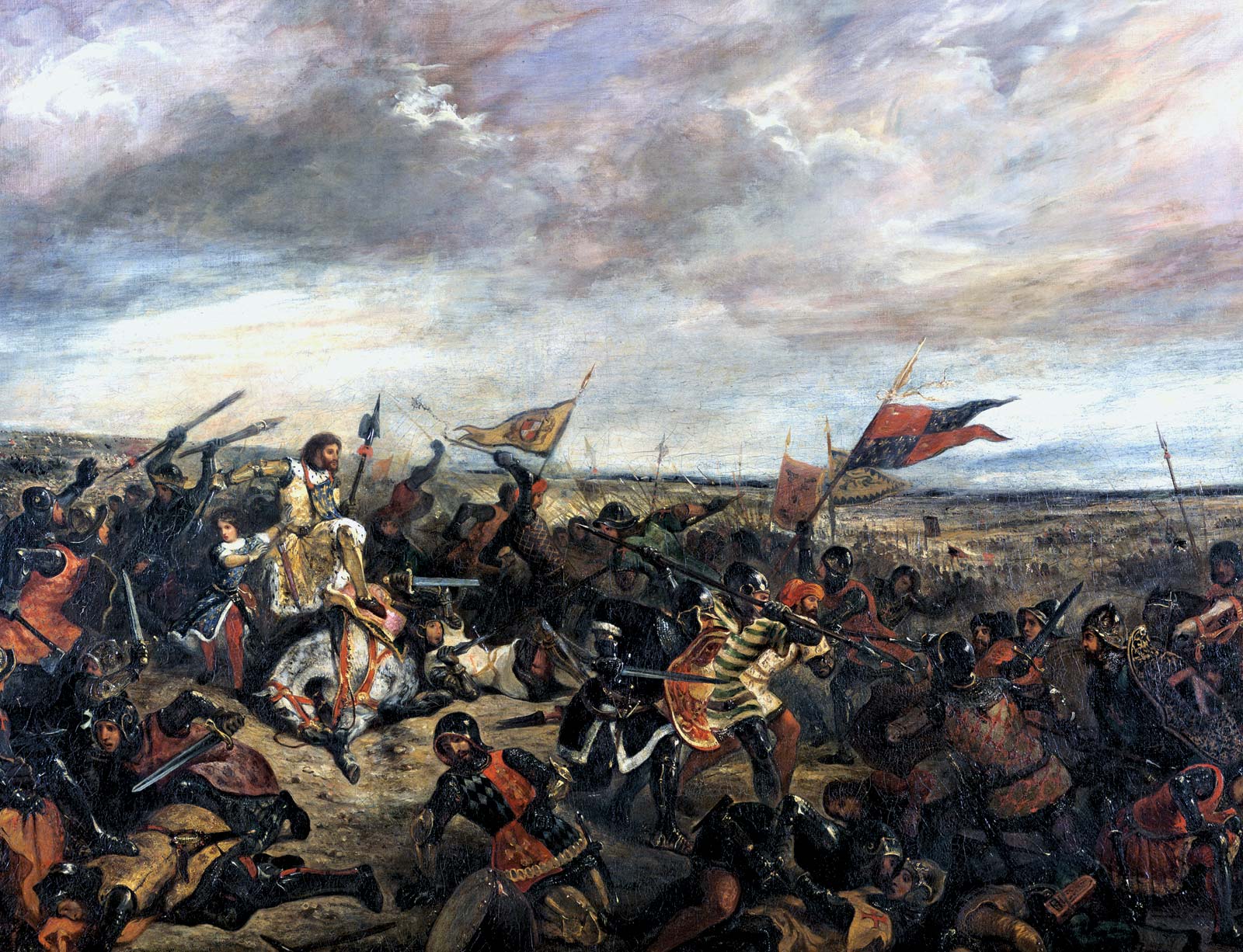
The Battle of Poitiers was fought on 19 September 1356, during the Hundred Years' War, between a French army commanded by King John II and an Anglo-Gascon force under Edward, the Black Prince. It took place in western France, 5 miles (8 km) south of Poitiers, when approximately 14,000 to 16,000 French attacked a strong defensive position held by 6,000 Anglo-Gascons.
Nineteen years after the start of the war, Edward, the Black Prince, the eldest son and heir of the King of England Edward III, set out on a major campaign in south-west France. His army marched from Bergerac to the River Loire, which they were unable to cross. John gathered a large and unusually mobile army and pursued Edward's forces. The Anglo-Gascons had by this point established a strong defensive position near Poitiers, and after unsuccessful negotiations between the two sides, were attacked by the French.
The first assault included two units of heavily armoured cavalry, a strong force of crossbowmen as well as many infantry and dismounted men-at-arms. They were driven back by the Anglo-Gascons, who were fighting entirely on foot. A second French attack by 4,000 men-at-arms on foot under John's son and heir Charles, the Dauphin, followed. After a prolonged fight this was also repulsed. As the Dauphin's division recoiled there was confusion in the French ranks: about half the men of their third division, under Philip, Duke of Orléans, left the field, taking with them all four of John's sons. Some of those who did not withdraw with Philip launched a weak and unsuccessful third assault. Those Frenchmen remaining gathered around the King and launched a fourth assault against the by now exhausted Anglo-Gascons, again all as infantry. The French sacred banner, the Oriflamme, borne by Geoffroi de Charny was unfurled, the signal that no prisoners were to be taken. Battle was again joined, with the French slowly getting the better of it. Then a small, mounted, Anglo-Gascon force of 160 men, who had been sent earlier to threaten the French rear, appeared behind the French. Believing themselves surrounded, some Frenchmen fled, which panicked others, and soon the entire French force collapsed.
John was captured, as were his 14-year-old son Philip and between 2,000 and 3,000 men-at-arms. Approximately 2,500 French men-at-arms were killed. Additionally, either 1,500 or 3,800 French common infantry were killed or captured. The surviving French dispersed, while the Anglo-Gascons continued their withdrawal to Gascony. The following spring a two-year truce was agreed and the Black Prince escorted John to London. Populist revolts broke out across France. Negotiations to end the war and ransom John dragged out. In response Edward launched a further campaign in 1359. During this, both sides compromised and the Treaty of Brétigny was agreed in 1360 by which vast areas of France were ceded to England, to be ruled by the Black Prince, and John was ransomed for three million gold écu. At the time this seemed to end the war, but the French resumed hostilities in 1369 and recaptured most of the lost territory. The war eventually ended with a French victory in 1453.
Since the Norman Conquest of 1066, English monarchs had held titles and lands within France, the possession of which made them vassals of the kings of France. By the first quarter of the fourteenth century, the only significant French possession still held by the English in France was Gascony in the south-west. But Gascony was disproportionately important: duty levied by the English Crown on wine from Bordeaux, the capital of Gascony, totalled more than all other English customs duties combined and was by far the largest source of state income. Bordeaux had a population of more than 50,000, greater than London's, and Bordeaux was possibly richer. Following a series of disagreements between Philip VI of France (r. 1328–1350) and Edward III of England (r. 1327–1377), on 24 May 1337 Philip's Great Council agreed that the lands held by Edward III in France should be taken back into Philip's hands on the grounds that Edward III was in breach of his obligations as a vassal. This marked the start of the Hundred Years' War, which was to last 116 years.
Although Gascony was the cause of the war, Edward III was able to spare few resources for its defence. In most campaigning seasons the Gascons had to rely on their own resources and had been hard-pressed by the French. Typically the Gascons could field 3,000 to 6,000 men, the large majority infantry, although up to two-thirds of them would be tied down in garrisoning their fortifications. In 1345 and 1346 Henry, Earl of Lancaster, led a series of successful Anglo-Gascon campaigns in Aquitaine and was able to push the focus of the fighting away from the heart of Gascony.
The French port of Calais fell to the English in August 1347 after the Crécy campaign. Shortly after this the Truce of Calais was signed, partially the result of both countries being financially exhausted. The same year the Black Death reached northern France and southern England and is estimated to have killed a third of the population of Western Europe; the death rate was over 40% in southern England. This catastrophe, which lasted until 1350, temporarily halted the fighting. The treaty was extended repeatedly over the years; this did not stop ongoing naval clashes, nor small-scale fighting – which was especially fierce in south-west France – nor occasional fighting on a larger scale.
A treaty to end the war was negotiated at Guînes and signed on 6 April 1354. However, the composition of the inner council of the French king, John II (r. 1350–1364), changed and sentiment turned against its terms. John decided not to ratify it, and it was clear that from the summer of 1355 both sides would be committed to full-scale war. In April 1355 Edward III and his council, with the treasury in an unusually favourable financial position, decided to launch offensives that year in both northern France and Gascony. John attempted to strongly garrison his northern towns and fortifications against the expected descent by Edward III, at the same time as assembling a field army; he was unable to, largely because of a lack of money.
Hub AI
Battle of Poitiers AI simulator
(@Battle of Poitiers_simulator)
Battle of Poitiers
The Battle of Poitiers was fought on 19 September 1356, during the Hundred Years' War, between a French army commanded by King John II and an Anglo-Gascon force under Edward, the Black Prince. It took place in western France, 5 miles (8 km) south of Poitiers, when approximately 14,000 to 16,000 French attacked a strong defensive position held by 6,000 Anglo-Gascons.
Nineteen years after the start of the war, Edward, the Black Prince, the eldest son and heir of the King of England Edward III, set out on a major campaign in south-west France. His army marched from Bergerac to the River Loire, which they were unable to cross. John gathered a large and unusually mobile army and pursued Edward's forces. The Anglo-Gascons had by this point established a strong defensive position near Poitiers, and after unsuccessful negotiations between the two sides, were attacked by the French.
The first assault included two units of heavily armoured cavalry, a strong force of crossbowmen as well as many infantry and dismounted men-at-arms. They were driven back by the Anglo-Gascons, who were fighting entirely on foot. A second French attack by 4,000 men-at-arms on foot under John's son and heir Charles, the Dauphin, followed. After a prolonged fight this was also repulsed. As the Dauphin's division recoiled there was confusion in the French ranks: about half the men of their third division, under Philip, Duke of Orléans, left the field, taking with them all four of John's sons. Some of those who did not withdraw with Philip launched a weak and unsuccessful third assault. Those Frenchmen remaining gathered around the King and launched a fourth assault against the by now exhausted Anglo-Gascons, again all as infantry. The French sacred banner, the Oriflamme, borne by Geoffroi de Charny was unfurled, the signal that no prisoners were to be taken. Battle was again joined, with the French slowly getting the better of it. Then a small, mounted, Anglo-Gascon force of 160 men, who had been sent earlier to threaten the French rear, appeared behind the French. Believing themselves surrounded, some Frenchmen fled, which panicked others, and soon the entire French force collapsed.
John was captured, as were his 14-year-old son Philip and between 2,000 and 3,000 men-at-arms. Approximately 2,500 French men-at-arms were killed. Additionally, either 1,500 or 3,800 French common infantry were killed or captured. The surviving French dispersed, while the Anglo-Gascons continued their withdrawal to Gascony. The following spring a two-year truce was agreed and the Black Prince escorted John to London. Populist revolts broke out across France. Negotiations to end the war and ransom John dragged out. In response Edward launched a further campaign in 1359. During this, both sides compromised and the Treaty of Brétigny was agreed in 1360 by which vast areas of France were ceded to England, to be ruled by the Black Prince, and John was ransomed for three million gold écu. At the time this seemed to end the war, but the French resumed hostilities in 1369 and recaptured most of the lost territory. The war eventually ended with a French victory in 1453.
Since the Norman Conquest of 1066, English monarchs had held titles and lands within France, the possession of which made them vassals of the kings of France. By the first quarter of the fourteenth century, the only significant French possession still held by the English in France was Gascony in the south-west. But Gascony was disproportionately important: duty levied by the English Crown on wine from Bordeaux, the capital of Gascony, totalled more than all other English customs duties combined and was by far the largest source of state income. Bordeaux had a population of more than 50,000, greater than London's, and Bordeaux was possibly richer. Following a series of disagreements between Philip VI of France (r. 1328–1350) and Edward III of England (r. 1327–1377), on 24 May 1337 Philip's Great Council agreed that the lands held by Edward III in France should be taken back into Philip's hands on the grounds that Edward III was in breach of his obligations as a vassal. This marked the start of the Hundred Years' War, which was to last 116 years.
Although Gascony was the cause of the war, Edward III was able to spare few resources for its defence. In most campaigning seasons the Gascons had to rely on their own resources and had been hard-pressed by the French. Typically the Gascons could field 3,000 to 6,000 men, the large majority infantry, although up to two-thirds of them would be tied down in garrisoning their fortifications. In 1345 and 1346 Henry, Earl of Lancaster, led a series of successful Anglo-Gascon campaigns in Aquitaine and was able to push the focus of the fighting away from the heart of Gascony.
The French port of Calais fell to the English in August 1347 after the Crécy campaign. Shortly after this the Truce of Calais was signed, partially the result of both countries being financially exhausted. The same year the Black Death reached northern France and southern England and is estimated to have killed a third of the population of Western Europe; the death rate was over 40% in southern England. This catastrophe, which lasted until 1350, temporarily halted the fighting. The treaty was extended repeatedly over the years; this did not stop ongoing naval clashes, nor small-scale fighting – which was especially fierce in south-west France – nor occasional fighting on a larger scale.
A treaty to end the war was negotiated at Guînes and signed on 6 April 1354. However, the composition of the inner council of the French king, John II (r. 1350–1364), changed and sentiment turned against its terms. John decided not to ratify it, and it was clear that from the summer of 1355 both sides would be committed to full-scale war. In April 1355 Edward III and his council, with the treasury in an unusually favourable financial position, decided to launch offensives that year in both northern France and Gascony. John attempted to strongly garrison his northern towns and fortifications against the expected descent by Edward III, at the same time as assembling a field army; he was unable to, largely because of a lack of money.