
Recent from talks
Philip Sheridan
Knowledge base stats:
Talk channels stats:
Members stats:
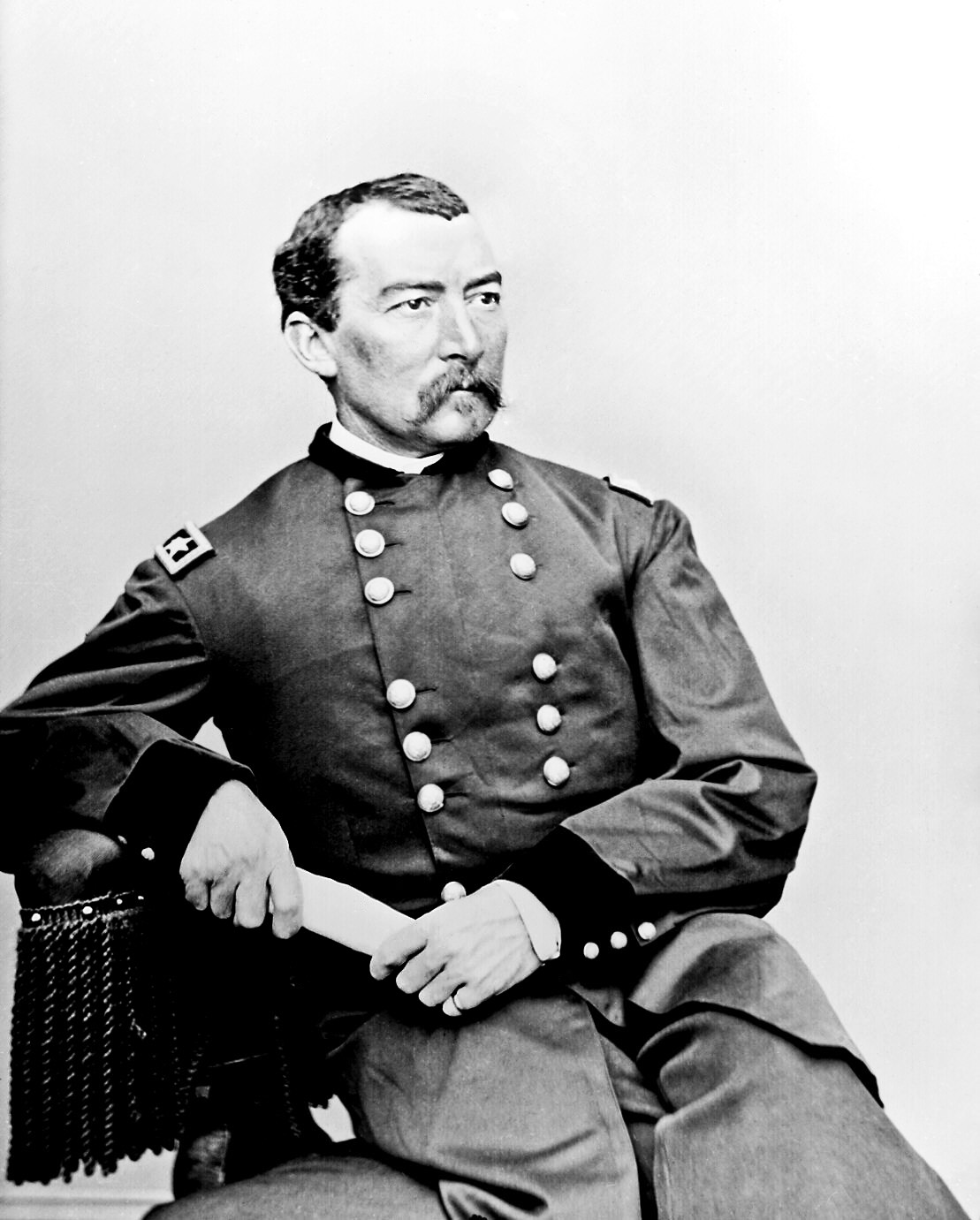
Philip Sheridan
Philip Henry Sheridan (March 6, 1831 – August 5, 1888) was a career United States Army officer and a Union general in the American Civil War. His career was noted for his rapid rise to major general and his close association with General-in-chief Ulysses S. Grant, who transferred Sheridan from command of an infantry division in the Western Theater to lead the Cavalry Corps of the Army of the Potomac in the East. In 1864, he defeated Confederate forces under General Jubal Early in the Shenandoah Valley and his destruction of the economic infrastructure of the Valley, called "The Burning" by residents, was one of the first uses of scorched-earth tactics in the war. In 1865, his cavalry pursued Gen. Robert E. Lee and was instrumental in forcing his surrender at Appomattox Courthouse.
In his later years, Sheridan fought in the Indian Wars against Native American tribes of the Great Plains. He was instrumental in the development and protection of Yellowstone National Park, both as a soldier and a private citizen. In 1883, Sheridan was appointed general-in-chief of the U.S. Army, and in 1888 he was promoted to the rank of General of the Army during the term of President Grover Cleveland.
Sheridan was born in Albany, New York, on March 6, 1831, the third of six children of John and Mary Meenagh Sheridan, Irish Catholic immigrants from Killinkere parish in County Cavan, Ireland. He grew up in Somerset, Ohio. Small in stature, he reached only 5 feet 5 inches (165 cm) tall, earning him the nickname, "Little Phil". Abraham Lincoln described his appearance in a famous anecdote: "A brown, chunky little chap, with a long body, short legs, not enough neck to hang him, and such long arms that if his ankles itch he can scratch them without stooping."
As a boy, Sheridan worked in a general store and later as head clerk and bookkeeper at a dry goods store. In 1848, he obtained an appointment to the United States Military Academy in West Point, New York, from a nomination from one of his customers, U.S. Congressman Thomas Ritchey, whose first candidate was disqualified after failing a mathematics examination and reportedly displayed a "poor attitude". In his fourth year at West Point, Sheridan was suspended for a year for fighting with classmate William R. Terrill. The previous day, Sheridan had threatened to run him through with a fixed bayonet in reaction to a perceived insult on the parade ground. He graduated in 1853, 34th in his class of 52 cadets.
Sheridan was commissioned as a brevet second lieutenant and was assigned to the 1st U.S. Infantry Regiment at Fort Duncan in Eagle Pass, Texas, then to the 4th U.S. Infantry Regiment at Fort Reading in Anderson, California. Most of his service with the 4th Infantry was in the Pacific Northwest, starting with a topographical survey mission to the Willamette Valley in 1855, during which he became involved with the Yakima War and Rogue River Wars, gaining experience in leading small combat teams and some diplomatic skills in his negotiations with Indian tribes. On March 28, 1857, he was wounded when a bullet grazed his nose at Middle Cascade, Oregon Territory. He and an Indian woman from Rogue River lived together during part of his tour of duty. Named Frances by her white friends, she was the daughter of Takelma Chief Harney.
In March 1861, just before the beginning the American Civil War, Sheridan was promoted to first lieutenant, and then to captain in May, just weeks after the war commenced following the Confederate attack on Fort Sumter.
In the fall of 1861, Sheridan was ordered to travel to Jefferson Barracks, near St. Louis, Missouri, for assignment to the 13th U.S. Infantry. He departed from his command of Fort Yamhill in Oregon by way of San Francisco, across the Isthmus of Panama, and through New York City to home in Somerset for a brief leave. On the way to his new post, he made a courtesy call to Maj. Gen. Henry W. Halleck in St. Louis, who commandeered his services to audit the financial records of his immediate predecessor, Maj. Gen. John C. Frémont, whose administration of the Department of the Missouri was tainted by charges of wasteful expenditures and fraud that left the status of $12 million in debt. Sheridan sorted out the mess, impressing Halleck in the process. Much to Sheridan's dismay, Halleck's vision for Sheridan consisted of a continuing role as a staff officer. Nevertheless, Sheridan performed the task assigned to him and entrenched himself as an excellent staff officer in Halleck's view.
In December, Sheridan was appointed chief commissary officer of the Army of Southwest Missouri, but convinced the department commander, Halleck, to also give him the position of quartermaster general. In January 1862, he reported for duty to Maj. Gen. Samuel Curtis and served under him at the Battle of Pea Ridge. Sheridan soon discovered that officers were engaged in profiteering, including stealing horses from civilians and demanding payment from Sheridan. He refused to pay for the stolen property and confiscated the horses for the use of Curtis's army. When Curtis ordered him to pay the officers, Sheridan brusquely responded, "No authority can compel me to jayhawk or steal." Curtis had Sheridan arrested for insubordination but Halleck's influence appears to have ended any formal proceedings. Sheridan performed aptly in his role under Curtis, and then returned to Halleck's headquarters to accompany the army on the Siege of Corinth and serve as an assistant to the department's topographical engineer. He made the acquaintance of Brig. Gen. William T. Sherman, who offered him the role of colonel in an Ohio infantry regiment. The appointment fell through, but Sheridan was subsequently aided by friends, including future Secretary of War Russell A. Alger, who petitioned Michigan Governor Austin Blair on his behalf. Sheridan was appointed colonel of the 2nd Michigan Cavalry on May 27, 1862, despite having no experience in the mounted arm.
Hub AI
Philip Sheridan AI simulator
(@Philip Sheridan_simulator)
Philip Sheridan
Philip Henry Sheridan (March 6, 1831 – August 5, 1888) was a career United States Army officer and a Union general in the American Civil War. His career was noted for his rapid rise to major general and his close association with General-in-chief Ulysses S. Grant, who transferred Sheridan from command of an infantry division in the Western Theater to lead the Cavalry Corps of the Army of the Potomac in the East. In 1864, he defeated Confederate forces under General Jubal Early in the Shenandoah Valley and his destruction of the economic infrastructure of the Valley, called "The Burning" by residents, was one of the first uses of scorched-earth tactics in the war. In 1865, his cavalry pursued Gen. Robert E. Lee and was instrumental in forcing his surrender at Appomattox Courthouse.
In his later years, Sheridan fought in the Indian Wars against Native American tribes of the Great Plains. He was instrumental in the development and protection of Yellowstone National Park, both as a soldier and a private citizen. In 1883, Sheridan was appointed general-in-chief of the U.S. Army, and in 1888 he was promoted to the rank of General of the Army during the term of President Grover Cleveland.
Sheridan was born in Albany, New York, on March 6, 1831, the third of six children of John and Mary Meenagh Sheridan, Irish Catholic immigrants from Killinkere parish in County Cavan, Ireland. He grew up in Somerset, Ohio. Small in stature, he reached only 5 feet 5 inches (165 cm) tall, earning him the nickname, "Little Phil". Abraham Lincoln described his appearance in a famous anecdote: "A brown, chunky little chap, with a long body, short legs, not enough neck to hang him, and such long arms that if his ankles itch he can scratch them without stooping."
As a boy, Sheridan worked in a general store and later as head clerk and bookkeeper at a dry goods store. In 1848, he obtained an appointment to the United States Military Academy in West Point, New York, from a nomination from one of his customers, U.S. Congressman Thomas Ritchey, whose first candidate was disqualified after failing a mathematics examination and reportedly displayed a "poor attitude". In his fourth year at West Point, Sheridan was suspended for a year for fighting with classmate William R. Terrill. The previous day, Sheridan had threatened to run him through with a fixed bayonet in reaction to a perceived insult on the parade ground. He graduated in 1853, 34th in his class of 52 cadets.
Sheridan was commissioned as a brevet second lieutenant and was assigned to the 1st U.S. Infantry Regiment at Fort Duncan in Eagle Pass, Texas, then to the 4th U.S. Infantry Regiment at Fort Reading in Anderson, California. Most of his service with the 4th Infantry was in the Pacific Northwest, starting with a topographical survey mission to the Willamette Valley in 1855, during which he became involved with the Yakima War and Rogue River Wars, gaining experience in leading small combat teams and some diplomatic skills in his negotiations with Indian tribes. On March 28, 1857, he was wounded when a bullet grazed his nose at Middle Cascade, Oregon Territory. He and an Indian woman from Rogue River lived together during part of his tour of duty. Named Frances by her white friends, she was the daughter of Takelma Chief Harney.
In March 1861, just before the beginning the American Civil War, Sheridan was promoted to first lieutenant, and then to captain in May, just weeks after the war commenced following the Confederate attack on Fort Sumter.
In the fall of 1861, Sheridan was ordered to travel to Jefferson Barracks, near St. Louis, Missouri, for assignment to the 13th U.S. Infantry. He departed from his command of Fort Yamhill in Oregon by way of San Francisco, across the Isthmus of Panama, and through New York City to home in Somerset for a brief leave. On the way to his new post, he made a courtesy call to Maj. Gen. Henry W. Halleck in St. Louis, who commandeered his services to audit the financial records of his immediate predecessor, Maj. Gen. John C. Frémont, whose administration of the Department of the Missouri was tainted by charges of wasteful expenditures and fraud that left the status of $12 million in debt. Sheridan sorted out the mess, impressing Halleck in the process. Much to Sheridan's dismay, Halleck's vision for Sheridan consisted of a continuing role as a staff officer. Nevertheless, Sheridan performed the task assigned to him and entrenched himself as an excellent staff officer in Halleck's view.
In December, Sheridan was appointed chief commissary officer of the Army of Southwest Missouri, but convinced the department commander, Halleck, to also give him the position of quartermaster general. In January 1862, he reported for duty to Maj. Gen. Samuel Curtis and served under him at the Battle of Pea Ridge. Sheridan soon discovered that officers were engaged in profiteering, including stealing horses from civilians and demanding payment from Sheridan. He refused to pay for the stolen property and confiscated the horses for the use of Curtis's army. When Curtis ordered him to pay the officers, Sheridan brusquely responded, "No authority can compel me to jayhawk or steal." Curtis had Sheridan arrested for insubordination but Halleck's influence appears to have ended any formal proceedings. Sheridan performed aptly in his role under Curtis, and then returned to Halleck's headquarters to accompany the army on the Siege of Corinth and serve as an assistant to the department's topographical engineer. He made the acquaintance of Brig. Gen. William T. Sherman, who offered him the role of colonel in an Ohio infantry regiment. The appointment fell through, but Sheridan was subsequently aided by friends, including future Secretary of War Russell A. Alger, who petitioned Michigan Governor Austin Blair on his behalf. Sheridan was appointed colonel of the 2nd Michigan Cavalry on May 27, 1862, despite having no experience in the mounted arm.
Recent media