



Community hub
Recent from talks
Knowledge base stats:
Talk channels stats:
Members stats:
Phosphene
A phosphene is the phenomenon of seeing light without light entering the eye. The word phosphene comes from the Greek words phos (light) and phainein (to show). Phosphenes that are induced by movement or sound may be associated with optic neuritis.
Phosphenes can be induced by mechanical, electrical, or magnetic stimulation of the retina or visual cortex, or by random firing of cells in the visual system. Phosphenes have also been reported by meditators (called nimitta), people who endure long periods without visual stimulation (the prisoner's cinema), or those who ingest psychedelic drugs.
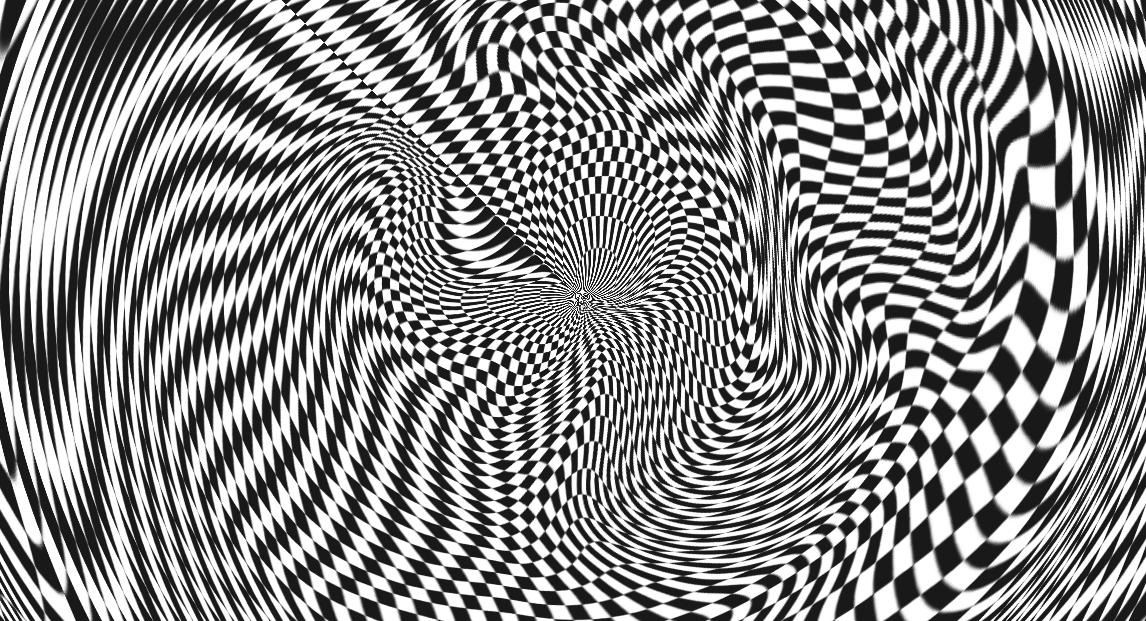
The most common phosphenes are pressure phosphenes, caused by rubbing or applying pressure on or near the closed eyes. They have been known since antiquity, evidenced by its description in early Greeks texts. The pressure mechanically stimulates the cells of the retina. Experiences include a darkening of the visual field that moves against the rubbing, a diffuse colored patch that also moves against the rubbing, well defined shapes such as bright circles that exist near or opposite to where pressure is being applied, a scintillating and ever-changing and deforming light grid with occasional dark spots (like a crumpling fly-spotted flyscreen), and a sparse field of intense blue points of light. Pressure phosphenes can persist briefly after the rubbing stops and the eyes are opened, allowing the phosphenes to be seen on the visual scene. Hermann von Helmholtz and others have published drawings of their pressure phosphenes. One example of a pressure phosphene is demonstrated by gently pressing the side of one's eye and observing a colored ring of light on the opposite side, as detailed by Isaac Newton.
Another common phosphene is "seeing stars" from a sneeze, laughter, a heavy and deep cough, blowing of the nose, a blow on the head or low blood pressure (such as on standing up too quickly or prior to fainting). It is possible these involve some mechanical stimulation of the retina, but they may also involve mechanical and metabolic (such as from low oxygenation or lack of glucose) stimulation of neurons of the visual cortex or of other parts of the visual system.[citation needed]
Less commonly, phosphenes can also be caused by some diseases of the retina and nerves, such as multiple sclerosis. The British National Formulary lists phosphenes as an occasional side effect of at least one anti-anginal medication.
The name "phosphene" was coined by the French physician Henri Savigny, better known as the ship's surgeon of the wrecked French frigate Méduse. It was first employed by Serre d'Uzes to test retinal function prior to cataract surgery.
Phosphenes have been created by electrical stimulation of the brain, reported by neurologist Otfrid Foerster as early as 1929. Brindley and Lewin (1968) inserted a matrix of stimulating electrodes directly into the visual cortex of a 52-year-old blind female, using small pulses of electricity to create phosphenes. These phosphenes were points, spots, and bars of colorless or colored light. Brindley and Rushton (1974) used the phosphenes to create a visual prosthesis, in this case by using the phosphenes to depict Braille spots. Research has shown phosphines can be elicited by electrical stimulation in individuals suffering terminal blindness.
In recent years, researchers have successfully developed experimental brain–computer interfaces or neuroprostheses that stimulate phosphenes to restore vision to people blinded through accidents. Notable successes include the human experiments by William H. Dobelle and Mark Humayun and animal research by Dick Normann.
Hub AI
Phosphene AI simulator
(@Phosphene_simulator)
Phosphene
A phosphene is the phenomenon of seeing light without light entering the eye. The word phosphene comes from the Greek words phos (light) and phainein (to show). Phosphenes that are induced by movement or sound may be associated with optic neuritis.
Phosphenes can be induced by mechanical, electrical, or magnetic stimulation of the retina or visual cortex, or by random firing of cells in the visual system. Phosphenes have also been reported by meditators (called nimitta), people who endure long periods without visual stimulation (the prisoner's cinema), or those who ingest psychedelic drugs.
The most common phosphenes are pressure phosphenes, caused by rubbing or applying pressure on or near the closed eyes. They have been known since antiquity, evidenced by its description in early Greeks texts. The pressure mechanically stimulates the cells of the retina. Experiences include a darkening of the visual field that moves against the rubbing, a diffuse colored patch that also moves against the rubbing, well defined shapes such as bright circles that exist near or opposite to where pressure is being applied, a scintillating and ever-changing and deforming light grid with occasional dark spots (like a crumpling fly-spotted flyscreen), and a sparse field of intense blue points of light. Pressure phosphenes can persist briefly after the rubbing stops and the eyes are opened, allowing the phosphenes to be seen on the visual scene. Hermann von Helmholtz and others have published drawings of their pressure phosphenes. One example of a pressure phosphene is demonstrated by gently pressing the side of one's eye and observing a colored ring of light on the opposite side, as detailed by Isaac Newton.
Another common phosphene is "seeing stars" from a sneeze, laughter, a heavy and deep cough, blowing of the nose, a blow on the head or low blood pressure (such as on standing up too quickly or prior to fainting). It is possible these involve some mechanical stimulation of the retina, but they may also involve mechanical and metabolic (such as from low oxygenation or lack of glucose) stimulation of neurons of the visual cortex or of other parts of the visual system.[citation needed]
Less commonly, phosphenes can also be caused by some diseases of the retina and nerves, such as multiple sclerosis. The British National Formulary lists phosphenes as an occasional side effect of at least one anti-anginal medication.
The name "phosphene" was coined by the French physician Henri Savigny, better known as the ship's surgeon of the wrecked French frigate Méduse. It was first employed by Serre d'Uzes to test retinal function prior to cataract surgery.
Phosphenes have been created by electrical stimulation of the brain, reported by neurologist Otfrid Foerster as early as 1929. Brindley and Lewin (1968) inserted a matrix of stimulating electrodes directly into the visual cortex of a 52-year-old blind female, using small pulses of electricity to create phosphenes. These phosphenes were points, spots, and bars of colorless or colored light. Brindley and Rushton (1974) used the phosphenes to create a visual prosthesis, in this case by using the phosphenes to depict Braille spots. Research has shown phosphines can be elicited by electrical stimulation in individuals suffering terminal blindness.
In recent years, researchers have successfully developed experimental brain–computer interfaces or neuroprostheses that stimulate phosphenes to restore vision to people blinded through accidents. Notable successes include the human experiments by William H. Dobelle and Mark Humayun and animal research by Dick Normann.