Hubbry Logo
RetinaRetinaMain
Open search
Retina
Community hub
Retina
logo
8 pages, 0 posts
0 subscribers
Be the first to start a discussion here.
Contribute something
Retina
Retina
from Wikipedia

Retina
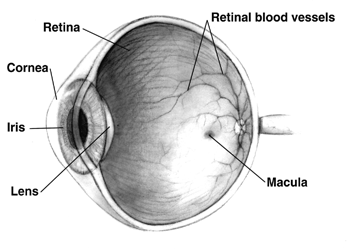
Right human eye cross-sectional view; eyes vary significantly among animals.
Details
PronunciationUK: /ˈrɛtɪnə/,
US: /ˈrɛtənə/,
pl. retinae /-ni/
Part ofEye
SystemVisual system
ArteryCentral retinal artery
Identifiers
Latinrēte, tunica interna bulbi
MeSHD012160
TA98A15.2.04.002
TA26776
FMA58301
Anatomical terminology

The retina (from Latin rete 'net'; pl.retinae or retinas) is the innermost, light-sensitive layer of tissue of the eye of most vertebrates and some molluscs. The optics of the eye create a focused two-dimensional image of the visual world on the retina, which then processes that image within the retina and sends nerve impulses along the optic nerve to the visual cortex to create visual perception. The retina serves a function which is in many ways analogous to that of the film or image sensor in a camera.

The neural retina consists of several layers of neurons interconnected by synapses and is supported by an outer layer of pigmented epithelial cells. The primary light-sensing cells in the retina are the photoreceptor cells, which are of two types: rods and cones. Rods function mainly in dim light and provide monochromatic vision. Cones function in well-lit conditions and are responsible for the perception of colour through the use of a range of opsins, as well as high-acuity vision used for tasks such as reading. A third type of light-sensing cell, the photosensitive ganglion cell, is important for entrainment of circadian rhythms and reflexive responses such as the pupillary light reflex.

Light striking the retina initiates a cascade of chemical and electrical events that ultimately trigger nerve impulses that are sent to various visual centres of the brain through the fibres of the optic nerve. Neural signals from the rods and cones undergo processing by other neurons, whose output takes the form of action potentials in retinal ganglion cells whose axons form the optic nerve.[1]

In vertebrate embryonic development, the retina and the optic nerve originate as outgrowths of the developing brain, specifically the embryonic diencephalon; thus, the retina is considered part of the central nervous system (CNS) and is actually brain tissue.[2][3] It is the only part of the CNS that can be visualized noninvasively. Like most of the brain, the retina is isolated from the vascular system by the blood–brain barrier. The retina is the part of the body with the greatest continuous energy demand.[4]

Structure

[edit]

Inverted versus non-inverted retina

[edit]

The vertebrate retina is inverted in the sense that the light-sensing cells are in the back of the retina, so that light has to pass through layers of neurons and capillaries before it reaches the photosensitive sections of the rods and cones.[5] The ganglion cells, whose axons form the optic nerve, are at the front of the retina; therefore, the optic nerve must cross through the retina en route to the brain. No photoreceptors are in this region, giving rise to the blind spot.[6] In contrast, in the cephalopod retina, the photoreceptors are in front, with processing neurons and capillaries behind them. Because of this, cephalopods do not have a blind spot.

Although the overlying neural tissue is partly transparent, and the accompanying glial cells have been shown to act as fibre-optic channels to transport photons directly to the photoreceptors,[7][8] light scattering does occur.[9] Some vertebrates, including humans, have an area of the central retina adapted for high-acuity vision. This area, termed the fovea centralis, is avascular (does not have blood vessels), and has minimal neural tissue in front of the photoreceptors, thereby minimizing light scattering.[9]

The cephalopods have a non-inverted retina, which is comparable in resolving power to the eyes of many vertebrates. Squid eyes do not have an analog of the vertebrate retinal pigment epithelium (RPE). Although their photoreceptors contain a protein, retinochrome, that recycles retinal and replicates one of the functions of the vertebrate RPE, cephalopod photoreceptors are likely not maintained as well as in vertebrates, and that as a result, the useful lifetime of photoreceptors in invertebrates is much shorter than in vertebrates.[10] Having easily replaced stalk eyes (some lobsters) or retinae (some spiders, such as Deinopis[11]) rarely occurs.

The cephalopod retina does not originate as an outgrowth of the brain, as the vertebrate one does. This difference suggests that vertebrate and cephalopod eyes are not homologous, but have evolved separately. From an evolutionary perspective, a more complex structure such as the inverted retina can generally come about as a consequence of two alternate processes - an advantageous "good" compromise between competing functional limitations, or as a historical maladaptive relic of the convoluted path of organ evolution and transformation. Vision is an important adaptation in higher vertebrates.

A third view of the "inverted" vertebrate eye is that it combines two benefits - the maintenance of the photoreceptors mentioned above, and the reduction in light intensity necessary to avoid blinding the photoreceptors, which are based on the extremely sensitive eyes of the ancestors of modern hagfish (fish that live in very deep, dark water).[12]

A recent study on the evolutionary purpose for the inverted retina structure from the APS (American Physical Society)[13] says that "The directional of glial cells helps increase the clarity of human vision. But we also noticed something rather curious: the colours that best passed through the glial cells were green to red, which the eye needs most for daytime vision. The eye usually receives too much blue—and thus has fewer blue-sensitive cones.

Further computer simulations showed that green and red are concentrated five to ten times more by the glial cells, and into their respective cones, than blue light. Instead, excess blue light gets scattered to the surrounding rods. This optimization is such that color vision during the day is enhanced, while night-time vision suffers very little".

Retinal layers

[edit]
an orthographic cross-section of the layers of the human retina labeling various elements. Light comes from top right
Rods, cones, and nerve layers in the retina: The front (anterior) of the eye is on the left. Light (from the left) passes through several transparent nerve layers to reach the rods and cones (far right). Chemical changes in the rods and cones send a signal back to the nerves. The signal goes first to the bipolar and horizontal cells (yellow layer), then to the amacrine cells and ganglion cells (purple layer), then to the optic nerve fibres. The signals are processed in these layers. First, the signals start as raw outputs of points in the rod and cone cells. Then, the nerve layers identify simple shapes, such as bright points surrounded by dark points, edges, and movement. (Based on a drawing by Ramón y Cajal, 1911)
Illustration of the distribution of cone cells in the fovea of an individual with normal colour vision (left), and a colourblind (protanopic) retina. The center of the fovea holds very few blue-sensitive cones.
Distribution of rods and cones along a line passing through the fovea and the blind spot of a human eye[14]

The vertebrate retina has 10 distinct layers.[15] From closest to farthest from the vitreous body:

  1. Inner limiting membrane – basement membrane elaborated by Müller cells
  2. Nerve fiber layer – axons of the ganglion cell bodies (a thin layer of Müller cell footplates exists between this layer and the inner limiting membrane)
  3. Ganglion cell layer – contains nuclei of ganglion cells, the axons of which become the optic nerve fibres, and some displaced amacrine cells[2]
  4. Inner plexiform layer – contains the synapse between the bipolar cell axons and the dendrites of the ganglion and amacrine cells[2]
  5. Inner nuclear layer – contains the nuclei and surrounding cell bodies (perikarya) of the amacrine cells, bipolar cells, and horizontal cells[2]
  6. Outer plexiform layer – projections of rods and cones ending in the rod spherule and cone pedicle, respectively, these make synapses with dendrites of bipolar cells and horizontal cells.[2] In the macular region, this is known as the fiber layer of Henle.
  7. Outer nuclear layer – cell bodies of rods and cones
  8. External limiting membrane – layer that separates the inner segment portions of the photoreceptors from their cell nuclei
  9. Inner segment / outer segment layer – inner segments and outer segments of rods and cones, the outer segments contain a highly specialized light-sensing apparatus.[16][17]
  10. Retinal pigment epithelium – single layer of cuboidal epithelial cells (with extrusions not shown in diagram). This layer is closest to the choroid, and provides nourishment and supportive functions to the neural retina, The black pigment melanin in the pigment layer prevents light reflection throughout the globe of the eyeball; this is extremely important for clear vision.[18][19][20]

These layers can be grouped into four main processing stages—photoreception; transmission to bipolar cells; transmission to ganglion cells, which also contain photoreceptors, the photosensitive ganglion cells; and transmission along the optic nerve. At each synaptic stage, horizontal and amacrine cells also are laterally connected.

The optic nerve is a central tract of many axons of ganglion cells connecting primarily to the lateral geniculate body, a visual relay station in the diencephalon (the rear of the forebrain). It also projects to the superior colliculus, the suprachiasmatic nucleus, and the nucleus of the optic tract. It passes through the other layers, creating the optic disc in primates.[21]

Additional structures, not directly associated with vision, are found as outgrowths of the retina in some vertebrate groups. In birds, the pecten is a vascular structure of complex shape that projects from the retina into the vitreous humour; it supplies oxygen and nutrients to the eye, and may also aid in vision. Reptiles have a similar, but much simpler, structure.[22]

In adult humans, the entire retina is about 72% of a sphere about 22 mm in diameter. The entire retina contains about 7 million cones and 75 to 150 million rods. The optic disc, a part of the retina sometimes called "the blind spot" because it lacks photoreceptors, is located at the optic papilla, where the optic-nerve fibres leave the eye. It appears as an oval white area of 3 mm2. Temporal (in the direction of the temples) to this disc is the macula, at whose centre is the fovea, a pit that is responsible for sharp central vision, but is actually less sensitive to light because of its lack of rods. Human and non-human primates possess one fovea, as opposed to certain bird species, such as hawks, that are bifoviate, and dogs and cats, that possess no fovea, but a central band known as the visual streak.[citation needed] Around the fovea extends the central retina for about 6 mm and then the peripheral retina. The farthest edge of the retina is defined by the ora serrata. The distance from one ora to the other (or macula), the most sensitive area along the horizontal meridian, is about 32 mm.[clarification needed]

In section, the retina is no more than 0.5 mm thick. It has three layers of nerve cells and two of synapses, including the unique ribbon synapse. The optic nerve carries the ganglion-cell axons to the brain, and the blood vessels that supply the retina. The ganglion cells lie innermost in the eye while the photoreceptive cells lie beyond. Because of this counter-intuitive arrangement, light must first pass through and around the ganglion cells and through the thickness of the retina, (including its capillary vessels, not shown) before reaching the rods and cones. Light is absorbed by the retinal pigment epithelium or the choroid (both of which are opaque).

The white blood cells in the capillaries in front of the photoreceptors can be perceived as tiny bright moving dots when looking into blue light. This is known as the blue field entoptic phenomenon (or Scheerer's phenomenon).

Between the ganglion-cell layer and the rods and cones are two layers of neuropils, where synaptic contacts are made. The neuropil layers are the outer plexiform layer and the inner plexiform layer. In the outer neuropil layer, the rods and cones connect to the vertically running bipolar cells, and the horizontally oriented horizontal cells connect to ganglion cells.

The central retina predominantly contains cones, while the peripheral retina predominantly contains rods. In total, the retina has about seven million cones and a hundred million rods. At the centre of the macula is the foveal pit where the cones are narrow and long, and arranged in a hexagonal mosaic, the most dense, in contradistinction to the much fatter cones located more peripherally in the retina.[23] At the foveal pit, the other retinal layers are displaced, before building up along the foveal slope until the rim of the fovea, or parafovea, is reached, which is the thickest portion of the retina. The macula has a yellow pigmentation, from screening pigments, and is known as the macula lutea. The area directly surrounding the fovea has the highest density of rods converging on single bipolar cells. Since its cones have a much lesser convergence of signals, the fovea allows for the sharpest vision the eye can attain.[2]

Though the rod and cones are a mosaic of sorts, transmission from receptors, to bipolars, to ganglion cells is not direct. Since about 150 million receptors and only 1 million optic nerve fibres exist, convergence and thus mixing of signals must occur. Moreover, the horizontal action of the horizontal and amacrine cells can allow one area of the retina to control another (e.g. one stimulus inhibiting another). This inhibition is key to lessening the sum of messages sent to the higher regions of the brain. In some lower vertebrates (e.g. the pigeon), control of messages is "centrifugal" – that is, one layer can control another, or higher regions of the brain can drive the retinal nerve cells, but in primates, this does not occur.[2]

Layers imagable with optical coherence tomography

[edit]

Using optical coherence tomography (OCT), at least 13 layers can be identified in the retina. The layers and anatomical correlation are:[24][25][26]

Time-Domain OCT of the macular area of a retina at 800 nm, axial resolution 3 μm
Spectral-Domain OCT macula cross-section scan
macula histology (OCT)
Macula histology (OCT)

From innermost to outermost, the layers identifiable by OCT are as follows:

# OCT Layer / Conventional Label Anatomical Correlate Reflectivity

on OCT

Specific

anatomical

boundaries?

Additional

references

1 Posterior cortical vitreous Posterior cortical vitreous Hyper-reflective Yes [25]
2 Preretinal space In eyes where the vitreous has fully or partially detached from the retina, this is the space created between the posterior cortical vitreous face and the internal limiting membrane of the retina. Hypo-reflective [25]
3 Internal limiting membrane (ILM) Formed by Müller cell endfeet

(unclear if it can be observed on OCT)

Hyper-reflective No [25]
Nerve fiber layer (NFL) Ganglion cell axons travelling towards the optic nerve
4 Ganglion cell layer (GCL) Ganglion cell bodies (and some displaced amacrine cells) Hypo-reflective [25]
5 Inner plexiform layer (IPL) Synapses between bipolar, amacrine and ganglion cells Hyper-reflective [25]
6 Inner nuclear layer (INL) a) Horizontal, bipolar and amacrine cell bodies

b) Müller cell nuclei

Hypo-reflective [25]
7 Outer plexiform layer (OPL) Synapses between photoreceptor, bipolar and horizontal cells Hyper-reflective [25]
8 (Inner half) Henle's nerve fiber layer (HL) Photoreceptor axons

(obliquely orientated fibres; not present in mid-peripheral or peripheral retina)

Hypo-reflective No [25]
(Outer half) Outer nuclear layer (ONL) The photoreceptor cell bodies
9 External limiting membrane (ELM) Made of zonulae adherens between Müller cells and photoreceptor inner segments Hyper-reflective [25]
10 Myoid zone (MZ) The innermost portion of the photoreceptor inner segment (IS) containing: Hypo-reflective No [27][28]
11 Ellipsoid zone (EZ) The outermost portion of the photoreceptor inner segment (IS) packed with mitochondria Very Hyper-reflective No [24][29][27][25][30][31]
IS/OS junction or Photoreceptor integrity line (PIL) The photoreceptor connecting cilia which bridge the inner and outer segments of the photoreceptor cells.
12 Photoreceptor outer segments (OS) The photoreceptor outer segments (OS) which contain disks filled with opsin, the molecule that absorbs photons. Hypo-reflective [32][25]
13 Interdigitation zone (IZ) Apices of the RPE cells which encase part of the cone OSs.

Poorly distinguishable from RPE. Previously: "cone outer segment tips line" (COST)

Hyper-reflective No
14 RPE/Bruch's complex RPE phagosome zone Very Hyper-reflective No [24][25]
RPE melanosome zone Hypo-reflective
RPE mitochondria zone + Junction between the RPE & Bruch's membrane Very Hyper-reflective
15 Choriocapillaris Thin layer of moderate reflectivity in inner choroid No [25]
16 Sattler's layer Thick layer of round or ovalshaped hyperreflective profiles, with hyporeflective cores in mid-choroid [25]
17 Haller's layer Thick layer of oval-shaped hyperreflective profiles, with hyporeflective cores in outer choroid [25]
18 Choroidal-scleral juncture Zone at the outer choroid with a marked change in texture, in which large circular or ovoid profiles abut a

homogenous region of variable reflectivity

[25]

Development

[edit]

Retinal development begins with the establishment of the eye fields mediated by the SHH and SIX3 proteins, with subsequent development of the optic vesicles regulated by the PAX6 and LHX2 proteins.[33] The role of Pax6 in eye development was elegantly demonstrated by Walter Gehring and colleagues, who showed that ectopic expression of Pax6 can lead to eye formation on Drosophila antennae, wings, and legs.[34] The optic vesicle gives rise to three structures: the neural retina, the retinal pigmented epithelium, and the optic stalk. The neural retina contains the retinal progenitor cells (RPCs) that give rise to the seven cell types of the retina. Differentiation begins with the retinal ganglion cells and concludes with production of the Muller glia.[35] Although each cell type differentiates from the RPCs in a sequential order, there is considerable overlap in the timing of when individual cell types differentiate.[33] The cues that determine a RPC daughter cell fate are coded by multiple transcription factor families including the bHLH and homeodomain factors.[36][37]

In addition to guiding cell fate determination, cues exist in the retina to determine the dorsal-ventral (D-V) and nasal-temporal (N-T) axes. The D-V axis is established by a ventral to dorsal gradient of VAX2, whereas the N-T axis is coordinated by expression of the forkhead transcription factors FOXD1 and FOXG1. Additional gradients are formed within the retina.[37] This spatial distribution may aid in proper targeting of RGC axons that function to establish the retinotopic map.[33]

Blood supply

[edit]
Fundus photograph showing the blood vessels in a normal human retina. Veins are darker and slightly wider than corresponding arteries. The optic disc is at right, and the macula lutea is near the centre.

The retina is stratified into distinct layers, each containing specific cell types or cellular compartments[38] that have metabolisms with different nutritional requirements.[39] To satisfy these requirements, the ophthalmic artery bifurcates and supplies the retina via two distinct vascular networks: the choroidal network, which supplies the choroid and the outer retina, and the retinal network, which supplies the retina's inner layer.[40]

Although the inverted retina of vertebrates appears counter-intuitive, it is necessary for the proper functioning of the retina. The photoreceptor layer must be embedded in the retinal pigment epithelium (RPE), which performs at least seven vital functions,[41] one of the most obvious being to supply oxygen and other necessary nutrients needed for the photoreceptors to function.

Energy requirements

[edit]

The energy requirements of the retina are even greater than that of the brain.[4] This is due to the additional energy needed to continuously renew the photoreceptor outer segments, of which 10% are shed daily.[4] Energy demands are greatest during dark adaptation when its sensitivity is most enhanced.[42] The choroid supplies about 75% of these nutrients to the retina and the retinal vasculature only 25%.[5]

When light strikes 11-cis-retinal (in the disks in the rods and cones), 11-cis-retinal changes to all-trans-retinal which then triggers changes in the opsins. Now, the outer segments do not regenerate the retinal back into the cis- form once it has been changed by light. Instead the retinal is pumped out to the surrounding RPE where it is regenerated and transported back into the outer segments of the photoreceptors. This recycling function of the RPE protects the photoreceptors against photo-oxidative damage[43][44] and allows the photoreceptor cells to have decades-long useful lives.

In birds

[edit]

The bird retina is devoid of blood vessels, perhaps to give unobscured passage of light for forming images, thus giving better resolution. It is, therefore, a considered view that the bird retina depends for nutrition and oxygen supply on a specialized organ, called the "pecten" or pecten oculi, located on the blind spot or optic disk. This organ is extremely rich in blood vessels and is thought to supply nutrition and oxygen to the bird retina by diffusion through the vitreous body. The pecten is highly rich in alkaline phosphatase activity and polarized cells in its bridge portion – both befitting its secretory role.[45] Pecten cells are packed with dark melanin granules, which have been theorized to keep this organ warm with the absorption of stray light falling on the pecten. This is considered to enhance metabolic rate of the pecten, thereby exporting more nutritive molecules to meet the stringent energy requirements of the retina during long periods of exposure to light.[46]

Biometric identification and diagnosis of disease

[edit]

The bifurcations and other physical characteristics of the inner retinal vascular network are known to vary among individuals,[47] and these individual variances have been used for biometric identification and for early detection of the onset of disease. The mapping of vascular bifurcations is one of the basic steps in biometric identification.[48] Results of such analyses of retinal blood vessel structure can be evaluated against the ground truth data[49] of vascular bifurcations of retinal fundus images that are obtained from the DRIVE dataset.[50] In addition, the classes of vessels of the DRIVE dataset have also been identified,[51] and an automated method for accurate extraction of these bifurcations is also available.[52] Changes in retinal blood circulation are seen with aging[53] and exposure to air pollution,[54] and may indicate cardiovascular diseases such as hypertension and atherosclerosis.[55][56][57] Determining the equivalent width of arterioles and venules near the optic disc is also a widely used technique to identify cardiovascular risks.[58]

Function

[edit]

The retina translates an optical image into neural impulses starting with the patterned excitation of the colour-sensitive pigments of its rods and cones, the retina's photoreceptor cells. The excitation is processed by the neural system and various parts of the brain working in parallel to form a representation of the external environment in the brain.[citation needed]

The cones respond to bright light and mediate high-resolution colour vision during daylight illumination (also called photopic vision). The rod responses are saturated at daylight levels and do not contribute to pattern vision. However, rods do respond to dim light and mediate lower-resolution, monochromatic vision under very low levels of illumination (called scotopic vision). The illumination in most office settings falls between these two levels and is called mesopic vision. At mesopic light levels, both the rods and cones are actively contributing pattern information. What contribution the rod information makes to pattern vision under these circumstances is unclear.

The response of cones to various wavelengths of light is called their spectral sensitivity. In normal human vision, the spectral sensitivity of a cone falls into one of three subtypes, often called blue, green, and red, but more accurately known as short, medium, and long wavelength-sensitive cone subtypes. It is a lack of one or more of the cone subtypes that causes individuals to have deficiencies in colour vision or various kinds of colour blindness. These individuals are not blind to objects of a particular colour, but are unable to distinguish between colours that can be distinguished by people with normal vision. Humans have this trichromatic vision, while most other mammals lack cones with red sensitive pigment and therefore have poorer dichromatic colour vision. However, some animals have four spectral subtypes, e.g. the trout adds an ultraviolet subgroup to short, medium, and long subtypes that are similar to humans. Some fish are sensitive to the polarization of light as well.

In the photoreceptors, exposure to light hyperpolarizes the membrane in a series of graded shifts. The outer cell segment contains a photopigment. Inside the cell the normal levels of cyclic guanosine monophosphate (cGMP) keep the Na+ channel open, and thus in the resting state the cell is depolarised. The photon causes the retinal bound to the receptor protein to isomerise to trans-retinal. This causes the receptor to activate multiple G-proteins. This in turn causes the Ga-subunit of the protein to activate a phosphodiesterase (PDE6), which degrades cGMP, resulting in the closing of Na+ cyclic nucleotide-gated ion channels (CNGs). Thus the cell is hyperpolarised. The amount of neurotransmitter released is reduced in bright light and increases as light levels fall. The actual photopigment is bleached away in bright light and only replaced as a chemical process, so in a transition from bright light to darkness the eye can take up to thirty minutes to reach full sensitivity.

When thus excited by light, the photoceptor sends a proportional response synaptically to bipolar cells which in turn signal the retinal ganglion cells. The photoreceptors are also cross-linked by horizontal cells and amacrine cells, which modify the synaptic signal before it reaches the ganglion cells, the neural signals being intermixed and combined. Of the retina's nerve cells, only the retinal ganglion cells and few amacrine cells create action potentials.

In the retinal ganglion cells there are two types of response, depending on the receptive field of the cell. The receptive fields of retinal ganglion cells comprise a central, approximately circular area, where light has one effect on the firing of the cell, and an annular surround, where light has the opposite effect. In ON cells, an increment in light intensity in the centre of the receptive field causes the firing rate to increase. In OFF cells, it makes it decrease. In a linear model, this response profile is well described by a difference of Gaussians and is the basis for edge detection algorithms. Beyond this simple difference, ganglion cells are also differentiated by chromatic sensitivity and the type of spatial summation. Cells showing linear spatial summation are termed X cells (also called parvocellular, P, or midget ganglion cells), and those showing non-linear summation are Y cells (also called magnocellular, M, or parasol retinal ganglion cells), although the correspondence between X and Y cells (in the cat retina) and P and M cells (in the primate retina) is not as simple as it once seemed.

In the transfer of visual signals to the brain, the visual pathway, the retina is vertically divided in two, a temporal (nearer to the temple) half and a nasal (nearer to the nose) half. The axons from the nasal half cross the brain at the optic chiasma to join with axons from the temporal half of the other eye before passing into the lateral geniculate body.

Although there are more than 130 million retinal receptors, there are only approximately 1.2 million fibres (axons) in the optic nerve. So, a large amount of pre-processing is performed within the retina. The fovea produces the most accurate information. Despite occupying about 0.01% of the visual field (less than 2° of visual angle), about 10% of axons in the optic nerve are devoted to the fovea. The resolution limit of the fovea has been determined to be around 10,000 points. The information capacity is estimated at 500,000 bits per second (for more information on bits, see information theory) without colour or around 600,000 bits per second including colour.[59]

Spatial encoding

[edit]
On-centres and off-centres of the retina

When the retina sends neural impulses representing an image to the brain, it spatially encodes (compresses) those impulses to fit the limited capacity of the optic nerve. Compression is necessary because there are 100 times more photoreceptor cells than ganglion cells. This is done by "decorrelation", which is carried out by the "centre–surround structures", which are implemented by the bipolar and ganglion cells.

There are two types of centre–surround structures in the retina – on-centres and off-centres. On-centres have a positively weighted centre and a negatively weighted surround. Off-centres are just the opposite. Positive weighting is more commonly known as excitatory, and negative weighting as inhibitory.

These centre–surround structures are not physical apparent, in the sense that one cannot see them by staining samples of tissue and examining the retina's anatomy. The centre–surround structures are logical (i.e., mathematically abstract) in the sense that they depend on the connection strengths between bipolar and ganglion cells. It is believed that the connection strength between cells is caused by the number and types of ion channels embedded in the synapses between the bipolar and ganglion cells.

The centre–surround structures are mathematically equivalent to the edge detection algorithms used by computer programmers to extract or enhance the edges in a digital photograph. Thus, the retina performs operations on the image-representing impulses to enhance the edges of objects within its visual field. For example, in a picture of a dog, a cat and a car, it is the edges of these objects that contain the most information. In order for higher functions in the brain (or in a computer for that matter) to extract and classify objects such as a dog and a cat, the retina is the first step to separating out the various objects within the scene.

As an example, the following matrix is at the heart of a computer algorithm that implements edge detection. This matrix is the computer equivalent to the centre–surround structure. In this example, each box (element) within this matrix would be connected to one photoreceptor. The photoreceptor in the centre is the current receptor being processed. The centre photoreceptor is multiplied by the +1 weight factor. The surrounding photoreceptors are the "nearest neighbors" to the centre and are multiplied by the −1/8 value. The sum of all nine of these elements is finally calculated. This summation is repeated for every photoreceptor in the image by shifting left to the end of a row and then down to the next line.

-1/8 -1/8 -1/8
-1/8 +1 -1/8
-1/8 -1/8 -1/8

The total sum of this matrix is zero, if all the inputs from the nine photoreceptors are of the same value. The zero result indicates the image was uniform (non-changing) within this small patch. Negative or positive sums mean the image was varying (changing) within this small patch of nine photoreceptors.

The above matrix is only an approximation to what really happens inside the retina. The differences are:

  • The above example is called "balanced". The term balanced means that the sum of the negative weights is equal to the sum of the positive weights so that they cancel out perfectly. Retinal ganglion cells are almost never perfectly balanced.
  • The table is square while the centre–surround structures in the retina are circular.
  • Neurons operate on spike trains traveling down nerve cell axons. Computers operate on a single floating-point number that is essentially constant from each input pixel. (The computer pixel is basically the equivalent of a biological photoreceptor.)
  • The retina performs all these calculations in parallel while the computer operates on each pixel one at a time. The retina performs no repeated summations and shifting as would a computer.
  • Finally, the horizontal and amacrine cells play a significant role in this process, but that is not represented here.

Here is an example of an input image and how edge detection would modify it.

input image

Once the image is spatially encoded by the centre–surround structures, the signal is sent out along the optic nerve (via the axons of the ganglion cells) through the optic chiasm to the LGN (lateral geniculate nucleus). The exact function of the LGN is unknown at this time. The output of the LGN is then sent to the back of the brain. Specifically, the output of the LGN "radiates" out to the V1 primary visual cortex.

Simplified signal flow: Photoreceptors → Bipolar → Ganglion → Chiasm → LGN → V1 cortex

ERP optic cabling

Clinical significance

[edit]

There are many inherited and acquired diseases or disorders that may affect the retina. Some of them include:

In addition, the retina has been described as a "window" into the brain and body, given that abnormalities detected through an examination of the retina can discover both neurological and systemic diseases.[61]

Diagnosis

[edit]

A number of different instruments are available for the diagnosis of diseases and disorders affecting the retina. Ophthalmoscopy and fundus photography have long been used to examine the retina. Recently, adaptive optics has been used to image individual rods and cones in the living human retina, and a company based in Scotland has engineered technology that allows physicians to observe the complete retina without any discomfort to patients.[62]

The electroretinogram is used to non-invasively measure the retina's electrical activity, which is affected by certain diseases. A relatively new technology, now becoming widely available, is optical coherence tomography (OCT). This non-invasive technique allows one to obtain a 3D volumetric or high resolution cross-sectional tomogram of the fine structures of the retina, with histologic quality. Retinal vessel analysis is a non-invasive method to examine the small arteries and veins in the retina which allows to draw conclusions about the morphology and the function of small vessels elsewhere in the human body. It has been established as a predictor of cardiovascular disease[63] and seems to have, according to a study published in 2019, potential in the early detection of Alzheimer's disease.[64]

Treatment

[edit]

Treatment depends upon the nature of the disease or disorder.

Common treatment modalities

[edit]

The following are commonly modalities of management for retinal disease:

Uncommon treatment modalities

[edit]

Retinal gene therapy

Gene therapy holds promise as a potential avenue to cure a wide range of retinal diseases. This involves using a non-infectious virus to shuttle a gene into a part of the retina. Recombinant adeno-associated virus (rAAV) vectors possess a number of features that render them ideally suited for retinal gene therapy, including a lack of pathogenicity, minimal immunogenicity, and the ability to transduce postmitotic cells in a stable and efficient manner.[65] rAAV vectors are increasingly utilized for their ability to mediate efficient transduction of retinal pigment epithelium (RPE), photoreceptor cells and retinal ganglion cells. Each cell type can be specifically targeted by choosing the appropriate combination of AAV serotype, promoter, and intraocular injection site.

Several clinical trials have already reported positive results using rAAV to treat Leber's congenital amaurosis, showing that the therapy was both safe and effective.[66][67] There were no serious adverse events, and patients in all three studies showed improvement in their visual function as measured by a number of methods. The methods used varied among the three trials, but included both functional methods such as visual acuity[67][68][69] and functional mobility[68][69][70] as well as objective measures that are less susceptible to bias, such as the pupil's ability to respond to light[66][71] and improvements on functional MRI.[72] Improvements were sustained over the long-term, with patients continuing to do well after more than 1.5 years.[66][67]

The unique architecture of the retina and its relatively immune-privileged environment help this process.[73] Tight junctions that form the blood retinal barrier separate the subretinal space from the blood supply, thus protecting it from microbes and most immune-mediated damage, and enhancing its potential to respond to vector-mediated therapies. The highly compartmentalized anatomy of the eye facilitates accurate delivery of therapeutic vector suspensions to specific tissues under direct visualization using microsurgical techniques.[74] In the sheltered environment of the retina, AAV vectors are able to maintain high levels of transgene expression in the retinal pigmented epithelium (RPE), photoreceptors, or ganglion cells for long periods of time after a single treatment. In addition, the eye and the visual system can be routinely and easily monitored for visual function and retinal structural changes after injections with noninvasive advanced technology, such as visual acuities, contrast sensitivity, fundus auto-fluorescence (FAF), dark-adapted visual thresholds, vascular diameters, pupillometry, electroretinography (ERG), multifocal ERG and optical coherence tomography (OCT).[75]

This strategy is effective against a number of retinal diseases that have been studied, including neovascular diseases that are features of age-related macular degeneration, diabetic retinopathy and retinopathy of prematurity. Since the regulation of vascularization in the mature retina involves a balance between endogenous positive growth factors, such as vascular endothelial growth factor (VEGF) and inhibitors of angiogenesis, such as pigment epithelium-derived factor (PEDF), rAAV-mediated expression of PEDF, angiostatin, and the soluble VEGF receptor sFlt-1, which are all antiangiogenic proteins, have been shown to reduce aberrant vessel formation in animal models.[76] Since specific gene therapies cannot readily be used to treat a significant fraction of patients with retinal dystrophy, there is a major interest in developing a more generally applicable survival factor therapy. Neurotrophic factors have the ability to modulate neuronal growth during development to maintain existing cells and to allow recovery of injured neuronal populations in the eye. AAV encoding neurotrophic factors such as fibroblast growth factor (FGF) family members and GDNF either protected photoreceptors from apoptosis or slowed down cell death.[76]

Organ transplantation Transplantation of retinae has been attempted, but without much success. At MIT, The University of Southern California, RWTH Aachen University, and the University of New South Wales, an "artificial retina" is under development: an implant which will bypass the photoreceptors of the retina and stimulate the attached nerve cells directly, with signals from a digital camera.

History

[edit]

Around 300 BCE, Herophilos identified the retina from dissections of cadaver eyes. He called it the arachnoid layer, from its resemblance to a spider web, and retiform, from its resemblance to a casting net. The term arachnoid came to refer to a layer around the brain; the term retiform came to refer to the retina.[77]

Between 1011 and 1021 CE, Ibn Al-Haytham published numerous experiments demonstrating that sight occurs from light reflecting from objects into the eye. This is consistent with intromission theory and against emission theory, the theory that sight occurs from rays emitted by the eyes. However, Ibn Al-Haytham decided that the retina could not be responsible for the beginnings of vision because the image formed on it was inverted. Instead he decided it must begin at the surface of the lens.[78]

In 1604, Johannes Kepler worked out the optics of the eye and decided that the retina must be where sight begins. He left it up to other scientists to reconcile the inverted retinal image with our perception of the world as upright.[79]

In 1894, Santiago Ramón y Cajal published the first major characterization of retinal neurons in Retina der Wirbelthiere (The Retina of Vertebrates).[80]

George Wald, Haldan Keffer Hartline, and Ragnar Granit won the 1967 Nobel Prize in Physiology or Medicine for their scientific research on the retina.[81]

A recent University of Pennsylvania study calculated that the approximate bandwidth of human retinae is 8.75 megabits per second, whereas a guinea pig's retinal transfer rate is 875 kilobits per second.[82]

MacLaren & Pearson and colleagues at University College London and Moorfields Eye Hospital in London, in 2006, showed that photoreceptor cells could be transplanted successfully in the mouse retina if donor cells were at a critical developmental stage.[83] Recently Ader and colleagues in Dublin showed, using the electron microscope, that transplanted photoreceptors formed synaptic connections.[84]

In 2012, Sebastian Seung and his laboratory at MIT launched EyeWire, an online Citizen science game where players trace neurons in the retina.[85] The goals of the EyeWire project are to identify specific cell types within the known broad classes of retinal cells, and to map the connections between neurons in the retina, which will help to determine how vision works.[86][87]

Additional images

[edit]

See also

[edit]

References

[edit]

Further reading

[edit]
[edit]
Revisions and contributorsEdit on WikipediaRead on Wikipedia
from Grokipedia
The retina is the light-sensitive neural tissue lining the inner surface of the posterior two-thirds of the eyeball, serving as the primary site for where light is converted into electrical signals transmitted to the via the . This multilayered structure, approximately 0.5 mm thick and spanning a of 30 to 40 mm, contains specialized photoreceptor cells— for low-light and motion detection, and cones for and high-acuity tasks—that initiate the visual process by responding to photons. The retina's central region, known as the , includes the fovea, which provides sharp central vision essential for reading and recognizing faces. Structurally, the retina is organized into ten distinct layers of neurons and glial cells, extending from the innermost internal limiting membrane to the outermost , which nourishes photoreceptors and absorbs excess light to prevent scattering. Key neuronal components include photoreceptors, bipolar cells that relay signals from photoreceptors, horizontal and amacrine cells for lateral processing and contrast enhancement, and cells whose axons form the . This layered architecture enables complex within the retina itself, such as and adaptation to varying light levels, before information reaches the . The retina receives its blood supply from two sources: the central retinal artery, which nourishes the inner layers via a superficial vascular network, and the choroidal circulation, which oxygenates the outer layers including the photoreceptors through a dense bed beneath the retina. This dual vascular system ensures efficient nutrient delivery and waste removal, critical for maintaining the high metabolic demands of photoreceptor activity. Disruptions in retinal blood flow or structure can lead to conditions like or , underscoring the retina's vulnerability despite its essential role in vision.

Anatomy

Macroscopic structure

The human retina forms a thin, circular to oval sheet that lines the posterior two-thirds of the eyeball, extending from the posteriorly to the ora serrata anteriorly. It has a diameter of approximately 30 to 40 mm and a surface area of about 1,100 mm², covering roughly 65-72% of the inner surface of the eye globe. The retina's thickness varies regionally, averaging 0.5 mm but thinning to about 0.1 mm at the fovea. This structure allows it to conform to the curved inner wall of the vitreous chamber, optimizing light capture across the . Regionally, the retina is divided into distinct zones with specialized functions. The , located nasally about 3-4 mm from the posterior pole, measures approximately 1.5-1.8 mm in diameter and serves as the exit point for axons forming the ; this region lacks photoreceptors, creating the physiological blind spot. Centrally, the lutea, a 5-6 mm diameter yellowish area responsible for high-acuity vision, encompasses the —a 1.5 mm pit with the highest density of cone photoreceptors for detailed . Surrounding these central structures is the peripheral retina, which extends to the ora serrata and predominates in rod photoreceptors for low-light and motion detection. In vertebrates, including humans, the retina is inverted, meaning incoming light must pass through the inner neural layers before reaching the photoreceptor layer at the back, adjacent to the . This contrasts with the non-inverted (everted) retina in cephalopods, where photoreceptors face directly toward the source. Despite initial perceptions of inefficiency, the inverted design offers advantages such as space-saving for vascular and neural integration in compact eyes and reduced scattering via specialized Müller glial cells, which act as fiber-optic-like waveguides to guide efficiently to photoreceptors with minimal distortion or loss. The neurosensory retina adheres firmly to the underlying choroid through the , while anteriorly, it attaches to the vitreous humor via a firm at the vitreous base, which straddles the ora serrata—the serrated junction where the retina transitions to the . This dual attachment maintains retinal stability, though disruptions can lead to detachment.

Microscopic layers

The retina is organized into ten microscopically distinct layers, extending from the inner surface adjacent to the vitreous humor to the outer surface bordering the choroid; this layered architecture facilitates the orderly processing of visual information through specialized cellular and synaptic arrangements. These layers are the internal limiting membrane, nerve fiber layer, ganglion cell layer, inner plexiform layer, inner nuclear layer, outer plexiform layer, outer nuclear layer, external limiting membrane, photoreceptor layer (comprising inner and outer segments of rods and cones), and retinal pigment epithelium. The internal limiting membrane serves as a thin basement membrane formed by the end feet of Müller glial cells, providing structural support. The nerve fiber layer consists of unmyelinated axons from retinal ganglion cells converging toward the optic disc. The ganglion cell layer contains the cell bodies of retinal ganglion cells, which integrate signals and project to the brain via the optic nerve. The inner plexiform layer is a synaptic zone rich in neuropil, where bipolar and amacrine cells connect with ganglion cells. The inner nuclear layer houses the nuclei of bipolar cells, horizontal cells, amacrine cells, and Müller glia. The outer plexiform layer features synapses between photoreceptors and second-order neurons. The outer nuclear layer includes the nuclei of rod and cone photoreceptors. The external limiting membrane is a fenestrated layer of adherens junctions between Müller cells and photoreceptors. The photoreceptor layer encompasses the inner segments (metabolic machinery) and outer segments (light-capturing discs) of rods and cones. The retinal pigment epithelium, the outermost layer, is a single layer of cuboidal cells essential for photoreceptor maintenance. Key cell types populate these layers, enabling light detection and initial neural processing. Photoreceptors, located in the outer nuclear and photoreceptor layers, include (approximately 120 million per human retina), which mediate in low-light conditions with high sensitivity but no color discrimination, and cones (about 6 million), which support and color perception under brighter illumination. Cones are categorized into three spectral types: L-cones (sensitive to long wavelengths, ~64% of total), M-cones (medium wavelengths, ~32%), and S-cones (short wavelengths, ~5%). Bipolar cells, residing primarily in the inner nuclear layer, transmit signals vertically from photoreceptors to ganglion cells, with subtypes (ON and OFF) responding to light increments or decrements. Horizontal cells, also in the inner nuclear layer, extend processes into the outer plexiform layer for , enhancing contrast. Amacrine cells, diverse in the inner nuclear and inner plexiform layers, provide inhibitory feedback and contribute to motion and direction selectivity through wide-ranging connections. Retinal ganglion cells, in the ganglion cell layer, output processed signals; prominent types include midget ganglion cells, which convey high-acuity, color-opponent information via small receptive fields, and ganglion cells, which detect motion and changes with larger fields. Synaptic connections occur predominantly in the plexiform layers, integrating vertical signal relay with horizontal processing across the retinal network. In the outer plexiform layer, photoreceptor terminals (spherules for , pedicles for cones) synapse onto the dendrites of bipolar and horizontal cells, allowing direct vertical transmission from photoreceptors to bipolars while horizontal cells form lateral gap junctions and feedback synapses for surround inhibition and color opponency. The inner plexiform layer, stratified into sublaminae, hosts synapses from bipolar cells onto amacrine and cell dendrites, enabling complex computations such as temporal filtering and directional selectivity; for instance, amacrine cells provide recurrent inhibition to refine cell receptive fields. These interconnections ensure that raw photic input is transformed into feature-encoded signals before exiting via cell axons. Optical coherence tomography (OCT) non-invasively images these layers by detecting tissue reflectivity, aiding in clinical correlation of with ; distinct bands arise from differences in cellular density, orientation, and composition. The nerve fiber layer, for example, appears hyperreflective due to the parallel alignment of ganglion cell axons, while the outer nuclear layer is hyporeflective owing to the loosely packed photoreceptor nuclei. The following table summarizes key anatomical-OCT correlations, including typical reflectivity patterns:
Anatomical LayerOCT Band/AppearanceReflectivityKey Correlate/Reason
Internal limiting membrane + Nerve fiber layerVitreoretinal interface to NFL-IPL boundaryHyperreflectiveBasement membrane and bundled axons with high axial orientation.
Ganglion cell layer + Inner plexiform layerGCL-IPL complexHypo- to hyperreflective (biphasic)Cell bodies (hypo) and synaptic neuropil (hyper).
Inner nuclear layerINL bandHyporeflectiveNuclei and processes of second-order neurons.
Outer plexiform layerOPL bandHyperreflectiveSynaptic densities and horizontal cell processes.
Outer nuclear layerONL bandHyporeflectivePhotoreceptor nuclei in low-density array.
External limiting membrane lineHyperreflectiveAdherens junctions at Müller-photoreceptor interface.
Photoreceptor inner/outer segments + Interdigitation zonesHyper- () to hypo- (outer segments)Mitochondrial-rich inner segments; disc membranes in outer segments.
Retinal pigment epithelium + RPE complexHyperreflective granules and choriocapillaris backscattering.
This mapping, derived from spectral-domain OCT, reveals disruptions in diseases like , where outer layer reflectivity changes signal photoreceptor loss.

Vascular supply and metabolism

The retina receives a dual blood supply to meet its distinct regional needs. The inner retinal layers are primarily nourished by the central retinal , a branch of the that enters the eye through the and branches into superficial and deep capillary plexuses. The outer retinal layers, including the photoreceptors, depend on the choroidal circulation, supplied by the short posterior ciliary arteries, which originate from the and form a dense choriocapillaris network adjacent to the . Venous drainage from the retina converges into the central retinal , which exits via the and joins the ophthalmic . The retinal vasculature includes two main capillary networks. The superficial capillary plexus lies within the nerve fiber layer and ganglion cell layer, providing oxygenation to the innermost retinal elements. The deep capillary plexus is located in the inner nuclear layer, supporting the bipolar and horizontal cells. Notably, the fovea centralis is avascular, relying on diffusion of oxygen from the underlying choroidal circulation to sustain its high-density photoreceptors. The retina exhibits exceptionally high metabolic demands, with oxygen and glucose consumption rates among the highest per unit tissue mass in the body, driven by continuous neural activity and phototransduction. Despite its small size—approximately 0.2 grams in humans—it utilizes glucose predominantly through , converting it to lactate even in the presence of ample oxygen, a process akin to the Warburg effect observed in other high-energy neural tissues. This supports rapid ATP production via , yielding lactate as a byproduct that can be shuttled to adjacent tissues like the for further oxidation. The retina's energy requirements are substantial, primarily for ATP-dependent ion pumps such as the sodium-potassium , which maintain potentials during phototransduction and signal propagation. Blood flow to the retina is tightly autoregulated to match these demands, responding to changes in perfusion pressure, metabolic byproducts, and neural activity while preserving stable oxygen delivery across a wide range of systemic conditions. In avian species, the retina is entirely avascular, with nourishment provided by the , a comb-like vascular projection extending from the into the vitreous humor to supply oxygen and nutrients via .

Embryological development

The retina originates from the of the optic vesicle, which evaginates from the ventral during the third week of . This optic vesicle contacts the surface , inducing lens placode formation, and subsequently invaginates around the fourth week to form the double-layered optic cup. The inner layer of the optic cup differentiates into the neural retina, consisting of photoreceptors, , and cells, while the outer layer develops into the (RPE), which provides nutritional support and phagocytic functions. Retinal development follows a precise timeline beginning in early . By the fifth week, the optic cup is established, and retinal progenitor cells (RPCs) begin proliferating in the neuroblastic layer. Retinal cells (RGCs) are the first neurons to differentiate, emerging around weeks 6 to 8, followed by horizontal cells and photoreceptors in the early phase of . Rod photoreceptors, bipolar cells, and differentiate later, primarily between weeks 12 and 27, with inner segments appearing around week 25 and outer segments maturing postnatally. Vascularization initiates at approximately 14 to 16 weeks via hyaloid artery branches, progressing centrifugally to reach the periphery by term, though full maturation occurs postnatally. By birth, the retina is largely mature except in the fovea, where photoreceptor refinement and displacement of inner retinal layers continue for several years. Key regulatory genes and processes orchestrate retinal formation. The homeobox genes Pax6 and Rx (also known as Rax) are expressed in the eye field during week 3 and are essential for optic vesicle induction and RPC specification; mutations in these genes disrupt eye primordia formation. RPCs undergo symmetric proliferative divisions to expand the progenitor pool, followed by asymmetric divisions that generate postmitotic neurons, with cells migrating radially to form the stratified retinal layers. Apoptosis, particularly in the foveal region, eliminates excess cells and refines the architecture, peaking around weeks 16 to 20 to establish the foveal pit. Developmental anomalies can arise from disruptions in these processes. , a gap in the inferior retina, results from incomplete closure of the optic fissure (choroidal fissure) between weeks 5 and 7, often linked to mutations in genes like or environmental factors.

Phototransduction mechanism

The outer segments of retinal photoreceptors, both and cones, are specialized structures containing stacks of flattened membranous discs that house the photopigments essential for light detection. In rod cells, the primary photopigment is , a consisting of the apoprotein covalently bound to the 11-cis- via a protonated linkage. These discs are enclosed within the plasma membrane in , providing a compartmentalized environment for phototransduction. Cone outer segments feature similar disc-like structures, but they are invaginations of the plasma membrane rather than free-floating, and contain cone opsins (historically termed iodopsins) also bound to 11-cis-, enabling color discrimination through three spectral variants. Phototransduction begins when a is absorbed by the 11-cis-retinal , triggering its to all-trans-retinal and inducing a conformational change in the to its active metarhodopsin II state. This activated catalyzes the exchange of GDP for GTP on numerous molecules (a ), amplifying the signal; each activated rhodopsin can activate hundreds of transducins. GTP-bound transducin then stimulates phosphodiesterase 6 (PDE6), which hydrolyzes (cGMP) to 5'-GMP, rapidly reducing cytosolic cGMP levels. In the dark, high cGMP concentrations keep cation-selective channels (primarily permeable to Na⁺ and Ca²⁺) open, allowing a "dark current" that depolarizes the photoreceptor. The drop in cGMP causes these channels to close, decreasing the inward current and hyperpolarizing the by approximately 10-20 mV from its dark potential of around -40 mV. This cascade exhibits an extraordinary gain of about 10⁵, enabling to detect and reliably signal the absorption of a single photon. The hyperpolarization magnitude can be approximated using a Nernst-like equation derived from the channel's conductance properties: ΔV=RTFln([cGMP]dark[cGMP]light)\Delta V = \frac{RT}{F} \ln \left( \frac{[\mathrm{cGMP}]_\mathrm{dark}}{[\mathrm{cGMP}]_\mathrm{light}} \right) where RR is the , TT is the absolute temperature, and FF is the , reflecting the logarithmic dependence of the change on the ratio of cGMP concentrations between dark and states. Recovery from the light response involves deactivation of the cascade and restoration of cGMP levels. Activated is phosphorylated by rhodopsin kinase and bound by , terminating its activity; all-trans- dissociates and is recycled via the . hydrolyzes its GTP to GDP via its intrinsic activity (accelerated by regulator of signaling proteins), releasing PDE6, which is inhibited by its gamma subunits. Simultaneously, retinal guanylate cyclase (RetGC) synthesizes cGMP from GTP, reopening the channels and repolarizing the cell; this enzyme's activity is modulated by guanylate cyclase-activating proteins (GCAPs). Adaptation to sustained light is facilitated by calcium feedback: light-induced channel closure reduces Ca²⁺ influx (while efflux continues via Na⁺/Ca²⁺-K⁺ exchanger), lowering cytosolic Ca²⁺, which relieves inhibition of RetGC by GCAPs, accelerating cGMP synthesis and response recovery. Rods and cones share this core mechanism but differ in key aspects that suit their roles in vision. Rods exhibit higher sensitivity due to greater amplification in the cascade, slower response kinetics (response duration ~200-500 ms), and expression of a single type peaking at ~500 nm, enabling without color discrimination but allowing single-photon detection. In contrast, cones have lower gain (~10³-10⁴), faster kinetics (response duration ~10-100 ms) for , and three types—short-wavelength-sensitive (S-opsin, peak ~420 nm), medium-wavelength-sensitive (M-opsin, peak ~530 nm), and long-wavelength-sensitive (L-opsin, peak ~560 nm)—which collectively enable photopic but require brighter light for activation.

Neural processing and signal transmission

Photoreceptors in the retina synapse directly with bipolar cells, which serve as second-order neurons to relay visual signals while segregating them into parallel ON and OFF channels. In the ON pathway, hyperpolarizes photoreceptors, reducing glutamate release and depolarizing ON bipolar cells via metabotropic glutamate receptors (mGluR6), whereas OFF bipolar cells depolarize in response to decrements through ionotropic glutamate receptors. Horizontal cells provide to photoreceptors and bipolar cells, enhancing contrast at edges, while amacrine cells offer feedback and inhibition within the inner plexiform layer to refine temporal and spatial aspects of the signal. Bipolar cells in turn synapse with retinal ganglion cells (RGCs), the output neurons of the retina, which integrate inputs to form distinct functional pathways. The parvocellular (P) pathway, arising from midget RGCs, processes fine spatial detail and red-green color opponency, contributing to high-acuity vision. The magnocellular (M) pathway, from parasol RGCs, handles low-contrast, high-motion detection for achromatic sensitivity. The koniocellular (K) pathway, originating from small bistratified RGCs, mediates blue-yellow color processing and contributes to certain aspects of spatial vision. RGCs exhibit center-surround receptive fields, where excitatory input to the center is antagonized by inhibitory surround, enabling efficient and contrast enhancement. This organization amplifies differences in , as seen in the perceptual illusion of , where abrupt intensity transitions appear exaggerated due to sharpening boundaries. The axons of approximately 1 million RGCs converge at the to form the , transmitting processed visual signals to the . At the , nasal retinal fibers decussate to the contralateral side, while temporal fibers remain ipsilateral, ensuring binocular representation in higher visual centers. Intraretinal signaling primarily uses glutamate as the excitatory for vertical transmission from photoreceptors to bipolars and from bipolars to RGCs. Inhibitory is mediated by GABA and , released mainly by horizontal, amacrine, and certain bipolar cells to modulate lateral interactions and prevent overexcitation.

Visual encoding and

The retina encodes visual information spatially through retinotopic mapping, where the topographic organization of photoreceptors is maintained in the projection of retinal ganglion cells (RGCs) to central visual targets, preserving the spatial layout of the . This mapping ensures that adjacent points in the visual scene activate neighboring RGCs, with their axons forming ordered bundles in the . RGCs further encode spatial features via modulated firing rates, where increases or decreases in spike frequency represent contrast at specific locations; for instance, center-surround receptive fields allow detection of edges and patterns akin to a Fourier-like of spatial frequencies. High-density recordings confirm this precise retinotopic representation, with single-cell specificity in RGC axon projections to subcortical targets like the . Temporally, the retina processes dynamic visual changes through differences in response kinetics between rod and cone pathways, influencing flicker fusion thresholds—the frequency at which intermittent light appears continuous. Rod-mediated vision achieves flicker fusion around 15-16 Hz under scotopic conditions, limited by slower phototransduction and synaptic delays, while cone-mediated photopic vision supports higher rates of approximately 50-60 Hz due to faster response latencies. This disparity arises from rods' longer integration times, which enhance sensitivity to low light but reduce temporal resolution; for example, rod signals exhibit phase lags that desynchronize at frequencies above 10 Hz, whereas cones maintain coherent encoding up to their fusion limit. Latency differences also manifest in perceived motion, with rod-driven stimuli appearing slower by about 20% at low temporal frequencies compared to cone-driven ones. Adaptation mechanisms enable the retina to adjust sensitivity across illumination ranges, with dark adaptation involving regeneration in , which typically requires 20-40 minutes to reach maximal sensitivity after bright light exposure bleaches the . Light , conversely, rapidly desensitizes the retina to prevent saturation in bright environments, shifting from rod to dominance within seconds to minutes. is maintained through cone opponency, where RGCs process antagonistic signals from L/M (red-green) and S (blue-yellow) cone types, stabilizing perceived hue despite varying illumination spectra. This opponency arises in the retinal circuitry, with cells exhibiting excitatory-inhibitory responses along these axes to compute relative color differences. The sensitivity curve follows a hyperbolic form derived from Michaelis-Menten kinetics, expressed as: S=Smax1+II0S = \frac{S_{\max}}{1 + \frac{I}{I_0}} where SS is the sensitivity, SmaxS_{\max} is the maximum dark-adapted sensitivity, II is the light intensity, and I0I_0 is the half-saturation constant representing the intensity at which sensitivity halves. This equation models the nonlinear gain control in photoreceptors and RGCs, compressing over several log units of intensity.

Clinical Aspects

Diagnostic methods

Diagnostic methods for assessing retinal health and function encompass a range of clinical techniques that evaluate structural integrity, vascular dynamics, and electrophysiological responses. These approaches enable early detection of abnormalities such as hemorrhages, detachments, and , guiding subsequent management. Ophthalmoscopy remains a cornerstone for direct visualization of the fundus, including the retina, , and blood vessels. In direct , a handheld device provides a magnified, upright view of the central retina, ideal for identifying fine details like small hemorrhages or macular changes, while indirect offers a wider stereoscopic field for detecting peripheral detachments or tears. These methods allow clinicians to observe structural anomalies in real-time without invasive procedures. Advanced imaging techniques provide detailed cross-sectional and vascular assessments. (OCT) uses low-coherence to generate high-resolution images of retinal layers, measuring thickness to detect conditions like where fluid accumulation disrupts normal architecture. captures wide-angle color images of the retina for documentation and monitoring, while involves intravenous injection of fluorescent dye to highlight vascular leakage, non-perfusion, or neovascularization in retinal circulation. Functional tests evaluate retinal performance and visual pathways. Visual acuity is assessed using the , where patients read progressively smaller letters from 20 feet, yielding a like 20/20 that reflects the retina's ability to resolve fine details; reduced acuity may indicate central retinal involvement. Perimetry maps the visual field by presenting stimuli at various points, identifying defects such as scotomas from retinal lesions. (ERG) records electrical responses from photoreceptors and inner retinal layers to stimuli; the a-wave represents photoreceptor activity, and the b-wave indicates bipolar cell function, with amplitude reductions signaling retinal dysfunction. Specialized techniques offer enhanced resolution and localization. ophthalmoscopy corrects ocular aberrations to image individual retinal cells, such as cones, enabling cellular-level assessment of degeneration or repair. Multifocal ERG divides the retina into hexagons for simultaneous focal responses, quantifying localized photoreceptor and bipolar cell activity to pinpoint macular or regional impairments. Beyond clinical diagnosis, retinal vessel patterns serve as a biometric identifier due to their unique, stable configuration, extracted from fundus images for secure via algorithms that analyze vascular and non-vascular features.

Major retinal disorders

occurs when the neurosensory retina separates from the underlying , leading to loss of oxygen and nutrient supply that can result in photoreceptor death if untreated. It is classified into three main types: rhegmatogenic, caused by a retinal tear allowing vitreous fluid to enter the subretinal space; tractional, resulting from fibrovascular proliferation pulling on the retina; and exudative, due to fluid leakage from choroidal vessels without tears. Common risk factors include high , which thins the peripheral retina, and (PVD), where the vitreous gel shrinks and pulls away from the retina, potentially creating tears. Symptoms typically include sudden onset of , photopsias (flashes of ), and a curtain-like shadow or loss of progressing to central vision impairment. Age-related macular degeneration (AMD) is a leading cause of central vision loss in older adults, characterized by progressive degeneration of the macula, the central retina responsible for detailed vision. It manifests in two forms: dry AMD, the more common type (about 85-90% of cases), involving drusen deposits (yellowish extracellular material) and atrophy of the retinal pigment epithelium (RPE), leading to gradual thinning of the outer retina; and wet AMD, involving choroidal neovascularization (CNV), where abnormal blood vessels grow from the choroid into the subretinal space, causing leakage, hemorrhage, and fibrosis. Risk factors include advanced age, genetic variants in complement factor H, smoking, and oxidative stress contributing to inflammation and RPE dysfunction. Symptoms often begin with blurred or distorted central vision, progressing to a central scotoma (blind spot) that impairs reading and face recognition, while peripheral vision remains intact. Diabetic retinopathy, a microvascular complication of mellitus, arises from chronic damaging retinal capillaries, leading to ischemia and changes. It progresses from non-proliferative diabetic retinopathy (NPDR), characterized by microaneurysms (small outpouchings of weakened capillaries), intraretinal hemorrhages, cotton-wool spots (nerve fiber layer infarcts), and , to proliferative diabetic retinopathy (PDR), involving neovascularization driven by (VEGF) release from hypoxic retina, which can cause vitreous hemorrhage or tractional detachment. includes loss, basement membrane thickening, and , exacerbated by duration of and poor glycemic control. Early symptoms may be asymptomatic or include and blurred vision from , while advanced stages present with sudden vision loss from hemorrhage or neovascular complications. Retinitis pigmentosa (RP) encompasses a group of inherited rod-cone dystrophies causing progressive photoreceptor degeneration, primarily affecting first, followed by cones. It is genetically heterogeneous, with mutations in over 80 genes, but X-linked RP, the most severe form, often involves the RPGR gene, which encodes a protein regulating ciliary function and phototransduction protein transport in photoreceptors. involves impaired retinal ciliary trafficking, , and of , leading to secondary cone loss due to loss of rod-derived trophic factors and metabolic stress. patterns include autosomal dominant (30%), recessive (60%), and X-linked (10%), with onset typically in or early adulthood. Symptoms start with night blindness and loss of , progressing to and eventual central vision impairment, often culminating in legal blindness. Retinoblastoma is the most common primary intraocular malignancy in children, typically diagnosed before age five, arising from biallelic inactivation of the on 13q14 in retinal precursor cells, following the . It presents as unilateral (60%) or bilateral (40%) tumors, with mutations in 40% of cases leading to heritable form and higher risk of second malignancies. involves uncontrolled due to loss of RB1-mediated regulation of the , resulting in endophytic (growing inward) or exophytic (outward) masses with , , and potential vitreous seeding. Common symptoms include (white pupil reflex), , and red eye, often detected during routine pediatric exams, with advanced cases causing vision loss or orbital inflammation. Macular holes are full-thickness defects in the central , most commonly idiopathic and associated with age-related vitreous changes. centers on anteroposterior and tangential traction from partial , causing foveal cystoid spaces, herniation of inner retinal layers, and eventual bridging of the hole by or glial proliferation. Risk factors include female gender, high , and prior trauma or , with stages ranging from impending (stage 1, with vitreomacular adhesion) to full-thickness (stage 4). Symptoms primarily involve central and (distorted vision), leading to reduced that can stabilize spontaneously in early stages but often progresses without intervention.

Therapeutic interventions

Therapeutic interventions for retinal conditions encompass a range of surgical, pharmacological, laser-based, gene and cell therapies, and prosthetic approaches, aimed at preserving or restoring vision in diseases such as retinal detachment, age-related macular degeneration (AMD), diabetic retinopathy, and retinitis pigmentosa (RP). Common treatments like anti-vascular endothelial growth factor (anti-VEGF) injections and laser photocoagulation are widely used due to their efficacy and accessibility, while uncommon options such as retinal implants and gene therapies are reserved for advanced or genetic cases. Surgical interventions are primary for acute threats like or vitreous hemorrhage. involves removing the vitreous gel through small incisions to repair detachments or clear blood, often combined with or gas for reattachment success rates exceeding 90% in uncomplicated cases. encircles the eye with a band to indent the and close retinal breaks, effectively treating rhegmatogenous detachments with anatomical success in about 85-95% of patients. Pneumatic retinopexy, a less invasive outpatient procedure, injects a gas bubble to push the retina back into place while seals breaks; it achieves reattachment in 70-90% of suitable cases but may require secondary surgery in 10-20%. Pharmacological treatments target vascular and inflammatory processes. Intravitreal injections, such as , inhibit in wet AMD by blocking , leading to stabilization or improvement in over 90% of patients after monthly dosing for the first year. Corticosteroids, administered intravitreally (e.g., triamcinolone or dexamethasone implants), reduce in conditions like uveitis-associated , with implants providing sustained release for 6-36 months and resolving in 60-80% of cases. Laser therapies offer precise, non-invasive ablation. Panretinal photocoagulation uses argon to scatter burns across the peripheral retina in proliferative diabetic retinopathy, reducing the risk of severe vision loss by more than 50% compared to observation. Photodynamic therapy (PDT) with for (CNV) involves photosensitizer activation by low-intensity , selectively occluding abnormal vessels while sparing healthy tissue, stabilizing vision in 60-70% of AMD-related cases. Gene and cell therapies address genetic and degenerative etiologies. Luxturna (), an FDA-approved adeno-associated virus-based therapy, delivers functional gene subretinally for patients with biallelic RPE65 mutations causing or RP, improving multi-luminance mobility test scores by at least two levels in 64% of treated eyes at one year. transplants, such as umbilical cord mesenchymal stem cells or retinal progenitor cells for RP, remain in clinical trials as of 2025; phase I/II studies report safety and modest visual function gains, like improved best-corrected in some participants at higher doses. Retinal prosthetics and emerging optogenetics provide options for end-stage disease. Although the Argus II epiretinal prosthesis, FDA-approved in 2013 for profound vision loss due to RP, electrically stimulates remaining bipolar cells via a 60-electrode array, enabling patients to perceive light patterns for with functional gains sustained over five years in 70-80% of users, its production and support were discontinued in 2022 following the manufacturer's . Existing implants continue to benefit patients, but it is no longer available for new treatments. , an investigational approach, genetically engineers surviving retinal cells to express light-sensitive opsins like ChRmine, restoring photosensitivity in preclinical models of RP and ; early 2025 trials show potential for high-sensitivity vision restoration without external devices.

History and Research

Key historical milestones

The foundational understanding of retinal anatomy began in antiquity. In the 2nd century CE, the Greek physician Galen described the optic nerve as a pathway for visual perception and observed the retina's net-like expansion from the brain, likening it to neural tissue essential for vision. Building on this, 11th-century Arabic scholar Ibn al-Haytham (Alhazen) revolutionized optics by demonstrating that light travels in straight lines from objects into the eye, interacting with the retina to form images, thus refuting earlier emission theories of vision. Advancements in the 18th and 19th centuries focused on detailed histological examination of the retina. In 1781, Swiss anatomist Albrecht von Haller identified distinct layers within the retina, contributing to early delineations of its stratified structure and its connection to the optic nerve via a vital nervous force. By 1834, German biologist Ludolph Christian Treviranus provided the first clear description of rods and cones as specialized endings of visual nerve fibers in the retina, linking their morphology to light sensitivity. In 1849, British histologist William Bowman advanced retinal microscopy through detailed lectures on its layered organization, including the nuclear and plexiform layers, establishing key histological features observable under early microscopes. The 20th century brought profound insights into retinal physiology, earning multiple Nobel Prizes. In 1967, American biochemist received the in Physiology or Medicine for elucidating the chemical basis of phototransduction, discovering that in retinal rods absorbs light to initiate visual signaling. In 1981, neurophysiologists David Hubel and shared the Nobel for their work on visual information processing, including their discoveries on the processing of visual information in the , revealing how the brain organizes visual features like edges and orientations. Key technological and therapeutic milestones emerged in the late 20th and early 21st centuries. In 1991, ophthalmologist David Huang and colleagues invented optical coherence tomography (OCT), a non-invasive imaging technique that revolutionized retinal layer visualization and diagnosis by providing micron-level cross-sectional views. In 2017, the FDA approved voretigene neparvovec (Luxturna), the first gene therapy for an inherited retinal dystrophy (Leber congenital amaurosis due to RPE65 mutations), involving subretinal delivery of a functional RPE65 gene. In 2004, the U.S. Food and Drug Administration approved pegaptanib (Macugen), the first anti-vascular endothelial growth factor (anti-VEGF) therapy for neovascular age-related macular degeneration, marking a breakthrough in targeting retinal vascular pathologies.

Modern advancements and future directions

Recent advancements in retinal imaging have leveraged (AI) to enhance (OCT) for the early detection of age-related (AMD), achieving accuracies often exceeding 95% in identifying subtle biomarkers such as and early fluid accumulation. These AI models, trained on large datasets of OCT scans, enable automated segmentation and that surpass traditional manual interpretation in speed and consistency, facilitating timely interventions to slow disease progression. Complementing this, swept-source OCT (SS-OCT) has emerged as a key technological leap since the 2010s, utilizing longer wavelengths for deeper tissue penetration and wider-field imaging of the retina and , which improves visualization of peripheral lesions and in conditions like AMD and . SS-OCT's higher and faster acquisition speeds have made it indispensable for longitudinal monitoring and surgical guidance. In therapeutic innovation, -based gene editing has advanced into clinical trials for inherited retinopathies, with the BRILLIANCE trial demonstrating and functional vision improvements in patients with type 10 (LCA10) following subretinal delivery of the CRISPR-Cas9 editor in 2023-2024, where 79% of participants in the low-dose group improved on a low-light mobility test, with some also showing gains in and quality of life. Ongoing phase 1/2 trials as of 2025 continue to explore for other inherited retinal mutations, highlighting its potential for precise correction of monogenic defects. Similarly, (iPSC)-derived (RPE) patches have progressed to FDA-approved investigational trials, with a 2022-initiated phase 1/2a study reporting vision stabilization and modest improvements in dry patients after subretinal implantation of allogeneic RPE sheets, without significant adverse events like rejection or tumorigenesis. Early outcomes from these approaches, as of 2025, indicate potential for vision stabilization and modest improvements in dry patients, with ongoing monitoring for long-term RPE integration and . Prosthetic and neurotechnological developments offer hope for vision restoration in advanced retinal degeneration. The PRIMA subretinal , a photovoltaic array introduced in clinical feasibility studies in 2021, bypasses damaged photoreceptors by directly stimulating bipolar cells, enabling patients with secondary to to achieve prosthetic improvements, with 81% of participants gaining the ability to read letters and perform daily tasks after 12 months. This higher-resolution bionic eye, comprising 378 electrodes, represents a shift toward more natural phosphene-based vision compared to earlier epiretinal devices. Emerging brain-computer interfaces (BCIs) further innovate by circumventing the retina entirely, with cortical like the Orion device, whose phase 1/2 trials resumed in 2023 under new developer Cortigent after a 2022 asset transfer, stimulating the to elicit phosphenes and enable basic in blind individuals, with ongoing efforts to expand field-of-view capabilities up to 20 degrees. Research frontiers are expanding through single-cell sequencing (scRNA-seq), which has generated comprehensive atlases of the human and mouse retina in the , including those from the Human Cell Atlas and CZ CELLxGENE Discover , profiling over 120 cell types and their transcriptional states across development and , revealing novel subtypes of and ganglion cells implicated in neurodegeneration. These atlases, integrating and data from thousands of nuclei, facilitate targeted for retinopathies. Emerging links between the gut and retinal health suggest dysbiosis contributes to and via inflammatory pathways, with studies identifying reduced microbial diversity in affected patients and potential interventions to modulate the gut-retina axis. NASA's investigations into spaceflight effects, including the Twins Study and ongoing missions through 2025, have documented Spaceflight-Associated Neuro-ocular Syndrome (SANS), characterized by optic disc and choroidal thickening in 70% of long-duration astronauts, informing countermeasures like fluid shift mitigation for future Mars missions. In preclinical labs, photoreceptors—nanoscale semiconductors injected intravitreally—have shown promise in restoring light sensitivity in animal models by converting photons to electrical signals that activate remaining retinal neurons, paving the way for potential future human trials.

References

Add your contribution
Related Hubs
Contribute something
User Avatar
No comments yet.