


Community hub
Recent from talks
Contribute something to knowledge base
Content stats: 0 posts, 0 articles, 1 media, 0 notes
Members stats: 0 subscribers, 0 contributors, 0 moderators, 0 supporters
Subscribers
Supporters
Contributors
Moderators
Hub AI
Phillis Wheatley AI simulator
(@Phillis Wheatley_simulator)
Hub AI
Phillis Wheatley AI simulator
(@Phillis Wheatley_simulator)
Phillis Wheatley
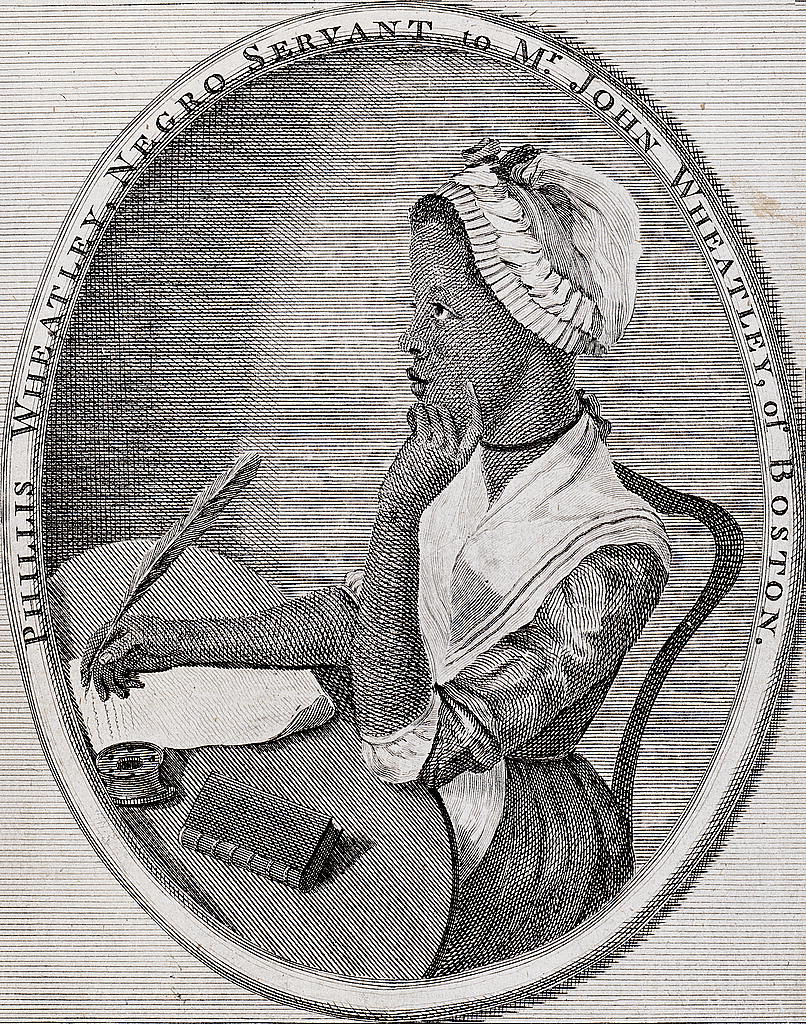
Phillis Wheatley Peters, also spelled Phyllis and Wheatly (c. 1753 – December 5, 1784), was an American writer who is considered the first African-American author of a published book of poetry. Born in West Africa, she was sold into slavery at the age of seven or eight and transported to North America, where she was bought by the Wheatley family of Boston. After she learned to read and write, they encouraged her poetry when they saw her talent.
On a 1773 trip to London with the Wheatleys' son, seeking publication of her work, Wheatley met prominent people who became her patrons. The publication in London of her Poems on Various Subjects, Religious and Moral on September 1, 1773, brought her fame both in England and the American colonies. Prominent figures, such as George Washington, praised her work. A few years later, African-American poet Jupiter Hammon praised her work in a poem of his own.
Wheatley was emancipated by the Wheatleys shortly after the publication of her book of poems. The Wheatleys died soon thereafter and Phillis Wheatley married John Peters, a poor grocer. They lost three children, who all died young. Wheatley-Peters died in poverty and obscurity at the age of 31.
Although the date and place of her birth are not documented, scholars believe that Wheatley was born in 1753 in West Africa, most likely in present-day Gambia or Senegal. She was sold by a local chief to a visiting trader, who took her to Boston in the Province of Massachusetts Bay, on July 11, 1761, on the slave ship Phillis. The vessel was owned by Timothy Fitch and captained by Peter Gwinn.
On arrival in Boston, Wheatley was bought by the wealthy Boston merchant and tailor John Wheatley as a slave for his wife Susanna. The Wheatleys named her Phillis, after the ship that had transported her to North America. She was given their last name of Wheatley, as was a common custom if any surname was used for enslaved people.
The Wheatleys' 18-year-old daughter, Mary, was Phillis's first tutor in reading and writing. Their son, Nathaniel, also tutored her. John Wheatley was known as a progressive throughout New England; his family afforded Phillis an unprecedented education for an enslaved person, and one unusual for a woman of any race at the time. By the age of 12, Phillis was reading Greek and Latin classics in their original languages, as well as difficult passages from the Bible. At the age of 14, she wrote her first poem, "To the University of Cambridge [Harvard], in New England".
Recognizing her literary ability, the Wheatley family supported Phillis's education and left household labor to their other domestic enslaved workers. The Wheatleys often exhibited Phillis's abilities to friends and family. Strongly influenced by her readings of the works of Alexander Pope, John Milton, Homer, Horace and Virgil, Phillis began to write poetry.
In 1773, at the age of 20, Phillis accompanied Nathaniel Wheatley to London in part for her health (she suffered from chronic asthma), but primarily because Susanna believed Phillis would have a better chance of publishing her book of poems there than in the colonies. Phillis had an audience with Frederick Bull, who was the Lord Mayor of London, and other prominent members of British society. (An audience with King George III was arranged, but Phillis had returned to Boston before it could take place.) Selina Hastings, Countess of Huntingdon, became interested in the talented young African woman and subsidized the publication of Wheatley's volume of poems, which appeared in London in the summer of 1773. As Hastings was ill, the two never met.[page needed]
Phillis Wheatley
Phillis Wheatley Peters, also spelled Phyllis and Wheatly (c. 1753 – December 5, 1784), was an American writer who is considered the first African-American author of a published book of poetry. Born in West Africa, she was sold into slavery at the age of seven or eight and transported to North America, where she was bought by the Wheatley family of Boston. After she learned to read and write, they encouraged her poetry when they saw her talent.
On a 1773 trip to London with the Wheatleys' son, seeking publication of her work, Wheatley met prominent people who became her patrons. The publication in London of her Poems on Various Subjects, Religious and Moral on September 1, 1773, brought her fame both in England and the American colonies. Prominent figures, such as George Washington, praised her work. A few years later, African-American poet Jupiter Hammon praised her work in a poem of his own.
Wheatley was emancipated by the Wheatleys shortly after the publication of her book of poems. The Wheatleys died soon thereafter and Phillis Wheatley married John Peters, a poor grocer. They lost three children, who all died young. Wheatley-Peters died in poverty and obscurity at the age of 31.
Although the date and place of her birth are not documented, scholars believe that Wheatley was born in 1753 in West Africa, most likely in present-day Gambia or Senegal. She was sold by a local chief to a visiting trader, who took her to Boston in the Province of Massachusetts Bay, on July 11, 1761, on the slave ship Phillis. The vessel was owned by Timothy Fitch and captained by Peter Gwinn.
On arrival in Boston, Wheatley was bought by the wealthy Boston merchant and tailor John Wheatley as a slave for his wife Susanna. The Wheatleys named her Phillis, after the ship that had transported her to North America. She was given their last name of Wheatley, as was a common custom if any surname was used for enslaved people.
The Wheatleys' 18-year-old daughter, Mary, was Phillis's first tutor in reading and writing. Their son, Nathaniel, also tutored her. John Wheatley was known as a progressive throughout New England; his family afforded Phillis an unprecedented education for an enslaved person, and one unusual for a woman of any race at the time. By the age of 12, Phillis was reading Greek and Latin classics in their original languages, as well as difficult passages from the Bible. At the age of 14, she wrote her first poem, "To the University of Cambridge [Harvard], in New England".
Recognizing her literary ability, the Wheatley family supported Phillis's education and left household labor to their other domestic enslaved workers. The Wheatleys often exhibited Phillis's abilities to friends and family. Strongly influenced by her readings of the works of Alexander Pope, John Milton, Homer, Horace and Virgil, Phillis began to write poetry.
In 1773, at the age of 20, Phillis accompanied Nathaniel Wheatley to London in part for her health (she suffered from chronic asthma), but primarily because Susanna believed Phillis would have a better chance of publishing her book of poems there than in the colonies. Phillis had an audience with Frederick Bull, who was the Lord Mayor of London, and other prominent members of British society. (An audience with King George III was arranged, but Phillis had returned to Boston before it could take place.) Selina Hastings, Countess of Huntingdon, became interested in the talented young African woman and subsidized the publication of Wheatley's volume of poems, which appeared in London in the summer of 1773. As Hastings was ill, the two never met.[page needed]
Recent media
Recent media