
Recent from talks
Piñata
Knowledge base stats:
Talk channels stats:
Members stats:
Piñata
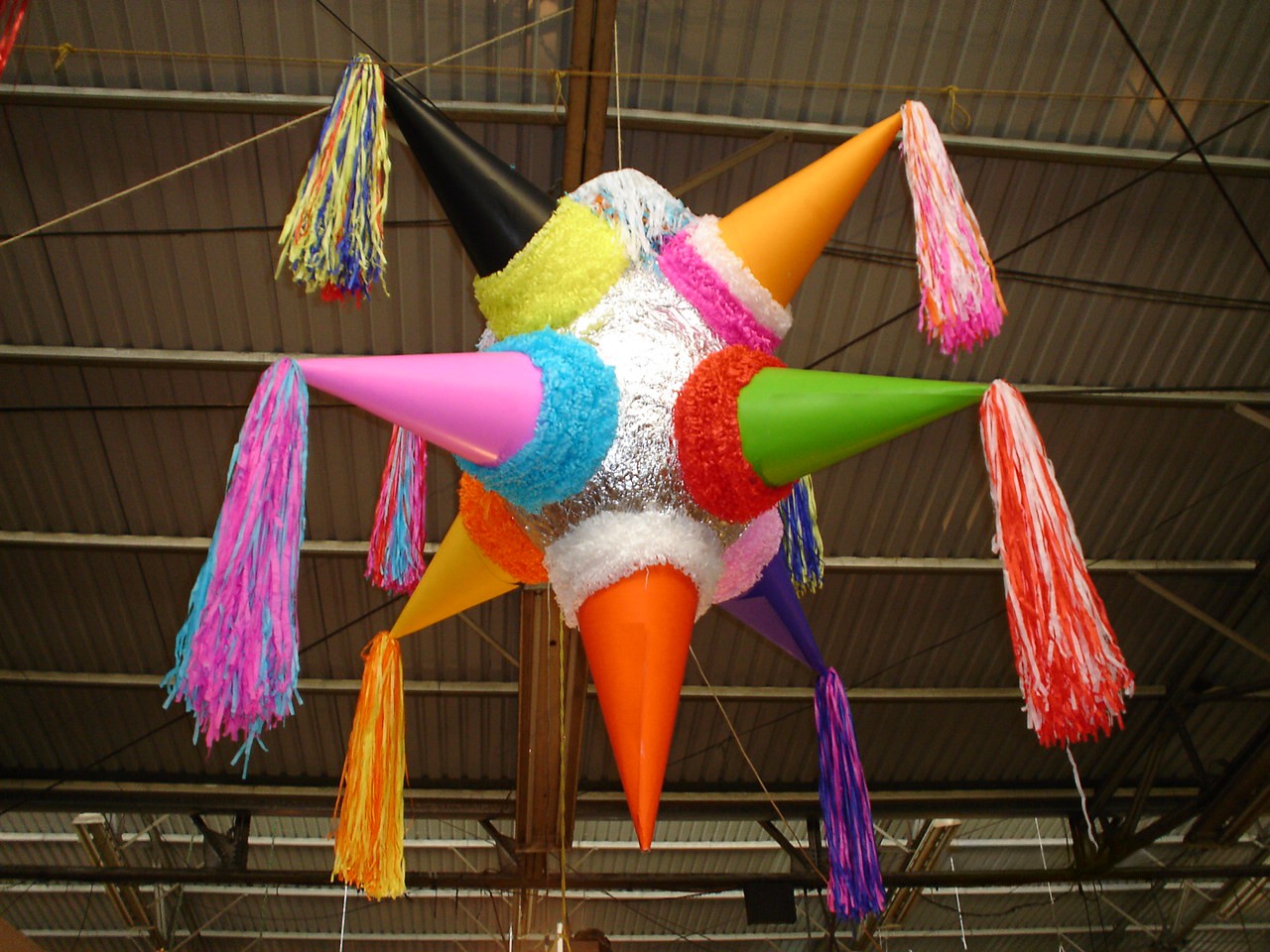
A piñata (/pɪnˈjɑːtə/, Spanish pronunciation: [piˈɲata] ⓘ) is a container, often made of papier-mâché, pottery, or cloth, that is decorated, filled with candy, and then broken as part of a celebration. Piñatas are commonly associated with Mexico.
The idea of breaking a container filled with treats came to Europe in the 14th century. The Spanish brought the European tradition to Mexico, although there were similar traditions in Mesoamerica, such as the Aztecs' honoring the birthday of the god Huītzilōpōchtli in mid-December. According to local records, the Mexican piñata tradition began in the town of Acolman, just north of Mexico City, where piñatas were introduced for catechism purposes as well as to co-opt the Huitzilopochtli ceremony.
Today, the piñata is still part of Mexican culture, the cultures of other countries in Latin America, as well as the United States, but it has mostly lost its religious character.
The Spanish word piñata probably derives from the Italian pignatta 'fragile pot,' itself from pigna lit. 'pinecone.' It may also come from Spanish piña lit. 'pinecone.'
Although today, piñatas are typically used for a fun activity at parties, their origins lie in other customs. There is some debate but it appears that their origin is not Spanish but Chinese. The Chinese version was in the shape of a cow or ox and used for the New Year. It was decorated with symbols and colors meant to produce a favorable climate for the coming growing season. It was filled with five types of seeds and then hit with sticks of various colors. After the piñata was broken, the remains were burned and the ashes kept for good luck.
The tradition arrived in Europe in the 14th century where it was associated with the Christian celebration of Lent; in Spain, the First Sunday of Lent, "Piñata Sunday", became a celebration known as the Dance of the Piñata. As the word's Italian origin indicates, pignatta (also pignata and pignàta) meaning "earthenware cooking pot", the Spanish initially used a plain clay container, before starting to decorate it with ribbons, tinsel and colored paper. The origin of the Italian word is thought to be linked to the Latin word pinea, "pine cone".
The European piñata tradition was brought to Mexico in the 16th century; however, there was a similar tradition in Mesoamerica already. The Mayan tradition was similar to the modern piñata tradition, including blindfolding the participant hitting the piñata. The Aztec tradition commemorated the birthday of Huitzilopochtli. Priests would decorate a clay pot with colorful feathers. When the pot was broken with a stick or club, the treasures inside would fall to the feet of the idol as an offering. According to local records, the piñata was first used for the purposes of evangelism in 1586, in Acolman, in the modern State of Mexico, just north of Mexico City. The Augustinian monks there modified European piñatas and created the Las Posadas tradition to co-opt the celebration of the birth of Huitzilopochtli, which was celebrated in mid December.
The Mexican Catholic interpretation assigned meanings related to the Catholic doctrine of struggle against temptation, and used for catechism purposes. In this tradition, the seven points represent the seven deadly sins, the pot represents evil, and the seasonal fruit and candy inside the temptations of evil. It was said that person with the stick is blindfolded to represent faith, and the turning, singing and shouting represent the disorientation that temptation creates. In some traditions, the participant is turned thirty three times, one for each year of Christ's life. As the participant beats the piñata, it is supposed to represent the struggle against temptation and evil. When the piñata breaks, some say (contrary to other interpretations) the treats inside then represent the rewards of keeping the faith.
Hub AI
Piñata AI simulator
(@Piñata_simulator)
Piñata
A piñata (/pɪnˈjɑːtə/, Spanish pronunciation: [piˈɲata] ⓘ) is a container, often made of papier-mâché, pottery, or cloth, that is decorated, filled with candy, and then broken as part of a celebration. Piñatas are commonly associated with Mexico.
The idea of breaking a container filled with treats came to Europe in the 14th century. The Spanish brought the European tradition to Mexico, although there were similar traditions in Mesoamerica, such as the Aztecs' honoring the birthday of the god Huītzilōpōchtli in mid-December. According to local records, the Mexican piñata tradition began in the town of Acolman, just north of Mexico City, where piñatas were introduced for catechism purposes as well as to co-opt the Huitzilopochtli ceremony.
Today, the piñata is still part of Mexican culture, the cultures of other countries in Latin America, as well as the United States, but it has mostly lost its religious character.
The Spanish word piñata probably derives from the Italian pignatta 'fragile pot,' itself from pigna lit. 'pinecone.' It may also come from Spanish piña lit. 'pinecone.'
Although today, piñatas are typically used for a fun activity at parties, their origins lie in other customs. There is some debate but it appears that their origin is not Spanish but Chinese. The Chinese version was in the shape of a cow or ox and used for the New Year. It was decorated with symbols and colors meant to produce a favorable climate for the coming growing season. It was filled with five types of seeds and then hit with sticks of various colors. After the piñata was broken, the remains were burned and the ashes kept for good luck.
The tradition arrived in Europe in the 14th century where it was associated with the Christian celebration of Lent; in Spain, the First Sunday of Lent, "Piñata Sunday", became a celebration known as the Dance of the Piñata. As the word's Italian origin indicates, pignatta (also pignata and pignàta) meaning "earthenware cooking pot", the Spanish initially used a plain clay container, before starting to decorate it with ribbons, tinsel and colored paper. The origin of the Italian word is thought to be linked to the Latin word pinea, "pine cone".
The European piñata tradition was brought to Mexico in the 16th century; however, there was a similar tradition in Mesoamerica already. The Mayan tradition was similar to the modern piñata tradition, including blindfolding the participant hitting the piñata. The Aztec tradition commemorated the birthday of Huitzilopochtli. Priests would decorate a clay pot with colorful feathers. When the pot was broken with a stick or club, the treasures inside would fall to the feet of the idol as an offering. According to local records, the piñata was first used for the purposes of evangelism in 1586, in Acolman, in the modern State of Mexico, just north of Mexico City. The Augustinian monks there modified European piñatas and created the Las Posadas tradition to co-opt the celebration of the birth of Huitzilopochtli, which was celebrated in mid December.
The Mexican Catholic interpretation assigned meanings related to the Catholic doctrine of struggle against temptation, and used for catechism purposes. In this tradition, the seven points represent the seven deadly sins, the pot represents evil, and the seasonal fruit and candy inside the temptations of evil. It was said that person with the stick is blindfolded to represent faith, and the turning, singing and shouting represent the disorientation that temptation creates. In some traditions, the participant is turned thirty three times, one for each year of Christ's life. As the participant beats the piñata, it is supposed to represent the struggle against temptation and evil. When the piñata breaks, some say (contrary to other interpretations) the treats inside then represent the rewards of keeping the faith.
Recent media