
Recent from talks
Picnic (band)
Knowledge base stats:
Talk channels stats:
Members stats:
Picnic (band)
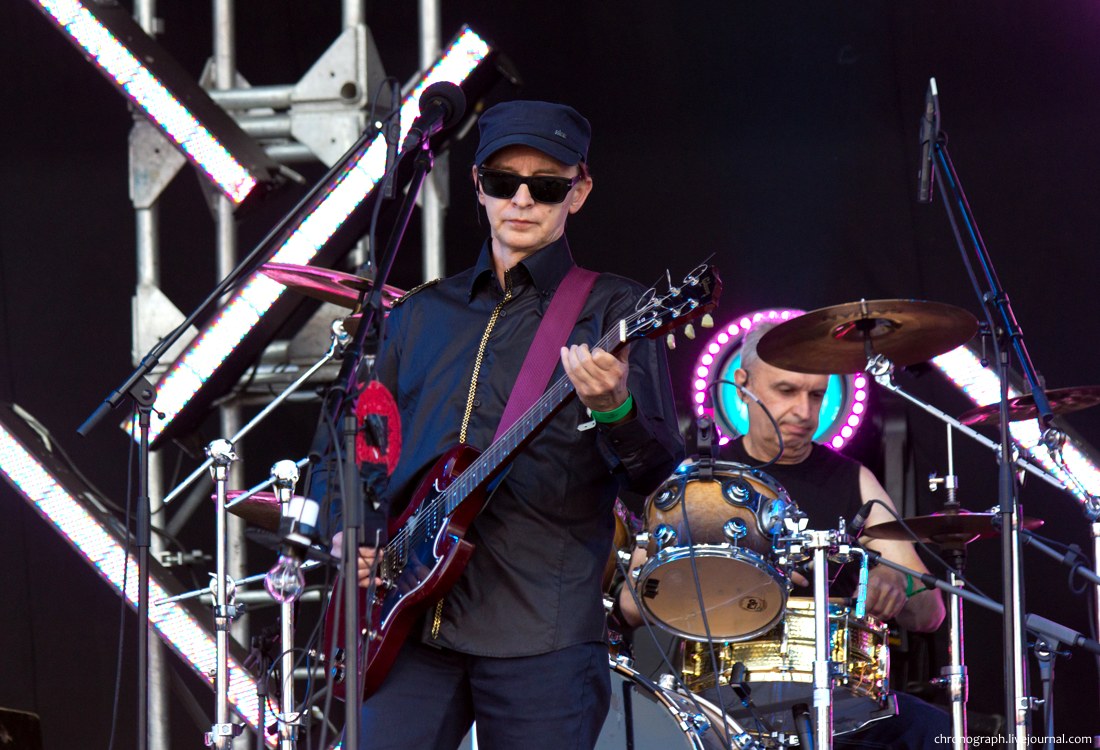
Picnic (Russian: Пикник), also transliterated as Piknik, is a Russian rock band formed in 1978 in Leningrad (now Saint Petersburg). Known for their blend of art, progressive, gothic, and Russian rock, they are considered a cult phenomenon in Russian music. The group's defining era began in 1981, with the arrival of frontman, guitarist, and primary songwriter Edmund Shklyarskiy. Picnic is highly regarded for their elaborate, theatrical live performances, which often feature custom-built and unconventional instruments.
The band has faced significant tragedies in recent years. In March 2018, several members were severely injured in a tour bus crash near Gus-Khrustalny. On 22 March 2024, they were scheduled to perform at Crocus City Hall in Krasnogorsk, when a terrorist attack occurred, resulting in the death of the band's administrator, Ekaterina Kushner.
Picnic was formed in September 1978 as a student band at the Leningrad Polytechnic Institute. Its lineup included Sergey Omelnichenko (guitar, vocals), Evgeny Voloshchuk (bass), and Alexei Dobychin (vocals), and they began playing local gigs.[citation needed]
Picnic's trajectory changed significantly in 1981, when Edmund Shklyarskiy joined as the frontman and principal songwriter. His distinct vocal style, philosophical lyrics, and guitar work steered the band toward art rock and psychedelic rock. In 1982, with the help of Boris Grebenshchikov of Aquarium and producer Andrei Tropillo, Picnic recorded their debut album, Dym. It was distributed via magnitizdat (underground tape trading) and quickly gained popularity across the Soviet Union, establishing Picnic as a major act in the Leningrad Rock Club.
During the mid-to-late 1980s, the band experimented with their sound, occasionally incorporating synthesizers and drum machines to achieve a more commercial, pop-oriented style in order to fund their own equipment. They eventually returned to their roots, emphasizing guitar-driven art rock and symphonic arrangements, culminating in the release of their classic 1986 album, Iyeroglif, on the state-owned Melodiya label.[citation needed]
In the 1990s, Shklyarskiy began designing highly unconventional, custom-built instruments into the band's live shows. These included a "living cello" (strings and pickups attached to a performer's body), an "Egyptian" Moog-based synthesizer with a massive lever, a circular saw with magnetic pickups, and various robotic and pyrotechnic stage props. The band's concerts evolved into theatrical experiences, drawing on themes of mysticism, Gothic literature, and carnival aesthetics.
Despite shifting trends in Russian rock, Picnic maintained a dedicated, multi-generational fanbase and continued to release critically acclaimed albums, such as Zhen-Shen (1996), Mrakobesiye i Dzhazz (2007), and Zhelezniye Mantry (2008).
In 2016, the band was barred from playing in Ukraine due to their performance in Crimea after it was annexed by Russia.
Hub AI
Picnic (band) AI simulator
(@Picnic (band)_simulator)
Picnic (band)
Picnic (Russian: Пикник), also transliterated as Piknik, is a Russian rock band formed in 1978 in Leningrad (now Saint Petersburg). Known for their blend of art, progressive, gothic, and Russian rock, they are considered a cult phenomenon in Russian music. The group's defining era began in 1981, with the arrival of frontman, guitarist, and primary songwriter Edmund Shklyarskiy. Picnic is highly regarded for their elaborate, theatrical live performances, which often feature custom-built and unconventional instruments.
The band has faced significant tragedies in recent years. In March 2018, several members were severely injured in a tour bus crash near Gus-Khrustalny. On 22 March 2024, they were scheduled to perform at Crocus City Hall in Krasnogorsk, when a terrorist attack occurred, resulting in the death of the band's administrator, Ekaterina Kushner.
Picnic was formed in September 1978 as a student band at the Leningrad Polytechnic Institute. Its lineup included Sergey Omelnichenko (guitar, vocals), Evgeny Voloshchuk (bass), and Alexei Dobychin (vocals), and they began playing local gigs.[citation needed]
Picnic's trajectory changed significantly in 1981, when Edmund Shklyarskiy joined as the frontman and principal songwriter. His distinct vocal style, philosophical lyrics, and guitar work steered the band toward art rock and psychedelic rock. In 1982, with the help of Boris Grebenshchikov of Aquarium and producer Andrei Tropillo, Picnic recorded their debut album, Dym. It was distributed via magnitizdat (underground tape trading) and quickly gained popularity across the Soviet Union, establishing Picnic as a major act in the Leningrad Rock Club.
During the mid-to-late 1980s, the band experimented with their sound, occasionally incorporating synthesizers and drum machines to achieve a more commercial, pop-oriented style in order to fund their own equipment. They eventually returned to their roots, emphasizing guitar-driven art rock and symphonic arrangements, culminating in the release of their classic 1986 album, Iyeroglif, on the state-owned Melodiya label.[citation needed]
In the 1990s, Shklyarskiy began designing highly unconventional, custom-built instruments into the band's live shows. These included a "living cello" (strings and pickups attached to a performer's body), an "Egyptian" Moog-based synthesizer with a massive lever, a circular saw with magnetic pickups, and various robotic and pyrotechnic stage props. The band's concerts evolved into theatrical experiences, drawing on themes of mysticism, Gothic literature, and carnival aesthetics.
Despite shifting trends in Russian rock, Picnic maintained a dedicated, multi-generational fanbase and continued to release critically acclaimed albums, such as Zhen-Shen (1996), Mrakobesiye i Dzhazz (2007), and Zhelezniye Mantry (2008).
In 2016, the band was barred from playing in Ukraine due to their performance in Crimea after it was annexed by Russia.
Recent media