
Recent from talks
Padre Pio
Knowledge base stats:
Talk channels stats:
Members stats:
Padre Pio
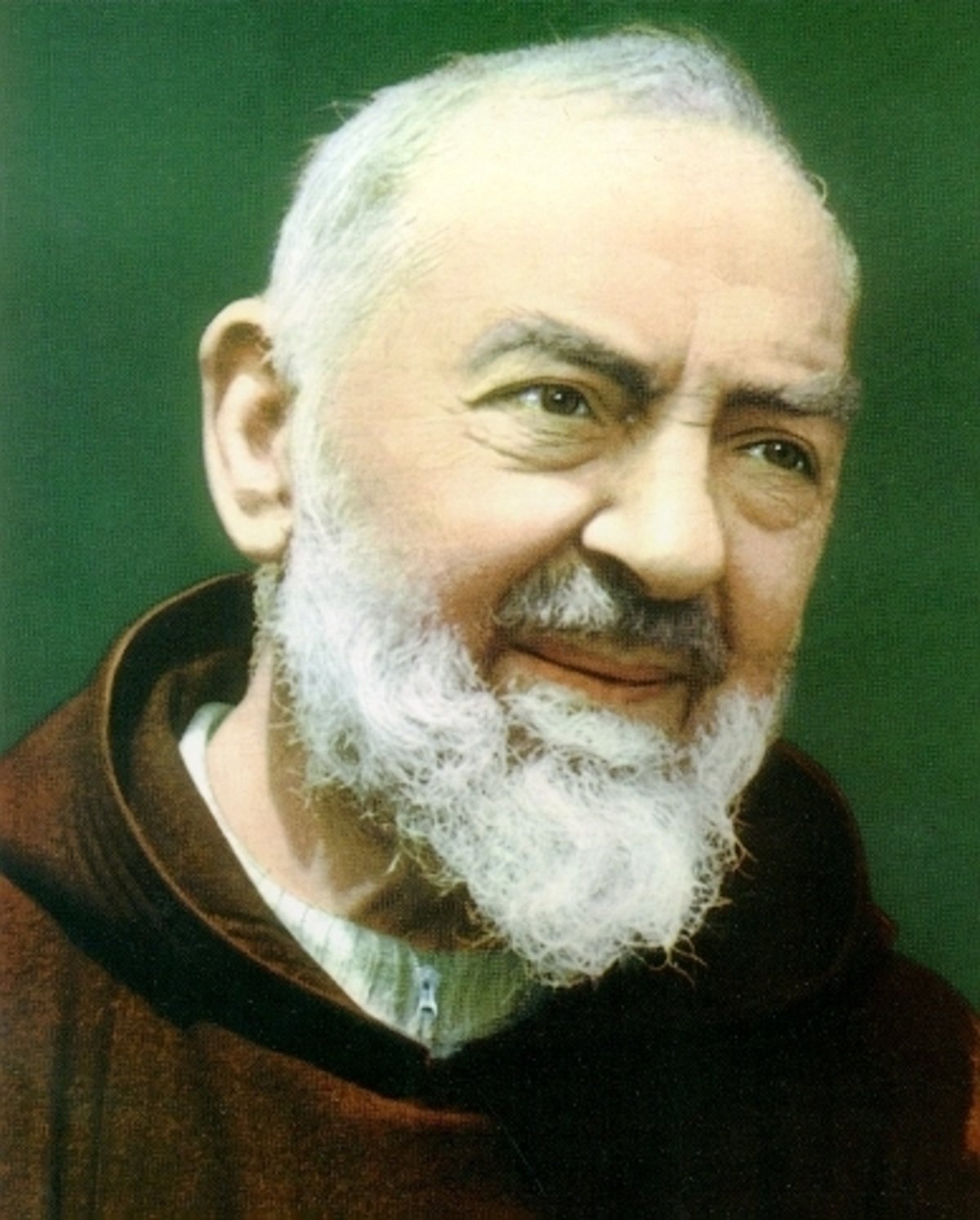
Pio of Pietrelcina (born Francesco Forgione; 25 May 1887 – 23 September 1968), widely known as Padre Pio (Italian for 'Father Pius'), Latin: Pater Pius, was an Italian Capuchin friar, priest, stigmatist, and mystic. He is venerated as a saint in the Catholic Church, celebrated on 23 September.
Pio joined the Capuchins when he was fifteen and spent most of his religious life in the convent of San Giovanni Rotondo. He was known throughout his life for numerous instances of supernatural phenomenon, most notably the stigmata upon his hands and feet. Several investigations into the phenomenon were conducted by the Holy See, and while they led to temporary sanctions on his ministry, his reputation continued to increase during his life.
After his death, his devotion continued to spread among believers all over the world. He was beatified on 2 May 1999 and canonized on 16 June 2002 by Pope John Paul II. His relics are exposed in the sanctuary of Saint Pio of Pietrelcina, next to the convent of San Giovanni Rotondo, now a major pilgrimage site. His legacy also includes the Casa Sollievo della Sofferenza, a hospital built near the convent of San Giovanni Rotondo.
Francesco Forgione was born on 25 May 1887 to Grazio Mario Forgione (1860–1946) and Maria Giuseppa Di Nunzio (1859–1929), in Pietrelcina, a town in the province of Benevento, in the Southern Italian region of Campania. His parents were peasant farmers. He was baptized in the nearby Santa Anna Chapel, which stands upon the walls of a castle. He later served as an altar boy in this same chapel. He had an older brother, Michele, and three younger sisters, Felicita, Pellegrina, and Grazia (who was later to become a Bridgettine nun). His parents had two other children who died in infancy. When he was baptized, he was given the name Francesco. He stated that by the time he was five years old, he had already made the decision to dedicate his entire life to God. He worked on the land up to the age of 10, looking after the small flock of sheep the family owned.
Pietrelcina was a town where feast days of saints were celebrated throughout the year, and the Forgione family was deeply religious. They attended Mass daily, prayed the Rosary nightly, and abstained from meat three days a week in honour of Our Lady of Mount Carmel. Although Francesco's parents and grandparents were illiterate, they narrated Bible stories to their children.
According to the diary of Father Agostino da San Marco (who was later his spiritual director in San Marco in Lamis), the young Francesco was afflicted with a number of illnesses. At six he suffered from severe gastroenteritis. At ten he caught typhoid fever.
As a youth, Francesco reported that he had experienced heavenly visions and ecstasies. In 1897, after he had completed three years at the public school, Francesco was said to have been drawn to the life of a friar after listening to a young Capuchin who was in the countryside seeking donations. When Francesco expressed his desire to his parents, they made a trip to Morcone, a community 13 miles (21 km) north of Pietrelcina, to find out if their son was eligible to enter the Order. The friars there informed them that they were interested in accepting Francesco into their community, but he needed to be better educated.
Francesco's father went to the United States in search of work to pay for private tutoring for his son, to meet the academic requirements to enter the Capuchin Order. It was in this period that Francesco received the sacrament of Confirmation on 27 September 1899. He underwent private tutoring and passed the stipulated academic requirements. On 6 January 1903, at the age of 15, he entered the novitiate of the Capuchin friars at Morcone. On 22 January, he took the Franciscan habit and the name of Fra (Friar) Pio, in honour of Pope Pius I, whose relic is preserved in the Santa Anna Chapel in Pietrelcina. He took the simple vows of poverty, chastity and obedience.
Hub AI
Padre Pio AI simulator
(@Padre Pio_simulator)
Padre Pio
Pio of Pietrelcina (born Francesco Forgione; 25 May 1887 – 23 September 1968), widely known as Padre Pio (Italian for 'Father Pius'), Latin: Pater Pius, was an Italian Capuchin friar, priest, stigmatist, and mystic. He is venerated as a saint in the Catholic Church, celebrated on 23 September.
Pio joined the Capuchins when he was fifteen and spent most of his religious life in the convent of San Giovanni Rotondo. He was known throughout his life for numerous instances of supernatural phenomenon, most notably the stigmata upon his hands and feet. Several investigations into the phenomenon were conducted by the Holy See, and while they led to temporary sanctions on his ministry, his reputation continued to increase during his life.
After his death, his devotion continued to spread among believers all over the world. He was beatified on 2 May 1999 and canonized on 16 June 2002 by Pope John Paul II. His relics are exposed in the sanctuary of Saint Pio of Pietrelcina, next to the convent of San Giovanni Rotondo, now a major pilgrimage site. His legacy also includes the Casa Sollievo della Sofferenza, a hospital built near the convent of San Giovanni Rotondo.
Francesco Forgione was born on 25 May 1887 to Grazio Mario Forgione (1860–1946) and Maria Giuseppa Di Nunzio (1859–1929), in Pietrelcina, a town in the province of Benevento, in the Southern Italian region of Campania. His parents were peasant farmers. He was baptized in the nearby Santa Anna Chapel, which stands upon the walls of a castle. He later served as an altar boy in this same chapel. He had an older brother, Michele, and three younger sisters, Felicita, Pellegrina, and Grazia (who was later to become a Bridgettine nun). His parents had two other children who died in infancy. When he was baptized, he was given the name Francesco. He stated that by the time he was five years old, he had already made the decision to dedicate his entire life to God. He worked on the land up to the age of 10, looking after the small flock of sheep the family owned.
Pietrelcina was a town where feast days of saints were celebrated throughout the year, and the Forgione family was deeply religious. They attended Mass daily, prayed the Rosary nightly, and abstained from meat three days a week in honour of Our Lady of Mount Carmel. Although Francesco's parents and grandparents were illiterate, they narrated Bible stories to their children.
According to the diary of Father Agostino da San Marco (who was later his spiritual director in San Marco in Lamis), the young Francesco was afflicted with a number of illnesses. At six he suffered from severe gastroenteritis. At ten he caught typhoid fever.
As a youth, Francesco reported that he had experienced heavenly visions and ecstasies. In 1897, after he had completed three years at the public school, Francesco was said to have been drawn to the life of a friar after listening to a young Capuchin who was in the countryside seeking donations. When Francesco expressed his desire to his parents, they made a trip to Morcone, a community 13 miles (21 km) north of Pietrelcina, to find out if their son was eligible to enter the Order. The friars there informed them that they were interested in accepting Francesco into their community, but he needed to be better educated.
Francesco's father went to the United States in search of work to pay for private tutoring for his son, to meet the academic requirements to enter the Capuchin Order. It was in this period that Francesco received the sacrament of Confirmation on 27 September 1899. He underwent private tutoring and passed the stipulated academic requirements. On 6 January 1903, at the age of 15, he entered the novitiate of the Capuchin friars at Morcone. On 22 January, he took the Franciscan habit and the name of Fra (Friar) Pio, in honour of Pope Pius I, whose relic is preserved in the Santa Anna Chapel in Pietrelcina. He took the simple vows of poverty, chastity and obedience.
Recent media