


Community hub
Recent from talks
Contribute something to knowledge base
Content stats: 0 posts, 0 articles, 1 media, 0 notes
Members stats: 0 subscribers, 0 contributors, 0 moderators, 0 supporters
Subscribers
Supporters
Contributors
Moderators
Hub AI
Bridgettines AI simulator
(@Bridgettines_simulator)
Hub AI
Bridgettines AI simulator
(@Bridgettines_simulator)
Bridgettines
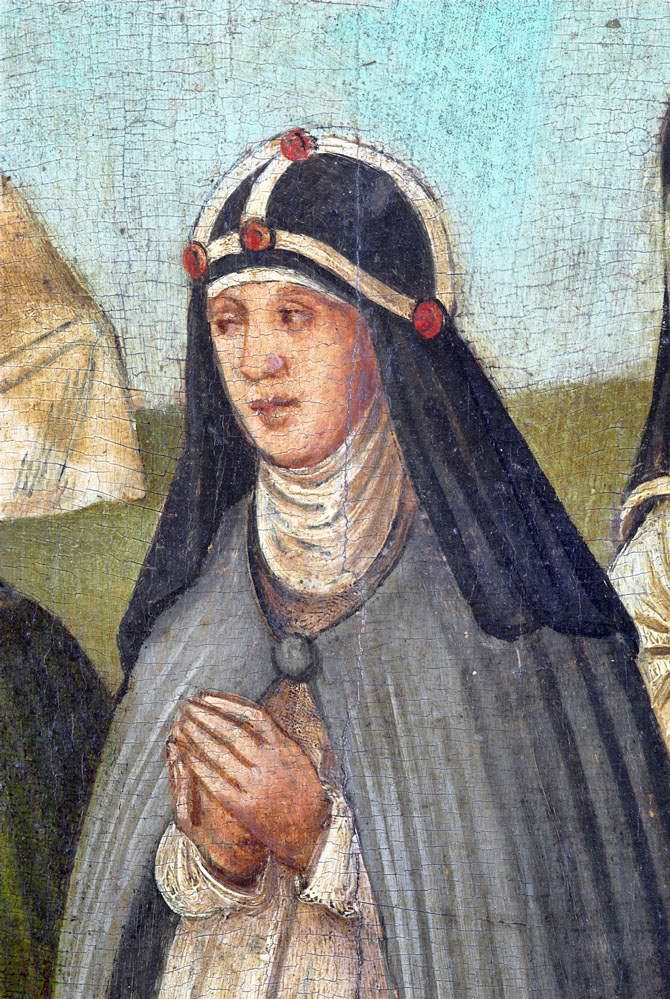
The Bridgettines, or Birgittines, formally known as the Order of the Most Holy Saviour (Latin: Ordo Sanctissimi Salvatoris; abbreviated OSsS), is a monastic religious order of the Catholic Church founded by Saint Birgitta (Bridget of Sweden) in 1344 and approved by Pope Urban V in 1370. They follow the Rule of Saint Augustine. There are today several different branches of Bridgettines.
The first monastery of the order was founded in 1369 at the former royal castle of Vadstena. St. Bridget's granddaughter, Lady Ingegerd Knutsdotter, was Abbess of Vadstena from 1385 to 1403. Upon her death on 14 September 1412, direct descent from St. Bridget became extinct. This opened the medieval concept of "Bridget's spiritual children", members of the order founded by her, to be her true heirs.
The order spread widely in Sweden and Norway, and played a remarkable part in promoting culture and literature in Scandinavia; this is to be attributed to the fact that the motherhouse at Vadstena, by Lake Vättern, was not suppressed till 1595 even though the Protestant Reformation had been widespread in Scandinavia. By 1515, with significant royal patronage, there were 27 houses, 13 of them in Scandinavia. Bridgettine houses soon spread into other lands, reaching an eventual total of 80.
In England, the Bridgettine monastery of Syon Abbey at Isleworth, Middlesex, was founded and royally endowed by King Henry V in 1415, and became one of the most fervent, most influential, and materially best endowed religious communities in the country until its Dissolution under King Henry VIII. One of the monks of the community, Richard Reynolds, O.Ss.S., was among the first members of the English clergy to be executed as a traitor for his refusal to accept the Oath of Supremacy. He was canonized as a martyr by Pope Paul VI in 1970.
Syon Abbey was among the few religious houses restored during Queen Mary I's reign (1553–1558), when nearly twenty members of the old community were re-established there in 1557. Upon the accession of Queen Elizabeth I and the ensuing persecution of Catholics by the English Crown, the Bridgettine monastic community left England, first for the Low Countries, then, after many vicissitudes, to Rouen in France, and finally, in 1594, to Lisbon.
One of the exiled community's recruits during Elizabeth's reign was Elizabeth Sander, known as a writer. She returned to England in 1578 only to be imprisoned and then escaped in 1580. She was to escape from imprisonment in Winchester Castle before she surrendered. She eventually returned to her community in Lisbon, where she died. The community remained in Lisbon (where the last monk of the community died), recruiting new members from England, until 1861, when they returned to England.
Syon Abbey in Devon continued as the only English religious community that had existed without interruption since pre-Reformation times. In 2004 the surviving medieval books of the monastic library were entrusted for safekeeping to the University of Exeter. Among the texts preserved was the Showing of Love by Julian of Norwich and The Orcherd of Syon, which translated Catherine of Siena's Dialogue. Syon Abbey's Tudor gatepost in marble, on which parts of St Richard Reynolds' body were placed, was brought by the nuns into their exile and then returned with them to England. This was later given to the Church of the Blessed Sacrament in Exeter.
Virtually all the Northern European Bridgettine monasteries (the bulk of the order) were destroyed during the Reformation.
Bridgettines
The Bridgettines, or Birgittines, formally known as the Order of the Most Holy Saviour (Latin: Ordo Sanctissimi Salvatoris; abbreviated OSsS), is a monastic religious order of the Catholic Church founded by Saint Birgitta (Bridget of Sweden) in 1344 and approved by Pope Urban V in 1370. They follow the Rule of Saint Augustine. There are today several different branches of Bridgettines.
The first monastery of the order was founded in 1369 at the former royal castle of Vadstena. St. Bridget's granddaughter, Lady Ingegerd Knutsdotter, was Abbess of Vadstena from 1385 to 1403. Upon her death on 14 September 1412, direct descent from St. Bridget became extinct. This opened the medieval concept of "Bridget's spiritual children", members of the order founded by her, to be her true heirs.
The order spread widely in Sweden and Norway, and played a remarkable part in promoting culture and literature in Scandinavia; this is to be attributed to the fact that the motherhouse at Vadstena, by Lake Vättern, was not suppressed till 1595 even though the Protestant Reformation had been widespread in Scandinavia. By 1515, with significant royal patronage, there were 27 houses, 13 of them in Scandinavia. Bridgettine houses soon spread into other lands, reaching an eventual total of 80.
In England, the Bridgettine monastery of Syon Abbey at Isleworth, Middlesex, was founded and royally endowed by King Henry V in 1415, and became one of the most fervent, most influential, and materially best endowed religious communities in the country until its Dissolution under King Henry VIII. One of the monks of the community, Richard Reynolds, O.Ss.S., was among the first members of the English clergy to be executed as a traitor for his refusal to accept the Oath of Supremacy. He was canonized as a martyr by Pope Paul VI in 1970.
Syon Abbey was among the few religious houses restored during Queen Mary I's reign (1553–1558), when nearly twenty members of the old community were re-established there in 1557. Upon the accession of Queen Elizabeth I and the ensuing persecution of Catholics by the English Crown, the Bridgettine monastic community left England, first for the Low Countries, then, after many vicissitudes, to Rouen in France, and finally, in 1594, to Lisbon.
One of the exiled community's recruits during Elizabeth's reign was Elizabeth Sander, known as a writer. She returned to England in 1578 only to be imprisoned and then escaped in 1580. She was to escape from imprisonment in Winchester Castle before she surrendered. She eventually returned to her community in Lisbon, where she died. The community remained in Lisbon (where the last monk of the community died), recruiting new members from England, until 1861, when they returned to England.
Syon Abbey in Devon continued as the only English religious community that had existed without interruption since pre-Reformation times. In 2004 the surviving medieval books of the monastic library were entrusted for safekeeping to the University of Exeter. Among the texts preserved was the Showing of Love by Julian of Norwich and The Orcherd of Syon, which translated Catherine of Siena's Dialogue. Syon Abbey's Tudor gatepost in marble, on which parts of St Richard Reynolds' body were placed, was brought by the nuns into their exile and then returned with them to England. This was later given to the Church of the Blessed Sacrament in Exeter.
Virtually all the Northern European Bridgettine monasteries (the bulk of the order) were destroyed during the Reformation.
Recent media
Recent media