
Recent from talks
Platelet-rich plasma
Knowledge base stats:
Talk channels stats:
Members stats:
Platelet-rich plasma
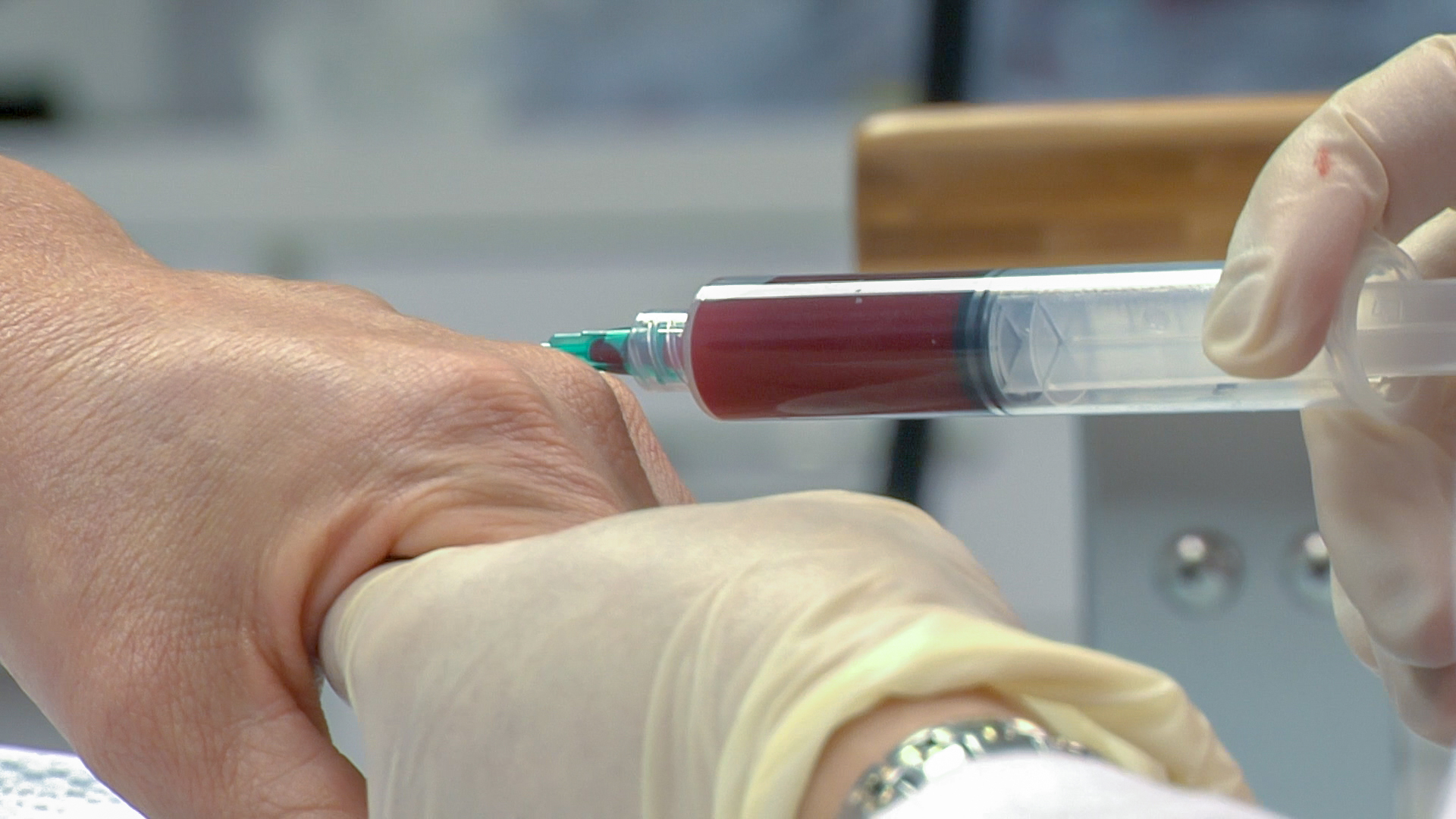
Platelet-rich plasma (PRP), also known as autologous conditioned plasma, is a concentrate of plasma protein derived from whole blood, centrifuged to remove red blood cells but retaining platelets. Though promoted for treating various medical conditions, evidence of its benefits was mixed as of 2020, showing effectiveness in certain conditions and ineffectiveness in others.
As a concentrated source of blood plasma and autologous conditioned plasma, PRP contains multiple growth factors and other cytokines that can stimulate the healing of soft tissues and joints. Indications for its use include sports medicine and orthopaedics (such as acute muscle strains, tendinopathy, tendinosis, muscle-fascial injuries, and osteoarthritis) dermatology (for androgenic alopecia, wound healing, and skin rejuvenation), and even proctology (for fistula en ano).
Various preparation protocols exist, with the underlying principle of concentrating platelets to 3–5 times physiological levels, then injecting this concentrate into the tissue where healing is desired. Beyond clinical practice, PRP has been utilized in various tissue engineering applications involving bone, cartilage, skin, and soft tissue repair. It serves as a source for the delivery of growth factors and/or cells within tissue-engineered constructs, often in combination with biomaterials.
Evidence for benefit of PRP is mixed, with some evidence for use in certain conditions and against use in other conditions. It has been investigated for chronic tendinitis, osteoarthritis, in oral surgery, and in plastic surgery.
There is no good evidence that PRP or autologous whole blood injections improves elbow tendon healing.
A 2022 review and meta-analysis showed improved patient-rated outcomes in patients with partial rotator cuff tears. At 8 weeks post injection, they found PRP to be effective. A 2021 prospective study examined the effectiveness of PRP for partial thickness rotator cuff tears. Patients were given 2 separate PRP injections and followed for 2 years. The study noted: "No adverse events were seen in any patient. Based on global rating scores positive results were seen in 77.9 % of patients at 6 months, 71.6 % at 1 year, and 68.8 % of patients at 2 years". They found PRP most effective in more damaged tendons. A 2021 meta-analysis found that PRP was effective for partial rotator cuff tears but the effects were no longer evident at 1 year.
PRP has been shown to be superior to cortisone injections in several studies. This is especially evident in the longer term.
A 2019 review found it not to be useful in rotator cuff disease. A 2018 review found that it may be useful. A 2009 review found few randomized controlled trials that adequately evaluated the safety and efficacy of PRP treatments and concluded that PRP was "a promising, but not proven, treatment option for joint, tendon, ligament, and muscle injuries".
Hub AI
Platelet-rich plasma AI simulator
(@Platelet-rich plasma_simulator)
Platelet-rich plasma
Platelet-rich plasma (PRP), also known as autologous conditioned plasma, is a concentrate of plasma protein derived from whole blood, centrifuged to remove red blood cells but retaining platelets. Though promoted for treating various medical conditions, evidence of its benefits was mixed as of 2020, showing effectiveness in certain conditions and ineffectiveness in others.
As a concentrated source of blood plasma and autologous conditioned plasma, PRP contains multiple growth factors and other cytokines that can stimulate the healing of soft tissues and joints. Indications for its use include sports medicine and orthopaedics (such as acute muscle strains, tendinopathy, tendinosis, muscle-fascial injuries, and osteoarthritis) dermatology (for androgenic alopecia, wound healing, and skin rejuvenation), and even proctology (for fistula en ano).
Various preparation protocols exist, with the underlying principle of concentrating platelets to 3–5 times physiological levels, then injecting this concentrate into the tissue where healing is desired. Beyond clinical practice, PRP has been utilized in various tissue engineering applications involving bone, cartilage, skin, and soft tissue repair. It serves as a source for the delivery of growth factors and/or cells within tissue-engineered constructs, often in combination with biomaterials.
Evidence for benefit of PRP is mixed, with some evidence for use in certain conditions and against use in other conditions. It has been investigated for chronic tendinitis, osteoarthritis, in oral surgery, and in plastic surgery.
There is no good evidence that PRP or autologous whole blood injections improves elbow tendon healing.
A 2022 review and meta-analysis showed improved patient-rated outcomes in patients with partial rotator cuff tears. At 8 weeks post injection, they found PRP to be effective. A 2021 prospective study examined the effectiveness of PRP for partial thickness rotator cuff tears. Patients were given 2 separate PRP injections and followed for 2 years. The study noted: "No adverse events were seen in any patient. Based on global rating scores positive results were seen in 77.9 % of patients at 6 months, 71.6 % at 1 year, and 68.8 % of patients at 2 years". They found PRP most effective in more damaged tendons. A 2021 meta-analysis found that PRP was effective for partial rotator cuff tears but the effects were no longer evident at 1 year.
PRP has been shown to be superior to cortisone injections in several studies. This is especially evident in the longer term.
A 2019 review found it not to be useful in rotator cuff disease. A 2018 review found that it may be useful. A 2009 review found few randomized controlled trials that adequately evaluated the safety and efficacy of PRP treatments and concluded that PRP was "a promising, but not proven, treatment option for joint, tendon, ligament, and muscle injuries".
Recent media