



Community hub
Recent from talks
Knowledge base stats:
Talk channels stats:
Members stats:
Political integration of India
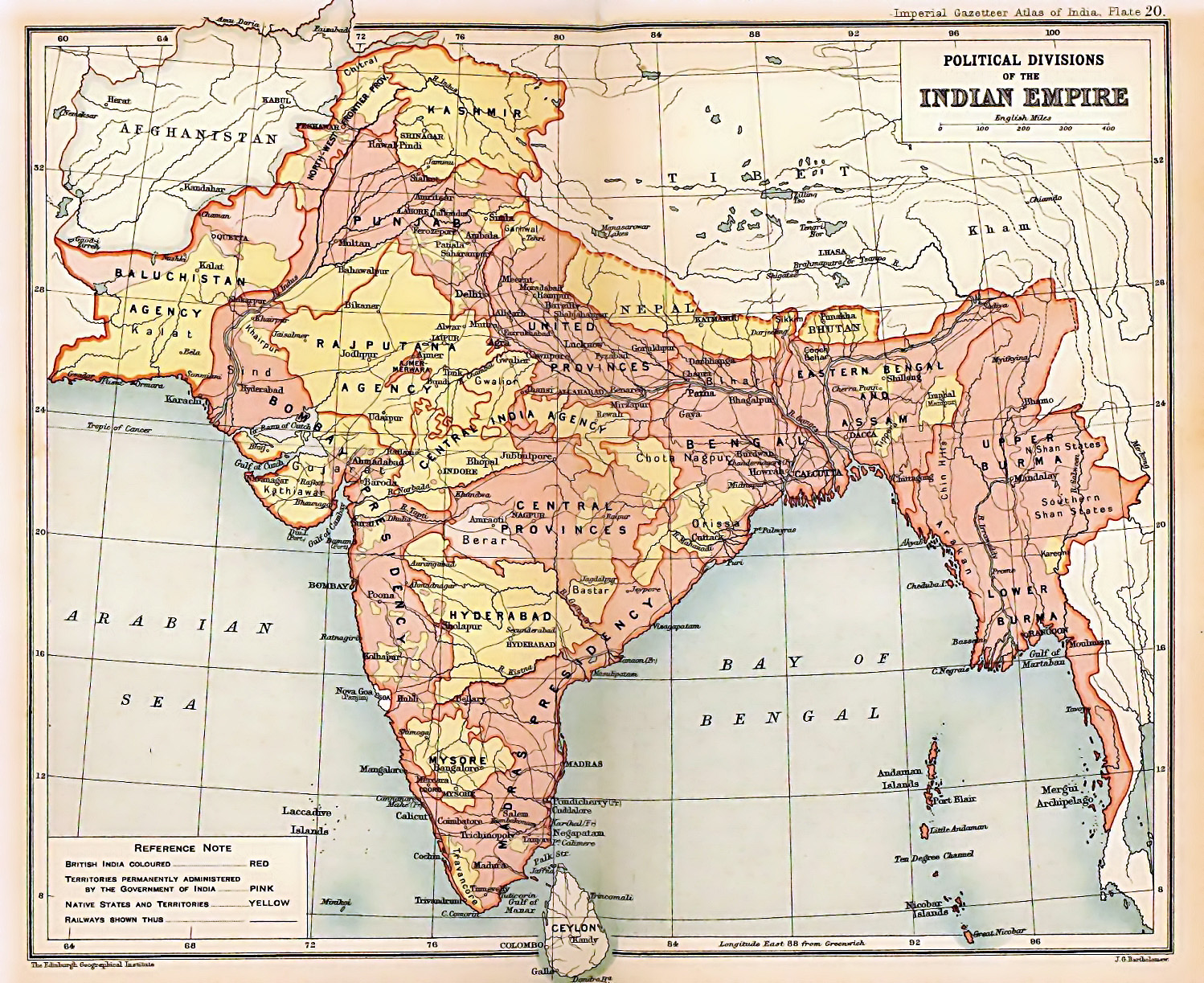
Before it gained independence in 1947, India (also called the Indian Empire) was divided into two sets of territories, one under direct British rule (British India), and the other consisting of princely states under the suzerainty of the British Crown, with control over their internal affairs remaining to varying degrees in the hands of their hereditary rulers. The latter included 562 princely states which had different types of revenue-sharing arrangements with the British, often depending on their size, population and local conditions. In addition, there were several colonial enclaves controlled by France and Portugal. After independence, the political integration of these territories into an Indian Union was a declared objective of the Indian National Congress, and the Government of India pursued this over the next decade.
In 1920, Congress (party) under the leadership of Mahatma Gandhi declared swaraj (self-rule) for Indians as its goal and asked the princes of India to establish responsible government. Jawaharlal Nehru played a major role in pushing Congress to confront the princely states and declared in 1929 that "only people who have the right to determine the future of the States must be the people of these States". In 1937, the Congress won in most parts of British India (not including the princely states) in the provincial elections, and started to intervene in the affairs of the states. In the same year, Gandhi played a major role in proposing a federation involving a union between British India and the princely states, with an Indian central government. In 1946, Jawaharlal Nehru observed that no princely state could prevail militarily against the army of independent India. In January 1947, Nehru said that independent India would not accept the divine right of kings. In May 1947, he declared that any princely state which refused to join the Constituent Assembly would be treated as an enemy state. Vallabhbhai Patel, Louis Mountbatten and V. P. Menon were more conciliatory towards the princes, and as the men charged with integrating the states, were successful in the task. Having secured their accession, they then proceeded, in a step-by-step process, to secure and extend the union government's authority over these states and transform their administrations until, by 1956, there was little difference between the territories that had been part of British India and those that had been princely states. Simultaneously, the Government of India, through a combination of military and diplomatic means, acquired de facto and de jure control over the remaining colonial enclaves, which too were integrated into India.
The early history of British expansion in India was characterised by the co-existence of two approaches towards the existing princely states. The first was a policy of annexation, where the British sought to forcibly absorb the Indian princely states into the provinces which constituted their Empire in India. The second was a policy of indirect rule, where the British assumed paramountcy over princely states, but conceded to them sovereignty and varying degrees of internal self-government. During the early part of the 19th century, the policy of the British tended towards annexation, but the Indian Rebellion of 1857 forced a change in this approach, by demonstrating both the difficulty of absorbing and subduing annexed states, and the usefulness of princely states as a source of support. In 1858, the policy of annexation was formally renounced, and British relations with the remaining princely states thereafter were based on subsidiary alliances, whereby the British exercised paramountcy over all princely states, with the British crown as ultimate suzerain, but at the same time respected and protected them as allies, taking control of their external relations. The exact relations between the British and each princely state were regulated by individual treaties and varied widely, with some states having complete internal self-government, others being subject to significant control in their internal affairs, and some rulers being in effect little more than the owners of landed estates, with little autonomy.
During the 20th century, the British made several attempts to integrate the princely states more closely with British India, in 1921 creating the Chamber of Princes as a consultative and advisory body, and in 1936 transferring the responsibility for the supervision of smaller states from the provinces to the centre and creating direct relations between the Government of India and the larger princely states, superseding political agents. A more ambitious aim was a scheme of federation contained in the Government of India Act 1935, which envisaged the princely states and British India being united under a federal government. This scheme came close to success, but was abandoned in 1939 as a result of the outbreak of the Second World War. As a result, in the 1940s the relationship between the princely states and the crown remained regulated by the principle of paramountcy and by the various treaties between the British crown and the states.
Neither paramountcy nor the subsidiary alliances could continue after Indian independence. The British took the view that because they had been established directly between the British crown and the princely states, they could not be transferred to the newly independent dominions of India and Pakistan. At the same time, the alliances imposed obligations on Britain that it was not prepared to continue to carry out, such as the obligation to maintain troops in India for the defence of the princely states. The British government therefore decided that paramountcy, together with all treaties between them and the princely states, would come to an end upon the British departure from India.
The termination of paramountcy meant that all rights flowing from the states' relationship with the British crown would return to them, leaving them free to negotiate relationships with the new states of India and Pakistan "on a basis of complete freedom". Early British plans for the transfer of power, such as the offer produced by the Cripps Mission, recognised the possibility that some princely states might choose to stand out of independent India. This was unacceptable to the Indian National Congress, which regarded the independence of princely states as a denial of the course of Indian history, and consequently regarded this scheme as a "Balkanisation" of India. The Congress had traditionally been less active in the princely states because of their limited resources which restricted their ability to organise there and their focus on the goal of independence from the British, and because Congress leaders, in particular Mahatma Gandhi, were sympathetic to the more progressive princes as examples of the capacity of Indians to rule themselves.
In 1920, Congress under the leadership of Mahatma Gandhi declared that attainment of swaraj for Indians was its goal. It asked "all the sovereign princes of India to establish full responsible government in their states". Gandhi assured the princes that Congress will not intervene in internal affairs of the princely states. Congress reiterated their demand at 1928 Calcutta Congress, "This Congress assures the people of the Indian States of its sympathy with and support in their legitimate and peaceful struggle for the attainment of full responsible government in the States."
Jawaharlal Nehru played a major role in pushing Congress to confront the princely states. In his presidential address at Lahore session in 1929, Jawaharlal Nehru declared: "The Indian states cannot live apart from the rest of the (sic) India". Nehru added he is "no believer in kings or princes" and that "the only people who have the right to determine the future of the States must be the people of these States. This Congress which claims self-determination cannot deny it to the people of the states."
Hub AI
Political integration of India AI simulator
(@Political integration of India_simulator)
Political integration of India
Before it gained independence in 1947, India (also called the Indian Empire) was divided into two sets of territories, one under direct British rule (British India), and the other consisting of princely states under the suzerainty of the British Crown, with control over their internal affairs remaining to varying degrees in the hands of their hereditary rulers. The latter included 562 princely states which had different types of revenue-sharing arrangements with the British, often depending on their size, population and local conditions. In addition, there were several colonial enclaves controlled by France and Portugal. After independence, the political integration of these territories into an Indian Union was a declared objective of the Indian National Congress, and the Government of India pursued this over the next decade.
In 1920, Congress (party) under the leadership of Mahatma Gandhi declared swaraj (self-rule) for Indians as its goal and asked the princes of India to establish responsible government. Jawaharlal Nehru played a major role in pushing Congress to confront the princely states and declared in 1929 that "only people who have the right to determine the future of the States must be the people of these States". In 1937, the Congress won in most parts of British India (not including the princely states) in the provincial elections, and started to intervene in the affairs of the states. In the same year, Gandhi played a major role in proposing a federation involving a union between British India and the princely states, with an Indian central government. In 1946, Jawaharlal Nehru observed that no princely state could prevail militarily against the army of independent India. In January 1947, Nehru said that independent India would not accept the divine right of kings. In May 1947, he declared that any princely state which refused to join the Constituent Assembly would be treated as an enemy state. Vallabhbhai Patel, Louis Mountbatten and V. P. Menon were more conciliatory towards the princes, and as the men charged with integrating the states, were successful in the task. Having secured their accession, they then proceeded, in a step-by-step process, to secure and extend the union government's authority over these states and transform their administrations until, by 1956, there was little difference between the territories that had been part of British India and those that had been princely states. Simultaneously, the Government of India, through a combination of military and diplomatic means, acquired de facto and de jure control over the remaining colonial enclaves, which too were integrated into India.
The early history of British expansion in India was characterised by the co-existence of two approaches towards the existing princely states. The first was a policy of annexation, where the British sought to forcibly absorb the Indian princely states into the provinces which constituted their Empire in India. The second was a policy of indirect rule, where the British assumed paramountcy over princely states, but conceded to them sovereignty and varying degrees of internal self-government. During the early part of the 19th century, the policy of the British tended towards annexation, but the Indian Rebellion of 1857 forced a change in this approach, by demonstrating both the difficulty of absorbing and subduing annexed states, and the usefulness of princely states as a source of support. In 1858, the policy of annexation was formally renounced, and British relations with the remaining princely states thereafter were based on subsidiary alliances, whereby the British exercised paramountcy over all princely states, with the British crown as ultimate suzerain, but at the same time respected and protected them as allies, taking control of their external relations. The exact relations between the British and each princely state were regulated by individual treaties and varied widely, with some states having complete internal self-government, others being subject to significant control in their internal affairs, and some rulers being in effect little more than the owners of landed estates, with little autonomy.
During the 20th century, the British made several attempts to integrate the princely states more closely with British India, in 1921 creating the Chamber of Princes as a consultative and advisory body, and in 1936 transferring the responsibility for the supervision of smaller states from the provinces to the centre and creating direct relations between the Government of India and the larger princely states, superseding political agents. A more ambitious aim was a scheme of federation contained in the Government of India Act 1935, which envisaged the princely states and British India being united under a federal government. This scheme came close to success, but was abandoned in 1939 as a result of the outbreak of the Second World War. As a result, in the 1940s the relationship between the princely states and the crown remained regulated by the principle of paramountcy and by the various treaties between the British crown and the states.
Neither paramountcy nor the subsidiary alliances could continue after Indian independence. The British took the view that because they had been established directly between the British crown and the princely states, they could not be transferred to the newly independent dominions of India and Pakistan. At the same time, the alliances imposed obligations on Britain that it was not prepared to continue to carry out, such as the obligation to maintain troops in India for the defence of the princely states. The British government therefore decided that paramountcy, together with all treaties between them and the princely states, would come to an end upon the British departure from India.
The termination of paramountcy meant that all rights flowing from the states' relationship with the British crown would return to them, leaving them free to negotiate relationships with the new states of India and Pakistan "on a basis of complete freedom". Early British plans for the transfer of power, such as the offer produced by the Cripps Mission, recognised the possibility that some princely states might choose to stand out of independent India. This was unacceptable to the Indian National Congress, which regarded the independence of princely states as a denial of the course of Indian history, and consequently regarded this scheme as a "Balkanisation" of India. The Congress had traditionally been less active in the princely states because of their limited resources which restricted their ability to organise there and their focus on the goal of independence from the British, and because Congress leaders, in particular Mahatma Gandhi, were sympathetic to the more progressive princes as examples of the capacity of Indians to rule themselves.
In 1920, Congress under the leadership of Mahatma Gandhi declared that attainment of swaraj for Indians was its goal. It asked "all the sovereign princes of India to establish full responsible government in their states". Gandhi assured the princes that Congress will not intervene in internal affairs of the princely states. Congress reiterated their demand at 1928 Calcutta Congress, "This Congress assures the people of the Indian States of its sympathy with and support in their legitimate and peaceful struggle for the attainment of full responsible government in the States."
Jawaharlal Nehru played a major role in pushing Congress to confront the princely states. In his presidential address at Lahore session in 1929, Jawaharlal Nehru declared: "The Indian states cannot live apart from the rest of the (sic) India". Nehru added he is "no believer in kings or princes" and that "the only people who have the right to determine the future of the States must be the people of these States. This Congress which claims self-determination cannot deny it to the people of the states."