



Community hub
Recent from talks
Contribute something to knowledge base
Content stats: 0 posts, 0 articles, 1 media, 0 notes
Members stats: 0 subscribers, 0 contributors, 0 moderators, 0 supporters
Subscribers
Supporters
Contributors
Moderators
Hub AI
Pomaks AI simulator
(@Pomaks_simulator)
Hub AI
Pomaks AI simulator
(@Pomaks_simulator)
Pomaks
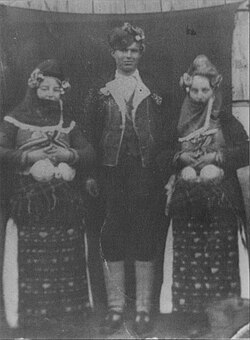
Pomaks (Bulgarian: Помаци, romanized: Pomatsi; Macedonian: Помаци Greek: Πομάκοι, romanized: Pomáki; Turkish: Pomaklar) are Bulgarian-speaking Muslims inhabiting Bulgaria, northwestern Turkey, and northeastern Greece. The c. 220,000 strong ethno-confessional minority in Bulgaria is recognized officially as Bulgarian Muslims by the government. The term has also been used as a wider designation, including also the Slavic Muslim populations of North Macedonia and Albania. Most Pomaks today live in Turkey, where they have settled as muhacirs as a result of escaping previous ethnic cleansing in Bulgaria.
Bulgaria recognizes their language as a Bulgarian dialect, whereas in Greece and Turkey they self-declare their language as the Pomak language. The community in Greece is commonly fluent in Greek, and in Turkey, Turkish, while the communities in these two countries, especially in Turkey, are increasingly adopting Turkish as their first language as a result of education and family links with the Turkish people.
They are not officially recognized as one people with the ethnonym of Pomaks. The term is widely used colloquially for Eastern South Slavic Muslims, considered derogatory.[clarification needed] However, in Greece and Turkey the practice for declaring the ethnic group at census has been abolished for decades.[clarification needed] Different members of the group today declare a variety of ethnic identities: Bulgarian, Pomak, ethnic Muslims, Turkish and other.
The name "Pomak" first appeared in the Bulgarian Christian-heretical language surroundings of Northern Bulgaria (the regions of Loveč, Teteven, Lukovit, Bjala Slatina). According to one theory,[citation needed] it comes from the expression "по-ямак" ("more than a Yemek", "more important than a Yamak", similar to "пó юнак", i.e. "more than a hero"). It has also been argued that the name comes from the dialectal words "помáкан, омáкан, омáчен, помáчен" (pomákan, omákan, omáčeen, pomáčen), meaning "tormented, tortured".
Their precise origin has been interpreted differently by Bulgarian, Greek and Turkish historians, but it is generally considered they are descendants of native Eastern Orthodox Bulgarians, and Paulicians who also previously converted to Orthodoxy and Catholicism, who converted to Islam during the Ottoman rule of the Balkans. Information through Ottoman and Catholic missionaries reports supports this theory.
A specific DNA mutation, HbO, which emerged about 2,000 years ago on a rare haplotype is characteristic of the Greek Pomaks. Its frequency increased as a consequence of high genetic drift within this population. This indicates that the Greek Pomaks are an isolated population with limited contacts with their neighbours. A 2014 study also confirmed high homozygosity and according to MDS analysis the Greek Pomaks cluster among European populations, near the general Greek population.
Pomaks are today usually considered descendants of native Orthodox Bulgarians and Paulicians who converted to Islam during the Ottoman rule of the Balkans. They started to become Muslim gradually, from the Ottoman occupation (early 15th century) to the end of the 18th century. Subsequently, these people became part of the Muslim community of the millet system. At that time people were bound to their millets by their religious affiliations (or their confessional communities), rather than their ethnic origins, according to the millet concept.
A monk Pachomios Roussanos (1508–1553), who visited the mountain area of Xanthi, mentioned that around 1550 only six or nine villages had turned to Islam. Furthermore[clarification needed] the documents[which?] show that not only had Islam spread to the area at that time, but that the Pomaks had participated in Ottoman military operations voluntarily as is the case with the village of Shahin (Echinos).
Pomaks
Pomaks (Bulgarian: Помаци, romanized: Pomatsi; Macedonian: Помаци Greek: Πομάκοι, romanized: Pomáki; Turkish: Pomaklar) are Bulgarian-speaking Muslims inhabiting Bulgaria, northwestern Turkey, and northeastern Greece. The c. 220,000 strong ethno-confessional minority in Bulgaria is recognized officially as Bulgarian Muslims by the government. The term has also been used as a wider designation, including also the Slavic Muslim populations of North Macedonia and Albania. Most Pomaks today live in Turkey, where they have settled as muhacirs as a result of escaping previous ethnic cleansing in Bulgaria.
Bulgaria recognizes their language as a Bulgarian dialect, whereas in Greece and Turkey they self-declare their language as the Pomak language. The community in Greece is commonly fluent in Greek, and in Turkey, Turkish, while the communities in these two countries, especially in Turkey, are increasingly adopting Turkish as their first language as a result of education and family links with the Turkish people.
They are not officially recognized as one people with the ethnonym of Pomaks. The term is widely used colloquially for Eastern South Slavic Muslims, considered derogatory.[clarification needed] However, in Greece and Turkey the practice for declaring the ethnic group at census has been abolished for decades.[clarification needed] Different members of the group today declare a variety of ethnic identities: Bulgarian, Pomak, ethnic Muslims, Turkish and other.
The name "Pomak" first appeared in the Bulgarian Christian-heretical language surroundings of Northern Bulgaria (the regions of Loveč, Teteven, Lukovit, Bjala Slatina). According to one theory,[citation needed] it comes from the expression "по-ямак" ("more than a Yemek", "more important than a Yamak", similar to "пó юнак", i.e. "more than a hero"). It has also been argued that the name comes from the dialectal words "помáкан, омáкан, омáчен, помáчен" (pomákan, omákan, omáčeen, pomáčen), meaning "tormented, tortured".
Their precise origin has been interpreted differently by Bulgarian, Greek and Turkish historians, but it is generally considered they are descendants of native Eastern Orthodox Bulgarians, and Paulicians who also previously converted to Orthodoxy and Catholicism, who converted to Islam during the Ottoman rule of the Balkans. Information through Ottoman and Catholic missionaries reports supports this theory.
A specific DNA mutation, HbO, which emerged about 2,000 years ago on a rare haplotype is characteristic of the Greek Pomaks. Its frequency increased as a consequence of high genetic drift within this population. This indicates that the Greek Pomaks are an isolated population with limited contacts with their neighbours. A 2014 study also confirmed high homozygosity and according to MDS analysis the Greek Pomaks cluster among European populations, near the general Greek population.
Pomaks are today usually considered descendants of native Orthodox Bulgarians and Paulicians who converted to Islam during the Ottoman rule of the Balkans. They started to become Muslim gradually, from the Ottoman occupation (early 15th century) to the end of the 18th century. Subsequently, these people became part of the Muslim community of the millet system. At that time people were bound to their millets by their religious affiliations (or their confessional communities), rather than their ethnic origins, according to the millet concept.
A monk Pachomios Roussanos (1508–1553), who visited the mountain area of Xanthi, mentioned that around 1550 only six or nine villages had turned to Islam. Furthermore[clarification needed] the documents[which?] show that not only had Islam spread to the area at that time, but that the Pomaks had participated in Ottoman military operations voluntarily as is the case with the village of Shahin (Echinos).
Recent media
Recent media