


Community hub
Recent from talks
Contribute something to knowledge base
Content stats: 0 posts, 0 articles, 1 media, 0 notes
Members stats: 0 subscribers, 0 contributors, 0 moderators, 0 supporters
Subscribers
Supporters
Contributors
Moderators
Hub AI
Port of Beirut AI simulator
(@Port of Beirut_simulator)
Hub AI
Port of Beirut AI simulator
(@Port of Beirut_simulator)
Port of Beirut
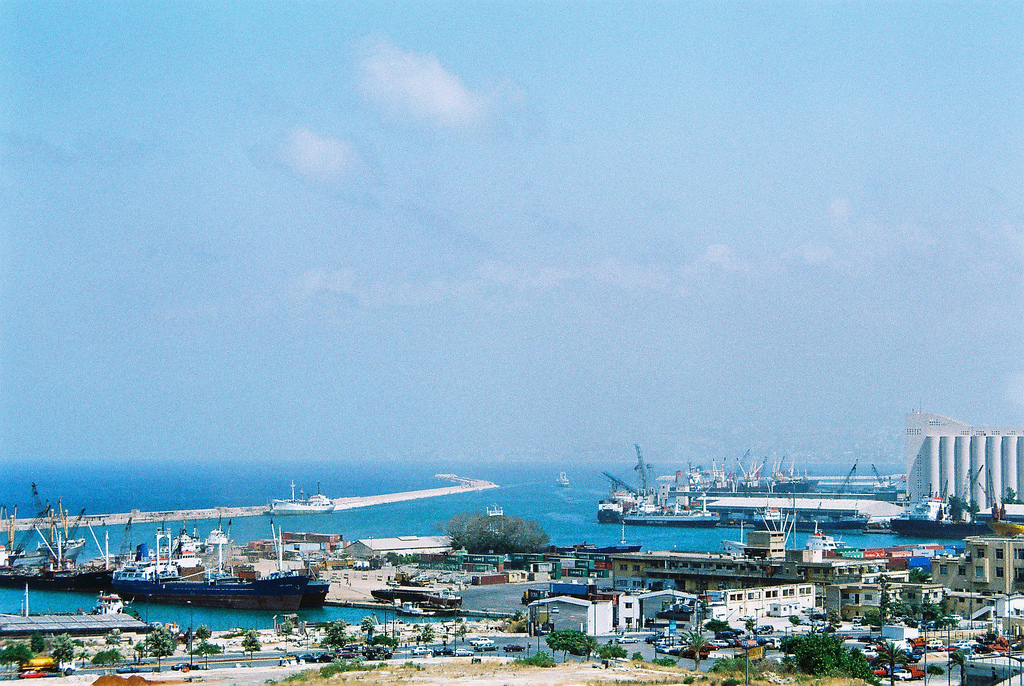
The Port of Beirut (Arabic: مرفأ بيروت) is the main port in Lebanon on the eastern part of the Saint George Bay on Beirut's northern Mediterranean coast, west of the Beirut River. It is one of the largest and busiest ports on the Eastern Mediterranean.
On 4 August 2020, a large explosion, caused by improperly stored ammonium nitrate, occurred at the port, killing at least 218 people, injuring more than 7,000 and rendering 300,000 others homeless. Large sections of the port and its infrastructure were destroyed, including most of Beirut's grain reserves, and billions of dollars in damages were inflicted across the city. The Port of Beirut was forced to close, due to the large-scale damage caused by the explosions, with cargo being redirected to smaller ports, such as Tripoli and Tyre. Prior to the disaster, about 60 percent of Lebanon's imports came through the port, according to an S&P Global estimate.
On 14 April 2022, the Lebanese government ordered the demolition of Beirut’s grain silos, which were at risk of collapse after the 2020 port explosion. On 31 July and 4 August 2022, exactly 2 years after the explosion, the last of the northern block of the grain silos fell down.
The port has been nicknamed the "Cave of Ali Baba and the 40 Thieves" due to longstanding reports of corruption, including evasion of customs duties at the port due to bribery schemes and the undervaluation of imports. In the early 2010s, Public Works and Transportation Minister Ghazi Aridi estimated that tax evasion at the port amounted to more than $1.5 billion annually. The port also earns this nickname for its abandonment of cargo and crew. In the aftermath of massive explosions in 2020, in an apparent industrial accident, Faysal Itani, a political analyst and deputy director of the Center for Global Policy at Georgetown University wrote that the Port, like other aspects of Lebanese society, suffered from "pervasive culture of negligence, petty corruption and blame-shifting."
In 1887, during Ottoman rule, the Port was granted to a French Company, the Compagnie du Port, des Quais et des Entrepôts de Beyrouth (Company of the Port, Quays and Warehouses of Beirut). The Ottoman administration granted further concessions and autonomy to the company, in managing the Port of Beirut, as it became an important harbour in Lebanon. In 1920, Lebanon came under French Administration, under the Mandate for Syria and the Lebanon, acting as Greater Lebanon. This provided the Port with access to French funding and trade. The Port of Beirut would be continue to be operated by the same French Company, which renamed the Gestion et Exploitation du Port de Beyrouth in 1960.
Much of the port was damaged during the Lebanese Civil War, and various parts of the port were under the control of various armed militias. In 1976, all shipping at the port stopped for nine months due to militia clashes. A 1977 article in the Middle East Economic Digest reported that "not a warehouse or piece of equipment was intact" when the port officially reopened on 15 December 1976. The Lebanese Forces, a Christian militia, took control of the port in mid-1986; the militia withdrew in 1989 amid a push from Lebanese Army forces under the command of General Michel Aoun. In 1991, Lebanese Forces that had controlled a pier at the Beirut port were ousted by Lebanese Army forces under Emile Lahoud; the seizure was part of broader efforts by President Elias Hrawi to consolidate power in the Beirut area, and coincided with the ouster of the Shi'a Amal from the Ouzai port and the predominately Druze Progressive Socialist Party from the Khalde harbor.
After the war, the seaport and surrounding area were reconstructed and again became a major seaport. The port is operated and managed by the Gestion et Exploitation du Port de Beyrouth (GEPB), ("Port Authority of Beirut"). In 1990, the Port of Beirut came under direct ownership of the Government of Lebanon, following the expiration of the company's charter, and continues to be operated by GEPB.
Since December, 2004, container terminal operations are subcontracted to the private Beirut Container Terminal Consortium (BCTC). The terminal quay was expanded to 1100 m and has 16 post-panamax ship-to-shore gantry cranes, and extensive on-shore container handling equipment. In addition to exports and imports, the terminal handles significant container transshipments. Traffic has grown from 945,143 TEUs in 2008, to 1,229,081 in 2019.
Port of Beirut
The Port of Beirut (Arabic: مرفأ بيروت) is the main port in Lebanon on the eastern part of the Saint George Bay on Beirut's northern Mediterranean coast, west of the Beirut River. It is one of the largest and busiest ports on the Eastern Mediterranean.
On 4 August 2020, a large explosion, caused by improperly stored ammonium nitrate, occurred at the port, killing at least 218 people, injuring more than 7,000 and rendering 300,000 others homeless. Large sections of the port and its infrastructure were destroyed, including most of Beirut's grain reserves, and billions of dollars in damages were inflicted across the city. The Port of Beirut was forced to close, due to the large-scale damage caused by the explosions, with cargo being redirected to smaller ports, such as Tripoli and Tyre. Prior to the disaster, about 60 percent of Lebanon's imports came through the port, according to an S&P Global estimate.
On 14 April 2022, the Lebanese government ordered the demolition of Beirut’s grain silos, which were at risk of collapse after the 2020 port explosion. On 31 July and 4 August 2022, exactly 2 years after the explosion, the last of the northern block of the grain silos fell down.
The port has been nicknamed the "Cave of Ali Baba and the 40 Thieves" due to longstanding reports of corruption, including evasion of customs duties at the port due to bribery schemes and the undervaluation of imports. In the early 2010s, Public Works and Transportation Minister Ghazi Aridi estimated that tax evasion at the port amounted to more than $1.5 billion annually. The port also earns this nickname for its abandonment of cargo and crew. In the aftermath of massive explosions in 2020, in an apparent industrial accident, Faysal Itani, a political analyst and deputy director of the Center for Global Policy at Georgetown University wrote that the Port, like other aspects of Lebanese society, suffered from "pervasive culture of negligence, petty corruption and blame-shifting."
In 1887, during Ottoman rule, the Port was granted to a French Company, the Compagnie du Port, des Quais et des Entrepôts de Beyrouth (Company of the Port, Quays and Warehouses of Beirut). The Ottoman administration granted further concessions and autonomy to the company, in managing the Port of Beirut, as it became an important harbour in Lebanon. In 1920, Lebanon came under French Administration, under the Mandate for Syria and the Lebanon, acting as Greater Lebanon. This provided the Port with access to French funding and trade. The Port of Beirut would be continue to be operated by the same French Company, which renamed the Gestion et Exploitation du Port de Beyrouth in 1960.
Much of the port was damaged during the Lebanese Civil War, and various parts of the port were under the control of various armed militias. In 1976, all shipping at the port stopped for nine months due to militia clashes. A 1977 article in the Middle East Economic Digest reported that "not a warehouse or piece of equipment was intact" when the port officially reopened on 15 December 1976. The Lebanese Forces, a Christian militia, took control of the port in mid-1986; the militia withdrew in 1989 amid a push from Lebanese Army forces under the command of General Michel Aoun. In 1991, Lebanese Forces that had controlled a pier at the Beirut port were ousted by Lebanese Army forces under Emile Lahoud; the seizure was part of broader efforts by President Elias Hrawi to consolidate power in the Beirut area, and coincided with the ouster of the Shi'a Amal from the Ouzai port and the predominately Druze Progressive Socialist Party from the Khalde harbor.
After the war, the seaport and surrounding area were reconstructed and again became a major seaport. The port is operated and managed by the Gestion et Exploitation du Port de Beyrouth (GEPB), ("Port Authority of Beirut"). In 1990, the Port of Beirut came under direct ownership of the Government of Lebanon, following the expiration of the company's charter, and continues to be operated by GEPB.
Since December, 2004, container terminal operations are subcontracted to the private Beirut Container Terminal Consortium (BCTC). The terminal quay was expanded to 1100 m and has 16 post-panamax ship-to-shore gantry cranes, and extensive on-shore container handling equipment. In addition to exports and imports, the terminal handles significant container transshipments. Traffic has grown from 945,143 TEUs in 2008, to 1,229,081 in 2019.
Recent media
Recent media