
Recent from talks
Pressurized water reactor
Knowledge base stats:
Talk channels stats:
Members stats:
Pressurized water reactor
A pressurized water reactor (PWR) is a type of light-water nuclear reactor. PWRs constitute the large majority of the world's nuclear power plants (with notable exceptions being the UK, Japan, India and Canada).
In a PWR, water is used both as a neutron moderator and as coolant fluid for the reactor core. In the core, water is heated by the energy released by the fission of atoms contained in the fuel. Using very high pressure (around 155 bar: 2250 psi) ensures that the water stays in a liquid state. The heated water then flows to a steam generator, where it transfers its thermal energy to the water of a secondary cycle kept at a lower pressure which allows it to vaporize. The resulting steam then drives steam turbines linked to an electric generator. A boiling water reactor (BWR) by contrast does not maintain such a high pressure in the primary cycle and the water thus vaporizes inside of the reactor pressure vessel before being sent to the turbine. Most PWR designs make use of two to six steam generators, each associated with a coolant loop.
PWRs were originally designed to serve as nuclear marine propulsion for nuclear submarines and were used in the original design of the second commercial power plant at Shippingport Atomic Power Station.
PWRs are operated in the United States, France, Russia, China, South Korea and several other countries. The majority are Generation II reactors; newer Generation III designs such as the AP1000, Hualong One, EPR and APR-1400 have entered service from 2018.
Development of pressurised water reactors began in 1946 with the initiation of the US Naval Nuclear Propulsion Program at Oak Ridge National Laboratory to develop nuclear propulsion for submarines. The first fully operational submarine power plant was located at the Idaho National Laboratory. Follow-on work was conducted by Westinghouse Bettis Atomic Power Laboratory. The first purely commercial nuclear power plant at Shippingport Atomic Power Station was originally designed as a pressurized water reactor (although the first power plant connected to the grid was at Obninsk, USSR), on insistence from Admiral Hyman G. Rickover that a viable commercial plant would include none of the "crazy thermodynamic cycles that everyone else wants to build".
The United States Army Nuclear Power Program operated pressurized water reactors from 1954 to 1974. Three Mile Island Nuclear Generating Station initially operated two pressurized water reactor plants, TMI-1 and TMI-2. The partial meltdown of TMI-2 in 1979 essentially ended the growth in new construction of nuclear power plants in the United States for two decades. Watts Bar unit 2 (a Westinghouse 4-loop PWR) came online in 2016, becoming the first new nuclear reactor in the United States since 1996.
The pressurized water reactor has several new Generation III reactor evolutionary designs: the AP1000, VVER-1200, ACPR1000+, APR1400, Hualong One, IPWR-900 and EPR. The first AP1000 and EPR reactors were connected to the power grid in China in 2018. In 2020, NuScale Power became the first U.S. company to receive regulatory approval from the Nuclear Regulatory Commission for a small modular reactor with a modified PWR design. Also in 2020, the Energy Impact Center introduced the OPEN100 project, which published open-source blueprints for the construction of a 100 MWelectric nuclear power plant with a PWR design.
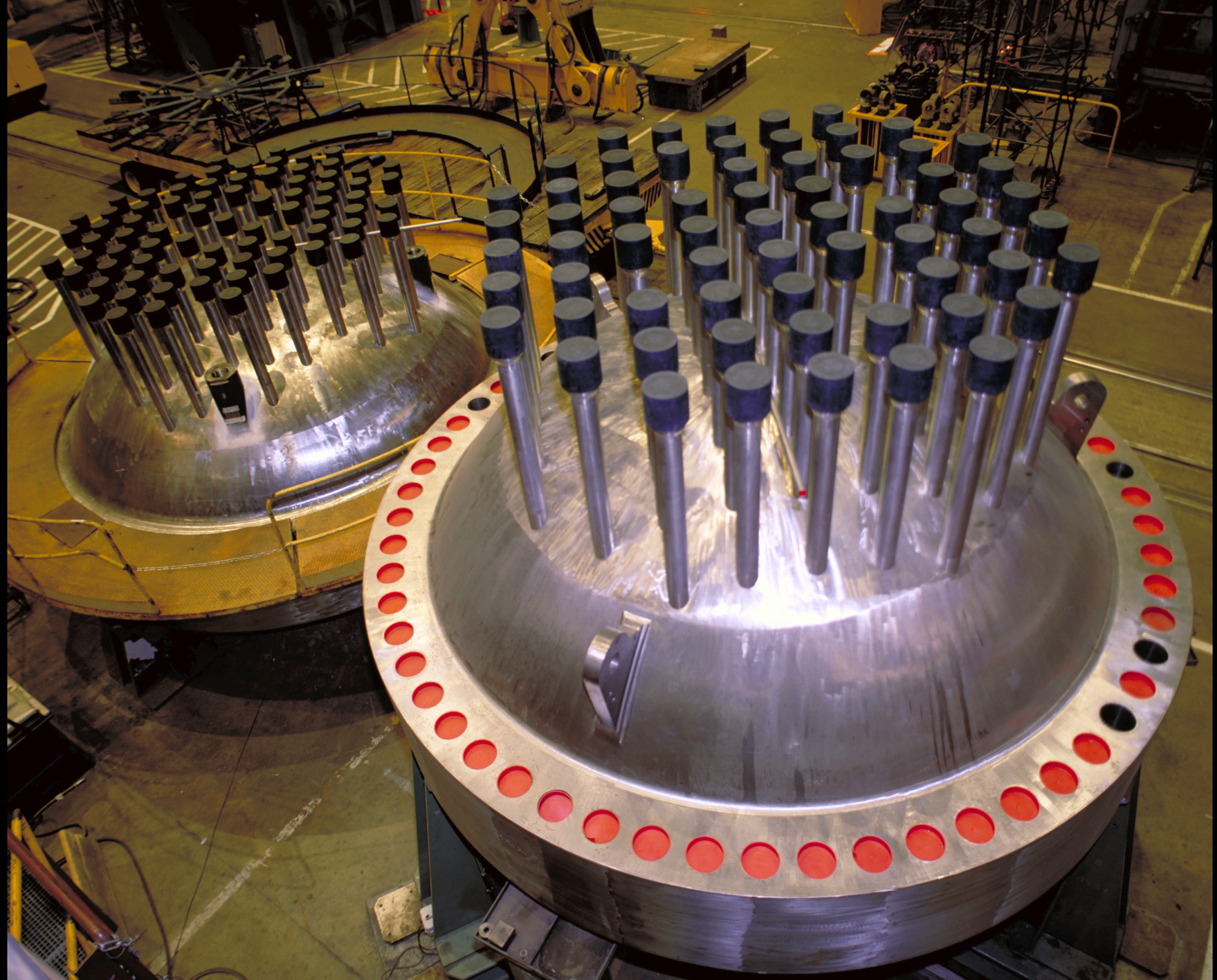
Nuclear fuel in the reactor pressure vessel is engaged in a controlled fission chain reaction, which produces heat, heating the water in the primary coolant loop by thermal conduction through the fuel cladding. The hot primary coolant is pumped into a heat exchanger called the steam generator, where it flows through several thousand small tubes. Heat is transferred through the walls of these tubes to the lower pressure secondary coolant located on the shell side of the exchanger where the secondary coolant evaporates to pressurized steam. This transfer of heat is accomplished without mixing the two fluids to prevent the secondary coolant from becoming radioactive.[failed verification] Some common steam generator arrangements are u-tubes or single pass heat exchangers.[citation needed]
Hub AI
Pressurized water reactor AI simulator
(@Pressurized water reactor_simulator)
Pressurized water reactor
A pressurized water reactor (PWR) is a type of light-water nuclear reactor. PWRs constitute the large majority of the world's nuclear power plants (with notable exceptions being the UK, Japan, India and Canada).
In a PWR, water is used both as a neutron moderator and as coolant fluid for the reactor core. In the core, water is heated by the energy released by the fission of atoms contained in the fuel. Using very high pressure (around 155 bar: 2250 psi) ensures that the water stays in a liquid state. The heated water then flows to a steam generator, where it transfers its thermal energy to the water of a secondary cycle kept at a lower pressure which allows it to vaporize. The resulting steam then drives steam turbines linked to an electric generator. A boiling water reactor (BWR) by contrast does not maintain such a high pressure in the primary cycle and the water thus vaporizes inside of the reactor pressure vessel before being sent to the turbine. Most PWR designs make use of two to six steam generators, each associated with a coolant loop.
PWRs were originally designed to serve as nuclear marine propulsion for nuclear submarines and were used in the original design of the second commercial power plant at Shippingport Atomic Power Station.
PWRs are operated in the United States, France, Russia, China, South Korea and several other countries. The majority are Generation II reactors; newer Generation III designs such as the AP1000, Hualong One, EPR and APR-1400 have entered service from 2018.
Development of pressurised water reactors began in 1946 with the initiation of the US Naval Nuclear Propulsion Program at Oak Ridge National Laboratory to develop nuclear propulsion for submarines. The first fully operational submarine power plant was located at the Idaho National Laboratory. Follow-on work was conducted by Westinghouse Bettis Atomic Power Laboratory. The first purely commercial nuclear power plant at Shippingport Atomic Power Station was originally designed as a pressurized water reactor (although the first power plant connected to the grid was at Obninsk, USSR), on insistence from Admiral Hyman G. Rickover that a viable commercial plant would include none of the "crazy thermodynamic cycles that everyone else wants to build".
The United States Army Nuclear Power Program operated pressurized water reactors from 1954 to 1974. Three Mile Island Nuclear Generating Station initially operated two pressurized water reactor plants, TMI-1 and TMI-2. The partial meltdown of TMI-2 in 1979 essentially ended the growth in new construction of nuclear power plants in the United States for two decades. Watts Bar unit 2 (a Westinghouse 4-loop PWR) came online in 2016, becoming the first new nuclear reactor in the United States since 1996.
The pressurized water reactor has several new Generation III reactor evolutionary designs: the AP1000, VVER-1200, ACPR1000+, APR1400, Hualong One, IPWR-900 and EPR. The first AP1000 and EPR reactors were connected to the power grid in China in 2018. In 2020, NuScale Power became the first U.S. company to receive regulatory approval from the Nuclear Regulatory Commission for a small modular reactor with a modified PWR design. Also in 2020, the Energy Impact Center introduced the OPEN100 project, which published open-source blueprints for the construction of a 100 MWelectric nuclear power plant with a PWR design.
Nuclear fuel in the reactor pressure vessel is engaged in a controlled fission chain reaction, which produces heat, heating the water in the primary coolant loop by thermal conduction through the fuel cladding. The hot primary coolant is pumped into a heat exchanger called the steam generator, where it flows through several thousand small tubes. Heat is transferred through the walls of these tubes to the lower pressure secondary coolant located on the shell side of the exchanger where the secondary coolant evaporates to pressurized steam. This transfer of heat is accomplished without mixing the two fluids to prevent the secondary coolant from becoming radioactive.[failed verification] Some common steam generator arrangements are u-tubes or single pass heat exchangers.[citation needed]
Recent media