
Recent from talks
Computer data storage
Knowledge base stats:
Talk channels stats:
Members stats:
Computer data storage
Computer data storage or digital data storage is the retention of digital data via technology consisting of computer components and recording media. Digital data storage is a core function and fundamental component of computers.
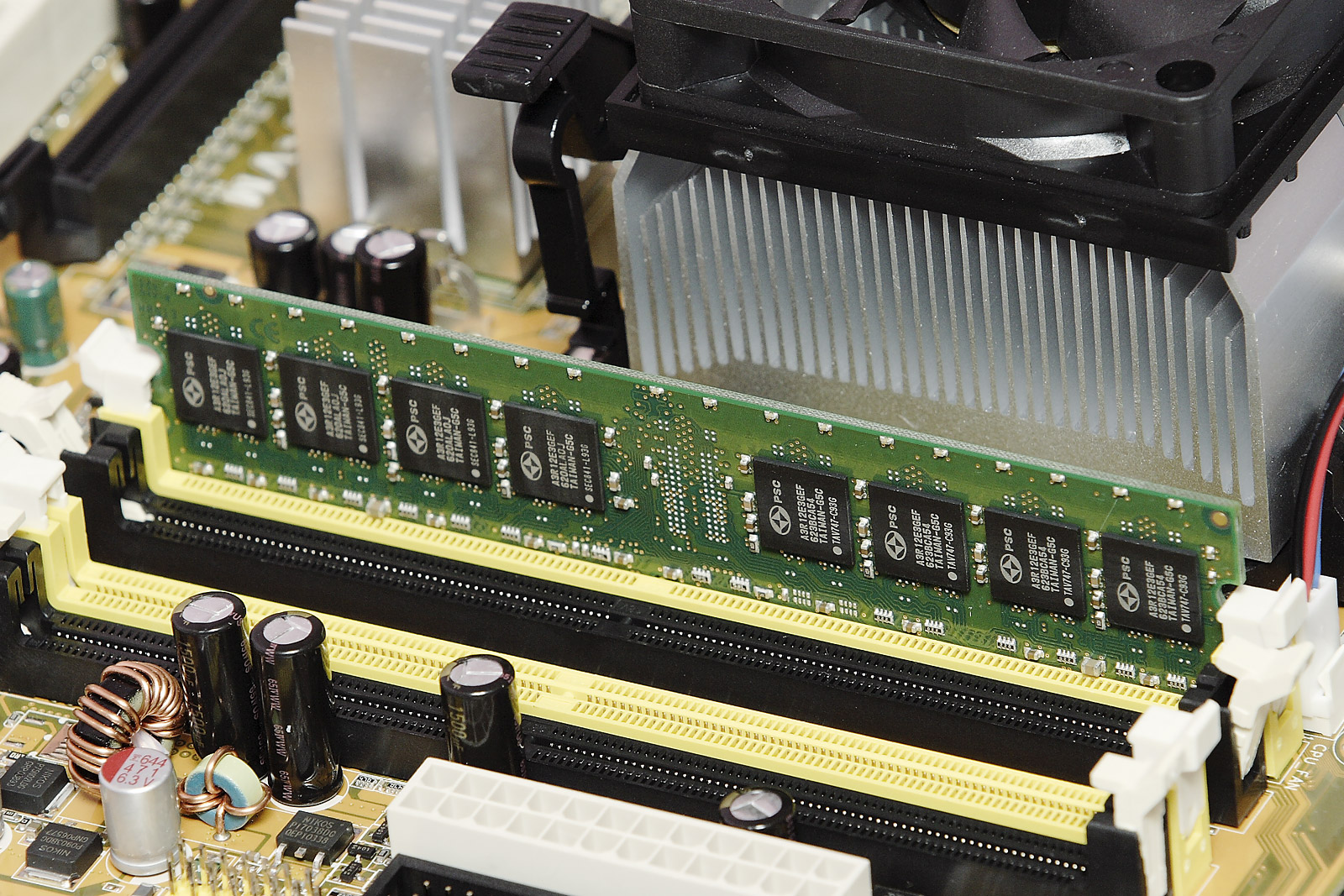
Generally, the faster and volatile storage components are referred to as "memory", while slower persistent components are referred to as "storage". This distinction was extended in the Von Neumann architecture, where the central processing unit (CPU) consists of two main parts: The control unit and the arithmetic logic unit (ALU). The former controls the flow of data between the CPU and memory, while the latter performs arithmetic and logical operations on data. In practice, almost all computers use a memory hierarchy, which puts memory close to the CPU and storage further away.
In modern computers, hard disk drives (HDDs) or solid-state drives (SSDs) are usually used as storage.
A modern digital computer represents data using the binary numeral system. The memory cell is the fundamental building block of computer memory, storing stores one bit of binary information that can be set to store a 1, reset to store a 0, and accessed by reading the cell.
Text, numbers, pictures, audio, and nearly any other form of information can be converted into a string of bits, or binary digits, each of which has a value of 0 or 1. The most common unit of storage is the byte, equal to 8 bits. Digital data comprises the binary representation of a piece of information, often being encoded by assigning a bit pattern to each character, digit, or multimedia object. Many standards exist for encoding (e.g. character encodings like ASCII, image encodings like JPEG, and video encodings like MPEG-4).
For security reasons, certain types of data may be encrypted in storage to prevent the possibility of unauthorized information reconstruction from chunks of storage snapshots. Encryption in transit protects data as it is being transmitted.
Data compression methods allow in many cases (such as a database) to represent a string of bits by a shorter bit string ("compress") and reconstruct the original string ("decompress") when needed. This utilizes substantially less storage (tens of percent) for many types of data at the cost of more computation (compress and decompress when needed). Analysis of the trade-off between storage cost saving and costs of related computations and possible delays in data availability is done before deciding whether to keep certain data compressed or not.
Distinct types of data storage have different points of failure and various methods of predictive failure analysis. Vulnerabilities that can instantly lead to total loss are head crashing on mechanical hard drives and failure of electronic components on flash storage.
Hub AI
Computer data storage AI simulator
(@Computer data storage_simulator)
Computer data storage
Computer data storage or digital data storage is the retention of digital data via technology consisting of computer components and recording media. Digital data storage is a core function and fundamental component of computers.
Generally, the faster and volatile storage components are referred to as "memory", while slower persistent components are referred to as "storage". This distinction was extended in the Von Neumann architecture, where the central processing unit (CPU) consists of two main parts: The control unit and the arithmetic logic unit (ALU). The former controls the flow of data between the CPU and memory, while the latter performs arithmetic and logical operations on data. In practice, almost all computers use a memory hierarchy, which puts memory close to the CPU and storage further away.
In modern computers, hard disk drives (HDDs) or solid-state drives (SSDs) are usually used as storage.
A modern digital computer represents data using the binary numeral system. The memory cell is the fundamental building block of computer memory, storing stores one bit of binary information that can be set to store a 1, reset to store a 0, and accessed by reading the cell.
Text, numbers, pictures, audio, and nearly any other form of information can be converted into a string of bits, or binary digits, each of which has a value of 0 or 1. The most common unit of storage is the byte, equal to 8 bits. Digital data comprises the binary representation of a piece of information, often being encoded by assigning a bit pattern to each character, digit, or multimedia object. Many standards exist for encoding (e.g. character encodings like ASCII, image encodings like JPEG, and video encodings like MPEG-4).
For security reasons, certain types of data may be encrypted in storage to prevent the possibility of unauthorized information reconstruction from chunks of storage snapshots. Encryption in transit protects data as it is being transmitted.
Data compression methods allow in many cases (such as a database) to represent a string of bits by a shorter bit string ("compress") and reconstruct the original string ("decompress") when needed. This utilizes substantially less storage (tens of percent) for many types of data at the cost of more computation (compress and decompress when needed). Analysis of the trade-off between storage cost saving and costs of related computations and possible delays in data availability is done before deciding whether to keep certain data compressed or not.
Distinct types of data storage have different points of failure and various methods of predictive failure analysis. Vulnerabilities that can instantly lead to total loss are head crashing on mechanical hard drives and failure of electronic components on flash storage.
Recent media