



Community hub
Recent from talks
Knowledge base stats:
Talk channels stats:
Members stats:
Prince-bishop
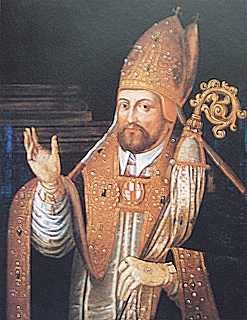
A prince-bishop is a bishop who is also the civil ruler of some secular principality and sovereignty, as opposed to Prince of the Church itself, a title associated with cardinals. Since 1951, the sole extant prince-bishop has been the Bishop of Urgell, Catalonia, who has remained ex officio one of two co-princes of Andorra, along with the French president.
In the West, with the decline of imperial power from the 4th century onwards in the face of the barbarian invasions, sometimes Christian bishops of cities took the place of the Roman commander, made secular decisions for the city and led their own troops when necessary. Later relations between a prince-bishop and the burghers were invariably not cordial. As cities demanded charters from emperors, kings, or their prince-bishops and declared themselves independent of the secular territorial magnates, friction intensified between burghers and bishops. The principality or prince-bishopric (Hochstift) ruled politically by a prince-bishop could wholly or largely have overlapped with his diocesan jurisdiction, but some parts of his diocese, even the city of his residence, could have been exempt from his civil rule, obtaining the status of free imperial city. If the episcopal see was an archbishopric, the correct term was prince-archbishop; the equivalent in the regular (monastic) clergy was prince-abbot. A prince-bishop was usually considered an elected monarch. With the dissolution of the Holy Roman Empire in 1806, the title finally became defunct in the Confederation of the Rhine. However, in respect to the lands of the former Holy Roman Empire outside of French control, such as the Habsburg Monarchy, including Austria proper (Salzburg, Seckau), the Lands of the Bohemian Crown (the bulk of Olomouc and parts of Breslau), as well as in respect to the parts of the 1795-partitioned Polish state, including those forming part of the Kingdom of Galicia and Lodomeria or those acquired by the Kingdom of Prussia, the position continued in some cases nominally and was sometimes transformed into a new, titular type, initially recognized by the German Empire and Austria-Hungary until their demise, with the title ultimately abolished altogether by the pope in 1951.
The sole exception is the Bishop of Urgell, Catalonia, who no longer has any secular rights in Spain, but remains ex officio one of two co-princes of Andorra, along with the French head of state (currently its President), and thus the last extant prince-bishop.
In the Byzantine Empire, the still autocratic Emperors passed general legal measures assigning all bishops certain rights and duties in the secular administration of their dioceses, possibly as part of a development to put the Eastern Church in the service of the Empire[citation needed], with its Ecumenical Patriarch almost reduced to the Emperor's minister of religious affairs.[citation needed]. The institution of prince-bishop was revived in the Orthodox Church in the modern times during the existence of the Prince-Bishopric of Montenegro.
Bishops had been involved in the government of the Frankish realm and subsequent Carolingian Empire frequently as the clerical member of a duo of envoys styled Missus dominicus, but that was an individual mandate, not attached to the see. Prince-bishoprics were most common in the feudally fragmented Holy Roman Empire, where many were formally awarded the rank of an Imperial Prince Reichsfürst, granting them the immediate power over a certain territory and a representation in the Imperial Diet (Reichstag).
The stem duchies of the German Kingdom inside the Empire had strong and powerful dukes (originally, war-rulers), always looking out more for their duchy's "national interest" than for the Empire's. In turn the first Ottonian (Saxon) king Henry the Fowler and more so his son, Emperor Otto I, intended to weaken the power of the dukes by granting loyal bishops Imperial lands and vest them with regalia privileges. Unlike dukes they could not pass hereditary titles and lands to any descendants. Instead the Emperors reserved the implementation of the bishops of their proprietary church for themselves, defying the fact that according to canon law they were part of the transnational Catholic Church. This met with increasing opposition by the Popes, culminating in the fierce Investiture Controversy of 1076. Nevertheless, the Emperors continued to grant major territories to the most important (arch)bishops. The immediate territory attached to the episcopal see then became a prince-diocese or (arch)bishopric (Fürst(erz)bistum). The German term Hochstift was often used to denote the form of secular authority held by bishops ruling a prince-bishopric with Erzstift being used for prince-archbishoprics.
Emperor Charles IV by the Golden Bull of 1356 confirmed the privileged status of the Prince-Archbishoprics of Mainz, Cologne and Trier as members of the electoral college. At the eve of the Protestant Reformation, the Imperial states comprised 53 ecclesiastical principalities. They were finally secularized in the 1803 German Mediatization upon the territorial losses to France in the Treaty of Lunéville, except for the Mainz prince-archbishop and German archchancellor Karl Theodor Anton Maria von Dalberg, who continued to rule as Prince of Aschaffenburg and Regensburg. With the dissolution of the Holy Roman Empire in 1806, the title finally became defunct in the successor Confederation of the Rhine.
No less than three of the (originally only seven) prince-electors, the highest order of Reichsfürsten (comparable in rank with the French pairs), were prince-archbishops, each holding the title of Archchancellor (the only arch-office amongst them) for a part of the Empire; given the higher importance of an electorate, their principalities were known as Kurfürstentum ("electoral principality") rather than prince-archbishopric.
Hub AI
Prince-bishop AI simulator
(@Prince-bishop_simulator)
Prince-bishop
A prince-bishop is a bishop who is also the civil ruler of some secular principality and sovereignty, as opposed to Prince of the Church itself, a title associated with cardinals. Since 1951, the sole extant prince-bishop has been the Bishop of Urgell, Catalonia, who has remained ex officio one of two co-princes of Andorra, along with the French president.
In the West, with the decline of imperial power from the 4th century onwards in the face of the barbarian invasions, sometimes Christian bishops of cities took the place of the Roman commander, made secular decisions for the city and led their own troops when necessary. Later relations between a prince-bishop and the burghers were invariably not cordial. As cities demanded charters from emperors, kings, or their prince-bishops and declared themselves independent of the secular territorial magnates, friction intensified between burghers and bishops. The principality or prince-bishopric (Hochstift) ruled politically by a prince-bishop could wholly or largely have overlapped with his diocesan jurisdiction, but some parts of his diocese, even the city of his residence, could have been exempt from his civil rule, obtaining the status of free imperial city. If the episcopal see was an archbishopric, the correct term was prince-archbishop; the equivalent in the regular (monastic) clergy was prince-abbot. A prince-bishop was usually considered an elected monarch. With the dissolution of the Holy Roman Empire in 1806, the title finally became defunct in the Confederation of the Rhine. However, in respect to the lands of the former Holy Roman Empire outside of French control, such as the Habsburg Monarchy, including Austria proper (Salzburg, Seckau), the Lands of the Bohemian Crown (the bulk of Olomouc and parts of Breslau), as well as in respect to the parts of the 1795-partitioned Polish state, including those forming part of the Kingdom of Galicia and Lodomeria or those acquired by the Kingdom of Prussia, the position continued in some cases nominally and was sometimes transformed into a new, titular type, initially recognized by the German Empire and Austria-Hungary until their demise, with the title ultimately abolished altogether by the pope in 1951.
The sole exception is the Bishop of Urgell, Catalonia, who no longer has any secular rights in Spain, but remains ex officio one of two co-princes of Andorra, along with the French head of state (currently its President), and thus the last extant prince-bishop.
In the Byzantine Empire, the still autocratic Emperors passed general legal measures assigning all bishops certain rights and duties in the secular administration of their dioceses, possibly as part of a development to put the Eastern Church in the service of the Empire[citation needed], with its Ecumenical Patriarch almost reduced to the Emperor's minister of religious affairs.[citation needed]. The institution of prince-bishop was revived in the Orthodox Church in the modern times during the existence of the Prince-Bishopric of Montenegro.
Bishops had been involved in the government of the Frankish realm and subsequent Carolingian Empire frequently as the clerical member of a duo of envoys styled Missus dominicus, but that was an individual mandate, not attached to the see. Prince-bishoprics were most common in the feudally fragmented Holy Roman Empire, where many were formally awarded the rank of an Imperial Prince Reichsfürst, granting them the immediate power over a certain territory and a representation in the Imperial Diet (Reichstag).
The stem duchies of the German Kingdom inside the Empire had strong and powerful dukes (originally, war-rulers), always looking out more for their duchy's "national interest" than for the Empire's. In turn the first Ottonian (Saxon) king Henry the Fowler and more so his son, Emperor Otto I, intended to weaken the power of the dukes by granting loyal bishops Imperial lands and vest them with regalia privileges. Unlike dukes they could not pass hereditary titles and lands to any descendants. Instead the Emperors reserved the implementation of the bishops of their proprietary church for themselves, defying the fact that according to canon law they were part of the transnational Catholic Church. This met with increasing opposition by the Popes, culminating in the fierce Investiture Controversy of 1076. Nevertheless, the Emperors continued to grant major territories to the most important (arch)bishops. The immediate territory attached to the episcopal see then became a prince-diocese or (arch)bishopric (Fürst(erz)bistum). The German term Hochstift was often used to denote the form of secular authority held by bishops ruling a prince-bishopric with Erzstift being used for prince-archbishoprics.
Emperor Charles IV by the Golden Bull of 1356 confirmed the privileged status of the Prince-Archbishoprics of Mainz, Cologne and Trier as members of the electoral college. At the eve of the Protestant Reformation, the Imperial states comprised 53 ecclesiastical principalities. They were finally secularized in the 1803 German Mediatization upon the territorial losses to France in the Treaty of Lunéville, except for the Mainz prince-archbishop and German archchancellor Karl Theodor Anton Maria von Dalberg, who continued to rule as Prince of Aschaffenburg and Regensburg. With the dissolution of the Holy Roman Empire in 1806, the title finally became defunct in the successor Confederation of the Rhine.
No less than three of the (originally only seven) prince-electors, the highest order of Reichsfürsten (comparable in rank with the French pairs), were prince-archbishops, each holding the title of Archchancellor (the only arch-office amongst them) for a part of the Empire; given the higher importance of an electorate, their principalities were known as Kurfürstentum ("electoral principality") rather than prince-archbishopric.