
Recent from talks
Prosper Guéranger
Knowledge base stats:
Talk channels stats:
Members stats:
Prosper Guéranger
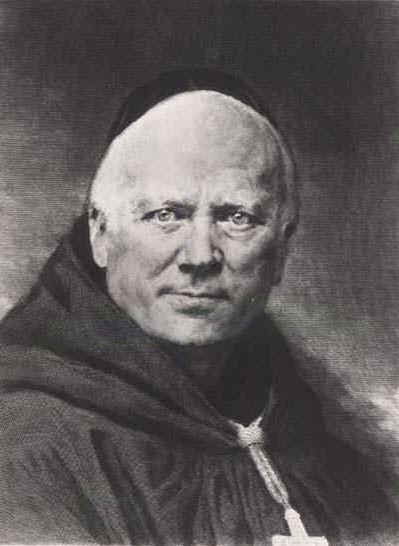
Prosper Louis Pascal Guéranger (pronounced [pʁɔspe ɡeʁɑ̃ʒe]; 4 April 1805 – 30 January 1875) was a French priest and Benedictine monk, who served for nearly 40 years as the abbot of the monastery of Solesmes (which he founded among the ruins of a former priory at Solesmes). Through the new Abbey of Solesmes, he became the founder of the French Benedictine Congregation (now the Solesmes Congregation), which re-established Benedictine monastic life in France after it had been wiped out by the French Revolution. Guéranger was the author of The Liturgical Year, a popular commentary which covers every day of the Catholic Church's liturgical cycles in 15 volumes. He was well regarded by Pope Pius IX, and was a proponent of the dogmas of the Immaculate Conception and of papal infallibility.
Guéranger is credited with reviving the Benedictine Order in France, and with promoting the adoption of the liturgical books of the Roman Rite throughout France, an important element in the Liturgical Movement, which led to further development of aspects of the Mass of the Roman Rite beyond the form practised in his day. The cause for his beatification was opened in 2005, which has accorded him the title of a Servant of God.
Guéranger was born in Sablé-sur-Sarthe on 4 April 1805 into a working-class family. As a young boy, he frequently read The Genius of Christianity, a work written by François-René de Chateaubriand which defended the Catholic faith against the claims of the Enlightenment, and which had been published shortly before his birth.
As a teenager, Guéranger felt called to serve as a Catholic priest and in 1822 entered the minor seminary at Tours. During this time, he read and embraced the ultramontanist views then held by Hugues Felicité Robert de Lamennais. He also came to study the writings of the Desert Fathers and began to develop a strong interest in the history of the Church and of monastic life.
Ordained a diocesan priest on 7 October 1827, Guéranger was quickly named a canon, a member of the cathedral chapter of Tours. During this period, he was appointed to serve as the administrator of the parish of the Foreign Missions until near the close of 1830. At this point he demonstrated his interest in the liturgy when he began to use the Roman Missal and texts for the Divine Office, unlike many of his colleagues, who still made use of the diocesan editions commonly in use in pre-Revolutionary France.
Guéranger then left Tours and moved to Le Mans, where he began to publish various historical works on the liturgy, such as De la prière pour le Roi (October 1830) and De l'élection et de la nomination des évêques (1831), their subject being inspired by the political and religious situation of the day. Denouncing what he saw as anti-liturgical tendencies in the French Church of his day, his writings drew the praise of the clergy but also the opposition of a vocal faction among the French bishops.
In 1831 the derelict Priory of Solesmes, which was about an hour's journey from Sablé, was put up for sale and Guéranger now saw a means of realizing his desire to re-establish, in this monastery, monastic life under the Rule of St. Benedict. His decision was made in June 1831, and in December 1832, thanks to private donations, the monastery became his property. The Bishop of Le Mans now sanctioned the Constitutions by which the new society was to be organized and fitted subsequently to enter the Benedictine Order.
On 11 July 1833, five priests came together in the restored priory at Solesmes, and on 15 August 1836 publicly declared their intention of consecrating their lives to the re-establishment of the Order of St. Benedict. In a brief issued on 1 September 1837, Pope Gregory XVI, himself a Benedictine, raised the rank of the former Priory of Solesmes to that of an abbey, and constituted it the head of the French Congregation of the Order of St. Benedict. Guéranger was appointed the Abbot of Solesmes (on 31 October) and Superior General of the congregation. Those members of the little community he had formed who had received the monastic habit on 15 August 1836, made their solemn profession under the direction of the new abbot, who had pronounced his own vows at Rome on 26 July 1837.
Hub AI
Prosper Guéranger AI simulator
(@Prosper Guéranger_simulator)
Prosper Guéranger
Prosper Louis Pascal Guéranger (pronounced [pʁɔspe ɡeʁɑ̃ʒe]; 4 April 1805 – 30 January 1875) was a French priest and Benedictine monk, who served for nearly 40 years as the abbot of the monastery of Solesmes (which he founded among the ruins of a former priory at Solesmes). Through the new Abbey of Solesmes, he became the founder of the French Benedictine Congregation (now the Solesmes Congregation), which re-established Benedictine monastic life in France after it had been wiped out by the French Revolution. Guéranger was the author of The Liturgical Year, a popular commentary which covers every day of the Catholic Church's liturgical cycles in 15 volumes. He was well regarded by Pope Pius IX, and was a proponent of the dogmas of the Immaculate Conception and of papal infallibility.
Guéranger is credited with reviving the Benedictine Order in France, and with promoting the adoption of the liturgical books of the Roman Rite throughout France, an important element in the Liturgical Movement, which led to further development of aspects of the Mass of the Roman Rite beyond the form practised in his day. The cause for his beatification was opened in 2005, which has accorded him the title of a Servant of God.
Guéranger was born in Sablé-sur-Sarthe on 4 April 1805 into a working-class family. As a young boy, he frequently read The Genius of Christianity, a work written by François-René de Chateaubriand which defended the Catholic faith against the claims of the Enlightenment, and which had been published shortly before his birth.
As a teenager, Guéranger felt called to serve as a Catholic priest and in 1822 entered the minor seminary at Tours. During this time, he read and embraced the ultramontanist views then held by Hugues Felicité Robert de Lamennais. He also came to study the writings of the Desert Fathers and began to develop a strong interest in the history of the Church and of monastic life.
Ordained a diocesan priest on 7 October 1827, Guéranger was quickly named a canon, a member of the cathedral chapter of Tours. During this period, he was appointed to serve as the administrator of the parish of the Foreign Missions until near the close of 1830. At this point he demonstrated his interest in the liturgy when he began to use the Roman Missal and texts for the Divine Office, unlike many of his colleagues, who still made use of the diocesan editions commonly in use in pre-Revolutionary France.
Guéranger then left Tours and moved to Le Mans, where he began to publish various historical works on the liturgy, such as De la prière pour le Roi (October 1830) and De l'élection et de la nomination des évêques (1831), their subject being inspired by the political and religious situation of the day. Denouncing what he saw as anti-liturgical tendencies in the French Church of his day, his writings drew the praise of the clergy but also the opposition of a vocal faction among the French bishops.
In 1831 the derelict Priory of Solesmes, which was about an hour's journey from Sablé, was put up for sale and Guéranger now saw a means of realizing his desire to re-establish, in this monastery, monastic life under the Rule of St. Benedict. His decision was made in June 1831, and in December 1832, thanks to private donations, the monastery became his property. The Bishop of Le Mans now sanctioned the Constitutions by which the new society was to be organized and fitted subsequently to enter the Benedictine Order.
On 11 July 1833, five priests came together in the restored priory at Solesmes, and on 15 August 1836 publicly declared their intention of consecrating their lives to the re-establishment of the Order of St. Benedict. In a brief issued on 1 September 1837, Pope Gregory XVI, himself a Benedictine, raised the rank of the former Priory of Solesmes to that of an abbey, and constituted it the head of the French Congregation of the Order of St. Benedict. Guéranger was appointed the Abbot of Solesmes (on 31 October) and Superior General of the congregation. Those members of the little community he had formed who had received the monastic habit on 15 August 1836, made their solemn profession under the direction of the new abbot, who had pronounced his own vows at Rome on 26 July 1837.
Recent media