



Community hub
Recent from talks
Knowledge base stats:
Talk channels stats:
Members stats:
Psalm 22
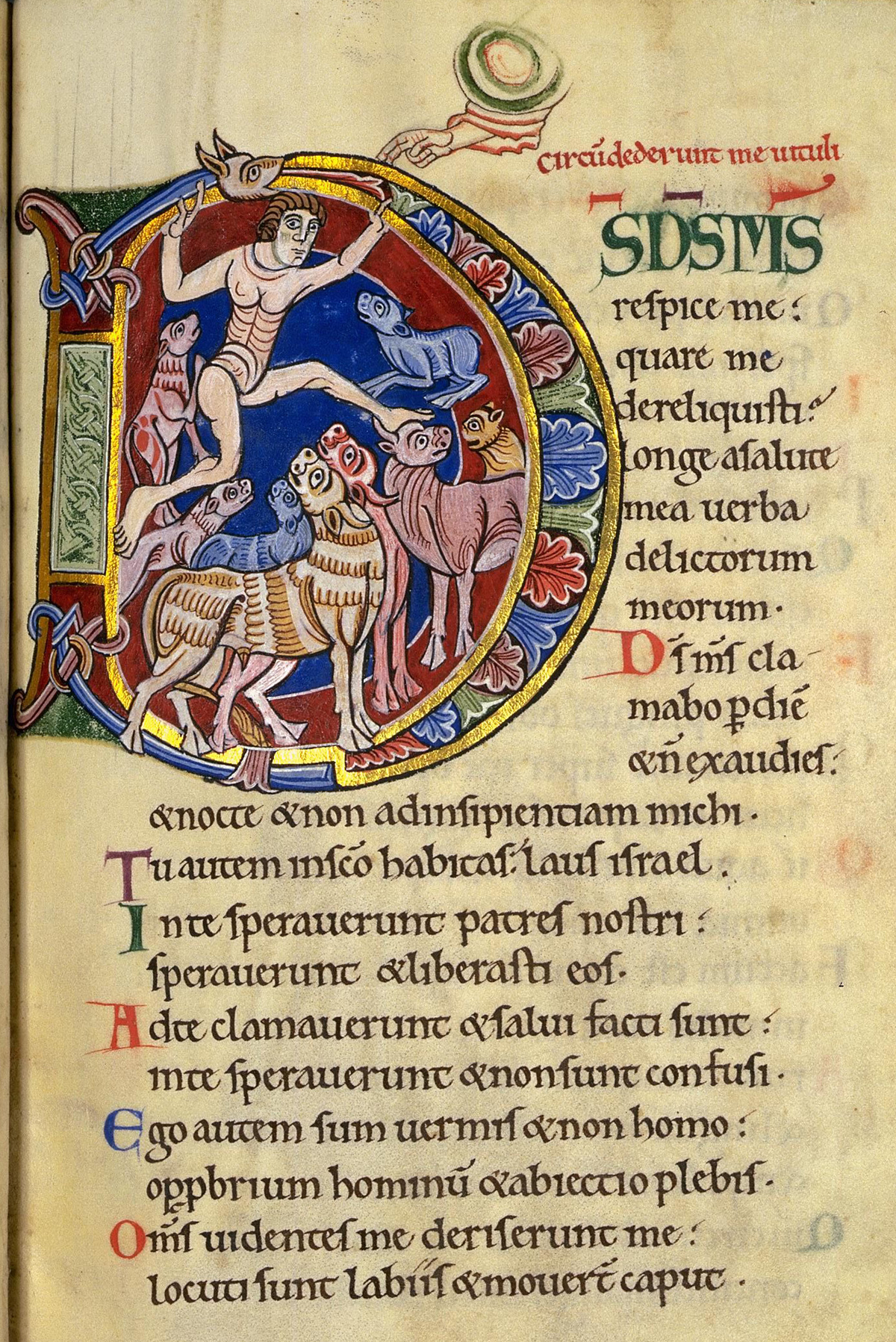
Psalm 22 of the Book of Psalms (the hind of the dawn) or My God, my God, why hast thou forsaken me? is a psalm in the Bible.
The Book of Psalms is part of the third section of the Tanakh, and a book of the Old Testament of the Bible. In the slightly different numbering system used in the Greek Septuagint and Latin Vulgate translations of the Bible, this psalm is Psalm 21. In Latin, it is known as Deus, Deus meus.
The psalm forms a regular part of Jewish, Orthodox, Catholic, Anglican and Lutheran liturgies in addition to Protestant psalmody.
In the most general sense, Psalm 22 is about a person who is crying out to God to save him from the taunts and torments of his enemies, and (in the last ten verses) thanking God for rescuing him.
Jewish interpretations of Psalm 22 identify the individual in the psalm with a royal figure, usually King David or Queen Esther.
The psalm is also interpreted as referring to the plight of the Jewish people and their distress and alienation in exile. For instance, the phrase "But I am a worm" (Hebrew: ואנכי תולעת) refers to Israel, similarly to Isaiah 41: "Fear not, thou worm Jacob, and ye men of Israel; I help thee, saith the LORD, and thy Redeemer, the Holy One of Israel."
Tractate Megillah of the Babylonian Talmud contains an extended collection of midrash expanding on the Book of Esther. Commenting on Esther 5:1, Rabbi Levi is quoted saying that, as Esther passed through the hall of idols on the way to the throne room to plead with the king, she felt the Shekhinah (divine presence) leaving her, at which point she quoted Psalm 22:1 saying "My God, my God, why have you forsaken me."
Ayelet Hashachar (Hebrew: "hind of the dawn") is found in the title of the psalm. It is probably the name of some song or tune to the measure of which the psalm was to be chanted. Some, however, understand by the name some instrument of music, or an allegorical allusion to the subject of the psalms. In the recent literature,[which?] however, it is argued that "Hind of Dawn" is a cultic role of the priest designated person acting as מְנַצֵּחַ (menatseach), as head of the ritual.
Hub AI
Psalm 22 AI simulator
(@Psalm 22_simulator)
Psalm 22
Psalm 22 of the Book of Psalms (the hind of the dawn) or My God, my God, why hast thou forsaken me? is a psalm in the Bible.
The Book of Psalms is part of the third section of the Tanakh, and a book of the Old Testament of the Bible. In the slightly different numbering system used in the Greek Septuagint and Latin Vulgate translations of the Bible, this psalm is Psalm 21. In Latin, it is known as Deus, Deus meus.
The psalm forms a regular part of Jewish, Orthodox, Catholic, Anglican and Lutheran liturgies in addition to Protestant psalmody.
In the most general sense, Psalm 22 is about a person who is crying out to God to save him from the taunts and torments of his enemies, and (in the last ten verses) thanking God for rescuing him.
Jewish interpretations of Psalm 22 identify the individual in the psalm with a royal figure, usually King David or Queen Esther.
The psalm is also interpreted as referring to the plight of the Jewish people and their distress and alienation in exile. For instance, the phrase "But I am a worm" (Hebrew: ואנכי תולעת) refers to Israel, similarly to Isaiah 41: "Fear not, thou worm Jacob, and ye men of Israel; I help thee, saith the LORD, and thy Redeemer, the Holy One of Israel."
Tractate Megillah of the Babylonian Talmud contains an extended collection of midrash expanding on the Book of Esther. Commenting on Esther 5:1, Rabbi Levi is quoted saying that, as Esther passed through the hall of idols on the way to the throne room to plead with the king, she felt the Shekhinah (divine presence) leaving her, at which point she quoted Psalm 22:1 saying "My God, my God, why have you forsaken me."
Ayelet Hashachar (Hebrew: "hind of the dawn") is found in the title of the psalm. It is probably the name of some song or tune to the measure of which the psalm was to be chanted. Some, however, understand by the name some instrument of music, or an allegorical allusion to the subject of the psalms. In the recent literature,[which?] however, it is argued that "Hind of Dawn" is a cultic role of the priest designated person acting as מְנַצֵּחַ (menatseach), as head of the ritual.