
Recent from talks
Esther
Knowledge base stats:
Talk channels stats:
Members stats:
Esther
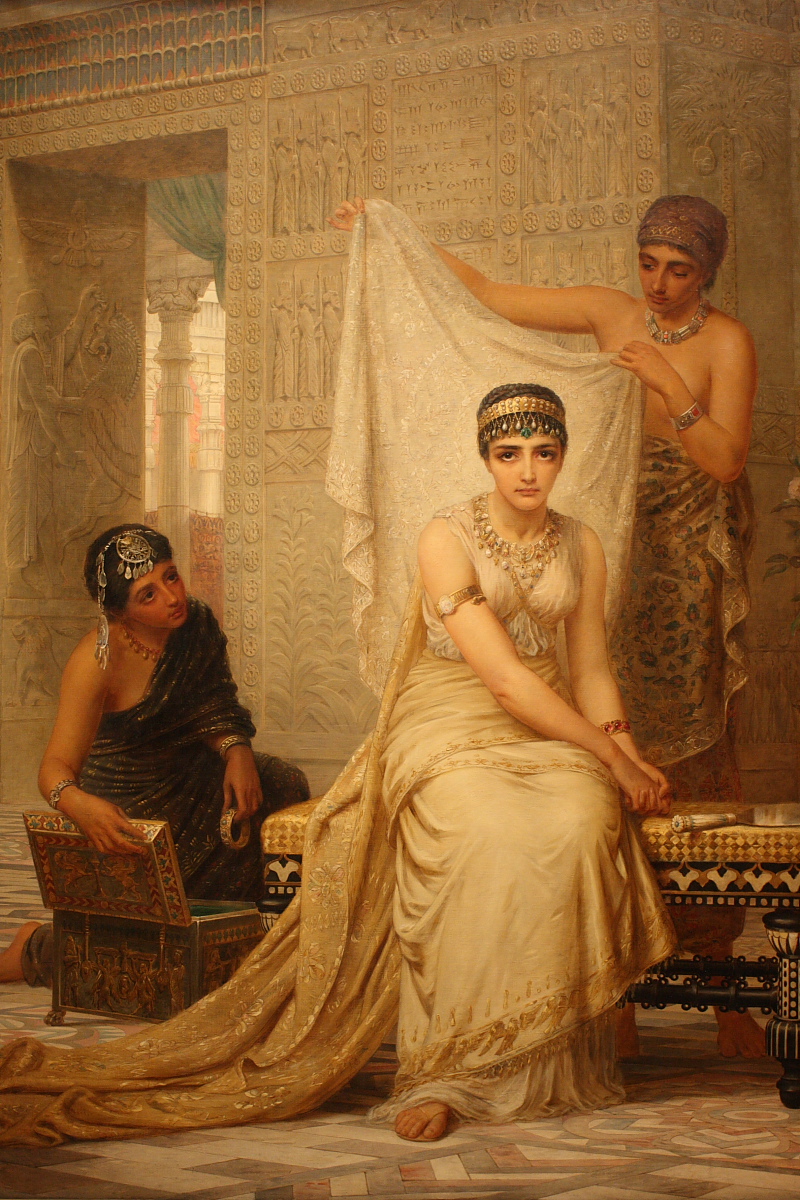
Esther (/ˈɛstər/; Hebrew: אֶסְתֵּר, romanized: ʾEstēr), originally Hadassah (/həˈdɑːsə/; Hebrew: הֲדַסָּה, romanized: Hăḏassā), is the eponymous heroine of the Book of Esther in the Hebrew Bible.
According to the biblical narrative, which is set in the Achaemenid Empire, the Persian king Ahasuerus falls in love with Esther and marries her. His grand vizier Haman is offended by Esther's cousin and guardian Mordecai because of his refusal to bow before him. When confronted, Mordecai's excuse was simply that he was a Jew. Various interpretations have been offered as to what Mordecai's concern was. Consequently, Haman plots to have all of Persia's Jews killed, and eventually convinces Ahasuerus to permit him to do so. However, Esther foils the plan by revealing and decrying Haman's plans to Ahasuerus, who then has Haman executed and grants permission to the Jews to take up arms against their enemies; Esther is hailed for her courage and for working to save the Jews of Persia from eradication.
The Book of Esther's story provides the traditional explanation for Purim, a celebratory Jewish holiday that is observed on the Hebrew date on which Haman's order was to go into effect, which is the day that the Jews killed their enemies after Esther exposed Haman's intentions to her husband; scholars have taken a mixed view as to the Book of Esther's historicity, with debates over its genre and the origins of Purim.
Two related forms of the Book of Esther exist: a shorter Biblical Hebrew-sourced version found in Jewish and Protestant Bibles, and a longer Koine Greek-sourced version found in Catholic and Orthodox Bibles.
When she is introduced, in Esther 2:7, she is first referred to by the Hebrew name Hadassah, which means 'myrtle tree'. This name is absent from the early Greek manuscripts, although present in the targumic texts, and was probably added to the Hebrew text in the 2nd century CE at the earliest to stress the heroine's Jewishness. The name Esther probably derives from the name of the Babylonian goddess Ishtar or from the Persian word cognate with the English word star (implying an association with Ishtar) though some scholars contend it is related to the Persian words for 'woman' or 'myrtle'.
In the third year of the reign of King Ahasuerus of Persia, the king banishes his queen, Vashti for refusing to appear before him as summoned, and seeks a new queen. Beautiful maidens gather together at the harem in the citadel of Susa under the authority of the eunuch Hegai.
Esther, a cousin of Mordecai, was a member of the Jewish community in the Exilic Period who claimed as an ancestor Kish, a Benjamite who had been taken from Jerusalem into captivity. She was the orphaned daughter of Mordecai's uncle, Abihail, from the tribe of Gad. According to the biblical narrative, she had a lovely figure and was beautiful. Upon the king's orders, Esther is taken to the palace where Hegai prepares her to meet the king. Even as she advances to the highest position of the harem, perfumed with gold and myrrh and allocated certain foods and servants, she is under strict instructions from Mordecai, who meets with her each day, to conceal her Jewish origins. The king falls in love with her and makes her his Queen.
Following Esther's coronation, Mordecai learns of an assassination plot by Bigthan and Teresh to kill King Ahasuerus. Mordecai tells Esther, who tells the king in the name of Mordecai, and he is saved. This act of great service to the king is recorded in the Annals of the Kingdom.
Hub AI
Esther AI simulator
(@Esther_simulator)
Esther
Esther (/ˈɛstər/; Hebrew: אֶסְתֵּר, romanized: ʾEstēr), originally Hadassah (/həˈdɑːsə/; Hebrew: הֲדַסָּה, romanized: Hăḏassā), is the eponymous heroine of the Book of Esther in the Hebrew Bible.
According to the biblical narrative, which is set in the Achaemenid Empire, the Persian king Ahasuerus falls in love with Esther and marries her. His grand vizier Haman is offended by Esther's cousin and guardian Mordecai because of his refusal to bow before him. When confronted, Mordecai's excuse was simply that he was a Jew. Various interpretations have been offered as to what Mordecai's concern was. Consequently, Haman plots to have all of Persia's Jews killed, and eventually convinces Ahasuerus to permit him to do so. However, Esther foils the plan by revealing and decrying Haman's plans to Ahasuerus, who then has Haman executed and grants permission to the Jews to take up arms against their enemies; Esther is hailed for her courage and for working to save the Jews of Persia from eradication.
The Book of Esther's story provides the traditional explanation for Purim, a celebratory Jewish holiday that is observed on the Hebrew date on which Haman's order was to go into effect, which is the day that the Jews killed their enemies after Esther exposed Haman's intentions to her husband; scholars have taken a mixed view as to the Book of Esther's historicity, with debates over its genre and the origins of Purim.
Two related forms of the Book of Esther exist: a shorter Biblical Hebrew-sourced version found in Jewish and Protestant Bibles, and a longer Koine Greek-sourced version found in Catholic and Orthodox Bibles.
When she is introduced, in Esther 2:7, she is first referred to by the Hebrew name Hadassah, which means 'myrtle tree'. This name is absent from the early Greek manuscripts, although present in the targumic texts, and was probably added to the Hebrew text in the 2nd century CE at the earliest to stress the heroine's Jewishness. The name Esther probably derives from the name of the Babylonian goddess Ishtar or from the Persian word cognate with the English word star (implying an association with Ishtar) though some scholars contend it is related to the Persian words for 'woman' or 'myrtle'.
In the third year of the reign of King Ahasuerus of Persia, the king banishes his queen, Vashti for refusing to appear before him as summoned, and seeks a new queen. Beautiful maidens gather together at the harem in the citadel of Susa under the authority of the eunuch Hegai.
Esther, a cousin of Mordecai, was a member of the Jewish community in the Exilic Period who claimed as an ancestor Kish, a Benjamite who had been taken from Jerusalem into captivity. She was the orphaned daughter of Mordecai's uncle, Abihail, from the tribe of Gad. According to the biblical narrative, she had a lovely figure and was beautiful. Upon the king's orders, Esther is taken to the palace where Hegai prepares her to meet the king. Even as she advances to the highest position of the harem, perfumed with gold and myrrh and allocated certain foods and servants, she is under strict instructions from Mordecai, who meets with her each day, to conceal her Jewish origins. The king falls in love with her and makes her his Queen.
Following Esther's coronation, Mordecai learns of an assassination plot by Bigthan and Teresh to kill King Ahasuerus. Mordecai tells Esther, who tells the king in the name of Mordecai, and he is saved. This act of great service to the king is recorded in the Annals of the Kingdom.
Recent media