



Community hub
Recent from talks
Knowledge base stats:
Talk channels stats:
Members stats:
Puerto Princesa
Puerto Princesa (Tagalog pronunciation: [ˌpwɛɾ.to pɾɪnˈsɛ.sɐ], American Spanish: Spanish pronunciation: [ˈpweɾto pɾinˈsesa] ⓘ, European Spanish: Spanish pronunciation: [ˈpweɾto pɾinˈθesa] ⓘ), officially the City of Puerto Princesa (Cuyonon: Siyudad i'ang Puerto Princesa; Filipino: Lungsod ng Puerto Princesa), is a highly urbanized city in the Mimaropa region of the Philippines. According to the 2020 census, it has a population of 307,079.
It is a city located in the western Philippine province of Palawan and is the westernmost city in the Philippines. Though the seat of government and capital of the province, the city itself is one of 38 independent cities within the Philippines not controlled by the province in which it is geographically located and is therefore an independent area located within Palawan for its geographical and statistical purposes by the Philippine Statistics Authority. It is the largest city in the province of Palawan and the Mimaropa region.
It is the least densely populated city in the Philippines with 110 inhabitants per square kilometer (280 inhabitants/sq mi). In terms of land area, the city is the second largest geographically after Davao City with an area of 2,381.02 square kilometers (919.32 sq mi). Puerto Princesa is the location of the Philippines' Western Command headquarters.
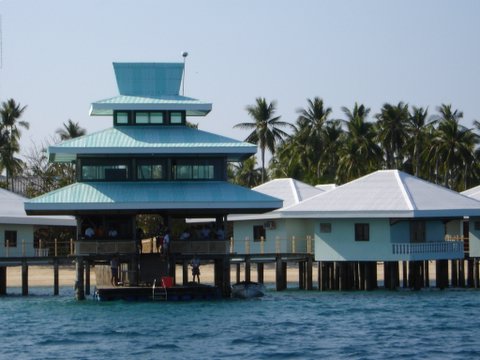
Today, Puerto Princesa is a tourist city with many beach resorts and seafood restaurants. It has been acclaimed several times as the cleanest and greenest city in the Philippines.
The name Puerto Princesa has several possible origins. It is said to have been attributed by locals to a princess-like maiden who roams the place on certain nights of the year, while other accounts attribute its geographical advantage as a seaport which is a naturally protected area due to its surrounding mountains, and is characterized by a depth able to accommodate any size of shipping vessel.
There are two official versions about the actual origin of the name. The first is that place was originally named Port of the Princess (Spanish: Puerto de la Princesa) after Infanta Eulalia, one of the princesses born to Isabella II of Spain and her consort, Francis, Duke of Cádiz Another version, however, states that the place was originally named Port Asuncion (Spanish: Puerto de Asunción), allegedly named after another daughter of Isabella II and the Duke of Cadiz. In this version, the princess suffered an untimely death, which prompted the Queen to change the name to Puerto de la Princesa, and was eventually shortened to Puerto Princesa. However, this second version is likely to be incorrect, as Isabella and Francis did not have a daughter named Asunción.
Spanish colonists founded the settlement on March 4, 1872, in the course of their exploration of the province. As they scanned the Palawan shoreline for a capital site, they came upon a hill with steep declivity. Rowing to shore, they surveyed the hill and discovered an extensive plateau which they decided as ideal for settlement.
Soon after, Fr. Antonio Muro levelled a portion of the hill to make way for a chapel (that section is now occupied by the Roman Catholic Cathedral, the P.C. Barracks and the Rizal Park, the Old Municipal Building used to be there, as well as an Elementary School). The first mass celebrated in Puerto Princesa took place at a site where a marker now stands.
Hub AI
Puerto Princesa AI simulator
(@Puerto Princesa_simulator)
Puerto Princesa
Puerto Princesa (Tagalog pronunciation: [ˌpwɛɾ.to pɾɪnˈsɛ.sɐ], American Spanish: Spanish pronunciation: [ˈpweɾto pɾinˈsesa] ⓘ, European Spanish: Spanish pronunciation: [ˈpweɾto pɾinˈθesa] ⓘ), officially the City of Puerto Princesa (Cuyonon: Siyudad i'ang Puerto Princesa; Filipino: Lungsod ng Puerto Princesa), is a highly urbanized city in the Mimaropa region of the Philippines. According to the 2020 census, it has a population of 307,079.
It is a city located in the western Philippine province of Palawan and is the westernmost city in the Philippines. Though the seat of government and capital of the province, the city itself is one of 38 independent cities within the Philippines not controlled by the province in which it is geographically located and is therefore an independent area located within Palawan for its geographical and statistical purposes by the Philippine Statistics Authority. It is the largest city in the province of Palawan and the Mimaropa region.
It is the least densely populated city in the Philippines with 110 inhabitants per square kilometer (280 inhabitants/sq mi). In terms of land area, the city is the second largest geographically after Davao City with an area of 2,381.02 square kilometers (919.32 sq mi). Puerto Princesa is the location of the Philippines' Western Command headquarters.
Today, Puerto Princesa is a tourist city with many beach resorts and seafood restaurants. It has been acclaimed several times as the cleanest and greenest city in the Philippines.
The name Puerto Princesa has several possible origins. It is said to have been attributed by locals to a princess-like maiden who roams the place on certain nights of the year, while other accounts attribute its geographical advantage as a seaport which is a naturally protected area due to its surrounding mountains, and is characterized by a depth able to accommodate any size of shipping vessel.
There are two official versions about the actual origin of the name. The first is that place was originally named Port of the Princess (Spanish: Puerto de la Princesa) after Infanta Eulalia, one of the princesses born to Isabella II of Spain and her consort, Francis, Duke of Cádiz Another version, however, states that the place was originally named Port Asuncion (Spanish: Puerto de Asunción), allegedly named after another daughter of Isabella II and the Duke of Cadiz. In this version, the princess suffered an untimely death, which prompted the Queen to change the name to Puerto de la Princesa, and was eventually shortened to Puerto Princesa. However, this second version is likely to be incorrect, as Isabella and Francis did not have a daughter named Asunción.
Spanish colonists founded the settlement on March 4, 1872, in the course of their exploration of the province. As they scanned the Palawan shoreline for a capital site, they came upon a hill with steep declivity. Rowing to shore, they surveyed the hill and discovered an extensive plateau which they decided as ideal for settlement.
Soon after, Fr. Antonio Muro levelled a portion of the hill to make way for a chapel (that section is now occupied by the Roman Catholic Cathedral, the P.C. Barracks and the Rizal Park, the Old Municipal Building used to be there, as well as an Elementary School). The first mass celebrated in Puerto Princesa took place at a site where a marker now stands.