



Community hub
Recent from talks
Knowledge base stats:
Talk channels stats:
Members stats:
Quilting
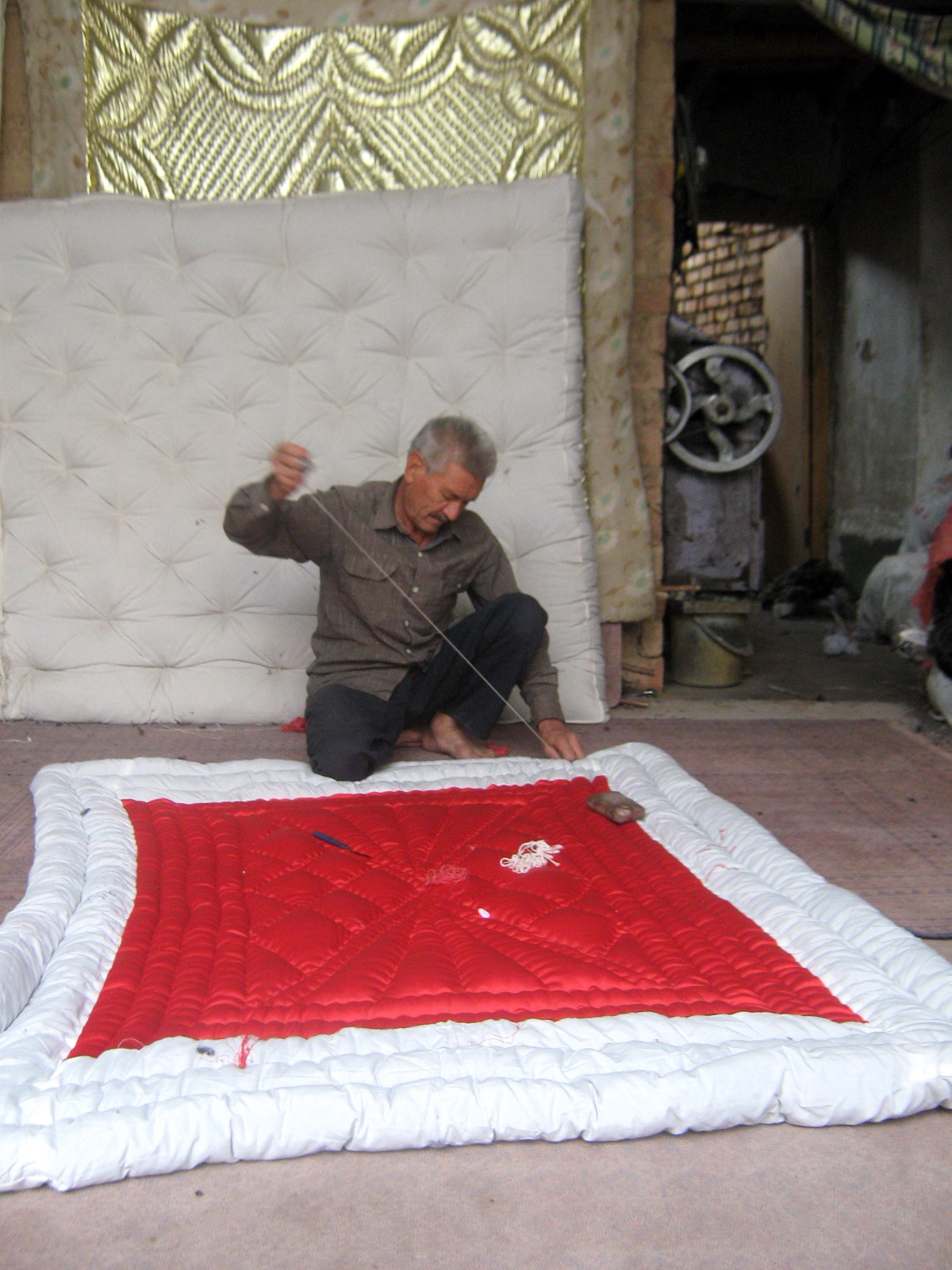
Quilting is the process of joining a minimum of three layers of fabric together either through stitching manually using a needle and thread, or mechanically with a sewing machine or specialised longarm quilting system. An array of stitches is passed through all layers of the fabric to create a three-dimensional padded surface. The three layers are typically referred to as the top fabric or quilt top, batting or insulating material, and the backing.
Quilting varies from a purely functional fabric joinery technique to highly elaborate, decorative three dimensional surface treatments. A wide variety of textile products are traditionally associated with quilting, including bed coverings, home furnishings, garments and costumes, wall hangings, artistic objects, and cultural artifacts.
A quilter can employ a wide range of effects that contribute to the quality and utility of the final quilted material. To create these effects, the quilter manipulates elements such as material type and thickness, stitch length and style, pattern design, piecing, and cutting. Two-dimensional effects such as optical illusions can be achieved through aesthetic choices regarding colour, texture, and print. Three-dimensional and sculptural components of quilted material can be manipulated and enhanced further by embellishment, which may include appliqué, embroidery techniques such as shisha mirror work, and the inclusion of other objects or elements such as pearls, beads, buttons, and sequins. Some quilters create or dye their own fabrics. In contemporary artistic quilting, quilters sometimes use new and experimental materials such as plastics, paper, natural fibers, and plants.
Quilting can be considered one of the first examples of upcycling, as quilters have historically made extensive use of remnants and offcuts for the creation of new products.
The origin of the term 'quilt' is linked to the Latin word culcita, meaning a bolster, cushion, or stuffed sack. The word came into the English language from the French word cuilte. The first use of the term seems to have been in England in the 13th century.
The sewing techniques of piecing, appliqué, and quilting have been used to create clothing and furnishings in various parts of the world for several millennia, and a wide range of unique quilting styles and techniques have evolved around the globe.
The earliest known quilted garment is depicted on the carved ivory figure of a Pharaoh dating from the ancient Egyptian First Dynasty. In 1924 archaeologists discovered a quilted floor covering in Mongolia, estimated to date between 100 BC and 200 AD.
In Europe, quilting has been part of the needlework tradition since about the fifth century. Early objects contained Egyptian cotton, which may indicate that Egyptian and Mediterranean trade provided a conduit for the technique. However, quilted objects were relatively rare in Europe until approximately the twelfth century, when quilted bedding and other items appeared after the return of the Crusaders from the Middle East. The medieval quilted gambeson, aketon and arming doublet were garments worn under or instead of chain mail or plate armor. These later developed into the quilted doublet worn as part of European male clothing from the fourteenth to seventeenth century. The earliest known surviving European bed quilt is the Tristan quilt, which was made in late-fourteenth century Italy from linen padded with wool. The blocks across its center are scenes from the legend of Tristan. The quilt is 320 × 287 cm (126 × 113 in) and is in the Victoria and Albert Museum in London.
Hub AI
Quilting AI simulator
(@Quilting_simulator)
Quilting
Quilting is the process of joining a minimum of three layers of fabric together either through stitching manually using a needle and thread, or mechanically with a sewing machine or specialised longarm quilting system. An array of stitches is passed through all layers of the fabric to create a three-dimensional padded surface. The three layers are typically referred to as the top fabric or quilt top, batting or insulating material, and the backing.
Quilting varies from a purely functional fabric joinery technique to highly elaborate, decorative three dimensional surface treatments. A wide variety of textile products are traditionally associated with quilting, including bed coverings, home furnishings, garments and costumes, wall hangings, artistic objects, and cultural artifacts.
A quilter can employ a wide range of effects that contribute to the quality and utility of the final quilted material. To create these effects, the quilter manipulates elements such as material type and thickness, stitch length and style, pattern design, piecing, and cutting. Two-dimensional effects such as optical illusions can be achieved through aesthetic choices regarding colour, texture, and print. Three-dimensional and sculptural components of quilted material can be manipulated and enhanced further by embellishment, which may include appliqué, embroidery techniques such as shisha mirror work, and the inclusion of other objects or elements such as pearls, beads, buttons, and sequins. Some quilters create or dye their own fabrics. In contemporary artistic quilting, quilters sometimes use new and experimental materials such as plastics, paper, natural fibers, and plants.
Quilting can be considered one of the first examples of upcycling, as quilters have historically made extensive use of remnants and offcuts for the creation of new products.
The origin of the term 'quilt' is linked to the Latin word culcita, meaning a bolster, cushion, or stuffed sack. The word came into the English language from the French word cuilte. The first use of the term seems to have been in England in the 13th century.
The sewing techniques of piecing, appliqué, and quilting have been used to create clothing and furnishings in various parts of the world for several millennia, and a wide range of unique quilting styles and techniques have evolved around the globe.
The earliest known quilted garment is depicted on the carved ivory figure of a Pharaoh dating from the ancient Egyptian First Dynasty. In 1924 archaeologists discovered a quilted floor covering in Mongolia, estimated to date between 100 BC and 200 AD.
In Europe, quilting has been part of the needlework tradition since about the fifth century. Early objects contained Egyptian cotton, which may indicate that Egyptian and Mediterranean trade provided a conduit for the technique. However, quilted objects were relatively rare in Europe until approximately the twelfth century, when quilted bedding and other items appeared after the return of the Crusaders from the Middle East. The medieval quilted gambeson, aketon and arming doublet were garments worn under or instead of chain mail or plate armor. These later developed into the quilted doublet worn as part of European male clothing from the fourteenth to seventeenth century. The earliest known surviving European bed quilt is the Tristan quilt, which was made in late-fourteenth century Italy from linen padded with wool. The blocks across its center are scenes from the legend of Tristan. The quilt is 320 × 287 cm (126 × 113 in) and is in the Victoria and Albert Museum in London.