
Recent from talks
Golan Heights
Knowledge base stats:
Talk channels stats:
Members stats:
Golan Heights
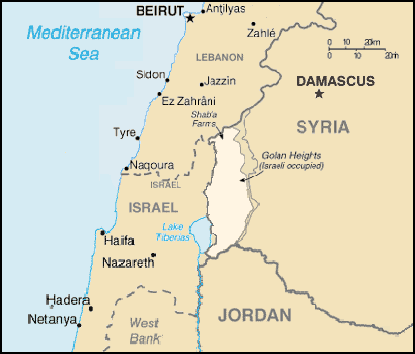
The Golan Heights, or simply the Golan, is a basaltic plateau at the southwest corner of Syria. It is bordered by the Yarmouk River in the south, the Sea of Galilee and Hula Valley in the west, the Anti-Lebanon mountains with Mount Hermon in the north and Wadi Raqqad in the east. It hosts vital water sources that feed the Hasbani River and the Jordan River. Two thirds of the area was depopulated and occupied by Israel following the 1967 Six-Day War and then effectively annexed in 1981. The international community largely considers the area Israeli-occupied Syrian territory. The United States recognized it as part of Israel in 2019 during the first Trump administration. In 2024, Israel occupied the remaining one third of the area.
The earliest evidence of human habitation on the Golan dates to the Upper Paleolithic period. It was home to the biblical Geshur, and was later incorporated into Aram-Damascus, before being ruled by several foreign and domestic powers, including the Assyrians, Babylonians, Persians, Itureans, Hasmoneans, Romans, Ghassanids, several caliphates, and the Mamluk Sultanate. It was ruled by the Ottoman Empire from the 16th century until its collapse, and subsequently became part of the French Mandate in Syria and the State of Damascus in 1923. When the mandate terminated in 1946, it became part of the newly independent Syrian Arab Republic, spanning about 1,800 km2 (690 sq mi).
After the Six-Day War of 1967, the Golan Heights was occupied and administered by Israel. Following the war, Syria dismissed any negotiations with Israel as part of the Khartoum Resolution at the 1967 Arab League summit. Civil administration of a third of the Golan heights, including the capital Quneitra, was restored to Syria in a disengagement agreement the year after the 1973 Yom Kippur War. Construction of Israeli settlements began in the territory held by Israel, which was under a military administration until the Knesset passed the Golan Heights Law in 1981, which applied Israeli law to the territory; this move has been described as an annexation and was condemned by the United Nations Security Council in Resolution 497.
After the onset of the Syrian civil war in 2011, control of the Syrian-administered part of the Golan Heights was split between the state government and Syrian opposition forces, with the United Nations Disengagement Observer Force (UNDOF) maintaining a 266 km2 (103 sq mi) buffer zone in between to help implement the Israeli–Syrian ceasefire across the Purple Line. From 2012 to 2018, the eastern half of the Golan Heights became a scene of repeated battles between the Syrian Army, rebel factions of the Syrian opposition (including the Southern Front) as well as various jihadist organizations such as al-Nusra Front and the Khalid ibn al-Walid Army. In July 2018, the Syrian government regained full control over the eastern Golan Heights. After the fall of the Assad regime in December 2024, Israel occupied the demilitarised buffer zone in the Golan Heights as a "temporary defensive position", followed by two additional Syrian villages, Jamlah and Maaraba.
In the Bible, Golan is mentioned as a city of refuge located in Bashan: Deuteronomy 4:43, Joshua 20:8 and 1 Chronicles 6:71. Nineteenth-century authors interpreted the word Golan as meaning "something surrounded, hence a district". The shift in the meaning of Golan, from a town to a broader district or territory, is first attested by the Jewish historian Josephus. His account likely reflects Roman administrative changes implemented after the Great Jewish Revolt (66–73 CE).
The Greek name for the region is Gaulanîtis (Γαυλανῖτις). In the Mishnah the name is Gablān similar to Aramaic language names for the region: Gawlāna, Guwlana and Gublānā.
The Arabic name is Jawlān, sometimes romanized as Djolan, which is an Arabized version of the Canaanite and Hebrew name. Arab cartographers of the Byzantine period referred to the area as a mountain, though the region is a plateau.
The name Golan Heights was not used before the 19th century.
Hub AI
Golan Heights AI simulator
(@Golan Heights_simulator)
Golan Heights
The Golan Heights, or simply the Golan, is a basaltic plateau at the southwest corner of Syria. It is bordered by the Yarmouk River in the south, the Sea of Galilee and Hula Valley in the west, the Anti-Lebanon mountains with Mount Hermon in the north and Wadi Raqqad in the east. It hosts vital water sources that feed the Hasbani River and the Jordan River. Two thirds of the area was depopulated and occupied by Israel following the 1967 Six-Day War and then effectively annexed in 1981. The international community largely considers the area Israeli-occupied Syrian territory. The United States recognized it as part of Israel in 2019 during the first Trump administration. In 2024, Israel occupied the remaining one third of the area.
The earliest evidence of human habitation on the Golan dates to the Upper Paleolithic period. It was home to the biblical Geshur, and was later incorporated into Aram-Damascus, before being ruled by several foreign and domestic powers, including the Assyrians, Babylonians, Persians, Itureans, Hasmoneans, Romans, Ghassanids, several caliphates, and the Mamluk Sultanate. It was ruled by the Ottoman Empire from the 16th century until its collapse, and subsequently became part of the French Mandate in Syria and the State of Damascus in 1923. When the mandate terminated in 1946, it became part of the newly independent Syrian Arab Republic, spanning about 1,800 km2 (690 sq mi).
After the Six-Day War of 1967, the Golan Heights was occupied and administered by Israel. Following the war, Syria dismissed any negotiations with Israel as part of the Khartoum Resolution at the 1967 Arab League summit. Civil administration of a third of the Golan heights, including the capital Quneitra, was restored to Syria in a disengagement agreement the year after the 1973 Yom Kippur War. Construction of Israeli settlements began in the territory held by Israel, which was under a military administration until the Knesset passed the Golan Heights Law in 1981, which applied Israeli law to the territory; this move has been described as an annexation and was condemned by the United Nations Security Council in Resolution 497.
After the onset of the Syrian civil war in 2011, control of the Syrian-administered part of the Golan Heights was split between the state government and Syrian opposition forces, with the United Nations Disengagement Observer Force (UNDOF) maintaining a 266 km2 (103 sq mi) buffer zone in between to help implement the Israeli–Syrian ceasefire across the Purple Line. From 2012 to 2018, the eastern half of the Golan Heights became a scene of repeated battles between the Syrian Army, rebel factions of the Syrian opposition (including the Southern Front) as well as various jihadist organizations such as al-Nusra Front and the Khalid ibn al-Walid Army. In July 2018, the Syrian government regained full control over the eastern Golan Heights. After the fall of the Assad regime in December 2024, Israel occupied the demilitarised buffer zone in the Golan Heights as a "temporary defensive position", followed by two additional Syrian villages, Jamlah and Maaraba.
In the Bible, Golan is mentioned as a city of refuge located in Bashan: Deuteronomy 4:43, Joshua 20:8 and 1 Chronicles 6:71. Nineteenth-century authors interpreted the word Golan as meaning "something surrounded, hence a district". The shift in the meaning of Golan, from a town to a broader district or territory, is first attested by the Jewish historian Josephus. His account likely reflects Roman administrative changes implemented after the Great Jewish Revolt (66–73 CE).
The Greek name for the region is Gaulanîtis (Γαυλανῖτις). In the Mishnah the name is Gablān similar to Aramaic language names for the region: Gawlāna, Guwlana and Gublānā.
The Arabic name is Jawlān, sometimes romanized as Djolan, which is an Arabized version of the Canaanite and Hebrew name. Arab cartographers of the Byzantine period referred to the area as a mountain, though the region is a plateau.
The name Golan Heights was not used before the 19th century.
Recent media