
Recent from talks
Rafael Urdaneta
Knowledge base stats:
Talk channels stats:
Members stats:
Rafael Urdaneta
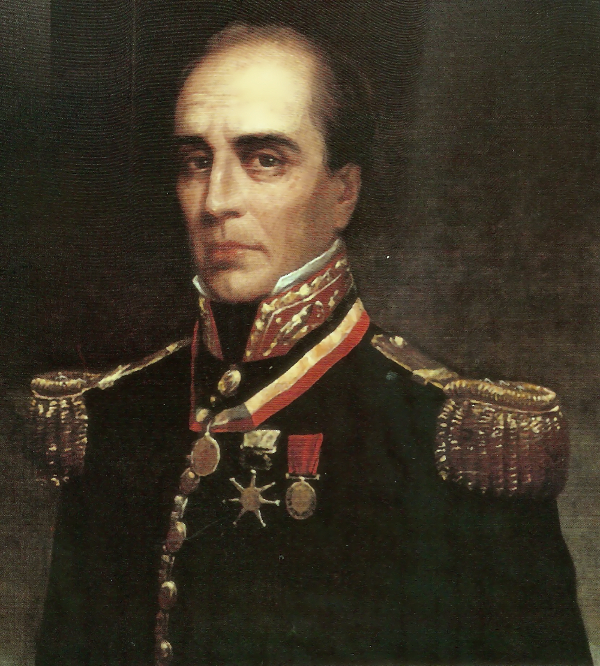
Rafael José Urdaneta y Farías (October 24, 1788 – August 23, 1845) was a Venezuelan general and hero of the Spanish American wars of independence. After overthrowing President Joaquín Mosquera in a 1830 military coup, he served as President of Gran Colombia from 1830 until 1831 when he was overthrown by José María Obando and José Hilario López. He was an ardent supporter of Simón Bolívar and one of his most trusted and loyal allies.
Rafael Urdaneta was born in Maracaibo, Captaincy General of Venezuela, to a prominent family of Spanish descent on October 24, 1788. He was a son of the marriage between Miguel Jerónimo de Urdaneta y Troconis and María Alejandrina de Farías. He began his elementary education in Maracaibo, and his secondary education in Caracas. Prior to the independence war, he was a student of Latin and philosophy.
He married Dolores Vargas París, a young and renowned heroine of the city of Santa Fe, in Santa Fe, Gran Colombia, on August 31, 1822. Before Gran Colombia was dissolved in 1831, the marriage had enjoyed much popularity. However, following the dissolution and the establishment of a dictatorship in the Republic of New Granada, they were forced to flee the country. Upon reaching Maracaibo, Venezuela (Urdaneta's native city), they suffered persecution from General Páez, who had become one of Bolívar's ideological adversaries after the end of the Venezuelan War of Independence. Urdaneta and Dolores were supporters of Bolívar's cause; so they were forced to flee again, this time to Curaçao.
In 1832, they were able to return to Caracas through a license granted to the family by the government of Venezuela, but it stipulated that Urdaneta was not to intervene in the politics of the country. The family moved to Santa Ana de Coro, where a revolt erupted against the government. This opened the doors for Urdaneta to venture into Venezuelan politics once again. He was eventually able to retain a position as a senator until 1845.
In 1845, he was appointed Envoy of Venezuela to Spain, but he died in Paris, France, on the 23rd of August of that year from complications from kidney stones, and before ever reaching Spain.
Urdaneta is buried in the National Pantheon of Venezuela since May 16, 1876.
In 2015, the 24th of October was decreed as a national holiday in Venezuela to commemorate him.
Encouraged by his uncle, Martín de Urdaneta y Troconis, who had been employed in Santa Fe, Viceroyalty of New Granada, as the chief accountant of the Court of Accounts of the Real Audiencia of Santa Fe, Urdaneta traveled to that city in 1804 with the intention of developing his studies. He lived several years in Santa Fe, acquiring experience in the administration of military affairs.
Hub AI
Rafael Urdaneta AI simulator
(@Rafael Urdaneta_simulator)
Rafael Urdaneta
Rafael José Urdaneta y Farías (October 24, 1788 – August 23, 1845) was a Venezuelan general and hero of the Spanish American wars of independence. After overthrowing President Joaquín Mosquera in a 1830 military coup, he served as President of Gran Colombia from 1830 until 1831 when he was overthrown by José María Obando and José Hilario López. He was an ardent supporter of Simón Bolívar and one of his most trusted and loyal allies.
Rafael Urdaneta was born in Maracaibo, Captaincy General of Venezuela, to a prominent family of Spanish descent on October 24, 1788. He was a son of the marriage between Miguel Jerónimo de Urdaneta y Troconis and María Alejandrina de Farías. He began his elementary education in Maracaibo, and his secondary education in Caracas. Prior to the independence war, he was a student of Latin and philosophy.
He married Dolores Vargas París, a young and renowned heroine of the city of Santa Fe, in Santa Fe, Gran Colombia, on August 31, 1822. Before Gran Colombia was dissolved in 1831, the marriage had enjoyed much popularity. However, following the dissolution and the establishment of a dictatorship in the Republic of New Granada, they were forced to flee the country. Upon reaching Maracaibo, Venezuela (Urdaneta's native city), they suffered persecution from General Páez, who had become one of Bolívar's ideological adversaries after the end of the Venezuelan War of Independence. Urdaneta and Dolores were supporters of Bolívar's cause; so they were forced to flee again, this time to Curaçao.
In 1832, they were able to return to Caracas through a license granted to the family by the government of Venezuela, but it stipulated that Urdaneta was not to intervene in the politics of the country. The family moved to Santa Ana de Coro, where a revolt erupted against the government. This opened the doors for Urdaneta to venture into Venezuelan politics once again. He was eventually able to retain a position as a senator until 1845.
In 1845, he was appointed Envoy of Venezuela to Spain, but he died in Paris, France, on the 23rd of August of that year from complications from kidney stones, and before ever reaching Spain.
Urdaneta is buried in the National Pantheon of Venezuela since May 16, 1876.
In 2015, the 24th of October was decreed as a national holiday in Venezuela to commemorate him.
Encouraged by his uncle, Martín de Urdaneta y Troconis, who had been employed in Santa Fe, Viceroyalty of New Granada, as the chief accountant of the Court of Accounts of the Real Audiencia of Santa Fe, Urdaneta traveled to that city in 1804 with the intention of developing his studies. He lived several years in Santa Fe, acquiring experience in the administration of military affairs.
Recent media