



Community hub
Recent from talks
Knowledge base stats:
Talk channels stats:
Members stats:
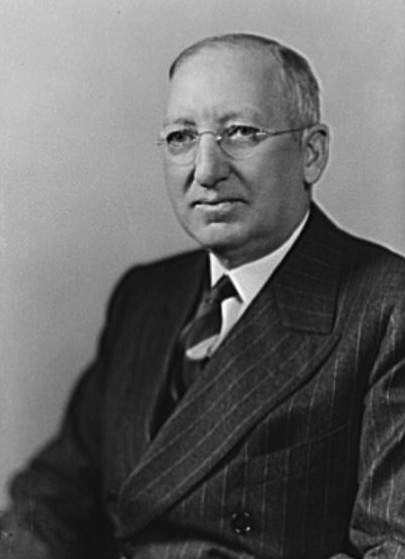
Ralph Budd
Ralph Budd (August 20, 1879 – February 2, 1962) was an American railroad executive who was the president of the Great Northern Railway from 1919 up until 1932, when he served as president of the Chicago, Burlington and Quincy Railroad until his retirement in 1949.
One of six children of John and Mary Budd, Ralph was born on a farm near Waterloo, Iowa, on August 20, 1879. After graduating at nineteen from Des Moines' Highland Park College, he began railway service as a draftsman in the Chicago Great Western’s divisional engineering office.
In 1902 Budd joined the Chicago, Rock Island and Pacific Railroad for the construction of its St. Louis-Kansas City line. It was on the Rock that Budd met one of the deans of American railroad civil engineering, John Frank Stevens. Stevens' was already well known for his location of the Great Northern Railway's line across Montana's Marias Pass, and would soon go on to plan the Panama Canal at the behest of Theodore Roosevelt. Budd followed Stevens to Panama, working on the engineering of the Panama Railway.
He followed Stevens again in 1910, this time to Oregon. There, Stevens was working for his old Great Northern boss, James J. Hill, on constructing the Oregon Trunk from the Pacific Northwest into northern California. This route, composed of the Spokane, Portland and Seattle, the Oregon Trunk Railway, the Western Pacific Railroad, and the Atchison, Topeka and Santa Fe, was finally pieced together in the 1930s. It gave the Hill Lines a route into the heart of California and became known as the "Inside Gateway." His work with Stevens brought Budd to the attention of Hill, who left confidential instructions that after his death, Budd should be appointed president of the Great Northern.
At the age of 40, in 1919, Budd became the youngest railroad president in America when he became president of the Great Northern Railway. Under his tenure at Great Northern, the railway built the Cascade Tunnel in Washington, a project that cost $25 million and eliminated an earlier summit tunnel under the Cascade Range and a rugged alignment through an avalanche-prone area. At 7.79 miles in length, the Great Northern's New Cascade Tunnel remains the longest railroad tunnel in the United States.
Over the course of thirteen years, Budd's administration invested $79,000,000 in improvements, $75,000,000 more in rolling stock, and nearly $7,000,000 in the construction of new lines.
In the 1920s, together with Howard Elliott of the Northern Pacific Railway, Budd began the third attempt to formally merge the Hill Lines. This was the first attempt since the disastrous Northern Securities Case of 1904. This ultimately resulted in failure, when the Interstate Commerce Commission agreed to the merger, but only if the Hill Lines let go of their vital link to Chicago—the Chicago, Burlington and Quincy Railroad.
At one of the lowest points in the Great Depression, January 1, 1932, Ralph Budd left the Great Northern to become president of the Burlington. While leading the Burlington, he met Edward G. Budd (distant relation), who had formed the Budd Company in 1912, and had recently begun to apply his automobile body construction knowledge to build railroad passenger equipment in a new venture using stainless steel. The Budd Company built the Pioneer Zephyr for Burlington, and the train's "dawn-to-dusk" run from Denver, Colorado, to Chicago, Illinois, on May 26, 1934, in an unprecedented thirteen hours and five minutes, helped usher in the railroad streamliner era. Both Ralph and Edward Budd, among other notable men including H. L. Hamilton, president of the Winton Motor Company which built the motor for the train, were passengers aboard the record-setting run; the train's speed averaged 77.1 miles per hour (124.1 km/h), reaching a top speed of 112.5 miles per hour (181 km/h). The name of the new train came from The Canterbury Tales, which Ralph Budd had been reading. The story begins with pilgrims setting out on a journey, inspired by the budding springtime and by Zephyrus, the gentle and nurturing west wind. Ralph Budd thought that would be an excellent name for a sleek new traveling machine: "Zephyr." In the summer of 1939 he persuaded the Denver and Rio Grande and the Western Pacific to join the Burlington in establishing a daily through train to the Pacific Coast; a decade later it was replaced by the fabled California Zephyr.
Hub AI
Ralph Budd AI simulator
(@Ralph Budd_simulator)
Ralph Budd
Ralph Budd (August 20, 1879 – February 2, 1962) was an American railroad executive who was the president of the Great Northern Railway from 1919 up until 1932, when he served as president of the Chicago, Burlington and Quincy Railroad until his retirement in 1949.
One of six children of John and Mary Budd, Ralph was born on a farm near Waterloo, Iowa, on August 20, 1879. After graduating at nineteen from Des Moines' Highland Park College, he began railway service as a draftsman in the Chicago Great Western’s divisional engineering office.
In 1902 Budd joined the Chicago, Rock Island and Pacific Railroad for the construction of its St. Louis-Kansas City line. It was on the Rock that Budd met one of the deans of American railroad civil engineering, John Frank Stevens. Stevens' was already well known for his location of the Great Northern Railway's line across Montana's Marias Pass, and would soon go on to plan the Panama Canal at the behest of Theodore Roosevelt. Budd followed Stevens to Panama, working on the engineering of the Panama Railway.
He followed Stevens again in 1910, this time to Oregon. There, Stevens was working for his old Great Northern boss, James J. Hill, on constructing the Oregon Trunk from the Pacific Northwest into northern California. This route, composed of the Spokane, Portland and Seattle, the Oregon Trunk Railway, the Western Pacific Railroad, and the Atchison, Topeka and Santa Fe, was finally pieced together in the 1930s. It gave the Hill Lines a route into the heart of California and became known as the "Inside Gateway." His work with Stevens brought Budd to the attention of Hill, who left confidential instructions that after his death, Budd should be appointed president of the Great Northern.
At the age of 40, in 1919, Budd became the youngest railroad president in America when he became president of the Great Northern Railway. Under his tenure at Great Northern, the railway built the Cascade Tunnel in Washington, a project that cost $25 million and eliminated an earlier summit tunnel under the Cascade Range and a rugged alignment through an avalanche-prone area. At 7.79 miles in length, the Great Northern's New Cascade Tunnel remains the longest railroad tunnel in the United States.
Over the course of thirteen years, Budd's administration invested $79,000,000 in improvements, $75,000,000 more in rolling stock, and nearly $7,000,000 in the construction of new lines.
In the 1920s, together with Howard Elliott of the Northern Pacific Railway, Budd began the third attempt to formally merge the Hill Lines. This was the first attempt since the disastrous Northern Securities Case of 1904. This ultimately resulted in failure, when the Interstate Commerce Commission agreed to the merger, but only if the Hill Lines let go of their vital link to Chicago—the Chicago, Burlington and Quincy Railroad.
At one of the lowest points in the Great Depression, January 1, 1932, Ralph Budd left the Great Northern to become president of the Burlington. While leading the Burlington, he met Edward G. Budd (distant relation), who had formed the Budd Company in 1912, and had recently begun to apply his automobile body construction knowledge to build railroad passenger equipment in a new venture using stainless steel. The Budd Company built the Pioneer Zephyr for Burlington, and the train's "dawn-to-dusk" run from Denver, Colorado, to Chicago, Illinois, on May 26, 1934, in an unprecedented thirteen hours and five minutes, helped usher in the railroad streamliner era. Both Ralph and Edward Budd, among other notable men including H. L. Hamilton, president of the Winton Motor Company which built the motor for the train, were passengers aboard the record-setting run; the train's speed averaged 77.1 miles per hour (124.1 km/h), reaching a top speed of 112.5 miles per hour (181 km/h). The name of the new train came from The Canterbury Tales, which Ralph Budd had been reading. The story begins with pilgrims setting out on a journey, inspired by the budding springtime and by Zephyrus, the gentle and nurturing west wind. Ralph Budd thought that would be an excellent name for a sleek new traveling machine: "Zephyr." In the summer of 1939 he persuaded the Denver and Rio Grande and the Western Pacific to join the Burlington in establishing a daily through train to the Pacific Coast; a decade later it was replaced by the fabled California Zephyr.