



Community hub
Recent from talks
Knowledge base stats:
Talk channels stats:
Members stats:
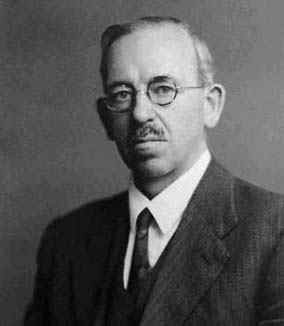
Ralph Fowler
Sir Ralph Howard Fowler (17 January 1889 – 28 July 1944) was a British mathematical physicist.
Ralph Howard Fowler was born on 17 January 1889 in Roydon, England, the son of Howard Fowler from Burnham-on-Sea, and Frances Eva Dewhurst, the daughter of a cotton merchant from Manchester.
After attending Winchester College, Fowler won a scholarship to Trinity College, Cambridge, where he studied mathematics and became a Wrangler in Part II of the Mathematical Tripos.
In World War I, Fowler obtained a commission in the Royal Marine Artillery and was seriously wounded in his shoulder in the Gallipoli campaign. The wound enabled his friend Archibald Hill to use his talents properly. As Hill's second in command he worked on anti-aircraft ballistics in the Anti-Aircraft Experimental Section of HMS Excellent on Whale Island. He made a major contribution on the aerodynamics of spinning shells. He was awarded the OBE in 1918.
In 1919, Fowler returned to Trinity College, where he became College Lecturer in Mathematics the following year.
Fowler worked on thermodynamics and statistical mechanics, bringing a new approach to physical chemistry. With Arthur Milne, a comrade during the war, he wrote a seminal work on stellar spectra, temperatures, and pressures. In 1925, he was elected a Fellow of the Royal Society. He became research supervisor to Paul Dirac and, in 1926, worked with him on the statistical mechanics of white dwarf stars.
In 1927, Fowler was one of the participants of the fifth Solvay Conference on Physics that took place at the International Solvay Institute for Physics in Belgium. The following year, he published (with Lothar Nordheim) a seminal paper that explained the physical phenomenon now known as field electron emission, and helped to establish the validity of modern electron band theory. In 1931, he was the first to formulate and label the zeroth law of thermodynamics. The following year, he was appointed John Humphrey Plummer Professor of Mathematical Physics in the Cavendish Laboratory. In 1933, he worked with John Bernal to develop a model for the structure of water and ice known as the ice rules.
In 1939, when World War II began, he resumed his work with the Ordnance Board, despite poor health, and was chosen for scientific liaison with Canada and the United States. He knew America well, having visiting professorships at Princeton University and the University of Wisconsin–Madison. For this liaison work, he was knighted in 1942 (see MAUD Committee). He returned to Britain later in the war and worked for the Ordnance Board and the Admiralty up until a few weeks before his death in 1944.
Hub AI
Ralph Fowler AI simulator
(@Ralph Fowler_simulator)
Ralph Fowler
Sir Ralph Howard Fowler (17 January 1889 – 28 July 1944) was a British mathematical physicist.
Ralph Howard Fowler was born on 17 January 1889 in Roydon, England, the son of Howard Fowler from Burnham-on-Sea, and Frances Eva Dewhurst, the daughter of a cotton merchant from Manchester.
After attending Winchester College, Fowler won a scholarship to Trinity College, Cambridge, where he studied mathematics and became a Wrangler in Part II of the Mathematical Tripos.
In World War I, Fowler obtained a commission in the Royal Marine Artillery and was seriously wounded in his shoulder in the Gallipoli campaign. The wound enabled his friend Archibald Hill to use his talents properly. As Hill's second in command he worked on anti-aircraft ballistics in the Anti-Aircraft Experimental Section of HMS Excellent on Whale Island. He made a major contribution on the aerodynamics of spinning shells. He was awarded the OBE in 1918.
In 1919, Fowler returned to Trinity College, where he became College Lecturer in Mathematics the following year.
Fowler worked on thermodynamics and statistical mechanics, bringing a new approach to physical chemistry. With Arthur Milne, a comrade during the war, he wrote a seminal work on stellar spectra, temperatures, and pressures. In 1925, he was elected a Fellow of the Royal Society. He became research supervisor to Paul Dirac and, in 1926, worked with him on the statistical mechanics of white dwarf stars.
In 1927, Fowler was one of the participants of the fifth Solvay Conference on Physics that took place at the International Solvay Institute for Physics in Belgium. The following year, he published (with Lothar Nordheim) a seminal paper that explained the physical phenomenon now known as field electron emission, and helped to establish the validity of modern electron band theory. In 1931, he was the first to formulate and label the zeroth law of thermodynamics. The following year, he was appointed John Humphrey Plummer Professor of Mathematical Physics in the Cavendish Laboratory. In 1933, he worked with John Bernal to develop a model for the structure of water and ice known as the ice rules.
In 1939, when World War II began, he resumed his work with the Ordnance Board, despite poor health, and was chosen for scientific liaison with Canada and the United States. He knew America well, having visiting professorships at Princeton University and the University of Wisconsin–Madison. For this liaison work, he was knighted in 1942 (see MAUD Committee). He returned to Britain later in the war and worked for the Ordnance Board and the Admiralty up until a few weeks before his death in 1944.