



Community hub
Recent from talks
Knowledge base stats:
Talk channels stats:
Members stats:
Ramona
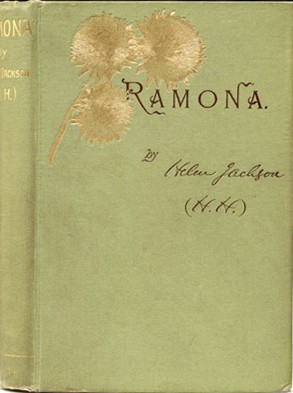
Ramona is an 1884 American novel written by Helen Hunt Jackson. Set in Southern California after the Mexican–American War and annexation of the territory by the United States, Ramona explores the life of a mixed-race Scottish–Native American orphan girl. The story was inspired by the marriage of Hugo Reid and Victoria Reid.
Originally serialized weekly in the Christian Union, the novel became immensely popular. It has had more than 300 printings, and has been adapted five times as a film. A play adaptation has been performed annually outdoors since 1923.
The novel's influence on the culture and image of Southern California was considerable. Its sentimental portrayal of Mexican elite colonial life contributed to establishing a unique cultural identity for the region. As its publication coincided with the arrival of railroad lines in the region, tourists used trains to visit sites thought to be associated with the novel.
In Southern California, shortly after the Mexican–American War, a Scottish-Native American orphan girl, Ramona, is raised by Señora Gonzaga Moreno, the sister of Ramona's deceased foster mother. Ramona is referred to as illegitimate in some summaries of the novel, but chapter 3 of the novel says that Ramona's parents were married by a priest in the San Gabriel Mission. Señora Moreno has raised Ramona as part of the family, giving her every luxury. Ramona's foster mother had requested this as her dying wish. Because Ramona has partial Native American heritage, Moreno reserves her love for her only child, Felipe Moreno, whom she adores. Señora Moreno identifies as Mexican of pure Spanish ancestry. She hates Americans since the United States' annexation of California following its victory in the war. They have disputed her claim to her lands, and have divided her huge rancho.
Señora Moreno delays the sheep shearing, a major event on the rancho, awaiting the arrival of a group of Native Americans from Temecula, whom she always hires for that work. The head of the Native American sheep shearers is Alessandro, son of Pablo Assís, chief of the tribe. Alessandro is portrayed as tall, wise, honest, and piously Catholic. Señora Moreno also awaits a priest, Father Salvierderra, from Santa Barbara. He will hear confessions of the workers and celebrate mass with them in her chapel after the shearing, before they return to Temecula.
Alessandro quickly falls in love with Ramona and agrees to stay on at the Rancho. In time, Ramona also falls in love with Alessandro. Señora Moreno opposes the marriage, as she does not want Ramona to marry a Native American. Realizing that Señora Moreno has never loved her, Ramona elopes with Alessandro.
The rest of the novel charts the two lovers' troubles. They have a daughter, and travel around Southern California trying to find a place to settle. In the aftermath of war, Alessandro's tribe is driven off their land, marking a new wave of European-American settlement in California from the United States. They endure misery and hardship, for the Americans who buy their land also demand their houses and their farm tools. Greedy Americans drive them off several homesteads, and they cannot find a permanent community that is not threatened by encroachment of American settlers. They finally move into the San Bernardino Mountains.
Alessandro slowly loses his mind, due to the forced relocations. He loves Ramona fiercely, and regrets having taken her away from relative comfort with Moreno. Their daughter, whose Native American name means "Eyes of the Sky", dies because an American doctor would not go to their homestead to treat her. They have another daughter, whom they name Ramona, but Alessandro still suffers. One day he rides off with the horse of an American, who follows him and shoots him, although he knew that Alessandro was mentally unbalanced.
Hub AI
Ramona AI simulator
(@Ramona_simulator)
Ramona
Ramona is an 1884 American novel written by Helen Hunt Jackson. Set in Southern California after the Mexican–American War and annexation of the territory by the United States, Ramona explores the life of a mixed-race Scottish–Native American orphan girl. The story was inspired by the marriage of Hugo Reid and Victoria Reid.
Originally serialized weekly in the Christian Union, the novel became immensely popular. It has had more than 300 printings, and has been adapted five times as a film. A play adaptation has been performed annually outdoors since 1923.
The novel's influence on the culture and image of Southern California was considerable. Its sentimental portrayal of Mexican elite colonial life contributed to establishing a unique cultural identity for the region. As its publication coincided with the arrival of railroad lines in the region, tourists used trains to visit sites thought to be associated with the novel.
In Southern California, shortly after the Mexican–American War, a Scottish-Native American orphan girl, Ramona, is raised by Señora Gonzaga Moreno, the sister of Ramona's deceased foster mother. Ramona is referred to as illegitimate in some summaries of the novel, but chapter 3 of the novel says that Ramona's parents were married by a priest in the San Gabriel Mission. Señora Moreno has raised Ramona as part of the family, giving her every luxury. Ramona's foster mother had requested this as her dying wish. Because Ramona has partial Native American heritage, Moreno reserves her love for her only child, Felipe Moreno, whom she adores. Señora Moreno identifies as Mexican of pure Spanish ancestry. She hates Americans since the United States' annexation of California following its victory in the war. They have disputed her claim to her lands, and have divided her huge rancho.
Señora Moreno delays the sheep shearing, a major event on the rancho, awaiting the arrival of a group of Native Americans from Temecula, whom she always hires for that work. The head of the Native American sheep shearers is Alessandro, son of Pablo Assís, chief of the tribe. Alessandro is portrayed as tall, wise, honest, and piously Catholic. Señora Moreno also awaits a priest, Father Salvierderra, from Santa Barbara. He will hear confessions of the workers and celebrate mass with them in her chapel after the shearing, before they return to Temecula.
Alessandro quickly falls in love with Ramona and agrees to stay on at the Rancho. In time, Ramona also falls in love with Alessandro. Señora Moreno opposes the marriage, as she does not want Ramona to marry a Native American. Realizing that Señora Moreno has never loved her, Ramona elopes with Alessandro.
The rest of the novel charts the two lovers' troubles. They have a daughter, and travel around Southern California trying to find a place to settle. In the aftermath of war, Alessandro's tribe is driven off their land, marking a new wave of European-American settlement in California from the United States. They endure misery and hardship, for the Americans who buy their land also demand their houses and their farm tools. Greedy Americans drive them off several homesteads, and they cannot find a permanent community that is not threatened by encroachment of American settlers. They finally move into the San Bernardino Mountains.
Alessandro slowly loses his mind, due to the forced relocations. He loves Ramona fiercely, and regrets having taken her away from relative comfort with Moreno. Their daughter, whose Native American name means "Eyes of the Sky", dies because an American doctor would not go to their homestead to treat her. They have another daughter, whom they name Ramona, but Alessandro still suffers. One day he rides off with the horse of an American, who follows him and shoots him, although he knew that Alessandro was mentally unbalanced.