
Recent from talks
Serial (literature)
Knowledge base stats:
Talk channels stats:
Members stats:
Serial (literature)
In literature, a serial is a printing or publishing format by which a single larger work, often a work of narrative fiction, is published in smaller, sequential instalments. The instalments are also known as numbers, parts, fascicules or fascicles, and may be released either as separate publications or within sequential issues of a periodical publication, such as a magazine or newspaper.
Serialisation can also begin with a single short story that is subsequently turned into a series. Historically, such series have been published in periodicals. Popular short-story series are often published together in book form as collections.
The growth of moveable type in the 17th century prompted episodic and often disconnected narratives such as L'Astrée and Le Grand Cyrus. At that time, books remained a premium item, so to reduce the price and expand the market, publishers produced large works in lower-cost instalments called fascicles. These had the added attraction of allowing a publisher to gauge the popularity of a work without incurring the expense of a substantial print run of bound volumes: if the work was not a success, no bound volumes needed to be prepared. If, on the other hand, the serialised book sold well, it was a good bet that bound volumes would sell well, too.
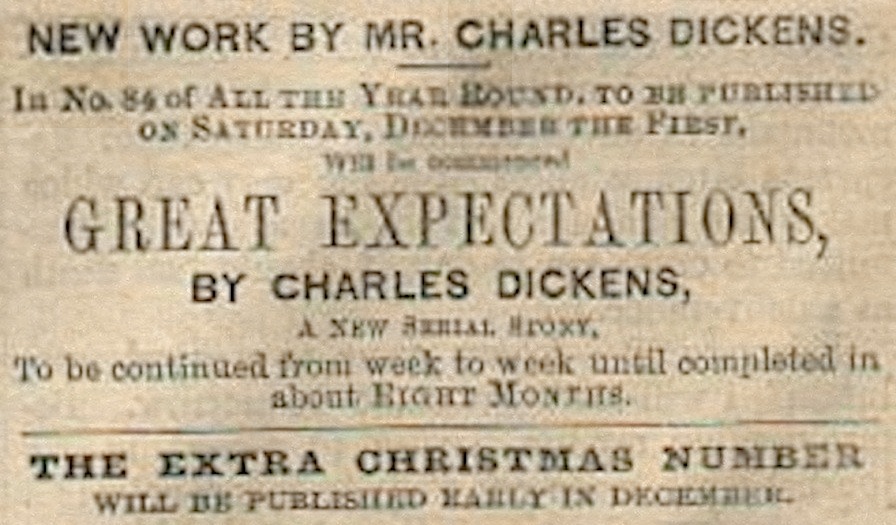
Serialised fiction surged in popularity during Britain's Victorian era, due to a combination of the rise of literacy, technological advances in printing, and improved economics of distribution. Most Victorian novels first appeared as instalments in monthly or weekly periodicals. The wild success of Charles Dickens's The Pickwick Papers, first published in 1836, is widely considered to have established the viability and appeal of the serialised format within periodical literature. During that era, the line between "quality" and "commercial" literature was not distinct. Other famous writers who wrote serial literature for popular magazines were Wilkie Collins, inventor of the detective novel with The Moonstone; Anthony Trollope, many of whose novels were published in serial form in Cornhill magazine; and Sir Arthur Conan Doyle, who created the Sherlock Holmes stories originally for serialisation in The Strand magazine.
While American periodicals first syndicated British writers, over time they drew from a growing base of domestic authors. The rise of the periodicals like Harper's and the Atlantic Monthly grew in symbiotic tandem with American literary talent. The magazines nurtured and provided economic sustainability for writers, while the writers helped grow the periodicals' circulation base. During the late 19th century, those that were considered the best American writers first published their work in serial form and then only later in a completed volume format.
As a piece in Scribner's Monthly explained in 1878, "Now it is the second or third rate novelist who cannot get publication in a magazine, and is obliged to publish in a volume, and it is in the magazine that the best novelist always appears first." Among the American writers who wrote in serial form were Henry James and Herman Melville. A large part of the appeal for writers at the time was the broad audiences that serialisation could reach, which would then grow their following for published works. One of the first significant American works to be released in serial format is Uncle Tom's Cabin, by Harriet Beecher Stowe, which was published over a 40-week period by The National Era, an abolitionist periodical, starting with the June 5, 1851 issue.
Serialisation was so standard in American literature that authors from that era often built instalment structure into their creative process. James, for example, often had his works divided into multi-part segments of similar length. The consumption of fiction during that time was different than in the 20th century. Instead of being read in a single volume, a novel would often be consumed by readers in instalments over a period as long as a year, with the authors and periodicals often responding to audience reaction.
In France, Alexandre Dumas and Eugène Sue were masters of the serialised genre. The Three Musketeers and The Count of Monte Cristo each appeared as a feuilleton. The Count of Monte Cristo was stretched out to 139 instalments. Eugène Sue's serial novel Le Juif errant increased circulation of Le Constitutionnel from 3,600 to 25,000. Production in book form soon followed and serialisation was one of the main reasons that nineteenth-century novels were so long. Authors and publishers kept the story going if it was successful since authors were paid by line and by episode. Gustave Flaubert's Madame Bovary was serialised in La Revue de Paris in 1856.
Hub AI
Serial (literature) AI simulator
(@Serial (literature)_simulator)
Serial (literature)
In literature, a serial is a printing or publishing format by which a single larger work, often a work of narrative fiction, is published in smaller, sequential instalments. The instalments are also known as numbers, parts, fascicules or fascicles, and may be released either as separate publications or within sequential issues of a periodical publication, such as a magazine or newspaper.
Serialisation can also begin with a single short story that is subsequently turned into a series. Historically, such series have been published in periodicals. Popular short-story series are often published together in book form as collections.
The growth of moveable type in the 17th century prompted episodic and often disconnected narratives such as L'Astrée and Le Grand Cyrus. At that time, books remained a premium item, so to reduce the price and expand the market, publishers produced large works in lower-cost instalments called fascicles. These had the added attraction of allowing a publisher to gauge the popularity of a work without incurring the expense of a substantial print run of bound volumes: if the work was not a success, no bound volumes needed to be prepared. If, on the other hand, the serialised book sold well, it was a good bet that bound volumes would sell well, too.
Serialised fiction surged in popularity during Britain's Victorian era, due to a combination of the rise of literacy, technological advances in printing, and improved economics of distribution. Most Victorian novels first appeared as instalments in monthly or weekly periodicals. The wild success of Charles Dickens's The Pickwick Papers, first published in 1836, is widely considered to have established the viability and appeal of the serialised format within periodical literature. During that era, the line between "quality" and "commercial" literature was not distinct. Other famous writers who wrote serial literature for popular magazines were Wilkie Collins, inventor of the detective novel with The Moonstone; Anthony Trollope, many of whose novels were published in serial form in Cornhill magazine; and Sir Arthur Conan Doyle, who created the Sherlock Holmes stories originally for serialisation in The Strand magazine.
While American periodicals first syndicated British writers, over time they drew from a growing base of domestic authors. The rise of the periodicals like Harper's and the Atlantic Monthly grew in symbiotic tandem with American literary talent. The magazines nurtured and provided economic sustainability for writers, while the writers helped grow the periodicals' circulation base. During the late 19th century, those that were considered the best American writers first published their work in serial form and then only later in a completed volume format.
As a piece in Scribner's Monthly explained in 1878, "Now it is the second or third rate novelist who cannot get publication in a magazine, and is obliged to publish in a volume, and it is in the magazine that the best novelist always appears first." Among the American writers who wrote in serial form were Henry James and Herman Melville. A large part of the appeal for writers at the time was the broad audiences that serialisation could reach, which would then grow their following for published works. One of the first significant American works to be released in serial format is Uncle Tom's Cabin, by Harriet Beecher Stowe, which was published over a 40-week period by The National Era, an abolitionist periodical, starting with the June 5, 1851 issue.
Serialisation was so standard in American literature that authors from that era often built instalment structure into their creative process. James, for example, often had his works divided into multi-part segments of similar length. The consumption of fiction during that time was different than in the 20th century. Instead of being read in a single volume, a novel would often be consumed by readers in instalments over a period as long as a year, with the authors and periodicals often responding to audience reaction.
In France, Alexandre Dumas and Eugène Sue were masters of the serialised genre. The Three Musketeers and The Count of Monte Cristo each appeared as a feuilleton. The Count of Monte Cristo was stretched out to 139 instalments. Eugène Sue's serial novel Le Juif errant increased circulation of Le Constitutionnel from 3,600 to 25,000. Production in book form soon followed and serialisation was one of the main reasons that nineteenth-century novels were so long. Authors and publishers kept the story going if it was successful since authors were paid by line and by episode. Gustave Flaubert's Madame Bovary was serialised in La Revue de Paris in 1856.
Recent media