
Recent from talks
Ramsay Hunt syndrome type 2
Knowledge base stats:
Talk channels stats:
Members stats:
Ramsay Hunt syndrome type 2
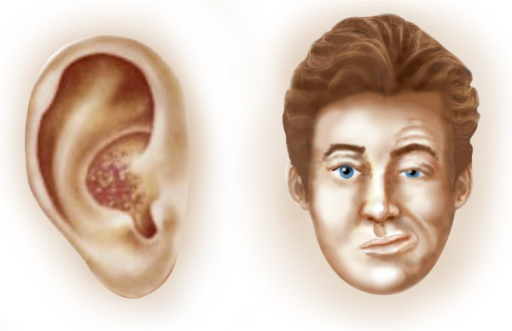
Ramsay Hunt syndrome type 2, commonly referred to simply as Ramsay Hunt syndrome (RHS) and also known as herpes zoster oticus, is inflammation of the geniculate ganglion of the facial nerve as a late consequence of varicella zoster virus (VZV). In regard to the frequency, less than 1% of varicella zoster infections involve the facial nerve and result in RHS. It is traditionally defined as a triad of ipsilateral facial paralysis, otalgia, and vesicles close to the ear and auditory canal. Due to its proximity to the vestibulocochlear nerve, the virus can spread and cause hearing loss, tinnitus (hearing noises that are not caused by outside sounds), and vertigo. It is common for diagnoses to be overlooked or delayed, which can raise the likelihood of long-term consequences. It is more complicated than Bell's palsy. Therapy aims to shorten its overall length, while also providing pain relief and averting any consequences.
Early symptoms include intense pain in one ear, the jaw on one side or the neck on one side which may precede the acute facial paralysis by a week or more.
Acute symptoms include:
Because the vestibulocochlear nerve is in proximity to the geniculate ganglion, it may also be affected and patients may also experience:
The swallow reflex might also be affected.
Involvement of the trigeminal nerve can cause numbness of the face.[citation needed]
The varicella zoster virus infects people and results in a distributed vesicular rash with fever, known as chickenpox. Respiratory droplets are the main method of virus transmission during the acute stage of the infection. After it subsides, it stays dormant in nerve cells in the body. It may reactivate under conditions of physiological stress or if the immune system is suppressed in any way (for example during an illness or undergoing chemotherapy), resulting in herpes zoster, also known as shingles or Ramsay Hunt syndrome when facial paralysis in involved. If the nerve cells affected lie within the facial nerves, it causes the symptoms described above.
Ramsay Hunt syndrome type 2 is estimated to account for 12% of all facial nerve paralysis. It occurs in both immunocompetent and immunocompromised individuals with immunocompromised patients often having more severe disease presentation. RHS may occur in any age group with cases reported in patients ranging in age from 3 months to 82 years.
Hub AI
Ramsay Hunt syndrome type 2 AI simulator
(@Ramsay Hunt syndrome type 2_simulator)
Ramsay Hunt syndrome type 2
Ramsay Hunt syndrome type 2, commonly referred to simply as Ramsay Hunt syndrome (RHS) and also known as herpes zoster oticus, is inflammation of the geniculate ganglion of the facial nerve as a late consequence of varicella zoster virus (VZV). In regard to the frequency, less than 1% of varicella zoster infections involve the facial nerve and result in RHS. It is traditionally defined as a triad of ipsilateral facial paralysis, otalgia, and vesicles close to the ear and auditory canal. Due to its proximity to the vestibulocochlear nerve, the virus can spread and cause hearing loss, tinnitus (hearing noises that are not caused by outside sounds), and vertigo. It is common for diagnoses to be overlooked or delayed, which can raise the likelihood of long-term consequences. It is more complicated than Bell's palsy. Therapy aims to shorten its overall length, while also providing pain relief and averting any consequences.
Early symptoms include intense pain in one ear, the jaw on one side or the neck on one side which may precede the acute facial paralysis by a week or more.
Acute symptoms include:
Because the vestibulocochlear nerve is in proximity to the geniculate ganglion, it may also be affected and patients may also experience:
The swallow reflex might also be affected.
Involvement of the trigeminal nerve can cause numbness of the face.[citation needed]
The varicella zoster virus infects people and results in a distributed vesicular rash with fever, known as chickenpox. Respiratory droplets are the main method of virus transmission during the acute stage of the infection. After it subsides, it stays dormant in nerve cells in the body. It may reactivate under conditions of physiological stress or if the immune system is suppressed in any way (for example during an illness or undergoing chemotherapy), resulting in herpes zoster, also known as shingles or Ramsay Hunt syndrome when facial paralysis in involved. If the nerve cells affected lie within the facial nerves, it causes the symptoms described above.
Ramsay Hunt syndrome type 2 is estimated to account for 12% of all facial nerve paralysis. It occurs in both immunocompetent and immunocompromised individuals with immunocompromised patients often having more severe disease presentation. RHS may occur in any age group with cases reported in patients ranging in age from 3 months to 82 years.
Recent media