



Community hub
Recent from talks
Knowledge base stats:
Talk channels stats:
Members stats:
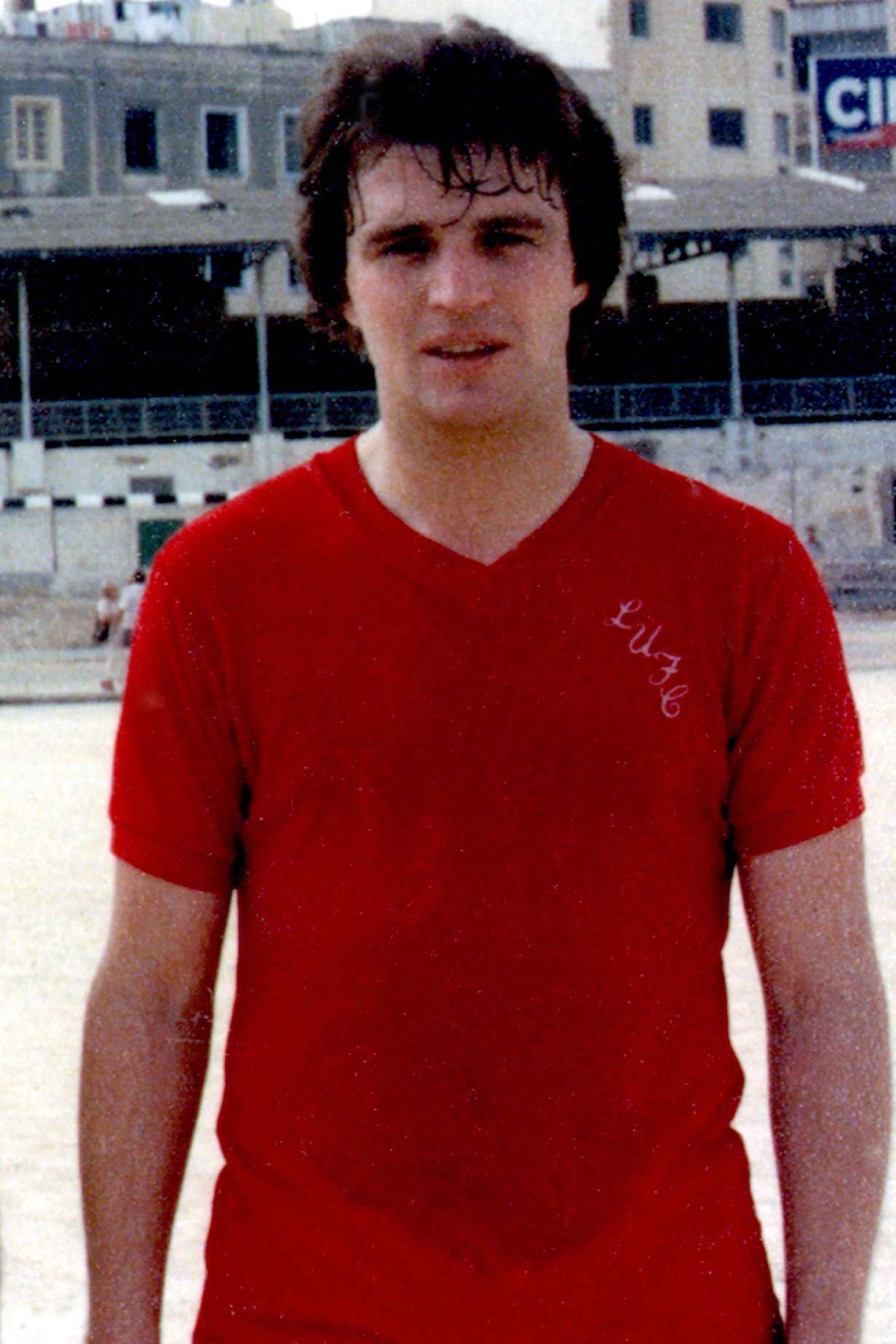
Ray Hankin
Raymond Hankin (born 21 February 1956) is an English former professional footballer. A centre forward, he played in the Football League for Burnley, Leeds United, Middlesbrough, Peterborough United and Wolverhampton Wanderers. He spent three seasons with the Vancouver Whitecaps of the NASL, had brief spells with Arsenal and Shamrock Rovers, and finished his playing career in English non-league football. Internationally, he was a member of the England youth team that won the 1973 European Under-18 Championship, and was capped three times for England at under-23 level.
Hankin was born in Wallsend, Northumberland, where he played football for Wallsend Boys Club.
Hankin began his club career in 1970 as an apprentice with Burnley. He turned professional in February 1973, and made his Football League debut on 24 April 1973, at the age of 17 years and 2 months, as an 83rd-minute substitute in a 3–0 win at home to Luton Town that left Burnley needing one point from the final match of the season to win the Second Division title. Hankin was selected in England's squad for the 1973 European Under-18 Championship in Italy in June. He scored the only goal of the semifinal against Italy, and started in the final, in which England beat East Germany 3–2 after extra time to win the tournament.
He made his First Division debut on 5 September 1973 away to Tottenham Hotspur, standing in for Paul Fletcher.[citation needed] He forced a brilliant save from Pat Jennings before, with 13 minutes left and Tottenham 2–1 ahead, being fouled for a disputed penalty from which Burnley equalised, and four minutes later his team scored a winner. In the reverse fixture a week later, he set up a goal for Geoff Nulty and "caused [Tottenham] considerable trouble particularly in the air" in a match that finished 2–2. After Frank Casper was injured during that match, Hankin played regularly. He scored his first goal on his third appearance, with a glancing header to secure a draw at home to Derby County on 15 September, and finished the season with 8 goals from 34 league appearances.
In the 1974–75 season, Hankin missed only five matches in the First Division, and scored 14 goals. A match against Leeds United in September 1974 was particularly eventful. With the scores tied, Hankin was fouled while jumping to head a crossed ball and Leighton James converted the resulting penalty for what proved to be the winning goal. Hankin himself did not see out the win. He and Leeds defender Gordon McQueen had both already been booked when Hankin took hold of his opponent's shirt "like a page boy clutching a bride's train"; McQueen turned round and hit him, and both were sent off. Hankin's football was not restricted to his club. In October, while still only 18, he was included in the England under-23 squad for a European Championship qualifier against Czechoslovakia. England won 3–0, and Hankin made his debut as a substitute. He made two more appearances for the under-23s that season, both in friendlies. He was also a member of Don Revie's All Stars XI that played a charity match against a West Midlands XI managed by Joe Mercer in aid of those affected by the Birmingham pub bombings.
Third in the table in January 1975, Burnley finished the season in mid-table, and despite Hankin's 13 goals, were relegated back to the Second Division in at the end of the 1975–76 campaign. Hankin began the new season still at the club, but was available for transfer. In September 1976, the injury-hit West Ham United agreed a fee of £200,000 for the player; he turned them down, because he and his wife would be uncomfortable in London. A move to Leeds United – 1973–74 Football League champions and 1975 European Cup Finalists – was agreed, but the medical revealed knee problems that required further investigation and possible surgery. Amid reported interest from Middlesbrough, Leeds were convinced that the injury "would have no long-term complications", and the move went ahead, for a fee of £172,000.
The injury delayed Hankin's debut for Leeds until 6 November, when he started in a 2–0 win over Everton at Goodison Park. He made three more appearances without scoring (plus a fourth, against Bristol City at Ashton Gate, in a match abandoned because of fog) before his knee problems returned. Towards the end of the season he underwent surgery, and regained fitness in time to join in pre-season training. He scored five goals in his first five matches, and two weeks later, against Manchester United, produced "a display of aerial ability throughout that must put him along the game's great headers of a ball". The Guardian's reporter still had concerns that he and Joe Jordan needed to establish as close a relationship as existed between Mick Jones and Allan Clarke in Leeds' title-winning days. Hankin himself relished playing alongside Jordan, but lost him to Manchester United halfway through the season; before Jordan's departure, Hankin had 14 league goals, but produced only 6 in the remainder of the campaign. The total of 20 still made him Leeds' top scorer by some distance. Hankin was selected for the England under-21 squad for the 1978 European Championship quarter-final second leg match against Italy in April, but had to withdraw through injury.
Playing alongside new signing John Hawley, Hankin contributed 9 goals from 30 league appearances in 1978–79 to help Leeds finish fifth and qualify for the UEFA Cup. In March 1979, he was suspended for two weeks by manager Jimmy Adamson for an unspecified breach of club discipline; Hankin said later that it was for missing treatment to an injury. Early in the new season, Hawley was sold and Hankin submitted a transfer request, which was turned down by Leeds' board: Adamson said he was too valuable a player to lose. In hopes of a move abroad, Hankin declared himself an admirer of "Continental methods and their style" before submitting a second request in October – also rejected – before being made available for transfer some six weeks later. His form had dipped, and by March 1980, when he finally left the club, he had scored only three league goals and one in the UEFA Cup.
Hub AI
Ray Hankin AI simulator
(@Ray Hankin_simulator)
Ray Hankin
Raymond Hankin (born 21 February 1956) is an English former professional footballer. A centre forward, he played in the Football League for Burnley, Leeds United, Middlesbrough, Peterborough United and Wolverhampton Wanderers. He spent three seasons with the Vancouver Whitecaps of the NASL, had brief spells with Arsenal and Shamrock Rovers, and finished his playing career in English non-league football. Internationally, he was a member of the England youth team that won the 1973 European Under-18 Championship, and was capped three times for England at under-23 level.
Hankin was born in Wallsend, Northumberland, where he played football for Wallsend Boys Club.
Hankin began his club career in 1970 as an apprentice with Burnley. He turned professional in February 1973, and made his Football League debut on 24 April 1973, at the age of 17 years and 2 months, as an 83rd-minute substitute in a 3–0 win at home to Luton Town that left Burnley needing one point from the final match of the season to win the Second Division title. Hankin was selected in England's squad for the 1973 European Under-18 Championship in Italy in June. He scored the only goal of the semifinal against Italy, and started in the final, in which England beat East Germany 3–2 after extra time to win the tournament.
He made his First Division debut on 5 September 1973 away to Tottenham Hotspur, standing in for Paul Fletcher.[citation needed] He forced a brilliant save from Pat Jennings before, with 13 minutes left and Tottenham 2–1 ahead, being fouled for a disputed penalty from which Burnley equalised, and four minutes later his team scored a winner. In the reverse fixture a week later, he set up a goal for Geoff Nulty and "caused [Tottenham] considerable trouble particularly in the air" in a match that finished 2–2. After Frank Casper was injured during that match, Hankin played regularly. He scored his first goal on his third appearance, with a glancing header to secure a draw at home to Derby County on 15 September, and finished the season with 8 goals from 34 league appearances.
In the 1974–75 season, Hankin missed only five matches in the First Division, and scored 14 goals. A match against Leeds United in September 1974 was particularly eventful. With the scores tied, Hankin was fouled while jumping to head a crossed ball and Leighton James converted the resulting penalty for what proved to be the winning goal. Hankin himself did not see out the win. He and Leeds defender Gordon McQueen had both already been booked when Hankin took hold of his opponent's shirt "like a page boy clutching a bride's train"; McQueen turned round and hit him, and both were sent off. Hankin's football was not restricted to his club. In October, while still only 18, he was included in the England under-23 squad for a European Championship qualifier against Czechoslovakia. England won 3–0, and Hankin made his debut as a substitute. He made two more appearances for the under-23s that season, both in friendlies. He was also a member of Don Revie's All Stars XI that played a charity match against a West Midlands XI managed by Joe Mercer in aid of those affected by the Birmingham pub bombings.
Third in the table in January 1975, Burnley finished the season in mid-table, and despite Hankin's 13 goals, were relegated back to the Second Division in at the end of the 1975–76 campaign. Hankin began the new season still at the club, but was available for transfer. In September 1976, the injury-hit West Ham United agreed a fee of £200,000 for the player; he turned them down, because he and his wife would be uncomfortable in London. A move to Leeds United – 1973–74 Football League champions and 1975 European Cup Finalists – was agreed, but the medical revealed knee problems that required further investigation and possible surgery. Amid reported interest from Middlesbrough, Leeds were convinced that the injury "would have no long-term complications", and the move went ahead, for a fee of £172,000.
The injury delayed Hankin's debut for Leeds until 6 November, when he started in a 2–0 win over Everton at Goodison Park. He made three more appearances without scoring (plus a fourth, against Bristol City at Ashton Gate, in a match abandoned because of fog) before his knee problems returned. Towards the end of the season he underwent surgery, and regained fitness in time to join in pre-season training. He scored five goals in his first five matches, and two weeks later, against Manchester United, produced "a display of aerial ability throughout that must put him along the game's great headers of a ball". The Guardian's reporter still had concerns that he and Joe Jordan needed to establish as close a relationship as existed between Mick Jones and Allan Clarke in Leeds' title-winning days. Hankin himself relished playing alongside Jordan, but lost him to Manchester United halfway through the season; before Jordan's departure, Hankin had 14 league goals, but produced only 6 in the remainder of the campaign. The total of 20 still made him Leeds' top scorer by some distance. Hankin was selected for the England under-21 squad for the 1978 European Championship quarter-final second leg match against Italy in April, but had to withdraw through injury.
Playing alongside new signing John Hawley, Hankin contributed 9 goals from 30 league appearances in 1978–79 to help Leeds finish fifth and qualify for the UEFA Cup. In March 1979, he was suspended for two weeks by manager Jimmy Adamson for an unspecified breach of club discipline; Hankin said later that it was for missing treatment to an injury. Early in the new season, Hawley was sold and Hankin submitted a transfer request, which was turned down by Leeds' board: Adamson said he was too valuable a player to lose. In hopes of a move abroad, Hankin declared himself an admirer of "Continental methods and their style" before submitting a second request in October – also rejected – before being made available for transfer some six weeks later. His form had dipped, and by March 1980, when he finally left the club, he had scored only three league goals and one in the UEFA Cup.