Hubbry Logo
RebreatherRebreatherMain
Open search
Rebreather
Community hub
Rebreather
logo
8 pages, 0 posts
0 subscribers
Be the first to start a discussion here.
Rebreather
Rebreather
from Wikipedia
Rebreather
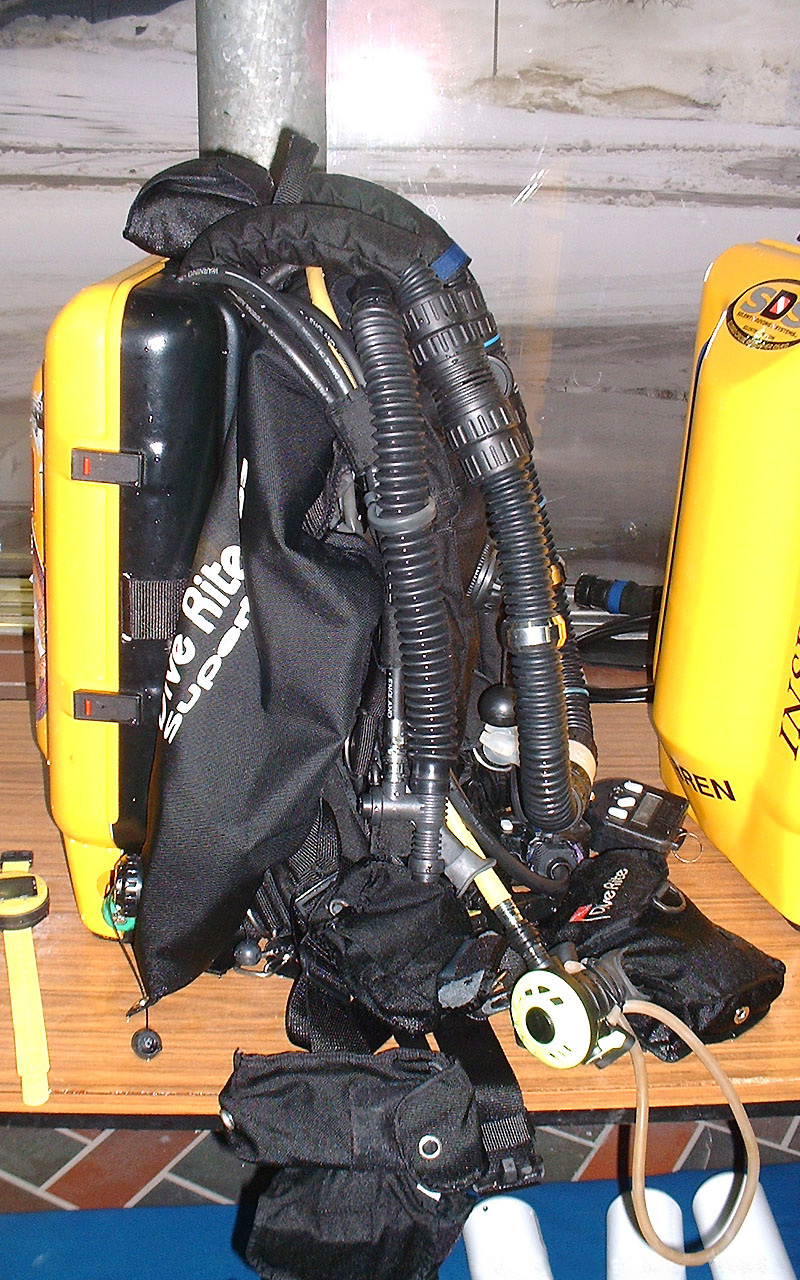
A fully closed circuit electronic rebreather (AP Diving Inspiration)
AcronymCCUBA (closed circuit underwater breathing apparatus); CCR (closed circuit rebreather), SCR (semi-closed rebreather)
UsesBreathing set
Related itemsDavis apparatus, Self-contained breathing apparatus, Escape hood

A rebreather is a breathing apparatus that absorbs the carbon dioxide of a user's exhaled breath to permit the rebreathing (recycling) of the substantial unused oxygen content, and unused inert content when present, of each breath. Oxygen is added to replenish the amount metabolised by the user. This differs from open-circuit breathing apparatus, where the exhaled gas is discharged directly into the environment. The purpose is to extend the breathing endurance of a limited gas supply, while also eliminating the bubbles otherwise produced by an open circuit system. The latter advantage over other systems is useful for covert military operations by frogmen, as well as for undisturbed observation of underwater wildlife. A rebreather is generally understood to be a portable apparatus carried by the user. The same technology on a vehicle or non-mobile installation is more likely to be referred to as a life-support system.

Rebreather technology may be used where breathing gas supply is limited, such as underwater, in space, where the environment is toxic or hypoxic (as in firefighting), mine rescue, high-altitude operations, or where the breathing gas is specially enriched or contains expensive components, such as helium diluent or anaesthetic gases.

Rebreathers are used in many environments: underwater, diving rebreathers are a type of self-contained underwater breathing apparatus which have provisions for both a primary and emergency gas supply. On land they are used in industrial applications where poisonous gases may be present or oxygen may be absent, firefighting, where firefighters may be required to operate in an atmosphere immediately dangerous to life and health for extended periods, in hospital anaesthesia breathing systems to supply controlled concentrations of anaesthetic gases to patients without contaminating the air that the staff breathe, and at high altitude, where the partial pressure of oxygen is low, for high altitude mountaineering. In aerospace there are applications in unpressurised aircraft and for high altitude parachute drops, and above the Earth's atmosphere, in space suits for extra-vehicular activity. Similar technology is used in life-support systems in submarines, submersibles, atmospheric diving suits, underwater and surface saturation habitats, spacecraft, and space stations, and in gas reclaim systems used to recover the large volumes of helium used in saturation diving.

The recycling of breathing gas comes at the cost of technological complexity and specific hazards, some of which depend on the application and type of rebreather used. Mass and bulk may be greater or less than open circuit depending on circumstances. Electronically controlled diving rebreathers may automatically maintain a partial pressure of oxygen between programmable upper and lower limits, or set points, and be integrated with decompression computers to monitor the decompression status of the diver and record the dive profile.

General concept

[edit]

As a person breathes, the body consumes oxygen and produces carbon dioxide. Base metabolism requires about 0.25 L/min of oxygen from a breathing rate of about 6 L/min, and a fit person working hard may ventilate at a rate of 95 L/min but will only metabolise about 4 L/min of oxygen.[1] The oxygen metabolised is generally about 4% to 5% of the inspired volume at normal atmospheric pressure, or about 20% of the available oxygen in the air at sea level. Exhaled air at sea level contains roughly 13.5% to 16% oxygen.[2]

The situation is even more wasteful of oxygen when the oxygen fraction of the breathing gas is higher, and in underwater diving, the compression of breathing gas due to depth makes the recirculation of exhaled gas even more desirable, as an even larger proportion of open circuit gas is wasted. Continued rebreathing of the same gas will deplete the oxygen to a level which will no longer support consciousness, and eventually life, so gas containing oxygen must be added to the breathing gas to maintain the required concentration of oxygen.[3]

However, if this is done without removing the carbon dioxide, it will rapidly build up in the recycled gas, resulting almost immediately in mild respiratory distress, and rapidly developing into further stages of hypercapnia, or carbon dioxide toxicity. A high ventilation rate is usually necessary to eliminate the metabolic product carbon dioxide (CO2). The breathing reflex is triggered by CO2 concentration in the blood, not by the oxygen concentration, so even a small buildup of CO2 in the inhaled gas quickly becomes intolerable; if a person tries to directly rebreathe their exhaled breathing gas, they will soon feel an acute sense of suffocation, so rebreathers must remove the CO2 in a component known as a carbon dioxide scrubber.[4]

By adding sufficient oxygen to compensate for the metabolic usage, removing the carbon dioxide, and rebreathing the gas, most of the volume is conserved.[4]

Relation of physiological effects to carbon dioxide concentration and exposure period.[5]
Effects of different levels of oxygen partial pressure[1]
PO2
(bar)
Application and effect
<0.08 Coma ultimately leading to death
0.08-0.10 Unconsciousness in most people
0.09-0.10 Serious signs/symptoms of hypoxia
0.14-0.16 Initial signs/symptoms of hypoxia (normal environment oxygen in some very high altitude areas)
0.21 Normal environment oxygen (sea level air)
0.35–0.40 Normal saturation dive PO2 level
0.50 Threshold for whole-body effects; maximum saturation dive exposure
1.0–1.20 Common range for recreational closed circuit set point
1.40 Recommended limit for recreational open circuit bottom sector
1.60 NOAA limit for maximum exposure for a working diver
Recreational/technical limit for decompression
2.20 Commercial/military "Sur-D" chamber surface decompression on 100% O2 at 12 msw (meters of sea water)
2.40 40% O2 nitrox recompression treatment gas for use in the chamber at 50 msw
2.80 100% O2 recompression treatment gas for use in the chamber at 18 msw
3.00 50% O2 nitrox recompression treatment gas for use in the chamber at 50 msw

Endurance

[edit]

The endurance of a rebreather, the duration for which it can be safely and comfortably used, is dependent on the oxygen supply at the oxygen consumption rate of the user, and the capacity of the scrubber to remove carbon dioxide at the rate it is produced by the user. These variables are closely linked, as the carbon dioxide is a product of metabolic oxygen consumption, though not the only product. This is independent of depth, except for work of breathing increase due to gas density increase.[4]

Architecture

[edit]
Comparison of pendulum and loop rebreather architecture
  • 1 Mouthpiece with dive/surface valve
  • 2 Two way breathing hose
  • 2a Exhalation hose with non-return valve
  • 2b Inhalation hose with non-return valve
  • 3 Scrubber
  • 4 Counterlung
  • 5 Automatic make-up valve
  • 6 Manual bypass valve
  • 7 Breathing gas storage cylinder
  • 8 Cylinder valve
  • 9 Regulator first stage
  • 10 Cylinder pressure gauge
  • 11 Over-pressure valve

There are two basic arrangements controlling the flow of breathing gas inside the rebreather, known as the pendulum and loop systems.

Pendulum

[edit]

In the pendulum configuration, the user inhales gas from the counterlung through a breathing hose, and exhaled gas returns to the counterlung by flowing back through the same hose. The scrubber is usually between the breathing hose and the counterlung bag, and gas flow is bi-directional. All of the flow passages between the user and the active absorbent in the scrubber are dead space – volume containing gas which is rebreathed without modification by the rebreather. The dead space increases as the absorbent is depleted. Breathing hose volume must be minimised to limit dead space.

Loop

[edit]

In the loop configuration, the user inhales gas through one hose, and exhales through a second hose. Exhaled gas flows into the scrubber from one side, and exits at the other side. There may be one large counterlung, on either side of the scrubber, or two smaller counterlungs, one on each side of the scrubber. Flow is in one direction, enforced by non-return valves, which are usually in the breathing hoses where they join the mouthpiece. Only the flow passage in the mouthpiece before the split between inhalation and exhalation hoses is dead space, and this is not affected by hose volume.[6]

Components

[edit]
Oxygen rebreather KIP-8 interior showing the basic components
Russian firefighting rebreather KIP-8 exterior

There are some components that are common to almost all personal portable rebreathers. These include the ambient pressure breathing volume components, usually called the breathing loop in a circulating flow rebreather, and the make-up gas supply and control system.

Counterlung

[edit]

The counterlung is an airtight bag of strong flexible material that holds the volume of the exhaled gas until it is inhaled again. There may be a single counterlung, or one on each side of the scrubber, which allows a more even flow rate of gas through the scrubber, which can reduce work of breathing and improve scrubber efficiency by a more consistent dwell time.

Scrubber

[edit]

The scrubber is a container filled with carbon dioxide absorbent material, mostly strong bases, through which the exhaled gas passes to remove the carbon dioxide. The absorbent may be granular or in the form of a moulded cartridge.[7] Granular absorbent may be manufactured by breaking up lumps of lime and sorting the granules by size, or by moulding granules at a consistent size and shape.[8] Gas flow through the scrubber may be in one direction in a loop rebreather, or both ways in a pendulum rebreather. The scrubber canister generally has an inlet on one side and an outlet on the other side.

A typical absorbent is soda lime, which is made up of calcium hydroxide Ca(OH)2, and sodium hydroxide NaOH. The main component of soda lime is calcium hydroxide, which is relatively cheap and easily available. Other components may be present in the absorbent. Sodium hydroxide is added to accelerate the reaction with carbon dioxide. Other chemicals may be added to prevent unwanted decomposition products when used with standard halogenated inhalation anaesthetics. An indicator may be included to show when carbon dioxide has dissolved in the water of the soda lime and formed carbonic acid, changing the pH from basic to acid, as the change of colour shows that the absorbent has reached saturation with carbon dioxide and must be changed.[8]

The carbon dioxide combines with water or water vapor to produce a weak carbonic acid: CO2 + H2O –> H2CO3. This reacts with the hydroxides to produce carbonates and water in an exothermic reaction.[6] In the intermediate reaction, the carbonic acid reacts exothermically with sodium hydroxide to form sodium carbonate and water: H2CO3 + 2NaOH –> Na2CO3 + 2H2O + heat. In the final reaction, the sodium carbonate reacts with the slaked lime (calcium hydroxide) to form calcium carbonate and sodium hydroxide: Na2CO3 + Ca(OH)2 –> CaCO3 + 2NaOH. The sodium hydroxide is then available again to react with more carbonic acid.[8] 100 grams (3.5 oz) of this absorbent can remove about 15 to 25 litres (0.53 to 0.88 cu ft) of carbon dioxide at standard atmospheric pressure.[6][8] This process also heats and humidifies the air, which is desirable for diving in cold water, or climbing at high altitudes, but not for working in hot environments.

Other reactions may be used in special circumstances. Lithium hydroxide and particularly lithium peroxide may be used where low mass is important, such as in space stations and space suits. Lithium peroxide also replenishes the oxygen during the scrubbing reaction.[9]

Another method of carbon dioxide removal occasionally used in portable rebreathers is to freeze it out, which is possible in a cryogenic rebreather which uses liquid oxygen. The liquid oxygen absorbs heat from the carbon dioxide in a heat exchanger to convert the oxygen to gas, which is sufficient to freeze the carbon dioxide. This process also chills the gas, which is sometimes, but not always, desirable.

Breathing hoses

[edit]
Draeger Ray dive/surface valve with bite grip scuba mouthpiece, non-return valves, and breathing hoses

A breathing hose or sometimes breathing tube on a rebreather is a flexible tube for breathing gas to pass through at ambient pressure. They are distinguished from the low-, intermediate-, and high-pressure hoses which may also be parts of rebreather apparatus. They have a wide enough bore to minimise flow resistance at the ambient pressure in the operational range for the equipment, are usually circular in cross section, and may be corrugated to let the user's head move about without the tube collapsing at kinks.[6]

Each end has an airtight connection to the adjacent component, and they may contain a one-way valve to keep the gas circulating the right way in a loop system. Depending on the service, they may be made of a flexible polymer, an elastomer, a fibre or cloth reinforced elastomer, or elastomer covered with a woven fabric for reinforcement or abrasion resistance. If the woven layer is bonded to the outside surface it protects the rubber from damage from scrapes but makes it more difficult to wash off contaminants.[6] Breathing hoses typically come in two types of corrugation. Annular corrugations, as depicted in the photo, benefit from easier field repair if a tear or hole while helical corrugations allow efficient drainage after cleaning.[10]

Breathing hoses are usually long enough to connect the apparatus to the user's head in all attitudes of their head, but should not be unnecessarily long, which will cause additional weight, hydrodynamic drag, risk snagging on things, or contain excess dead space in a pendulum rebreather. Breathing hoses can be tethered down to a diver's shoulders or ballasted for neutral buoyancy to minimise loads on the mouthpiece.

Mouthpiece or facemask

[edit]

A mouthpiece with bite-grip, an oro-nasal mask, a full-face mask, or a sealed helmet is provided so that the user can breathe from the unit hands-free.

Oxygen supply

[edit]

A store of oxygen, usually as compressed gas in a high pressure cylinder, but sometimes as liquid oxygen, that feeds gaseous oxygen into the ambient pressure breathing volume, either continuously, or when the user operates the oxygen addition valve, or via a demand valve in an oxygen rebreather, when the volume of gas in the breathing circuit becomes low and the pressure drops, or in an electronically controlled mixed gas rebreather, after a sensor has detected insufficient oxygen partial pressure, and activates a solenoid valve.

Valves

[edit]

Valves are needed to control gas flow in the breathing volume, and gas feed from the storage container. They include:

  • Non-return valves in the breathing loop of loop rebreathers, which enforce one-directional flow to minimise dead space,
  • Dive/surface valves on diving rebreathers, which prevent water from entering the breathing volume when the mouthpiece is removed, or the user elects to breathe ambient air at the surface.
  • Gas supply valves, including a cylinder valve, to allow high pressure gas to flow from the cylinder. This may be manually operated by the user to directly supply make-up gas, or may provide the gas to a pressure regulator which reduces the pressure to a few bar above ambient pressure, and supplies this intermediate pressure gas to the gas feed system, which may contain one or more of:
    • Manually operated feed valve,
    • Constant mass flow orifice or needle valve, to provide a continuous feed,
    • Demand valve which automatically adds gas when the volume of the counterlung(s) is too low, and pressure in the breathing volume drops below ambient pressure.
  • Overpressure valve, to release excess gas. This is mainly used in diving rebreathers to compensate for expansion during ascent. Excess gas may also be vented past the skirt seal of a full-face mask, or through the nose when a mouthpiece is used.

Oxygen sensors

[edit]

Oxygen sensors may be used to monitor partial pressure of oxygen in mixed gas rebreathers to ensure that it does not fall outside the safe limits, but are generally not used on oxygen rebreathers, as the oxygen content is fixed at 100%, and its partial pressure varies only with the ambient pressure.

System variants

[edit]

Re breathers can be primarily categorised as diving rebreathers, intended for hyperbaric use, and other rebreathers used at pressures from slightly more than normal atmospheric pressure at sea level to significantly lower ambient pressure at high altitudes and in space. Diving rebreathers must often deal with the complications of avoiding hyperbaric oxygen toxicity, while normobaric and hypobaric applications can use the relatively trivially simple oxygen rebreather technology, where there is no requirement to monitor oxygen partial pressure during use providing the ambient pressure is sufficient.

Rebreathers can also be subdivided by functional principle as closed circuit and semi-closed circuit rebreathers.

  • Closed circuit rebreather: A closed circuit rebreather adds oxygen to the loop gas to make up for oxygen used by metabolic processes. These processes do not use diluent gas, so none is added unless the volume of the loop is reduced for other reasons, such as intentional dumping, flushing, or an ambient pressure change. Gas is dumped from the loop when it expands during a pressure reduction, or too much is added.[citation needed]
  • Semi-closed circuit rebreather, also known as a gas extender: A semi-closed circuit rebreather either dumps some loop gas nearly constantly or constantly adds gas to the loop, and consequently needs an inflow of both diluent and oxygen to make up the volume. Changes in ambient pressure also require changes in the number (mass) of gas in the loop to maintain the working volume.[citation needed]

Oxygen rebreathers

[edit]
Siebe Gorman Proto 1 mine rescue rebreather, a simple oxygen rebreather.

This is the earliest type of rebreather and was commonly used by navies for submarine escape and shallow water diving work, for mine rescue, high altitude mountaineering and flight, and in industrial applications from the early twentieth century. Oxygen rebreathers can be remarkably simple and mechanically reliable, and they were invented before open-circuit scuba. They only supply oxygen, so there is no requirement to control the gas composition other than removing the carbon dioxide.[11]

Oxygen feed options

[edit]

In some rebreathers the oxygen cylinder has oxygen supply mechanisms in parallel. One is constant flow; the other is a manual on-off valve called a bypass valve; both feed into the same hose which feeds the counterlung.[12] Others are supplied via a demand valve on the counterlung. This will add gas at any time that the counterlung is emptied and the diver continues to inhale. Oxygen can also be added manually by a button which activates the demand valve.[13] Some simple oxygen rebreathers had no automatic supply system, but only the manual feed valve, and the diver had to operate the valve at intervals to refill the breathing bag as the volume of oxygen decreased below a comfortable level.

Mixed gas rebreathers

[edit]
Mixed gas electronically controlled closed circuit diving rebreather

All rebreathers other than oxygen rebreathers may be considered mixed gas rebreathers, as the breathing gas is a mixture of oxygen and metabolically inactive diluent gas. These can be divided into semi-closed circuit, where the supply gas is a breathable mixture containing oxygen and inert diluents, usually nitrogen and helium, and which is replenished by adding more of the mixture as the oxygen is used up, sufficient to maintain a breathable partial pressure of oxygen in the loop, and closed circuit rebreathers, where two parallel gas supplies are used: the diluent, to provide the bulk of the gas, and which is recycled, and oxygen, which is metabolically expended. Carbon dioxide is considered a waste product, and in a correctly functioning rebreather, is effectively removed when the gas passes through the scrubber.

Rebreathers using an absorbent that releases oxygen

[edit]
Russian multipurpose rebreather IDA-71 with lid of casing opened showing interior – one of the scrubber canisters can optionally be filled with superoxide.

There have been a few rebreather designs (e.g. the Oxylite) which use potassium superoxide, which gives off oxygen as it absorbs carbon dioxide, as the carbon dioxide absorbent: 4KO2 + 2CO2 = 2K2CO3 + 3O2. A small volume oxygen cylinder is needed to fill and purge the loop at the start of use.[14] This technology may be applied to both oxygen and mixed gas rebreathers, and can be used for diving and other applications. Potassium superoxide reacts vigorously with liquid water, releasing considerable heat and oxygen, and causing a fire hazard, so the more successful applications have been for space-suits, fire-fighting and mine rescue.[15]

Rebreathers which use liquid oxygen

[edit]
Aerorlox liquid oxygen rebreather in a coal mining museum

A liquid oxygen supply can be used for oxygen or mixed gas rebreathers. If used underwater, the liquid-oxygen container must be well insulated against heat transfer from the water. Industrial sets of this type may not be suitable for diving, and diving sets of this type may not be suitable for use out of water due to conflicting heat transfer requirements. The set's liquid oxygen tank must be filled immediately before use. Examples of the type include:

Cryogenic rebreather

[edit]

A cryogenic rebreather removes the carbon dioxide by freezing it out in a "snow box" by the low temperature produced as liquid oxygen evaporates to replace the oxygen used.

Fields of application

[edit]

This may be compared with some applications of open-circuit breathing apparatus:

  • The oxygen enrichment systems primarily used by medical patients, high altitude mountaineers and commercial aircraft emergency systems, in which the user breathes ambient air which is enriched by the addition of pure oxygen,
  • Open circuit breathing apparatus used by firefighters, underwater divers and some mountaineers, which supplies fresh gas for each breath, which is then discharged into the environment.
  • Gas masks and respirators which filter contaminants from ambient air which is then breathed.

Diving rebreathers

[edit]
SIVA Underwater Mine Countermeasures (MCM) Diving Apparatus (oxygen rebreather)

The widest variety of rebreather types is used in diving, as the consequences of breathing under pressure complicate the requirements, and a large range of options are available depending on the specific application and available budget. A diving rebreather is safety-critical life-support equipment – some modes of failure can kill the diver without warning, others can require immediate appropriate response for survival.

Surface supplied diving gas reclaim systems

[edit]

A helium reclaim system (or push-pull system) is used to recover helium based breathing gas after use by the diver when this is more economical than losing it to the environment in open circuit systems. The recovered gas is passed through a scrubber system to remove carbon dioxide, filtered to remove odours, and pressurised into storage containers, where it may be mixed with oxygen to the required composition for re-use, either immediately, or at a later date.

Saturation diving life-support systems

[edit]

The life support system provides breathing gas and other services to support life for the personnel under pressure in the accommodation chambers and closed diving bell. It includes the following components:[22]

  • Breathing gas supply, distribution and recycling equipment: scrubbers, filters, boosters, compressors, mixing, monitoring, and storage facilities
  • Chamber climate control system – control of temperature and humidity, and filtration of gas
  • Instrumentation, control, monitoring and communications equipment
  • Fire suppression systems
  • Sanitation systems

The life support system for the bell provides and monitors the main supply of breathing gas, and the control station monitors the deployment and communications with the divers. Primary gas supply, power and communications to the bell are through a bell umbilical, made up from a number of hoses and electrical cables twisted together and deployed as a unit.[23] This is extended to the divers through the diver umbilicals.[22]

The accommodation life support system maintains the chamber environment within the acceptable range for health and comfort of the occupants. Temperature, humidity, breathing gas quality, sanitation systems, and equipment function are monitored and controlled.[23]

Atmospheric diving suits

[edit]
US Navy atmospheric diving suit

An atmospheric diving suit is a small one-man articulated submersible of roughly anthropomorphic form, with limb joints which allow articulation under external pressure while maintaining an internal pressure of one atmosphere. Breathing gas supply may be surface supplied by umbilical, or from a rebreather carried on the suit. An emergency gas supply rebreather may also be fitted to a suit with either surface supply or rebreather for primary breathing gas. As the internal pressure is maintained at one atmosphere, there is no risk of acute oxygen toxicity. This is an underwater diving application, but has more in common with industrial applications than with ambient pressure scuba rebreathers.

Industrial and rescue self-contained rebreathers

[edit]
Mine rescue rebreathers in a Czech museum

Different design criteria apply to SCBA rebreathers for use only out of the water:

  • There is no variation in ambient pressure on the components. The counterlung may be placed for comfort and convenience.
  • Cooling of the gas in the breathing loop may be desirable, as the absorbent produces heat as it reacts with carbon dioxide, and the warming of the gas is not welcome in hot industrial situations such as firefighting and deep mines.[24]
  • Absorbent containers may in some cases rely on gravity for preventing channeling.
  • If a full-face mask is used, it may have viewports designed for convenience or improved field of vision, and they do not need to be flat and parallel to prevent visual distortion as when underwater.[24]
  • In firefighting rebreathers, consideration must be given to making the set reasonably flame-proof and protecting it from heat and debris impacts.[24]
  • The need to ditch the set quickly may not arise, and harness straps may not need a quick-release.
  • Buoyancy is not a consideration, but weight may be critical. Good ergonomic design for ease of carrying, comfort, and balance are important where the unit may be worn in confined spaces, while climbing and crawling through small gaps.[24]
  • A spring loaded counterlung pressurisation system may be used to provide slight positive pressure in the breathing loop, to prevent noxious gas entry if the mask seal is not perfect.[24]
  • There are no constraints due to the physiological effects of breathing under pressure. Complex gas mixtures are unnecessary. Oxygen rebreathers can usually be used, which makes the design considerably simpler, and the mechanism more reliable.
  • A system allowing the user to access drinking water from a bag may be fitted, A bite operated valve van be used to control flow.[24]
  • Radio voice communications may be fitted.[24]
  • A constant mass flow system may be used to ensure a minimum fresh gas supply, with a demand valve to add gas if the loop is emptied.[24]
  • Gas supply and absorbent duration would usually be matched for efficiency[24]
  • Insulation may be needed for the breathing loop for use in sub-zero temperatures where freezing of the absorbent would reduce its effectiveness.[24]
  • A water trap may be provided to collect condensed water from the absorbent reaction and from metabolic product.[24]
  • Monitoring functions may include:[24]
    • Cylinder pressure (analog and digital)
    • Estimated remaining duration of use until residual low pressure warning is activated
    • Temperature indication
    • Automatic recording of warning signals
  • Optical and/or acoustic warning signals may be provided for:[24]
    • Low gas pressure in the cylinder
    • Alarm triggered by lack of user movement
    • Manually triggered alarm.

Mountaineering rebreathers

[edit]

Mountaineering rebreathers provide oxygen at a higher concentration than available from atmospheric air in a naturally hypoxic environment. They need to be lightweight and to be reliable in severe cold including not getting choked with deposited frost.[25] A high rate of system failures due to extreme cold has not been solved.[citation needed] Breathing pure oxygen results in an elevated partial pressure of oxygen in the blood: a climber breathing pure oxygen at the summit of Mount Everest has a greater oxygen partial pressure than breathing air at sea level. This results in being able to exert greater physical effort at altitude. The exothermic reaction helps keep the scrubber contents from freezing, and helps reduce heat loss from the user.

Both chemical and compressed gas oxygen have been used in experimental closed-circuit oxygen systems – the first on Mount Everest in 1938. The 1953 expedition used closed-circuit oxygen equipment developed by Tom Bourdillon and his father for the first assault team of Bourdillon and Evans; with one "dural" 800l compressed oxygen cylinder and soda lime canister (the second (successful) assault team of Hillary and Tenzing used open-circuit equipment).[26]

Rebreathers for unpressurised aircraft and high altitude parachuting

[edit]

Similar requirement and working environment to mountaineering, but weight is less of a problem. The Soviet IDA71 rebreather was also manufactured in a high altitude version, which was operated as an oxygen rebreather.

Anaesthesia systems

[edit]

Anaesthetic machines can be configured as rebreathers to provide oxygen and anaesthetic gases to a patient during surgery or other procedures that require sedation. An absorbent is present in the machine to remove the carbon dioxide from the loop.[27]

Both semi-closed and fully closed circuit systems may be used for anaesthetic machines, and both push-pull (pendulum) two directional flow and one directional loop systems are used.[28] The breathing circuit of a loop configured machine has two unidirectional valves so that only scrubbed gas flows to the patient while expired gas goes back to the machine.[27]

The anaesthetic machine can also provide gas to ventilated patients who cannot breathe on their own.[29] A waste gas scavenging system removes any gasses from the operating room to avoid environmental contamination.[30]

Space suits

[edit]
Buzz Aldrin on the Moon on the 1969 Apollo 11 mission, showing the portable life support system.
Orlan space suit on an EVA from the International Space Station, with the life-support umbilical in view.

One of the functions of a space suit is to provide the wearer with breathing gas. This can be done via an umbilical from the life-support systems of the spacecraft or habitat, or from a primary life support system carried on the suit. Both of these systems involve rebreather technology as they both remove carbon dioxide from the breathing gas and add oxygen to compensate for oxygen used by the wearer. Space suits usually use oxygen rebreathers as this allows a lower pressure in the suit which gives the wearer better freedom of movement.

Habitat life-support systems

[edit]

Submarines, underwater habitats, bomb shelters, space stations, and other living spaces occupied by several people over medium to long periods on a limited gas supply, are equivalent to closed circuit rebreathers in principle, but generally rely on mechanical circulation of breathing gas through the scrubbers.

Safety

[edit]

There are several safety issues with rebreather equipment, and these tend to be more severe in diving rebreathers.

Hazards

[edit]

Some of the hazards are due to the way the equipment works, while others are related to the environment in which the equipment is used, as rebreathers are usually used where no breathable ambient atmosphere is available.

Hypoxia

[edit]

Hypoxia can occur in any rebreather which contains enough inert gas to allow breathing without triggering automatic gas addition.

In an oxygen rebreather this can occur if the loop is not sufficiently purged at the start of use. Purging is the replacement of the original gas content by fresh gas, and may have to be repeated to completely remove inert gas. Purging should be done while breathing off the unit so that the inert gas in the user's lungs and body tissues that finds its way into the loop is also removed from the system.

Carbon dioxide buildup

[edit]

Carbon dioxide buildup will occur if the scrubber medium is absent, badly packed, inadequate or exhausted. The normal human body is fairly sensitive to carbon dioxide partial pressure, and a buildup will be noticed by the user. However, there is not often much that can be done to rectify the problem except changing to another breathing gas supply until the scrubber can be repacked. Continued use of a rebreather with an ineffective scrubber is not possible for very long, as the levels will become toxic and the user will experience extreme respiratory distress, ultimately leading to loss of consciousness and death. The rate at which these problems develop depends on the volume of the circuit and the metabolic rate of the user at the time.

Carbon dioxide buildup can also occur when a combination of exertion and work of breathing exceeds the capacity of the user. If this occurs where the user cannot reduce exertion sufficiently, it may be impossible to correct. This problem is more likely to occur with diving rebreathers at depths where the density of the breathing gas is severely elevated.[31][32][33] The only recourse is to vent the expelled breath outside the closed system, therefore not reusing the oxygen, and thereby increasing use of the gas mixture, but this is not an option in every field of application.

Leakage of toxic gases into the breathing loop

[edit]

Industrial rebreathers are often used where the ambient air is contaminated and may be toxic. Parts of the loop will be at a slightly lower than external ambient pressure during inhalation, and if the circuit is not airtight external gases may leak in. This is a particular issue around the edge of a full-face mask, where the rubber mask skirt must seal against the user's face.

Fire hazards of high concentration of oxygen

[edit]

High partial pressures of oxygen greatly increase fire hazard, and many materials which are self-extinguishing in atmospheric air will burn continuously in a high oxygen concentration. This is more of a hazard for terrestrial applications such as rescue and firefighting than for diving, where the ignition risk is relatively low.

Caustic cocktail

[edit]

Caused by a loop flood reaching the absorbent canister, so only applicable in immersed applications.

Failure modes

[edit]

Scrubber failure

[edit]

The term "break-through" means the failure of the scrubber to continue removing sufficient carbon dioxide from the gas circulating in the loop. This will inevitably happen if the scrubber is used too long, but can happen prematurely in some circumstances. There are several ways that the scrubber may fail or become less efficient:

  • Complete consumption of the active ingredient in a "general break through". Depending on scrubber design and user workload, this may be gradual, allowing the user to become aware of the problem in time to make a controlled exit or bailout to open circuit, or relatively sudden, triggering an urgent or emergency response.
  • Bypassing the absorbent. The absorbent granules must be packed closely so that all exhaled gas comes into contact with the surface of soda lime and the canister is designed to avoid any large spaces or gaps between the absorbent granules or between the granules and the canister walls that would let gas bypass contact with the absorbent. If any of the seals, such as O-rings, or spacers that prevent bypassing of the scrubber, are not present or not fitted properly, or if the scrubber canister has been incorrectly packed or fitted, it may allow the exhaled gas to bypass the absorbent, and the scrubber will be less effective. This failure mode is also called "tunneling" when absorbent settles to form void spaces inside the canister. Bypass will cause an unexpected early break-through.
  • When the gas mix is under pressure at depth, the gas molecules are more densely packed, and the carbon dioxide molecules' mean path between collisions is shorter, so they are not so free to move around to reach the absorbent surface, and require a longer dwell time. Because of this effect, the scrubber must be bigger for deep diving than is needed for a shallow-water, industrial or high altitude rebreather.
  • Carbon dioxide absorbent can be caustic and can cause burns to the eyes, mucous membranes and skin. A mixture of water and absorbent occurs when the scrubber floods and depending on the chemicals used, can produce a chalky taste or a burning sensation if the contaminated water reaches the mouthpiece, which should prompt the diver to switch to an alternative source of breathing gas and rinse their mouth out with water. This is known to rebreather divers as a caustic cocktail. The excessive wetting of the absorbent also reduces the rate of carbon dioxide removal and can cause premature break-through even if no caustic liquid reaches the diver. Work of breathing may also increase. Many modern diving rebreather absorbents are designed not to produce this caustic fluid if they get wet.[clarification needed]
  • In below-freezing operation (primarily mountain climbing), wet scrubber chemicals can freeze when oxygen bottles are changed, while there is a pause in the exothermic reaction of taking up the carbon dioxide, thus preventing carbon dioxide from reaching the scrubber material, and slowing the reaction when used again.

Other failure modes

[edit]
  • Flooding of the ambient pressure volume can occur in diving rebreathers.
  • Gas leakage to or from the ambient pressure volume can occur. Since the volume of gas lost or gained is likely to be very small, it is most relevant when the surroundings contain toxic gases or fumes.
  • Oxygen monitoring failure can lead to incorrect partial pressure of oxygen in the breathing gas. This is only relevant in mixed gas rebreathers used for diving.
  • Gas injection system failure is also mainly a problem of mixed gas diving rebreathers. Oxygen rebreathers gas injection systems are generally robust and reliable and can be manually overridden if they fail, and this form of failure is identifiable by an inappropriate volume of gas in the ambient pressure volume of the rebreather.

History

[edit]

Early history

[edit]

Around 1620, Cornelis Drebbel discovered that heating saltpetre (potassium nitrate) would generate oxygen.[34]

The first basic rebreather based on carbon dioxide absorption was patented in France in 1808 by Pierre-Marie Touboulic from Brest, a mechanic in Napoleon's Imperial Navy. This early rebreather design worked with an oxygen reservoir, the oxygen being delivered progressively by the diver and circulating in a closed circuit through a sponge soaked in limewater, a solution of calcium hydroxide in water.[35][36] Touboulic called his invention Ichtioandre (Greek for 'fish-man').[37][citation needed] There is no evidence of a prototype having been manufactured.

A prototype rebreather was built in 1849 by Pierre Aimable De Saint Simon Sicard,[38]

In 1853 Professor T. Schwann presented a rebreather at the Belgian Academy of Science.[39][36] It had a large back mounted oxygen tank with working pressure of about 13.3 bar, and two scrubbers containing sponges soaked in a caustic soda solution.[36]

Working rebreathers

[edit]
Henry Fleuss, inventor of the rebreather

The first commercially practical closed-circuit scuba was designed and built by the diving engineer Henry Fleuss in 1878, while working for Siebe Gorman in London.[40][12] His self-contained breathing apparatus consisted of a rubber mask connected to a breathing bag, with (estimated) 50–60% O2 supplied from a copper tank and CO2 scrubbed by rope yarn soaked in a solution of caustic potash; the system giving a duration of about three hours.[12][41] Fleuss tested his device in 1879 by spending an hour submerged in a water tank, then one week later by diving to a depth of 5.5 m in open water, upon which occasion he was slightly injured when his assistants abruptly pulled him to the surface.

His apparatus was first used under operational conditions in 1880 by Alexander Lambert, the lead diver on the Severn Tunnel construction project, who was able to travel 1000 feet in the darkness to close several submerged sluice doors in the tunnel; this had defeated his best efforts with standard diving dress due to the danger of the air supply hose becoming fouled on submerged debris, and the strong water currents in the workings.[12] In 1880 Fleuss, used a rebreather to inspect Seaham Colliery in the UK after a gas explosion.[36]

Fleuss and Siebe Gorban developed the Proto breathing apparatus for mine rescue in 1911.[36]

Fleuss continually improved his apparatus, adding a demand regulator and tanks capable of holding greater amounts of oxygen at higher pressure. Sir Robert Davis, head of Siebe Gorman, improved the oxygen rebreather in 1910[12][41] with his invention of the Davis Submerged Escape Apparatus, the first practical rebreather to be made in quantity. While intended primarily as an emergency escape apparatus for submarine crews, it was soon also used for diving, being a handy shallow water diving apparatus with a thirty-minute endurance,[41] and as an industrial breathing set.

Davis Submerged Escape Apparatus being tested at the submarine escape test tank at HMS Dolphin, Gosport, 14 December 1942

The rig comprised a rubber breathing/buoyancy bag containing a canister of barium hydroxide to scrub exhaled CO2 and, in a pocket at the lower end of the bag, a steel pressure cylinder holding approximately 56 litres of oxygen at a pressure of 120 bar. The cylinder was equipped with a control valve and was connected to the breathing bag. Opening the cylinder's valve admitted oxygen to the bag and charged it to the pressure of the surrounding water. The rig also included an emergency buoyancy bag on the front of to help keep the wearer afloat. The DSEA was adopted by the Royal Navy after further development by Davis in 1927.[42] Various industrial oxygen rebreathers such as the Siebe Gorman Salvus and the Siebe Gorman Proto, both invented in the early 1900s, were derived from it.

Professor Georges Jaubert invented the chemical compound Oxylithe in 1907. It was a form of sodium peroxide (Na2O2) or sodium superoxide (NaO2). As it absorbs carbon dioxide in a rebreather's scrubber it emits oxygen. This compound was first incorporated into a rebreather design by Captain S.S. Hall and Dr. O. Rees of the Royal Navy in 1909. Although intended for use as a submarine escape apparatus, it was never accepted by the Royal Navy and was instead used for shallow water diving.[41]

In 1912 the German firm Dräger began mass production of their own version of standard diving dress with the air supply from a rebreather. The apparatus had been invented some years earlier by Hermann Stelzner, an engineer at the Dräger company,[43] for mine rescue.[44]

In the 1930s, after some tragic accidents in the 1920s, the United States Navy began to equip Porpoise- and Salmon-class submarines with primitive rebreathers called Momsen lungs, which were in use until the 1960s.

Rebreathers during World War II

[edit]
A 1945 Royal Navy frogman with Davis apparatus

In the 1930s, Italian sport spearfishers began to use the Davis rebreather; Italian manufacturers received a licence from the English patent holders to produce it. This practice soon came to the attention of the Italian Navy, which developed an extensively upgraded model designed by Teseo Tesei and Angelo Belloni [it] that was used by its frogman unit Decima Flottiglia MAS with good results during World War II.[41]

During the Second World War, captured Italian frogmen's rebreathers influenced improved designs for British rebreathers.[41] Many British frogmen's breathing sets used aircrew breathing oxygen cylinders salvaged from shot-down German Luftwaffe aircraft. The earliest of these breathing sets may have been modified Davis Submerged Escape Apparatus; their fullface masks were the type intended for the Siebe Gorman Salvus, but in later operations different designs were used, leading to a fullface mask with one big face window, at first circular or oval and later rectangular (mostly flat, but the sides curved back to allow better vision sideways). Early British frogman's rebreathers had rectangular counterlungs on the chest like Italian frogman's rebreathers, but later designs had a square recess in the top of the counterlung so it could extend further up toward the shoulders. In front they had a rubber collar that was clamped around the absorbent canister.[41] Some British armed forces divers used bulky thick diving suits called Sladen suits; one version of it had a flip-up single faceplate for both eyes to let the user get binoculars to his eyes when on the surface.

The Dräger rebreathers, especially the DM20 and DM40 model series, were used by the German helmet divers and German frogmen during World War II. Rebreathers for the US Navy were developed by Dr. Christian J. Lambertsen for underwater warfare.[45][46] Lambertsen held the first closed-circuit oxygen rebreather course in the United States for the Office of Strategic Services maritime unit at the Naval Academy on 17 May 1943.[46][47]

During and after WWII, needs arose in the armed forces to dive deeper than allowed by pure oxygen. That prompted, at least in Britain, design of simple constant-flow "mixture rebreather" variants of some of their diving oxygen rebreathers (= what is now called "nitrox"): SCMBA from the SCBA (Swimmer Canoeist's Breathing Apparatus), and CDMBA from the Siebe Gorman CDBA, by adding an extra gas supply cylinder. Before a dive with such a set, the diver had to know the maximum or working depth of his dive, and how fast his body used his oxygen supply, and from those to calculate what to set his rebreather's gas flow rate to.

Post-WWII

[edit]

The diving pioneer Hans Hass used Dräger oxygen rebreathers in the early 1940s for underwater cinematography.

Due to the military importance of the rebreather, amply demonstrated during the naval campaigns of the Second World War, most governments were reluctant to issue the technology into the public domain. In Britain rebreather use for civilians was negligible, and the BSAC formally prohibited rebreather use by its members. The Italian firms Pirelli and Cressi-Sub at first each sold a model of sport diving rebreather, but after a while discontinued those models. Some home made rebreathers were used by cave divers to penetrate cave sumps.

Most high-altitude mountaineers use open-circuit oxygen equipment; the 1953 Everest expedition used both closed-circuit and open-circuit oxygen equipment: see bottled oxygen.

Eventually the Cold War ended, and in 1989 the Communist Bloc collapsed, and as a result the perceived risk of sabotage attacks by combat divers dwindled, and Western armed forces had less reason to requisition civilian rebreather patents, and automatic and semi-automatic recreational diving rebreathers with oxygen partial pressure sensors started to appear.

Manufacturers and models

[edit]

Industrial/rescue:

  • Blackett's Aerophor – Nitrox semi-closed-circuit rebreather with liquid gas storage made in England from 1910 onwards for use in mine rescue and other industrial uses.[citation needed]
  • Sabre Safety
    • SEFA (Selected Elevated Flow Apparatus) – an industrial oxygen rebreather formerly made by Sabre Safety with 2 hours duration on a filling.[citation needed]
  • Siebe Gorman – British manufacturer of diving equipment and salvage contractor
    • The Savox was an oxygen rebreather with a use duration of 45 minutes. It had no hard casing and was worn in front of the body.[16]
    • Siebe Gorman Salvus – Industrial rescue and shallow water oxygen rebreather
    • Siebe Gorman Proto – Industrial rescue rebreather set
  • IDA71 – Russian military rebreather for underwater and high altitude use

Others:


See also

[edit]

References

[edit]
[edit]
Revisions and contributorsEdit on WikipediaRead on Wikipedia
from Grokipedia
A rebreather is a self-contained used primarily in that recirculates the diver's exhaled breath by chemically absorbing and replenishing oxygen, thereby extending dive duration and eliminating the production of exhaust bubbles associated with open-circuit systems. This closed-circuit design allows divers to reuse the majority of their , making it ideal for applications requiring prolonged submersion, such as scientific research, , and operations where stealth is essential. The concept of rebreathers traces back to the early , with the first patent issued in 1808 to a device developed for the , marking an early advancement in underwater respiration technology. Modern rebreathers evolved significantly during , notably through Christian J. Lambertsen's development of the Lambertsen Amphibious Respiratory Unit (LARU), a closed-circuit oxygen rebreather used by U.S. military divers for covert operations and credited with foundational contributions to teams. Today, rebreathers are categorized into types such as closed-circuit rebreathers (CCRs), which fully recycle gas for maximum efficiency, and semi-closed circuit rebreathers (SCRs), which vent a portion of exhaled gas while still conserving resources. Key advantages of rebreathers include dramatically increased gas efficiency—enabling dives lasting several hours with smaller gas supplies—and minimal environmental impact due to the absence of bubbles, which prevents disturbance to and enhances observation opportunities for biologists. However, their complexity demands rigorous and maintenance to mitigate risks like hypoxia from oxygen depletion or from failure. Rebreathers have become integral to advanced diving programs, including those at institutions like the , where they support global scientific missions alongside traditional scuba methods.

Fundamentals

Operating Principle

A rebreather is a self-contained that recycles the diver's exhaled gas by chemically removing and replenishing consumed oxygen, thereby creating a closed-circuit or semi-closed-circuit loop that conserves the breathing mixture. This design contrasts with traditional open-circuit systems by recirculating the majority of the exhaled breath rather than venting it, which significantly reduces gas consumption and allows for extended dive times or use in environments with limited gas resupply. The core principle relies on maintaining a balanced gas composition suitable for human respiration, preventing the buildup of toxic byproducts while optimizing oxygen utilization. The operational cycle commences with the diver exhaling into the breathing loop via a one-way valve system, directing the carbon dioxide-rich gas toward the absorption stage. Here, the exhaled mixture passes through a scrubber canister containing a chemical absorbent, such as soda lime, which reacts with and traps the carbon dioxide to keep its partial pressure below harmful levels. Oxygen is then injected into the loop—either manually by the diver or automatically via sensors monitoring gas levels—to restore the partial pressure of oxygen to a safe range, typically compensating for metabolic consumption. The processed gas circulates through counterlungs or breathing bags before reaching the inhalational pathway, where the diver draws in the refreshed mixture through the mouthpiece. In terms of gas physiology, rebreathers prioritize control over the partial pressures of oxygen (PPO₂) and (PPCO₂) within the loop to mimic atmospheric conditions at the surface while accounting for depth-induced pressure changes. Adequate PPO₂ ensures sufficient oxygenation to prevent hypoxia, while effective CO₂ scrubbing mitigates , a condition arising from CO₂ retention that can impair judgment and cause respiratory distress. This physiological management is critical, as deviations in these partial pressures can lead to rapid onset of symptoms during immersion.

Advantages and Limitations

Rebreathers offer extended gas endurance compared to open-circuit scuba systems, allowing dives lasting several hours or more with a single gas supply, which is particularly beneficial for deep or remote operations where resupply is impractical. This efficiency stems from recycling exhaled gas after removing , contrasting with open-circuit systems limited to 30-60 minutes at typical depths. A key advantage is the absence of exhaust bubbles, resulting in significantly reduced noise levels that enhance stealth for or observational dives and minimize disturbance to . Additionally, the recycled gas remains warmer and more humid than the dry, cold air from compressed cylinders, improving diver comfort and reducing heat loss in cold-water environments. In mixed-gas variants, rebreathers maintain an optimal of oxygen throughout the dive profile, enabling the use of oxygen-enriched mixtures at shallower depths to lower nitrogen loading and reduce the risk of compared to fixed-composition open-circuit gases. Environmentally, this gas conservation reduces waste and bubble emissions, lessening impact on sensitive aquatic ecosystems by avoiding the noise and agitation that can scare away and other . Despite these benefits, rebreathers introduce higher complexity through multiple interconnected components and electronic monitoring systems, necessitating extensive specialized —often 50-100 hours—beyond standard open-circuit to ensure safe operation. Mismanagement of gas mixtures can lead to risks such as , hypoxia, or , which are more pronounced than in simpler systems due to the closed-loop design. Rebreather units are generally bulkier and heavier than equivalent open-circuit setups, owing to counterlungs, , and cylinders, which can complicate transport and control. They also carry a higher upfront cost, typically ranging from $5,000 to $15,000 for the unit plus ongoing expenses for training, maintenance, and sorbent materials, making them less accessible for casual divers.

System Design

Architectures

Rebreathers utilize two fundamental architectures for their breathing circuits: the pendulum and the loop configurations, which govern the pattern of gas flow and significantly influence performance characteristics. The pendulum architecture employs bidirectional flow through a single hose connecting the mouthpiece to a counterlung via the scrubber, where exhaled gas travels to the counterlung for storage and CO2 absorption before returning along the same path for inhalation. This design offers structural simplicity with fewer hoses and valves, making it suitable for compact, short-duration applications such as industrial self-rescuers. However, it increases the work of breathing because gas must traverse the full hose length twice per cycle, potentially elevating respiratory effort during high-volume ventilation, and introduces dead space risks where unscrubbed gas can linger in hose ends, leading to CO2 buildup on shallow breaths. In contrast, the loop architecture features unidirectional gas flow in a closed circuit, typically with separate inhale and exhale hoses linked by one-way valves, directing exhaled gas from the mouthpiece to an exhale counterlung, through the , into an inhale counterlung, and back to the diver. This setup is the standard for modern rebreathers, particularly in diving, as it optimizes gas management by minimizing recirculation of untreated gas and allowing precise addition of oxygen or to maintain loop volume and composition. Counterlungs in this system buffer changes to sustain consistent pressure. These architectures differ notably in work of breathing, gas mixing, and activity suitability. The pendulum's bidirectional path heightens flow resistance and can cause inconsistent gas mixing, making it less ideal for strenuous or prolonged efforts where efficient CO2 scrubbing is essential. The loop, with its directed flow, reduces resistance—often by up to 50% compared to bidirectional systems—and promotes uniform gas treatment, enhancing comfort and safety for dynamic activities like . Pendulum designs suit low-demand, brief exposures, while loops excel in scenarios requiring sustained efficiency and control. Early rebreather development favored architectures for their ease of manufacture in 19th- and early 20th-century escape devices and units, but the adoption of loop systems from the mid-20th century onward reflects advancements in and the demand for bubble-free, extended-range operations in diving and applications.

Core Components

Rebreathers rely on a set of essential hardware components that work together to recycle exhaled gas while maintaining safe breathing conditions. These components form the closed or semi-closed breathing loop, ensuring efficient gas management and user safety. Key elements include counterlungs for volume regulation, for , breathing interfaces for gas delivery, valves for flow control, oxygen supply systems for gas addition, and electronics for monitoring in advanced models. Counterlungs are expandable bags or bladders that store and regulate the volume of breathing gas within the rebreather loop. They accommodate the changes in gas volume during inhalation and exhalation by expanding to receive exhaled gas and contracting to supply gas during inhalation, thereby minimizing the diver's work of breathing. Typically positioned over the shoulders or on the back, counterlungs can be designed as over-pressure or under-pressure types; over-pressure variants maintain positive loop pressure to prevent water ingress, while under-pressure types reduce buoyancy but require careful management to avoid collapse. Their size and placement influence static lung load, which affects the effort required for breathing, with front-mounted designs often preferred for lower work of breathing in certain configurations. Scrubbers are canisters filled with chemical absorbents, such as , that remove from the exhaled gas through an exothermic . The absorbent binds CO₂ molecules, preventing toxic buildup in the breathing loop, and the scrubber's efficiency depends on factors like canister , gas flow rate, and absorbent to avoid channeling—where gas bypasses the material unevenly. Duration of scrubber use is calculated based on the absorbents' capacity and the diver's workload; for instance, approximately 100 grams of can absorb about 26 liters of CO₂ under standard conditions, though real-world performance varies with temperature, humidity, and exertion levels, typically supporting 2 to 6 hours of operation in typical diving scenarios. Axial or radial flow designs optimize gas contact with the absorbent, extending usable time. Breathing hoses and the mouthpiece or facemask provide the interface for gas delivery and form the core pathway of the breathing loop. Constructed from durable, low-resistance materials like corrugated rubber or , the hoses connect the counterlungs to the and mouthpiece, ensuring unidirectional flow with minimal drag on and . The mouthpiece, often equipped with a dive/surface valve for quick loop closure, seals against the user's mouth or integrates with a full facemask for better comfort and reduced during extended use; these interfaces must maintain a watertight seal to prevent flooding while allowing easy removal and replacement. Valves are critical for managing gas flow and pressure within the system, including one-way valves that direct gas unidirectionally through the loop, overpressure relief valves that vent excess gas to prevent from lung overexpansion, and manual bypass valves for emergency flushing of the loop. One-way valves, typically or flap designs, ensure exhaled gas passes through the before returning to the inhale counterlung, while valves typically activate at thresholds around 20-50 mbar above ambient to safely release surplus volume. Manual add valves allow divers to introduce fresh gas if automated systems fail, providing redundancy against loop imbalances. The oxygen supply system adds pure oxygen or to replenish consumed gas and maintain appropriate of oxygen (ppO₂) in the loop. In constant flow setups, a fixed orifice delivers oxygen at a predetermined rate based on estimated metabolic consumption, while valves in electronic units inject gas only when sensors detect low ppO₂. Oxygen addition is monitored by sensors, such as galvanic cells, which generate a current proportional to the surrounding oxygen , enabling precise control to avoid hypoxia or ; these sensors, often three in redundant arrays, have a linear response from 0 to 100% oxygen and are typically replaced every 12-18 months or after approximately 500-1000 hours of operation, depending on manufacturer recommendations and usage conditions. In advanced electronic rebreathers, a integrates sensors and actuators to automate gas dosing and monitor system status. The electronics, powered by batteries, process data from ppO₂ sensors, valves for on-demand injection, and sometimes additional probes for or , using algorithms to maintain setpoint ppO₂ within narrow limits like 0.7-1.3 bar. Head-up displays or integrated screens provide real-time feedback, with fail-safes like automatic addition during descent to prevent high ppO₂ at depth. These systems enhance reliability over manual models but require regular calibration and sensor replacement.

Types of Rebreathers

Oxygen Rebreathers

Oxygen rebreathers, also known as closed-circuit oxygen rebreathers (CCOR), are that recirculate a diver's exhaled breath while supplying pure oxygen to replace the consumed portion, maintaining a closed breathing loop without . These systems operate without a gas, relying solely on 100% oxygen, which simplifies the design by eliminating the need for gas mixing mechanisms. The breathing loop incorporates a to absorb metabolic byproducts, ensuring the gas remains breathable. Oxygen addition in CCOR systems can occur through several methods to match the user's metabolic consumption, typically around 0.8-1.2 liters per minute at . Manual addition involves the user activating a or to inject oxygen as needed, often guided by gauges or user judgment. Constant mass flow uses a calibrated or orifice to deliver a steady of oxygen, providing a baseline supply independent of demand. Timed injection employs valves or electronic controllers to add oxygen at intervals based on sensors monitoring . Due to the high partial pressure of oxygen in pure systems, CCORs are restricted to shallow depths, typically less than 6 meters of (msw), to avoid central nervous system oxygen toxicity, which can cause convulsions and loss of consciousness. Beyond this limit, the partial pressure exceeds safe thresholds, such as 1.6 bar, increasing toxicity risks. Historically, oxygen rebreathers were pivotal in military operations, where they enabled stealthy underwater sabotage by frogmen without bubble emissions. Designs like the Dräger LAR series and the US Navy's Lambertsen Amphibious Respiratory Unit (LARU), developed by , were used by Allied and Axis forces for covert missions, such as harbor infiltrations. In modern contexts, oxygen rebreathers remain in limited recreational use, confined to shallow-water training and exploration within the 6 msw depth restriction to mitigate risks. Military applications persist for specialized shallow-water operations requiring and efficiency. Key advantages of CCORs include no bubble production for stealth, extended gas duration due to near-100% oxygen utilization, and construction from the absence of diluent cylinders. However, disadvantages encompass the risk of hypoxia if oxygen supply fails, leading to , and from scrubber inefficiency, causing respiratory distress; additionally, depth-induced oxygen convulsions pose an immediate hazard if limits are exceeded.

Mixed Gas Rebreathers

Mixed gas rebreathers extend the capabilities of oxygen rebreathers by incorporating diluent gases such as nitrogen or helium alongside oxygen, enabling safer operations at greater depths where pure oxygen would pose risks of toxicity. These systems maintain a controlled breathing mixture to mitigate issues like nitrogen narcosis and excessive decompression obligations during technical diving. Fully closed-circuit rebreathers (CCRs) operate by electronically monitoring and regulating the partial pressure of oxygen (ppO2) in the breathing loop, typically using solenoid valves to inject small amounts of pure oxygen and diluent as needed to sustain a constant setpoint, often around 1.2 to 1.3 bar for technical dives. This closed-loop recycling of exhaled gas, after carbon dioxide removal, achieves near-complete gas efficiency, making CCRs ideal for extended technical diving beyond recreational limits. In contrast, semi-closed circuit rebreathers (SCRs) supply a continuous, constant flow of pre-mixed gas—such as or trimix—into the breathing loop, where the diver's exhaled breath is partially recycled after scrubbing, with excess gas automatically vented through an overpressure valve to prevent loop flooding. SCRs are mechanically simpler than CCRs, lacking electronic oxygen control, which reduces complexity and cost but results in lower gas efficiency due to the fixed flow rate that does not fully match the diver's consumption, leading to periodic venting and higher gas usage. Gas management in mixed gas rebreathers involves selecting appropriate diluents to optimize the breathing mixture: air for shallow dives, trimix (a blend of oxygen, , and ) to minimize at moderate depths by substituting for some , or (helium and oxygen) for very deep operations to further reduce narcosis and gas density while controlling decompression through precise ppO2 maintenance. In CCRs, solenoids facilitate automated injections of oxygen and diluent based on feedback, ensuring the (END) remains manageable and decompression times are minimized by avoiding high inert gas partial pressures. For deep dives, mixed gas rebreathers offer significant advantages, including dramatically extended bottom times—often several hours with compact cylinders—due to superior gas conservation compared to open-circuit systems, and reduced decompression requirements through optimal gas blends that limit loading. However, these benefits come with challenges, such as the need for rigorous monitoring of ppO2 via multiple sensors to prevent hypoxia or , demanding extensive diver training and regular equipment calibration to manage the system's complexity reliably.

Specialized Variants

Specialized variants of rebreathers incorporate alternative mechanisms for oxygen delivery and management, diverging from conventional gas storage or injection methods to achieve compact or self-sustaining operation in niche scenarios. These designs often leverage chemical or electrochemical processes to generate oxygen on demand, integrating scrubbing functions directly into the oxygen supply system. Such systems prioritize high oxygen density and minimal external dependencies but face challenges in reliability and user safety. Absorbent-releasing oxygen systems utilize chemical compounds that simultaneously scrub CO2 and release oxygen through reactions with exhaled gases. (KO2), for instance, reacts with and from breath to form and liberate oxygen, enabling a closed-loop rebreathing cycle without separate gas reservoirs. This approach was explored in emergency rebreather prototypes, where the superoxide canister serves dual purposes, producing breathable gas volumes proportional to CO2 input—approximately 0.75 liters of O2 per liter of CO2 absorbed under standard conditions. Similarly, chlorate-based systems, such as "candles," decompose thermally to generate oxygen while a separate or integrated absorbent handles CO2; these have been adapted for short-duration rebreathers in confined environments like submarines, providing up to 2-4 hours of supplemental oxygen from a compact unit weighing around 10-15 kg. Liquid oxygen rebreathers employ cryogenic storage to achieve superior oxygen density—approximately 860 liters of gas per liter of liquid at standard temperature and pressure—allowing extended durations in prototypes without frequent replenishment. Developed in early 20th-century military and space-related designs, these systems vaporize liquid O2 via heat exchangers linked to the breathing loop, often using the warmth from CO2-laden exhalations to prevent freezing. However, insulation requirements add bulk, and rapid boil-off in warm conditions limits practicality to controlled, short missions. Hybrid and experimental designs further innovate by integrating active generation technologies, such as water electrolysis for oxygen production coupled with electrochemical CO2 concentrators. In one aircraft-oriented prototype, yields pure O2 on demand (at rates up to 1-2 liters per minute), while the CO2 device removes exhaled by concentrating it for later venting, reducing loop volume needs by recycling water from the process. These remain largely experimental due to integration complexities. Despite their ingenuity, these variants encounter significant limitations that hinder widespread adoption. Chemical systems like superoxides or candles exhibit instability from exothermic reactions, risking or incomplete combustion if ignition fails, with documented concerns in naval applications leading to strict operational protocols. Cryogenic liquid oxygen setups impose heavy insulation (adding 20-30% to system weight) and regulatory hurdles from handling hazards, confining them to prototypes. Hybrid electrochemical approaches suffer from high power demands (e.g., 50-100W for ) and degradation over cycles. Overall, these factors—combined with superior reliability of standard mixed-gas systems—restrict specialized variants to prototypes or backups. As of 2025, advancements in specialized variants are limited, with primary innovations occurring in electronic mixed-gas rebreathers for and technical applications.

Applications

Underwater Diving

Rebreathers play a significant role in recreational closed-circuit rebreather (CCR) diving, where divers undergo specialized training to operate these systems safely within moderate depths. The TDI Air Diluent CCR Diver course, offered by agencies such as TDI/SDI, requires prerequisites including minimum age of 18 years, TDI Nitrox Diver certification or equivalent from a TDI-recognized agency, and proof of at least 20 logged open water dives, followed by training dives emphasizing skills like gas management, scrubber monitoring, and bailout procedures. These courses typically limit no-decompression dives to a maximum depth of 30 meters (100 feet) using air as diluent, with partial pressure of oxygen (PPO2) not exceeding manufacturer specifications, such as 1.3 bar, to minimize risks like oxygen toxicity. Decompression procedures courses extend this to 40 meters (130 feet), incorporating staged ascents and gas switches. In technical and cave diving, rebreathers enable exploration beyond recreational limits, often employing mixed gases like trimix or heliox to mitigate nitrogen narcosis and oxygen toxicity at greater depths. TDI's Mixed Gas CCR Diver course qualifies divers for helium-based trimix dives up to 60 meters (200 feet), requiring prior Air Diluent Decompression Procedures certification or equivalent and at least 50 dives on the rebreather, with training in hypoxic gas management, while advanced courses push to 100 meters (328 feet) with bailout strategies including open-circuit emergency ascent kits limited to PPO2 of 1.6 bar. For depths exceeding 100 meters, heliox diluents predominate in cave environments, with mandatory bailout drills simulating full system failures. These setups demand rigorous planning for decompression obligations, often spanning hours, and integration of redundant gas supplies. Commercial applications leverage rebreathers in to support extended operations, such as offshore pipeline inspections or habitat construction, where divers remain pressurized for days or weeks. Gas reclamation systems capture and recycle exhaled helium-rich mixtures, recovering up to 95% of the costly gas through and compressors, reducing operational expenses in deep-water projects. Surface-supplied umbilical rebreathers, like those certified to 350 meters, deliver via a tethered while recirculating the diver's exhalate, enhancing efficiency in controlled environments without bulky onboard cylinders. Environmentally, rebreathers minimize disturbance in sensitive underwater habitats by eliminating exhaust bubbles, which in open-circuit scuba can attract and inflate behavioral observations. Studies in heavily fished areas show open-circuit systems recording up to 113% higher abundances of certain piscivores compared to closed-circuit methods, as the absence of noise and visual cues allows more accurate surveys. In marine protected areas (MPAs), such as national marine sanctuaries, this reduced impact facilitates compliance with regulations; divers must obtain permits for activities like or , often requiring demonstration of low-disturbance techniques to protect ecosystems. For instance, simple no-cost permits are issued for recreational access in sites like Monitor National Marine Sanctuary, prioritizing gear that avoids bubble-induced stress on .

Aviation and High-Altitude Uses

Rebreathers play a critical role in and high-altitude environments where low of oxygen leads to hypoxia risks, providing closed-loop breathing systems that recycle exhaled gas while maintaining safe oxygen levels. These systems are particularly vital in unpressurized settings, where open-circuit oxygen supplies would be inefficient due to limited capacity and duration constraints. In high-altitude parachuting, oxygen systems enable safe jumps from altitudes exceeding 10,000 meters by delivering a controlled oxygen-enriched mixture to prevent hypoxia during freefall and canopy descent. variants employ compact oxygen supplies with in some specialized operations, allowing prolonged exposure without excessive oxygen consumption. These designs prioritize portability, with lightweight canisters and demand regulators that adjust flow based on activity, supporting missions up to 33,000 feet. For unpressurized aircraft, rebreather systems supplement pilot and passenger oxygen needs during flights above 10,000 feet, where continuous use is mandated by regulations. Oral-nasal rebreather masks, equipped with reservoir bags, capture and remix exhaled air with pure oxygen from onboard cylinders or chemical generators, extending supply duration up to 25,000 feet while minimizing waste. Emergency chemical oxygen generators, often integrated into cabin drop-down units, produce oxygen via sodium chlorate reactions for rapid deployment in decompression scenarios, though they operate as semi-closed systems rather than full rebreathers. In space suits for (EVA), portable closed-loop rebreathers form the core of the primary subsystem (PLSS), recirculating suit atmosphere to conserve resources during extended outings. These systems remove using lithium hydroxide canisters and replenish oxygen via stored gaseous supplies or emerging electrochemical generators that electrolyze water into high-purity oxygen at pressures suitable for suit recharge. NASA's (EMU), for instance, relies on such integration to sustain 8-hour EVAs, with LiOH absorbing up to 0.84 kg of CO2 per kilogram of canister material. Key challenges in these applications include stringent weight constraints, as added mass impacts performance, parachutist stability, and mobility in EVA suits. Rapid deployment is essential for emergencies, requiring fail-safe mechanisms like quick-don masks that activate within seconds of cabin pressure loss. Integration with EVA suits demands seamless compatibility to avoid leaks or thermal issues in conditions, often necessitating custom fittings that balance durability with minimal volume.

Medical and Industrial Systems

In medical settings, particularly during surgical procedures, rebreather systems known as circle breathing systems are widely employed to deliver efficiently. These systems recycle the patient's exhaled gases by absorbing through a chemical absorbent, such as , while adding fresh oxygen and anesthetic agents to maintain appropriate gas concentrations. This closed-loop design minimizes the waste of volatile anesthetics and reduces environmental pollution, enabling low-flow that conserves resources in operating rooms. Rebreathers play a critical role in industrial rescue operations, where self-contained closed-circuit breathing apparatus (SCBAs) provide respiratory protection in hazardous atmospheres, such as those encountered in mines, fires, or chemical spills. These units function by scrubbing from the user's exhaled breath and replenishing oxygen from a stored supply, allowing extended operations without reliance on external air sources. For instance, devices like the Dräger PSS BG 4 plus offer up to four hours of positive-pressure breathing in irrespirable environments, enhancing rescuer endurance during prolonged missions. Experimental oxygen rebreathers have been explored for at extreme altitudes, such as on , to mitigate the logistical burden of heavy supplemental oxygen cylinders. These closed-circuit systems recycle exhaled gases after CO2 removal, delivering a steady supply of warmed oxygen and potentially reducing the weight of equipment carried by climbers, which can exceed 30 pounds in traditional open-circuit setups. Early prototypes were tested during the 1953 British Everest expedition, and modern innovations continue to investigate their feasibility for high-altitude ascents by minimizing gas consumption and bulk. Atmospheric diving suits (ADS) integrate rebreather technology to support deep-sea work by maintaining internal pressure at one atmosphere, thereby avoiding and other physiological effects of high-pressure exposure. In these hard suits, dual oxygen rebreather systems regenerate breathable air by absorbing CO2 and adding oxygen, enabling operators to perform tasks at depths up to 305 meters (1000 feet) for extended periods, such as 8 hours in models like the Nuytco Exosuit. Contemporary designs, including the Nuytco Exosuit, further incorporate advanced rebreather components for enhanced mobility and life support during industrial underwater operations.

Safety Considerations

Physiological Hazards

Rebreather users face significant physiological risks from gas imbalances in the closed breathing loop, which can lead to life-threatening conditions without immediate symptoms. Hypoxia, or insufficient oxygen supply to tissues, arises primarily from failures in oxygen sensors, incorrect gas addition, or dilution by exhaled gases, resulting in a partial pressure of oxygen (ppO₂) below 0.16 bar. Symptoms manifest as impaired cognitive function, dizziness, and rapid unconsciousness, with risks intensifying at greater depths where ambient pressure amplifies the effects of even minor oxygen deficits; for instance, at 30 meters, a ppO₂ drop to 0.10 bar can cause sudden blackout within minutes. Hypercapnia, the accumulation of (CO₂) due to scrubber exhaustion or inadequate absorption, elevates end-tidal CO₂ levels, triggering and . Common symptoms include , , , and escalating to panic, muscle twitching, or loss of consciousness if ppCO₂ exceeds 0.07 bar. This condition not only impairs judgment but also heightens susceptibility to other hazards, such as prolonged exposure worsening overall physiological stress during extended dives. Oxygen toxicity occurs when ppO₂ surpasses safe thresholds, typically above 1.6 bar for (CNS) effects or 0.5 bar for prolonged pulmonary exposure in rebreathers. presents with , twitching, and potentially fatal convulsions, while pulmonary toxicity causes , , and substernal pain leading to reduced . These risks are particularly acute in oxygen rebreathers or during descent phases where rapid ppO₂ increases can exceed limits without warning. A caustic cocktail forms when water enters the absorbent canister, reacting with to produce a highly alkaline solution (pH up to 14) that floods the breathing loop. or ingestion causes severe chemical burns to the oropharyngeal mucosa, airways, and lungs, resulting in immediate pain, coughing, , dyspnea, and potential or . Respiratory distress can progress to prolonged inflammation or if the caustic mixture is aspirated. In mixed-gas rebreathers, impairs mental function from high partial pressures of inert gases like nitrogen, mimicking with symptoms of , reduced coordination, and fixation on irrelevant ideas at depths beyond 30 meters. Severe cases lead to hallucinations or , increasing accident risk through poor , though helium dilution in trimix mitigates this in deeper applications. Enriched oxygen environments in rebreathers elevate risk, where ignition can produce rapid , leading to thermal burns, of superheated gases, and acute respiratory injury from or byproducts. Such events exacerbate hypoxia or through loop contamination, compounding physiological trauma with potential for immediate tissue damage.

Equipment Failure Modes

Rebreather equipment failures primarily involve mechanical and electronic components that can compromise the closed breathing loop, leading to risks such as , hypoxia, or . These failures underscore the importance of rigorous pre-dive checks and built-in redundancies to mitigate hazards. Scrubber failure occurs when the absorbent in the canister reaches exhaustion or develops channeling, allowing CO2 breakthrough where unabsorbed gas enters the breathing loop. Channeling arises from uneven packing of the absorbent material, creating paths of least resistance that bypass portions of the , while exhaustion happens when the or equivalent absorbent saturates after prolonged use, often influenced by factors like water temperature and diver workload. Indicators of breakthrough include elevated end-tidal CO2 levels detected by heads-up display (HUD) warnings or integrated monitors that provide graphical feedback on scrubber efficiency, prompting immediate . Countermeasures involve adhering to manufacturer-specified absorbent duration and packing protocols to prevent channeling. Loop leaks represent another critical failure mode, often resulting from poor seals in hoses, counterlungs, or one-way s, which permit water ingress and flooding of the . This can lead to dilution of the gas mixture or caustic ingress, where water reacts with the CO2 absorbent to form a corrosive "caustic cocktail" capable of causing irritation or burns upon . malfunctions exacerbate the issue by failing to vent excess gas or water, potentially causing uncontrolled shifts or loop overpressurization. Basic countermeasures include positive and negative pressure leak tests during assembly and ensuring functional relief on exhalation counterlungs. Sensor and electronic faults commonly manifest as calibration drift in oxygen (O2) cells, where sensors provide inaccurate of oxygen (PPO2) readings due to age, exposure to contaminants, or improper , potentially leading to hypoxic or hyperoxic conditions. Battery depletion in closed-circuit rebreathers (CCRs) can disable electronics, halting operation and PPO2 monitoring. These faults are addressed through routine with pure oxygen or air before dives and regular battery replacements to ensure reliable power for extended operations. Gas supply issues include solenoid sticking, where the oxygen injection fails to open or close properly, causing uncontrolled PPO2 additions or failures to maintain setpoints. Diluent flush errors, such as improper manual additions during descent or ascent, can induce rapid PPO2 swings, risking or hypoxia. Countermeasures involve verifying function via pre-dive tests and using flushes judiciously while monitoring HUD displays for anomalies. To counter these failure modes, rebreathers incorporate general redundancy features such as cylinders providing open-circuit emergency and manual overrides like hand wheels for gas addition, allowing divers to bypass automated systems. These elements enable quick transition to backup procedures, minimizing exposure to physiological effects like gas imbalances.

Historical Development

Early Concepts

The earliest known rebreather was granted in to Sieur Touboulic for a device intended for the , though it was not practically implemented. The origins of rebreather trace back to the late , when British inventor Henry Fleuss developed the first practical closed-circuit oxygen rebreather in 1878 while working for & Co. This device was designed primarily for rescue operations in hazardous environments like flooded mines or shipwrecks, featuring a self-contained system that recycled exhaled breath by absorbing (CO₂) using rope yarn soaked in a solution of caustic (potassium hydroxide). In 1880, the apparatus proved its potential during a demonstration dive by Alexander Lambert, who used it to close a submerged gate at a depth of approximately 5.5 meters (18 feet) for about 30 minutes, marking the first successful use of a self-contained . In the early , rebreather development advanced with a focus on escape, culminating in the (DSEA) invented by Sir Robert Henry Davis in 1910. This oxygen rebreather, also produced by , supplied pure gaseous oxygen from a small steel cylinder while scrubbing CO₂ from the breathing loop using a canister of or similar chemical absorbent, providing submariners with and breathable gas for emergency ascents from disabled vessels. Adopted by during , the DSEA enabled escapes from depths up to about 18 meters (60 feet) and was credited with saving lives in various wartime losses. Key contributions to these early designs came from physiologist , whose research on respiratory gases profoundly influenced rebreather safety and efficacy. In 1907–1909, Haldane collaborated with Captain S.S. Hall of the Royal Navy on prototype escape sets that incorporated chemical oxygen generation using , which released oxygen upon reaction with exhaled moisture while simultaneously absorbing CO₂, addressing limitations in gaseous oxygen storage. Haldane's foundational work on gas physiology, including the effects of oxygen and CO₂ on the human body derived from self-experiments in sealed chambers, informed the development of effective absorbents like (a mix of sodium and calcium hydroxides) and helped mitigate risks such as hypoxia and in confined breathing systems. Despite these innovations, early rebreather prototypes suffered from significant limitations that curtailed their widespread adoption. Their short operational duration—typically 20 to depending on exertion and oxygen supply—stemmed from limited gas storage capacity in portable units designed for escape rather than extended use. Additionally, reliance on pure oxygen posed risks, including convulsions and pulmonary damage at partial pressures exceeding 1.6 bar (beyond shallow depths of about 6 or 20 feet), while incomplete CO₂ absorption could lead to toxic buildup causing and . These hazards, combined with the complexity of maintenance and the emergence of simpler open-circuit scuba systems in the mid-20th century, led to a temporary shift away from rebreathers for most diving applications until technological refinements revived interest.

Military Applications

During , rebreathers were adapted primarily as submarine escape apparatus to enable crews to surface from disabled vessels. The British Royal Navy utilized the , an oxygen rebreather invented by Sir Robert H. Davis of & Company, which allowed submariners to ascend while breathing recycled oxygen after exhaling through a . German forces employed similar Dräger-designed escape sets, such as early versions of the Dräger , for crew evacuations in shallow waters. The Salvus, a lightweight oxygen rebreather, was also deployed by British and Allied forces for shallow diving tasks, including mine clearance and rescue operations in contaminated environments. In , rebreathers enabled specialized units to conduct covert against enemy shipping. Italian naval commandos from the (Tenth Light Flotilla) used oxygen rebreathers on manned torpedoes and assault craft to infiltrate harbors and attach limpet mines to Allied vessels, notably damaging and in in 1941. German Kampfschwimmer (combat swimmers) of the Kleinkampfverbände (K-Verband) relied on Dräger rebreathers, including the DM40 model, for missions targeting bridges, ships, and supply lines, with operations limited to depths of about 20 meters to avoid . The United States (OSS) adopted the Lambertsen Amphibious Respiratory Unit (LARU), an oxygen rebreather developed by , for Maritime Unit operations; this device supported bubble-free swims of up to 90 minutes at 50 feet, facilitating agent insertions, , and in enemy waters. Following , during the , Soviet military forces advanced closed-circuit rebreathers for and , incorporating mixed-gas configurations like those in the IDA series to enable deeper, extended underwater missions without detection. These systems supported naval commando incursions, such as cable tapping and harbor infiltrations, paralleling Western efforts like U.S. Project Ivy Bells, which used mixed-gas closed-circuit units to intercept Soviet undersea communications. Military demands across these conflicts accelerated rebreather evolution, driving miniaturization for portable combat use, enhancements to scrubbers for consistent absorption over longer durations, and integration into stealth tactics that prioritized bubble-free operation to evade acoustic and visual detection.

Modern Innovations

The transition to civilian use of rebreathers began in the late , with the first civilian model appearing in , marking a shift from primarily military and industrial applications to recreational and . During the 1970s, companies like Biomarine Industries introduced the CCR 1000, a mixed-gas closed-circuit rebreather that laid groundwork for broader adoption in non-military contexts. By the late 1980s, innovators such as Peter Readey advocated for rebreathers in leisure diving, leading to units like the KISS Classic in the early 1990s, which emphasized simplicity and portability for sport divers. The introduction of electronic closed-circuit rebreathers (eCCRs) accelerated this trend, with the Inspiration model in 1997 becoming the first production eCCR specifically for recreational divers, featuring automated oxygen control to enhance safety and usability. In the 1990s and 2000s, technological refinements focused on and , including digital controllers for precise of oxygen (PO₂) monitoring and heads-up displays (HUDs) to provide real-time feedback without diverting attention from the dive. These innovations, seen in models like the systems with early real-time decompression computations, reduced and improved response times to gas anomalies. Front-mounted counterlung designs emerged as a key ergonomic advancement in the , positioning breathing components on the chest to minimize hydrostatic pressure differentials and , as exemplified by units like the rEvo and ChO₂ptima, which enhanced comfort during extended dives. From 2020 to 2025, rebreather technology integrated with advanced dive computers, such as the Descent Mk3 series, which supports closed-circuit rebreather (CCR) modes with configurable PO₂ setpoints, diluent gases, and options for seamless monitoring. Improvements in CO₂ absorbent efficiency, including optimized canisters like the ChO₂ptima, addressed and effects to extend duration and reliability, allowing longer dives with reduced risks. The global market was valued at approximately USD 400 million as of 2023, driven by recreational demand and technological accessibility. Regulatory evolution through organizations like the International Association of and Technical Divers (IANTD) and Technical International (TDI) emphasized standardized protocols, incorporating , comparisons, and unit-specific skills to mitigate hazards. These efforts have contributed to accident reductions, with fatality rates stabilizing at 2-4 per 100,000 dives through enhanced user education and safety protocols.

Manufacturers and Models

Leading Manufacturers

AP Diving, based in the , is a prominent manufacturer of closed-circuit rebreathers (CCRs), particularly renowned for its Inspiration series, which emphasizes reliability through advanced Vision electronics and customizable configurations tailored to diver needs. The company's integration of comprehensive training programs alongside its equipment has solidified its position in the recreational and markets, with the Inspiration models supporting a range of diving depths and gas mixtures while prioritizing user safety and ease of maintenance. Dräger, a German company with a long-standing legacy in , has shifted its focus in recent years toward industrial, , and rebreather systems, exemplified by units like the Ray for specialized applications and the LAR series for tactical diving. These systems are designed for high-performance environments requiring low acoustic signatures and non-magnetic components, maintaining Dräger's market leadership in professional sectors beyond recreational use. In the United States, KISS Rebreather stands out for its emphasis on simplicity and modularity in CCR designs, with models such as and Sidewinder 2 offering lightweight, travel-friendly options that minimize complexity for divers transitioning from open-circuit systems. The company's approach prioritizes robust, user-serviceable components, contributing to its strong presence among technical divers seeking durable, straightforward equipment. Halcyon Dive Systems, also from the , has pioneered recreational CCRs since the late , integrating its RBK backplate systems with rebreather configurations to enhance diver comfort and streamline gear setup for extended dives. Its current flagship, the Symbios chest-mount CCR introduced in 2024 and approved by GUE in November 2025, features advanced wireless safety systems. Known for fostering a holistic diving ecosystem, Halcyon maintains a significant in the community through its focus on ergonomic, high-quality components that support both semi-closed and closed-circuit operations. Emerging in the 2020s, rEvo from represents a recent entrant with its modular rebreather designs, allowing divers to configure units as electronic (eCCR), manual (mCCR), or hybrid (hCCR) systems for versatile applications. This adaptability, combined with dual technology for efficient CO2 absorption, aligns with broader market trends toward electronic enhancements, such as advanced sensors and connectivity features seen across leading manufacturers.

Key Models and Specifications

The Inspiration EVP from AP Diving is an electronic closed-circuit rebreather (CCR) designed for versatile use in recreational and . It features over-the-shoulder counterlungs available in configurations suitable for various body sizes, a 2.5 kg axial canister rated for up to 3 hours of CO₂ absorption under standard test conditions (4°C water, 40 RMV), and a ready-to-dive weight of 28.2 kg including full 2-liter cylinders and . The unit includes dual independent oxygen controllers with dynamic valves for precise PPO₂ management, supporting dives to depths beyond 100 meters when configured appropriately. The Ratio iX3M, distributed by Dive Rite, serves as an advanced and controller optimized for trimix-capable closed-circuit rebreathers, enabling support for up to 10 gas mixes and direct monitoring of up to three oxygen plus one CO₂ via a dedicated sensor board. It offers front-mounted mounting options for integration into rebreather harnesses, a large color IPS display for real-time PPO₂ and data, and a depth rating exceeding 100 meters, with full trimix normoxic and hypoxic modes for technical applications. The device features vibration alarms, integrated GPS, and enhanced usability in low-light conditions. The Sentinel rebreather, originally developed by VR Technology (now VMS Marine), is an electronic CCR with integrated incorporating predictive algorithms for gas management and monitoring, featuring a single back-mounted counterlung for low work-of-breathing. It includes a diver HUD, backup display, optional CO₂ sensor, and a with a 3-hour capacity in its Expedition variant, weighing approximately 30-35 kg ready-to-dive and supporting depths to 100 meters or more in technical configurations; recent iterations like the RedHead model emphasize and reduced weight by 4 kg compared to predecessors. Battery life enhancements in controller have been noted in ongoing updates, though specific 2023 changes focus on compatibility with modern sensors rather than explicit runtime extensions. The Dräger Dolphin is a semi-closed constant-flow rebreather primarily employed in commercial operations, utilizing a fixed-orifice gas injection system for enriched air () breathing mixtures at flow rates of 8-10 liters per minute. It accommodates a 2.5 kg scrubber with a duration of 3 hours using Divesorb material, has a total unit weight of 17 kg, and is rated for maximum depths of 40 , with dimensions of 340 x 435 x 190 for compact transport. The design includes an overpressure valve set to 18-25 mbar and supports intermediate pressures up to 40 bar, making it suitable for shallow professional tasks without electronic PPO₂ control.
ModelTypeScrubber DurationWeight (Ready-to-Dive)Gas Capacity ExampleDepth Rating
Inspiration EVPElectronic CCR3 hours28.2 kg2 x 2 L cylinders>100 m
Ratio iX3M (Controller)Trimix CCR SupportN/A~0.3 kg (unit)Up to 10 mixes300 m
SentinelElectronic CCR3 hours30-35 kgVariable cylinders>100 m
Dräger DolphinSemi-Closed SCR3 hours17 kg27 cu ft equivalent40 m
This table highlights representative specifications without implying superiority among models; actual performance varies with configuration, gas choices, and environmental factors.

References

  1. https://wikem.org/wiki/Caustic_cocktail
Add your contribution
Related Hubs
User Avatar
No comments yet.