



Community hub
Recent from talks
Knowledge base stats:
Talk channels stats:
Members stats:
Redneck
Redneck is a derogatory term mainly applied to white Americans perceived to be crass and unsophisticated, closely associated with rural whites of the southern United States. Its meaning possibly stems from the sunburn found on farmers' necks dating back to the late 19th century. Authors Joseph Flora and Lucinda MacKethan describe the stereotype as follows:
Its modern usage is similar in meaning to cracker (especially regarding Texas, Georgia, and Florida), hillbilly (especially regarding Appalachia and the Ozarks), and white trash (but without the last term's suggestions of immorality). In Britain, the Cambridge Dictionary definition states: "A poor, white person without education, esp. one living in the countryside in the southern US, who is believed to have prejudiced ideas and beliefs. This word is usually considered offensive." People from the white South sometimes jocularly call themselves "rednecks" as insider humor.
Some people claim that the term’s origin is that during the West Virginia Mine Wars of the early 1920s, workers organizing for labor rights donned red bandanas, worn tied around their necks, as they marched up Blair Mountain in a pivotal confrontation. The West Virginia Mine Wars Museum commemorates their struggle for fair wages. A monument in front of the George Buckley Community Center in Marmet, WV, part of the "Courage in the Hollers Project" of the West Virginia Mine Wars Museum depicts the silhouettes of four mine workers cut from steel plate, wearing bright red bandanas around their necks or holding them in their hands. However, the term was used as early as 1830 to refer to white rural Southern laborers, so although the 1920s wearers of red bandanas may have used the term, they did not originate it.
By the 1970s, the term had become offensive slang, its meaning expanded to include racism, loutishness, and opposition to modern ways.
Patrick Huber, in his monograph A Short History of Redneck: The Fashioning of a Southern White Masculine Identity, emphasized the theme of masculinity in the 20th-century expansion of the term, noting: "The redneck has been stereotyped in the media and popular culture as a poor, dirty, uneducated, and racist Southern white man."
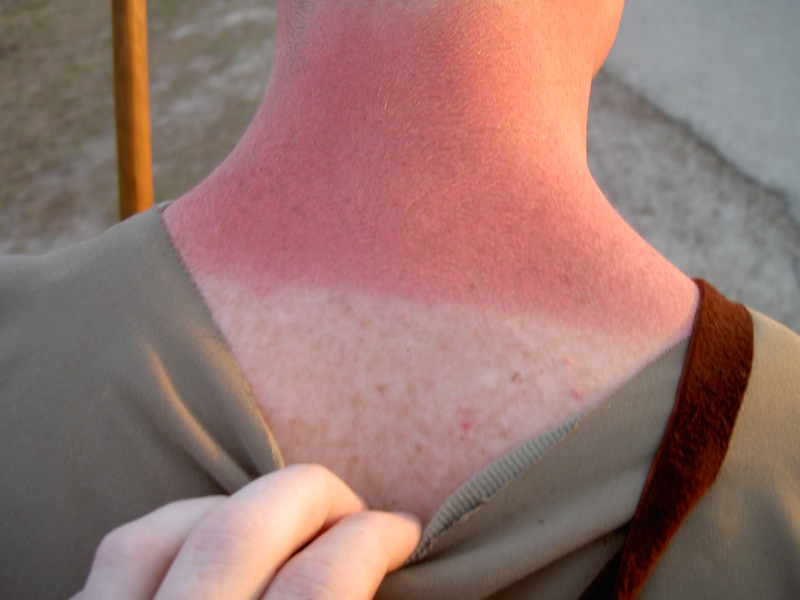
The term originally characterized farmers that had a red neck, caused by sunburn from long hours working in the fields. A citation from provides a definition as "poorer inhabitants of the rural districts ... men who work in the field, as a matter of course, generally have their skin stained red and burnt by the sun, and especially is this true of the back of their necks". Hats were usually worn and they protected that wearer's head from the sun, but also provided psychological protection by shading the face from close scrutiny. The back of the neck however was more exposed to the sun and allowed closer scrutiny about the person's background in the same way callused working hands could not be easily covered.
By 1900, "rednecks" was in common use to designate the political factions inside the Democratic Party comprising poor white farmers in the South. The same group was also often called the "wool hat boys" (for they opposed the rich men, who wore expensive silk hats). A newspaper notice in Mississippi in August 1891 called on rednecks to rally at the polls at the upcoming primary election:
Primary on the 25th.
And the "rednecks" will be there.
And the "Yaller-heels" will be there, also.
And the "hayseeds" and "gray dillers", they'll be there, too.
And the "subordinates" and "subalterns" will be there to rebuke their slanderers and traducers.
And the men who pay ten, twenty, thirty, etc. etc. per cent on borrowed money will be on hand, and they'll remember it, too.
Hub AI
Redneck AI simulator
(@Redneck_simulator)
Redneck
Redneck is a derogatory term mainly applied to white Americans perceived to be crass and unsophisticated, closely associated with rural whites of the southern United States. Its meaning possibly stems from the sunburn found on farmers' necks dating back to the late 19th century. Authors Joseph Flora and Lucinda MacKethan describe the stereotype as follows:
Its modern usage is similar in meaning to cracker (especially regarding Texas, Georgia, and Florida), hillbilly (especially regarding Appalachia and the Ozarks), and white trash (but without the last term's suggestions of immorality). In Britain, the Cambridge Dictionary definition states: "A poor, white person without education, esp. one living in the countryside in the southern US, who is believed to have prejudiced ideas and beliefs. This word is usually considered offensive." People from the white South sometimes jocularly call themselves "rednecks" as insider humor.
Some people claim that the term’s origin is that during the West Virginia Mine Wars of the early 1920s, workers organizing for labor rights donned red bandanas, worn tied around their necks, as they marched up Blair Mountain in a pivotal confrontation. The West Virginia Mine Wars Museum commemorates their struggle for fair wages. A monument in front of the George Buckley Community Center in Marmet, WV, part of the "Courage in the Hollers Project" of the West Virginia Mine Wars Museum depicts the silhouettes of four mine workers cut from steel plate, wearing bright red bandanas around their necks or holding them in their hands. However, the term was used as early as 1830 to refer to white rural Southern laborers, so although the 1920s wearers of red bandanas may have used the term, they did not originate it.
By the 1970s, the term had become offensive slang, its meaning expanded to include racism, loutishness, and opposition to modern ways.
Patrick Huber, in his monograph A Short History of Redneck: The Fashioning of a Southern White Masculine Identity, emphasized the theme of masculinity in the 20th-century expansion of the term, noting: "The redneck has been stereotyped in the media and popular culture as a poor, dirty, uneducated, and racist Southern white man."
The term originally characterized farmers that had a red neck, caused by sunburn from long hours working in the fields. A citation from provides a definition as "poorer inhabitants of the rural districts ... men who work in the field, as a matter of course, generally have their skin stained red and burnt by the sun, and especially is this true of the back of their necks". Hats were usually worn and they protected that wearer's head from the sun, but also provided psychological protection by shading the face from close scrutiny. The back of the neck however was more exposed to the sun and allowed closer scrutiny about the person's background in the same way callused working hands could not be easily covered.
By 1900, "rednecks" was in common use to designate the political factions inside the Democratic Party comprising poor white farmers in the South. The same group was also often called the "wool hat boys" (for they opposed the rich men, who wore expensive silk hats). A newspaper notice in Mississippi in August 1891 called on rednecks to rally at the polls at the upcoming primary election:
Primary on the 25th.
And the "rednecks" will be there.
And the "Yaller-heels" will be there, also.
And the "hayseeds" and "gray dillers", they'll be there, too.
And the "subordinates" and "subalterns" will be there to rebuke their slanderers and traducers.
And the men who pay ten, twenty, thirty, etc. etc. per cent on borrowed money will be on hand, and they'll remember it, too.