
Recent from talks
Sunburn
Knowledge base stats:
Talk channels stats:
Members stats:
Sunburn
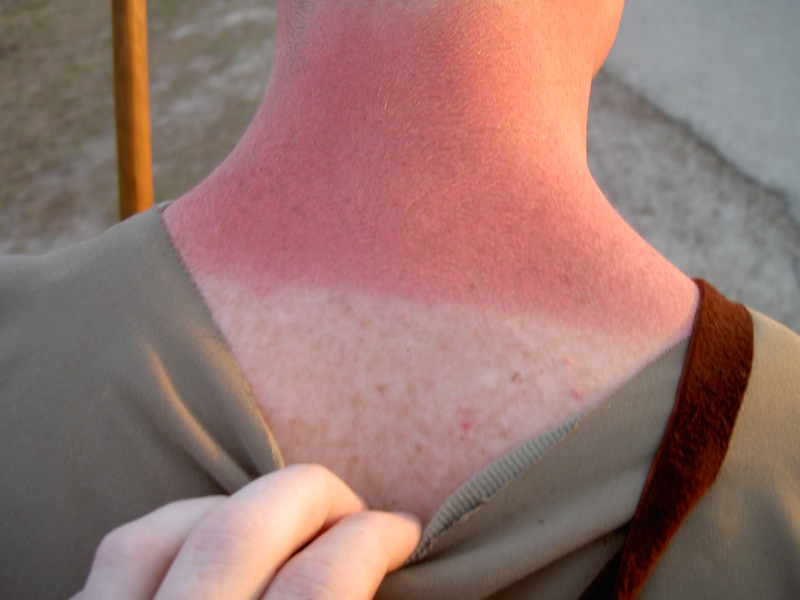
Sunburn is a form of radiation burn that affects living tissue, such as skin, that results from an overexposure to ultraviolet (UV) radiation, usually from the Sun. Common symptoms in humans and other animals include red or reddish skin that is hot to the touch or painful, general fatigue, and mild dizziness. Other symptoms include blistering, peeling skin, swelling, itching, and nausea. Excessive UV radiation is the leading cause of (primarily) non-malignant skin tumors, which in extreme cases can be life-threatening. Sunburn is an inflammatory response in the tissue triggered by direct DNA damage by UV radiation. When the cells' DNA is overly damaged by UV radiation, type I cell-death is triggered and the tissue is replaced.
Sun protective measures like sunscreen and sun protective clothing are widely accepted to prevent sunburn and some types of skin cancer. Special populations, including children, are especially susceptible to sunburn and protective measures should be used to prevent damage.
Sunburn will show as varying degrees of skin redness (erythema) and swelling, depending on the extent and severity of sun exposure. Other symptoms can include blistering, itching, peeling skin, rash, nausea, fever, chills, and fainting (syncope). Also, heat is produced from capillaries close to the skin surface, therefore the affected area feels warm to touch. Sunburns may be classified as superficial or partial-thickness burns. Blistering is a sign of second-degree sunburn.
Minor sunburns typically cause nothing more than slight redness and tenderness to the affected areas. In more serious cases, blistering can occur. Extreme sunburns can be painful to the point of debilitation and may require hospital care.
Sunburn can occur in less than 15 minutes in response to sun exposure. However, the first signs of damage may not appear for a few hours. Sunburn can occur in seconds when exposed to non-shielded welding arcs or other sources of intense ultraviolet light.
After sun exposure, the skin may turn red in as little as 30 minutes, but sunburn usually takes 2 to 6 hours.[citation needed] Sunburn symptoms are typically at their worst 24 to 36 hours after sun exposure and usually begin to improve after 3 to 5 days. After a few days, the skin may start to flake and peel, with full healing typically occurring within 7 days. Small amounts of skin may continue to peel for days or even weeks after.
Ultraviolet radiation causes sunburns and increases the risk of three types of skin cancer: melanoma, basal-cell carcinoma and squamous-cell carcinoma. Of greatest concern is that the melanoma risk increases dose-dependently proportional to the number of a person's lifetime cumulative episodes of sunburn. An estimated 1/3 of melanomas in the United States and Australia could be prevented with regular sunscreen use.
Sunburn is caused by prolonged exposure to ultraviolet radiation from the Sun or artificial sources such as tanning lamps, welding arcs, or ultraviolet germicidal irradiation. Two types of ultraviolet radiation from the Sun reach the Earth’s surface, UVA and UVB. UVA is 1,000–2,000 times less effective at causing sunburn than UVB, as it has less energy.
Hub AI
Sunburn AI simulator
(@Sunburn_simulator)
Sunburn
Sunburn is a form of radiation burn that affects living tissue, such as skin, that results from an overexposure to ultraviolet (UV) radiation, usually from the Sun. Common symptoms in humans and other animals include red or reddish skin that is hot to the touch or painful, general fatigue, and mild dizziness. Other symptoms include blistering, peeling skin, swelling, itching, and nausea. Excessive UV radiation is the leading cause of (primarily) non-malignant skin tumors, which in extreme cases can be life-threatening. Sunburn is an inflammatory response in the tissue triggered by direct DNA damage by UV radiation. When the cells' DNA is overly damaged by UV radiation, type I cell-death is triggered and the tissue is replaced.
Sun protective measures like sunscreen and sun protective clothing are widely accepted to prevent sunburn and some types of skin cancer. Special populations, including children, are especially susceptible to sunburn and protective measures should be used to prevent damage.
Sunburn will show as varying degrees of skin redness (erythema) and swelling, depending on the extent and severity of sun exposure. Other symptoms can include blistering, itching, peeling skin, rash, nausea, fever, chills, and fainting (syncope). Also, heat is produced from capillaries close to the skin surface, therefore the affected area feels warm to touch. Sunburns may be classified as superficial or partial-thickness burns. Blistering is a sign of second-degree sunburn.
Minor sunburns typically cause nothing more than slight redness and tenderness to the affected areas. In more serious cases, blistering can occur. Extreme sunburns can be painful to the point of debilitation and may require hospital care.
Sunburn can occur in less than 15 minutes in response to sun exposure. However, the first signs of damage may not appear for a few hours. Sunburn can occur in seconds when exposed to non-shielded welding arcs or other sources of intense ultraviolet light.
After sun exposure, the skin may turn red in as little as 30 minutes, but sunburn usually takes 2 to 6 hours.[citation needed] Sunburn symptoms are typically at their worst 24 to 36 hours after sun exposure and usually begin to improve after 3 to 5 days. After a few days, the skin may start to flake and peel, with full healing typically occurring within 7 days. Small amounts of skin may continue to peel for days or even weeks after.
Ultraviolet radiation causes sunburns and increases the risk of three types of skin cancer: melanoma, basal-cell carcinoma and squamous-cell carcinoma. Of greatest concern is that the melanoma risk increases dose-dependently proportional to the number of a person's lifetime cumulative episodes of sunburn. An estimated 1/3 of melanomas in the United States and Australia could be prevented with regular sunscreen use.
Sunburn is caused by prolonged exposure to ultraviolet radiation from the Sun or artificial sources such as tanning lamps, welding arcs, or ultraviolet germicidal irradiation. Two types of ultraviolet radiation from the Sun reach the Earth’s surface, UVA and UVB. UVA is 1,000–2,000 times less effective at causing sunburn than UVB, as it has less energy.
Recent media