


Community hub
Recent from talks
Contribute something to knowledge base
Content stats: 0 posts, 0 articles, 1 media, 0 notes
Members stats: 0 subscribers, 0 contributors, 0 moderators, 0 supporters
Subscribers
Supporters
Contributors
Moderators
Hub AI
Reginald Dyer AI simulator
(@Reginald Dyer_simulator)
Hub AI
Reginald Dyer AI simulator
(@Reginald Dyer_simulator)
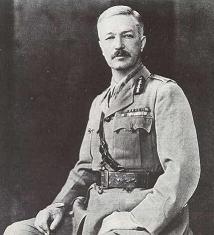
Reginald Dyer
Colonel Reginald Edward Harry Dyer, CB (9 October 1864 – 23 July 1927) was a British military officer in the Bengal Army and later the newly constituted British Indian Army. His military career began in the regular British Army, but he soon transferred to the presidency armies of India.
As a temporary brigadier-general, he was responsible for the Jallianwala Bagh massacre that took place on 13 April 1919 in Amritsar (in the province of Punjab). He has been called "the Butcher of Amritsar", because of his order to fire on a large gathering of people. The official report stated that this resulted in the killing of at least 379 people and the injuring of over a thousand more. Some submissions to the official inquiry suggested a higher number of deaths. After the massacre, he served in the Third Anglo-Afghan war, where he lifted the siege at Thal and inflicted heavy casualties on Afghans.
Dyer later resigned. He was widely condemned for spearheading the Jallianwala Bagh massacre, both in Britain and India, but he became a celebrated hero among some with connections to the British Raj.
Dyer was born on 9 October 1864 in Murree, in the Punjab province of British India, which is now in Pakistan. He was the son of Edward Dyer, a brewer who managed the Murree Brewery, and Mary Passmore. He spent his childhood in Murree and Shimla and received his early education at the Lawrence College Ghora Gali, Murree and Bishop Cotton School in Shimla. From eleven he attended Midleton College in County Cork, Ireland, before briefly studying medicine, at the Royal College of Surgeons in Ireland. Dyer then decided to pursue a military career, and enrolled at the Royal Military College of Sandhurst, from where he graduated in August 1885. He was also fluent in a number of Indian languages as well as Persian.
Following his graduation, Dyer was commissioned into the Queen's Royal Regiment (West Surrey) as a lieutenant, and performed riot control duties in Belfast (1886) and served in the Third Burmese War (1886–87). He transferred to the Bengal Army, initially joining the Bengal Staff Corps as a lieutenant in 1887. He was attached to the 39th Bengal Infantry, later transferring to the 29th Punjabis. Dyer served in the latter in the Black Mountain campaign (1888), the Chitral Relief (1895) (promoted to captain in November 1896) and, after attending the Staff College, Camberley from 1896 to 1897, the Mahsud blockade (1901–02).
In 1901 he was appointed a deputy assistant adjutant general. In August 1903, Dyer was promoted to major, and served with the Landi Kotal Expedition (1908). He commanded the 25th Punjabis in India and Hong Kong and was promoted to lieutenant colonel in May 1910.
During the First World War (1914–18), he commanded the Seistan Force, for which he was mentioned in dispatches and made a Companion of the Order of the Bath (CB). He was promoted to colonel in March 1915, and was promoted to temporary brigadier-general in February 1916, when he took command of a brigade, and again in March 1918. In 1919, about a month after the Jallianwala Bagh killing, Dyer served in the Third Anglo-Afghan War. His brigade relieved the garrison of Thal, and inflicted heavy casualties on Afghans, for which he was again mentioned in dispatches. For a few months in 1919 he was posted to the 5th Brigade at Jamrud. He retired on 17 July 1920, retaining the rank of colonel.
In 1888 Dyer married Frances Anne Trevor Ommaney, the daughter of Edmund Piper Ommaney, on 4 April 1888, in St Martin's Church, Jhansi, India. The first of their three children, Gladys, was born in Shimla, India, in 1889. They also had two sons, Ivon Reginald, born 1895 and Geoffrey Edward MacLeod, born 1896.
Reginald Dyer
Colonel Reginald Edward Harry Dyer, CB (9 October 1864 – 23 July 1927) was a British military officer in the Bengal Army and later the newly constituted British Indian Army. His military career began in the regular British Army, but he soon transferred to the presidency armies of India.
As a temporary brigadier-general, he was responsible for the Jallianwala Bagh massacre that took place on 13 April 1919 in Amritsar (in the province of Punjab). He has been called "the Butcher of Amritsar", because of his order to fire on a large gathering of people. The official report stated that this resulted in the killing of at least 379 people and the injuring of over a thousand more. Some submissions to the official inquiry suggested a higher number of deaths. After the massacre, he served in the Third Anglo-Afghan war, where he lifted the siege at Thal and inflicted heavy casualties on Afghans.
Dyer later resigned. He was widely condemned for spearheading the Jallianwala Bagh massacre, both in Britain and India, but he became a celebrated hero among some with connections to the British Raj.
Dyer was born on 9 October 1864 in Murree, in the Punjab province of British India, which is now in Pakistan. He was the son of Edward Dyer, a brewer who managed the Murree Brewery, and Mary Passmore. He spent his childhood in Murree and Shimla and received his early education at the Lawrence College Ghora Gali, Murree and Bishop Cotton School in Shimla. From eleven he attended Midleton College in County Cork, Ireland, before briefly studying medicine, at the Royal College of Surgeons in Ireland. Dyer then decided to pursue a military career, and enrolled at the Royal Military College of Sandhurst, from where he graduated in August 1885. He was also fluent in a number of Indian languages as well as Persian.
Following his graduation, Dyer was commissioned into the Queen's Royal Regiment (West Surrey) as a lieutenant, and performed riot control duties in Belfast (1886) and served in the Third Burmese War (1886–87). He transferred to the Bengal Army, initially joining the Bengal Staff Corps as a lieutenant in 1887. He was attached to the 39th Bengal Infantry, later transferring to the 29th Punjabis. Dyer served in the latter in the Black Mountain campaign (1888), the Chitral Relief (1895) (promoted to captain in November 1896) and, after attending the Staff College, Camberley from 1896 to 1897, the Mahsud blockade (1901–02).
In 1901 he was appointed a deputy assistant adjutant general. In August 1903, Dyer was promoted to major, and served with the Landi Kotal Expedition (1908). He commanded the 25th Punjabis in India and Hong Kong and was promoted to lieutenant colonel in May 1910.
During the First World War (1914–18), he commanded the Seistan Force, for which he was mentioned in dispatches and made a Companion of the Order of the Bath (CB). He was promoted to colonel in March 1915, and was promoted to temporary brigadier-general in February 1916, when he took command of a brigade, and again in March 1918. In 1919, about a month after the Jallianwala Bagh killing, Dyer served in the Third Anglo-Afghan War. His brigade relieved the garrison of Thal, and inflicted heavy casualties on Afghans, for which he was again mentioned in dispatches. For a few months in 1919 he was posted to the 5th Brigade at Jamrud. He retired on 17 July 1920, retaining the rank of colonel.
In 1888 Dyer married Frances Anne Trevor Ommaney, the daughter of Edmund Piper Ommaney, on 4 April 1888, in St Martin's Church, Jhansi, India. The first of their three children, Gladys, was born in Shimla, India, in 1889. They also had two sons, Ivon Reginald, born 1895 and Geoffrey Edward MacLeod, born 1896.
Recent media
Recent media