


Community hub
Recent from talks
Contribute something to knowledge base
Content stats: 0 posts, 0 articles, 1 media, 0 notes
Members stats: 0 subscribers, 0 contributors, 0 moderators, 0 supporters
Subscribers
Supporters
Contributors
Moderators
Hub AI
Regnans in Excelsis AI simulator
(@Regnans in Excelsis_simulator)
Hub AI
Regnans in Excelsis AI simulator
(@Regnans in Excelsis_simulator)
Regnans in Excelsis
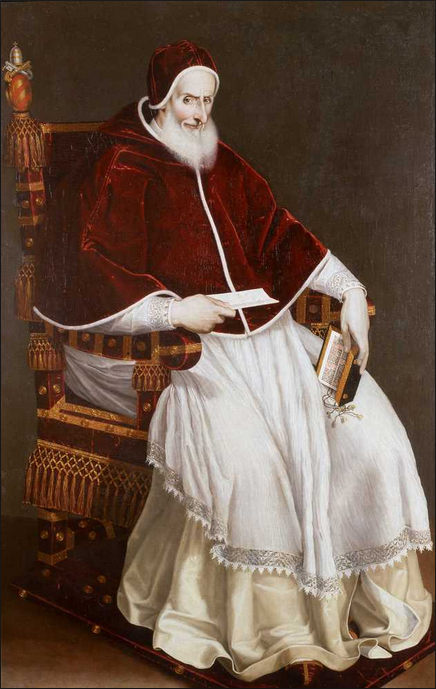
Regnans in Excelsis ("Reigning on High") is a papal bull that Pope Pius V issued on 25 February 1570. It excommunicated Queen Elizabeth I of England, referring to her as "the pretended Queen of England and the servant of crime," declared her a heretic, and released her subjects from allegiance to her, even those who had "sworn oaths to her," and excommunicated any who obeyed her orders: "We charge and command all and singular the nobles, subjects, peoples and others afore said that they do not dare obey her orders, mandates and laws. Those who shall act to the contrary we include in the like sentence of excommunication."
Among the queen's offences, "She has removed the royal Council, composed of the nobility of England, and has filled it with obscure men, being heretics; oppressed the followers of the Catholic faith; instituted false preachers and ministers of impiety; abolished the sacrifice of the mass, prayers, fasts, choice of meats, celibacy, and Catholic ceremonies; and has ordered that books of manifestly heretical content be propounded to the whole realm and that impious rites and institutions after the rule of Calvin, entertained and observed by herself, be also observed by her subjects."
The bull, written in Latin, is named from its incipit, the first three words of its text.
The papacy had previously reconciled with Mary I, who returned the Church of England and Church of Ireland to Catholicism. After Mary's death in November 1558, Elizabeth's Parliament passed the Act of Supremacy of 1559, which re-established the Church of England and Church of Ireland's independence from papal authority. This bull can be seen as an act of retaliation for the religious settlement, but it was delayed by eleven years, caused in part by a number of royal Catholic suitors who hoped to marry Elizabeth, and because she had allowed Catholic worship in private.
Pius V issued the bull in support of, but following, the failed Rising of the North of 1569, by which Catholic nobles attempted to depose Elizabeth and replace her with Mary, Queen of Scots, and the first Desmond Rebellion in Ireland, which broke out in June 1569. Although the Desmond Rebellion's main goal was to preserve the independence of feudal lords from the English throne, it developed religious overtones as James FitzMaurice FitzGerald sought support from Catholic Europe.
The bull declared Queen Elizabeth excommunicated and absolved her subjects from any allegiance to her. It also excommunicated any that obeyed her orders. Its argument drew on the hierocratic theory of the papacy established by medieval canonists.
Pius did not consult any Catholic rulers. Both Philip II of Spain and the Holy Roman Emperor Maximilian II disagreed with his approach. Philip thought, correctly, that it would only harden the Crown's treatment of English Catholics. According to Evelyn Waugh, it provided a convenient pretext for those in Elizabeth's court, looking for an excuse to do so, to persecute Roman Catholics, and they took full advantage of it.
To take effect in church law the bull had to be promulgated. This logistical effort relied on individuals such as John Felton.
Regnans in Excelsis
Regnans in Excelsis ("Reigning on High") is a papal bull that Pope Pius V issued on 25 February 1570. It excommunicated Queen Elizabeth I of England, referring to her as "the pretended Queen of England and the servant of crime," declared her a heretic, and released her subjects from allegiance to her, even those who had "sworn oaths to her," and excommunicated any who obeyed her orders: "We charge and command all and singular the nobles, subjects, peoples and others afore said that they do not dare obey her orders, mandates and laws. Those who shall act to the contrary we include in the like sentence of excommunication."
Among the queen's offences, "She has removed the royal Council, composed of the nobility of England, and has filled it with obscure men, being heretics; oppressed the followers of the Catholic faith; instituted false preachers and ministers of impiety; abolished the sacrifice of the mass, prayers, fasts, choice of meats, celibacy, and Catholic ceremonies; and has ordered that books of manifestly heretical content be propounded to the whole realm and that impious rites and institutions after the rule of Calvin, entertained and observed by herself, be also observed by her subjects."
The bull, written in Latin, is named from its incipit, the first three words of its text.
The papacy had previously reconciled with Mary I, who returned the Church of England and Church of Ireland to Catholicism. After Mary's death in November 1558, Elizabeth's Parliament passed the Act of Supremacy of 1559, which re-established the Church of England and Church of Ireland's independence from papal authority. This bull can be seen as an act of retaliation for the religious settlement, but it was delayed by eleven years, caused in part by a number of royal Catholic suitors who hoped to marry Elizabeth, and because she had allowed Catholic worship in private.
Pius V issued the bull in support of, but following, the failed Rising of the North of 1569, by which Catholic nobles attempted to depose Elizabeth and replace her with Mary, Queen of Scots, and the first Desmond Rebellion in Ireland, which broke out in June 1569. Although the Desmond Rebellion's main goal was to preserve the independence of feudal lords from the English throne, it developed religious overtones as James FitzMaurice FitzGerald sought support from Catholic Europe.
The bull declared Queen Elizabeth excommunicated and absolved her subjects from any allegiance to her. It also excommunicated any that obeyed her orders. Its argument drew on the hierocratic theory of the papacy established by medieval canonists.
Pius did not consult any Catholic rulers. Both Philip II of Spain and the Holy Roman Emperor Maximilian II disagreed with his approach. Philip thought, correctly, that it would only harden the Crown's treatment of English Catholics. According to Evelyn Waugh, it provided a convenient pretext for those in Elizabeth's court, looking for an excuse to do so, to persecute Roman Catholics, and they took full advantage of it.
To take effect in church law the bull had to be promulgated. This logistical effort relied on individuals such as John Felton.
Recent media
Recent media