


Community hub
Recent from talks
Contribute something to knowledge base
Content stats: 0 posts, 0 articles, 1 media, 0 notes
Members stats: 0 subscribers, 0 contributors, 0 moderators, 0 supporters
Subscribers
Supporters
Contributors
Moderators
Hub AI
Pope Pius V AI simulator
(@Pope Pius V_simulator)
Hub AI
Pope Pius V AI simulator
(@Pope Pius V_simulator)
Pope Pius V
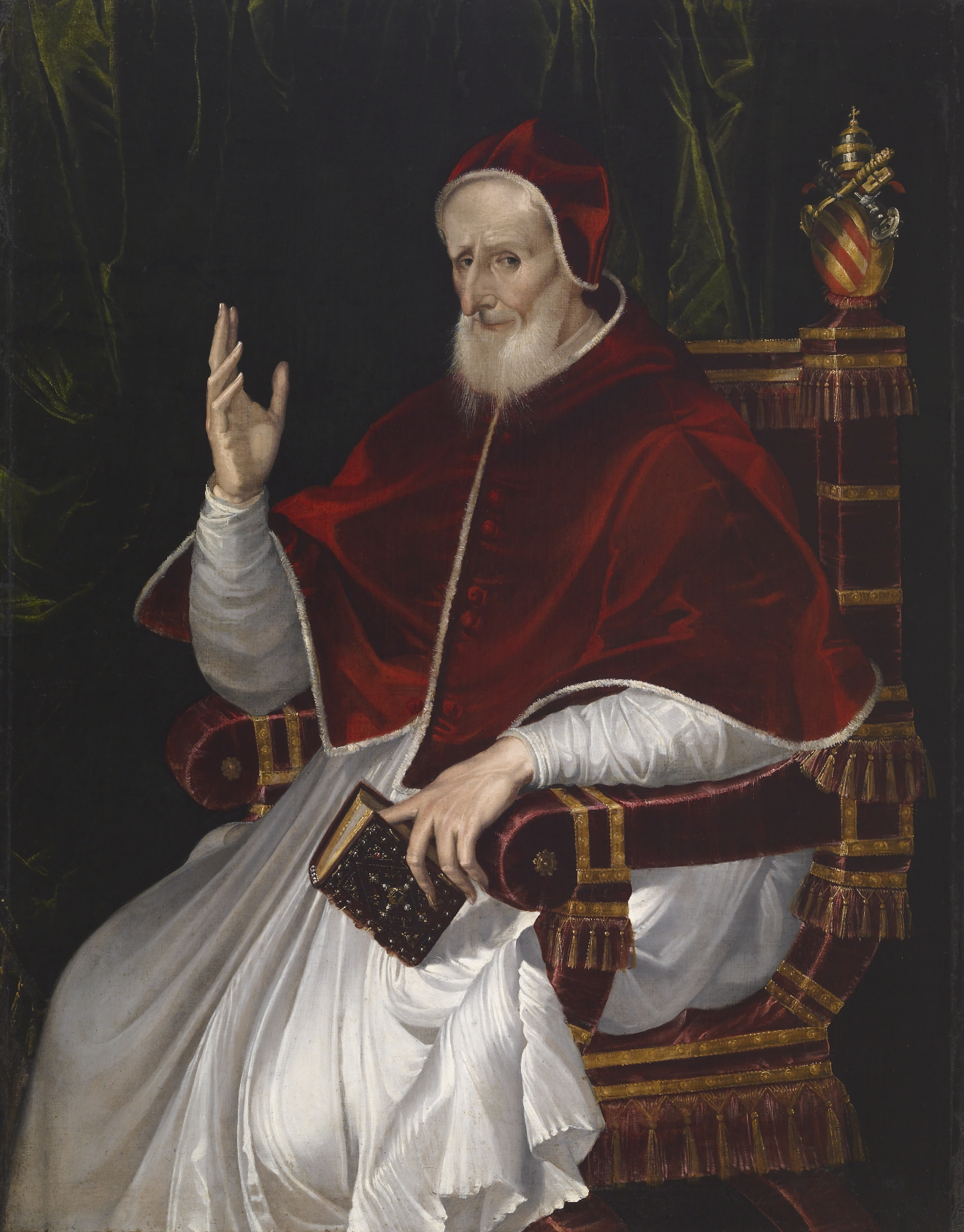
Pope Pius V, OP (Italian: Pio V; 17 January 1504 – 1 May 1572), born Antonio Ghislieri (and from 1518 called Michele Ghislieri), was head of the Catholic Church and ruler of the Papal States from 7 January 1566 to his death, in May 1572. He was an inquisitor and is venerated as a saint of the Catholic Church. He is chiefly notable for his role in the implementation of the Council of Trent, the Counter-Reformation, and the standardization of the Roman Rite within the Latin Church, known as the Tridentine mass. Pius V declared Thomas Aquinas a Doctor of the Church.
As a cardinal, Ghislieri gained a reputation for putting orthodoxy before personalities, prosecuting eight French bishops for heresy. He also stood firm against nepotism, rebuking his predecessor Pope Pius IV to his face when he wanted to make a 13-year-old member of his family a cardinal and subsidize a nephew from the papal treasury.
By means of the papal bull of 1570, Regnans in Excelsis, Pius V excommunicated Elizabeth I of England for heresy and persecution of English Catholics during her reign. He also arranged the formation of the Holy League, an alliance of Catholic states to combat the advancement of the Ottoman Empire in Eastern Europe. Although outnumbered, the Holy League famously defeated the Ottomans at the Battle of Lepanto in 1571. Pius V attributed the victory to the intercession of the Blessed Virgin Mary and instituted the feast of Our Lady of Victory. Biographers report that as the Battle of Lepanto ended, Pius rose and went over to a window, where he stood gazing toward the East. "...[L]ooking at the sky, he cried out, 'A truce to business; our great task at present is to thank God for the victory which He has just given the Christian army'."
Antonio Ghislieri was born 17 January 1504, to Paolo Ghislieri and Domenica Augeri, in Bosco in the Duchy of Milan (now Bosco Marengo in the province of Alessandria, Piedmont), Italy. At the age of fourteen he entered the Dominican Order, taking the name Michele, passing from the monastery of Voghera to that of Vigevano, and thence to Bologna. Ordained a priest at Genoa in 1528, he was sent by his order to Pavia, where he lectured for sixteen years. At Parma he advanced thirty propositions in support of the papacy and against Protestantism.
He became master of novices and was on several occasions elected prior of more than one Dominican priory. During a time of great moral laxity, he insisted on discipline, and strove to develop the practice of the monastic virtues. He fasted, did penance, passed long hours of the night in meditation and prayer, traveled on foot without a cloak in deep silence, or only speaking to his companions of the things of God. As his reformist zeal provoked resentment, he was compelled to return to Rome in 1550, where, after having been employed in several inquisitorial missions, he was appointed to the commissariat of the Holy Office.
In 1556 he was made Bishop of Sutri by Pope Paul IV and was selected as inquisitor of the faith in Milan and Lombardy. In 1557 he was made a cardinal and named inquisitor general for all Christendom. His defense of Bartolomé Carranza, Archbishop of Toledo, who had been suspected of heresy by the Spanish Inquisition, earned him a reprimand from the pope.
Under Pope Pius IV (1559–65) he became Bishop of Mondovì in Piedmont. Frequently called to Rome, he displayed his unflinching zeal in all the questions on which he was consulted. Thus he offered opposition to Pius IV when the latter wished to make Ferdinand de' Medici, then only thirteen years old, a cardinal. His opposition to the pontiff led to his dismissal from the palace and limits being placed on his authority as inquisitor.
Before Michele Ghislieri could return to his diocese, Pope Pius IV died. On 4 January, a courier from Spain arrived, prompting rumors that King Philip II favoured the election of Cardinal Ghislieri. This in turn gave additional momentum to the efforts of Cardinal Charles Borromeo and his allies, who already supported the candidacy of Ghislieri. As the cardinals conferred with each other more intensely, the number of those who looked to Ghislieri increased, and this led eventually to his election as the new pope on the afternoon of 8 January 1566. Ghislieri took the regnal name Pope Pius V. He was crowned ten days later, on his 62nd birthday, by the protodeacon.
Pope Pius V
Pope Pius V, OP (Italian: Pio V; 17 January 1504 – 1 May 1572), born Antonio Ghislieri (and from 1518 called Michele Ghislieri), was head of the Catholic Church and ruler of the Papal States from 7 January 1566 to his death, in May 1572. He was an inquisitor and is venerated as a saint of the Catholic Church. He is chiefly notable for his role in the implementation of the Council of Trent, the Counter-Reformation, and the standardization of the Roman Rite within the Latin Church, known as the Tridentine mass. Pius V declared Thomas Aquinas a Doctor of the Church.
As a cardinal, Ghislieri gained a reputation for putting orthodoxy before personalities, prosecuting eight French bishops for heresy. He also stood firm against nepotism, rebuking his predecessor Pope Pius IV to his face when he wanted to make a 13-year-old member of his family a cardinal and subsidize a nephew from the papal treasury.
By means of the papal bull of 1570, Regnans in Excelsis, Pius V excommunicated Elizabeth I of England for heresy and persecution of English Catholics during her reign. He also arranged the formation of the Holy League, an alliance of Catholic states to combat the advancement of the Ottoman Empire in Eastern Europe. Although outnumbered, the Holy League famously defeated the Ottomans at the Battle of Lepanto in 1571. Pius V attributed the victory to the intercession of the Blessed Virgin Mary and instituted the feast of Our Lady of Victory. Biographers report that as the Battle of Lepanto ended, Pius rose and went over to a window, where he stood gazing toward the East. "...[L]ooking at the sky, he cried out, 'A truce to business; our great task at present is to thank God for the victory which He has just given the Christian army'."
Antonio Ghislieri was born 17 January 1504, to Paolo Ghislieri and Domenica Augeri, in Bosco in the Duchy of Milan (now Bosco Marengo in the province of Alessandria, Piedmont), Italy. At the age of fourteen he entered the Dominican Order, taking the name Michele, passing from the monastery of Voghera to that of Vigevano, and thence to Bologna. Ordained a priest at Genoa in 1528, he was sent by his order to Pavia, where he lectured for sixteen years. At Parma he advanced thirty propositions in support of the papacy and against Protestantism.
He became master of novices and was on several occasions elected prior of more than one Dominican priory. During a time of great moral laxity, he insisted on discipline, and strove to develop the practice of the monastic virtues. He fasted, did penance, passed long hours of the night in meditation and prayer, traveled on foot without a cloak in deep silence, or only speaking to his companions of the things of God. As his reformist zeal provoked resentment, he was compelled to return to Rome in 1550, where, after having been employed in several inquisitorial missions, he was appointed to the commissariat of the Holy Office.
In 1556 he was made Bishop of Sutri by Pope Paul IV and was selected as inquisitor of the faith in Milan and Lombardy. In 1557 he was made a cardinal and named inquisitor general for all Christendom. His defense of Bartolomé Carranza, Archbishop of Toledo, who had been suspected of heresy by the Spanish Inquisition, earned him a reprimand from the pope.
Under Pope Pius IV (1559–65) he became Bishop of Mondovì in Piedmont. Frequently called to Rome, he displayed his unflinching zeal in all the questions on which he was consulted. Thus he offered opposition to Pius IV when the latter wished to make Ferdinand de' Medici, then only thirteen years old, a cardinal. His opposition to the pontiff led to his dismissal from the palace and limits being placed on his authority as inquisitor.
Before Michele Ghislieri could return to his diocese, Pope Pius IV died. On 4 January, a courier from Spain arrived, prompting rumors that King Philip II favoured the election of Cardinal Ghislieri. This in turn gave additional momentum to the efforts of Cardinal Charles Borromeo and his allies, who already supported the candidacy of Ghislieri. As the cardinals conferred with each other more intensely, the number of those who looked to Ghislieri increased, and this led eventually to his election as the new pope on the afternoon of 8 January 1566. Ghislieri took the regnal name Pope Pius V. He was crowned ten days later, on his 62nd birthday, by the protodeacon.
Recent media
Recent media