Hubbry Logo
Rico AlanizRico AlanizMain
Open search
Rico Alaniz
Community hub
Rico Alaniz
logo
8 pages, 0 posts
0 subscribers
Be the first to start a discussion here.
Rico Alaniz
Rico Alaniz
from Wikipedia

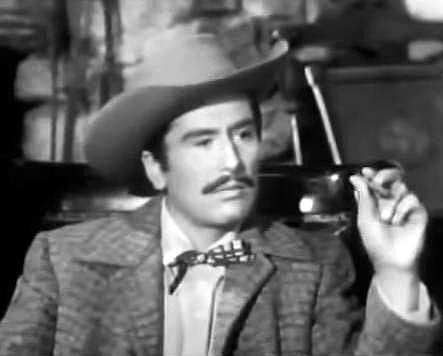
Americo Zorilla "Rico" Alaniz (October 25, 1919 – March 9, 2015) was a Mexican-American actor.

Key Information

Early years

[edit]

Alaniz was born in Juárez, Mexico, and began riding when he was a child.[1]

Selected filmography

[edit]

The Life And Legend Of Wyatt Earp tv series - Mr. Cousin - 19 episodes

References

[edit]
[edit]
Revisions and contributorsEdit on WikipediaRead on Wikipedia
from Grokipedia
Americo Zorilla "Rico" Alaniz (October 25, 1919 – March 9, 2015) was a Mexican-born American actor renowned for his supporting roles in Western films and television series spanning nearly four decades. Born in , , Alaniz relocated to the and debuted in acting during the early , frequently portraying character types such as bandits, Native Americans, soldiers, spies, and townsfolk in over 90 credits. His breakthrough came with recurring appearances in Western TV shows, most notably as the peaceful informant Mr. Cousin in sixteen episodes of the series Cheyenne (1957–1963). Alaniz's film career included standout roles in classics like (1960), where he played a Mexican villager, as well as (1958) and Wolf Larsen (1958). He continued working into the 1980s and 1990s, with later appearances in productions such as (1987) and (1992). Alaniz died in Los Angeles, California, at age 95 from undisclosed causes.

Early life

Birth and childhood

Americo Zorilla "Rico" Alaniz was born on October 25, 1919, in , Chihuahua, . Information regarding Alaniz's family background and immediate relatives remains limited, with no publicly available details on his parents or siblings. He was raised in , a vibrant border city characterized by its position along the frontier, fostering a setting rich in Mexican cultural traditions amid close proximity to American influences.

Path to the United States

Americo Zorilla Alaniz, known professionally as Rico Alaniz, was born in , , on October 25, 1919. He relocated to the , eventually establishing himself in . As a Mexican-born American actor, Alaniz was part of the Mexican-American community in Hollywood. His early experiences in the U.S. involved leveraging skills honed in to secure entry into the entertainment industry in the post-World War II era. These initial roles provided Alaniz with entry into the entertainment industry, where he faced the typical hurdles of immigrant performers seeking steady work in a competitive field dominated by established talent. By the late , he began making connections through auditions and bit parts, setting the stage for his transition to on-screen acting roles.

Acting career

Early film roles

Rico Alaniz entered the industry in , beginning with a series of uncredited minor roles that showcased his versatility in portraying ethnic supporting characters during the declining years of the Hollywood . His debut came in The Capture, where he appeared as a policeman, followed by parts as a young Cuban man in A Lady Without Passport and as Carlos, a Spanish interpreter, in . These early appearances placed him in low-budget productions, often as incidental figures in crime dramas and adventure stories, reflecting the limited opportunities for Mexican-American actors at the time. By the early 1950s, Alaniz secured a mix of credited and uncredited roles in B-movies, typically as soldiers, guards, or bandits, which helped establish him as a reliable character actor. Notable examples include his portrayal of a bandit in Golden Girl (1951), a Spanish actor in Hollywood Story (1951), and Pedro in the Western-adjacent California Conquest (1952). He also played Carlos in The Fighter (1952) and a guard in the historical drama Viva Zapata! (1952, uncredited), demonstrating his growing presence in both action-oriented and period pieces. His riding skills from childhood occasionally aided in preparing for such physically demanding parts, though his focus remained on dialogue-light ensemble roles. Throughout the decade, Alaniz's work expanded into , including sci-fi and adventure, where he took on more defined supporting characters. In (1958), a low-budget horror sequel, he played Sgt. Luis Murillo, a responding to the giant mutant threat. Similarly, in the adventure film Wolf Larsen (1958), he portrayed Louis, a member aboard a sealing ship. Other key appearances included Captain Gomez in Wings of the Hawk (1953) and Bermudez in (1953), often as authoritative or antagonistic figures in exotic settings. These roles, while minor, contributed to his reputation as a dependable performer in the B-movie circuit, paving the way for larger opportunities in the following decade.

Breakthrough in Westerns

In the mid-1950s, Rico Alaniz gained prominence in the Western genre, leveraging his background in smaller film roles to secure character parts that capitalized on the era's demand for diverse ethnic portrayals in frontier narratives. His transition aligned with Hollywood's post-war boom in Western productions, where studios like 20th Century Fox and United Artists emphasized action-oriented stories set in the American Southwest and Mexico. Key films during this period highlighted Alaniz's versatility within typecast ethnic roles, often depicting Mexican or Native American figures as bandits, warriors, or reluctant allies. In 1953, he portrayed Felipe, a loyal warrior, in Conquest of Cochise, a epic about U.S. Army negotiations with Native tribes. The following year, Alaniz played Chief , a leader navigating alliances amid Civil War intrigue, in , directed by and starring . His role as Tomas, a Mexican peon supporting the , in the 1955 The Last Command further solidified his presence in the genre. These performances exemplified his frequent casting as sympathetic yet conflicted characters in borderland conflicts. Alaniz's breakthrough peaked with his appearance in John Sturges's 1960 classic , where he played Sotero, a resilient Mexican villager joining the fight against bandits—a role that underscored the film's ensemble dynamic and earned critical acclaim for its ensemble cast. Another notable credit was in Border Patrol (1959), though primarily a television production, it featured him as Jacques Larron, a French-accented operative in plots, blending Western elements with themes. During the and , Alaniz contributed to over 20 Western films amid a total of approximately 30 cinematic credits, often drawing on his authentic riding skills from childhood to perform convincingly in horseback scenes. The genre's dominance—fueled by television crossovers and box-office successes like , which grossed over $5 million domestically—increased Alaniz's visibility in Hollywood, though it reinforced in roles as Mexican bandits, Native American scouts, spies, or uneasy allies, limiting him to supporting parts in narratives centered on white protagonists. This era marked his most active phase in Westerns, with roles spanning from antagonistic figures to community defenders, reflecting the industry's reliance on Latino actors for cultural authenticity in Southwestern settings.

Television work

As the popularity of Western television series surged in the , Rico Alaniz transitioned from film to television, leveraging his experience in supporting roles to secure steady work in the genre. His most notable television contribution was as Mr. Cousin, a peaceful informer who aided while navigating tensions between Native American communities and settlers, appearing in 19 episodes of The Life and Legend of Wyatt Earp from 1957 to 1959. Alaniz also featured in other Western series, including multiple episodes of in the early 1950s, such as as Luciano Mesconti and Roberto Avila, and a single appearance as Carlos Rodriguez in in 1987. He made guest spots in various anthology and drama shows, including , The Fugitive, and . On television, Alaniz portrayed a diverse array of characters, from prisoners and police officers to merchants and informants, which allowed him to extend his career through the 1980s and into the early 1990s. Overall, he accumulated approximately 40 television credits across roughly 29 years, spanning from the early 1950s to the late 1980s.

Later years and death

Retirement from acting

Rico Alaniz's acting career spanned 42 years from 1950 to 1992, accumulating over 90 credits across film and television. His final active years marked a gradual winding down, with his last credited role as the Old Spanish Man in the 1992 psychological thriller Final Analysis, directed by Phil Joanou. He turned 73 in 1992. By the late 1980s and early 1990s, the Western faced a severe downturn, with major studios producing far fewer entries due to shifting audience tastes toward action, science fiction, and other contemporary genres, exacerbated by costly flops like Heaven's Gate (1980). In response to these changes, Alaniz's later projects increasingly featured brief character cameos rather than the substantial supporting roles he had earlier in his career.

Death and tributes

Rico Alaniz died on March 9, 2015, in , , at the age of 95. The cause of his death was not publicly disclosed. Following his passing, Alaniz was honored in the magazine's Fall 2015 "In Memoriam" section, which recognized his decades-long career in film and television. He did not garner major industry awards during his lifetime. No public details regarding or services have been reported.
Add your contribution
Related Hubs
User Avatar
No comments yet.