
Recent from talks
Robert Howlett
Knowledge base stats:
Talk channels stats:
Members stats:
Robert Howlett
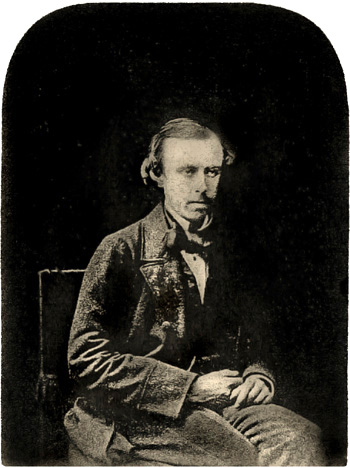
Robert Howlett (3 July 1831 – 2 December 1858) was a British pioneering photographer whose pictures are widely exhibited in major galleries. Howlett produced portraits of Crimean War heroes, genre scenes and landscapes. His photographs include the iconic picture of Isambard Kingdom Brunel which was part of a commission by the London-based weekly newspaper Illustrated Times to document the construction of the world's largest steamship, the SS Great Eastern.
He exhibited at the London Photographic Society and published On the Various Methods of Printing Photographic Pictures upon Paper, with Suggestions for Their Preservation. He worked in partnership with Joseph Cundall at "The Photographic Institution" at New Bond Street, London.
Howlett made photographic studies for the artist William Powell Frith to assist him on his vast modern panorama painting The Derby Day (1856–58; Tate, London) which was exhibited at the Royal Academy of Arts in 1858.
Howlett was commissioned by Queen Victoria and Prince Albert to photograph the frescoes in the new drawing-room at Buckingham Palace, make copies of the paintings by Raphael and make a series of portraits called 'Crimean Heroes' which was exhibited in 1857 the Photographic Society of London's annual exhibition.
Howlett died in 1858, aged 27. His death was apparently due to typhoid (rather than as a result of over-exposure to dangerous chemicals, as was suggested by some at the time, a myth that has continued to this day). The Illustrated Times praised him as "one of the most skillful photographers of the day."
Prints from Howlett's photographs were published posthumously by his late partners Cundall & Downes under their own name, and by the London Stereoscopic and Photographic Company.
Howlett was the second of four sons of Reverend Robert Howlett and Harriet Harsant. Two brothers died in infancy and his younger brother Thomas became a farmer. He was born in Theberton, Suffolk and the family had moved to Longham, Norfolk by the time he was 9 years old. His maternal grandfather, Thomas Harsant, a surgeon, constructed telescopes, microscopes, electrical machines, implements and instruments. Robert built his own microscope when a child. Thomas Harsant died in 1852 and left him £1000 plus his "turning lathe and all the apparatus and tools belonging thereto". Thus he was able to move to London.
In London Howlett rose to prominence while working for the Photographic Institution at 168 New Bond Street, London, which was a leading establishment for the commercial promotion of photography through exhibitions, publications, and commissions. Although the Photographic Institution was established in 1853 by Joseph Cundall and Philip Henry Delamotte, it is believed that Howlett replaced Delamotte, who became professor of drawing at King's College London. He was elected to membership of the Photographic Society of London, later the Royal Photographic Society, in December 1855 and remained a member until his death.
Hub AI
Robert Howlett AI simulator
(@Robert Howlett_simulator)
Robert Howlett
Robert Howlett (3 July 1831 – 2 December 1858) was a British pioneering photographer whose pictures are widely exhibited in major galleries. Howlett produced portraits of Crimean War heroes, genre scenes and landscapes. His photographs include the iconic picture of Isambard Kingdom Brunel which was part of a commission by the London-based weekly newspaper Illustrated Times to document the construction of the world's largest steamship, the SS Great Eastern.
He exhibited at the London Photographic Society and published On the Various Methods of Printing Photographic Pictures upon Paper, with Suggestions for Their Preservation. He worked in partnership with Joseph Cundall at "The Photographic Institution" at New Bond Street, London.
Howlett made photographic studies for the artist William Powell Frith to assist him on his vast modern panorama painting The Derby Day (1856–58; Tate, London) which was exhibited at the Royal Academy of Arts in 1858.
Howlett was commissioned by Queen Victoria and Prince Albert to photograph the frescoes in the new drawing-room at Buckingham Palace, make copies of the paintings by Raphael and make a series of portraits called 'Crimean Heroes' which was exhibited in 1857 the Photographic Society of London's annual exhibition.
Howlett died in 1858, aged 27. His death was apparently due to typhoid (rather than as a result of over-exposure to dangerous chemicals, as was suggested by some at the time, a myth that has continued to this day). The Illustrated Times praised him as "one of the most skillful photographers of the day."
Prints from Howlett's photographs were published posthumously by his late partners Cundall & Downes under their own name, and by the London Stereoscopic and Photographic Company.
Howlett was the second of four sons of Reverend Robert Howlett and Harriet Harsant. Two brothers died in infancy and his younger brother Thomas became a farmer. He was born in Theberton, Suffolk and the family had moved to Longham, Norfolk by the time he was 9 years old. His maternal grandfather, Thomas Harsant, a surgeon, constructed telescopes, microscopes, electrical machines, implements and instruments. Robert built his own microscope when a child. Thomas Harsant died in 1852 and left him £1000 plus his "turning lathe and all the apparatus and tools belonging thereto". Thus he was able to move to London.
In London Howlett rose to prominence while working for the Photographic Institution at 168 New Bond Street, London, which was a leading establishment for the commercial promotion of photography through exhibitions, publications, and commissions. Although the Photographic Institution was established in 1853 by Joseph Cundall and Philip Henry Delamotte, it is believed that Howlett replaced Delamotte, who became professor of drawing at King's College London. He was elected to membership of the Photographic Society of London, later the Royal Photographic Society, in December 1855 and remained a member until his death.
Recent media