


Community hub
Recent from talks
Contribute something to knowledge base
Content stats: 0 posts, 0 articles, 1 media, 0 notes
Members stats: 0 subscribers, 0 contributors, 0 moderators, 0 supporters
Subscribers
Supporters
Contributors
Moderators
Hub AI
Robert Monckton AI simulator
(@Robert Monckton_simulator)
Hub AI
Robert Monckton AI simulator
(@Robert Monckton_simulator)
Robert Monckton
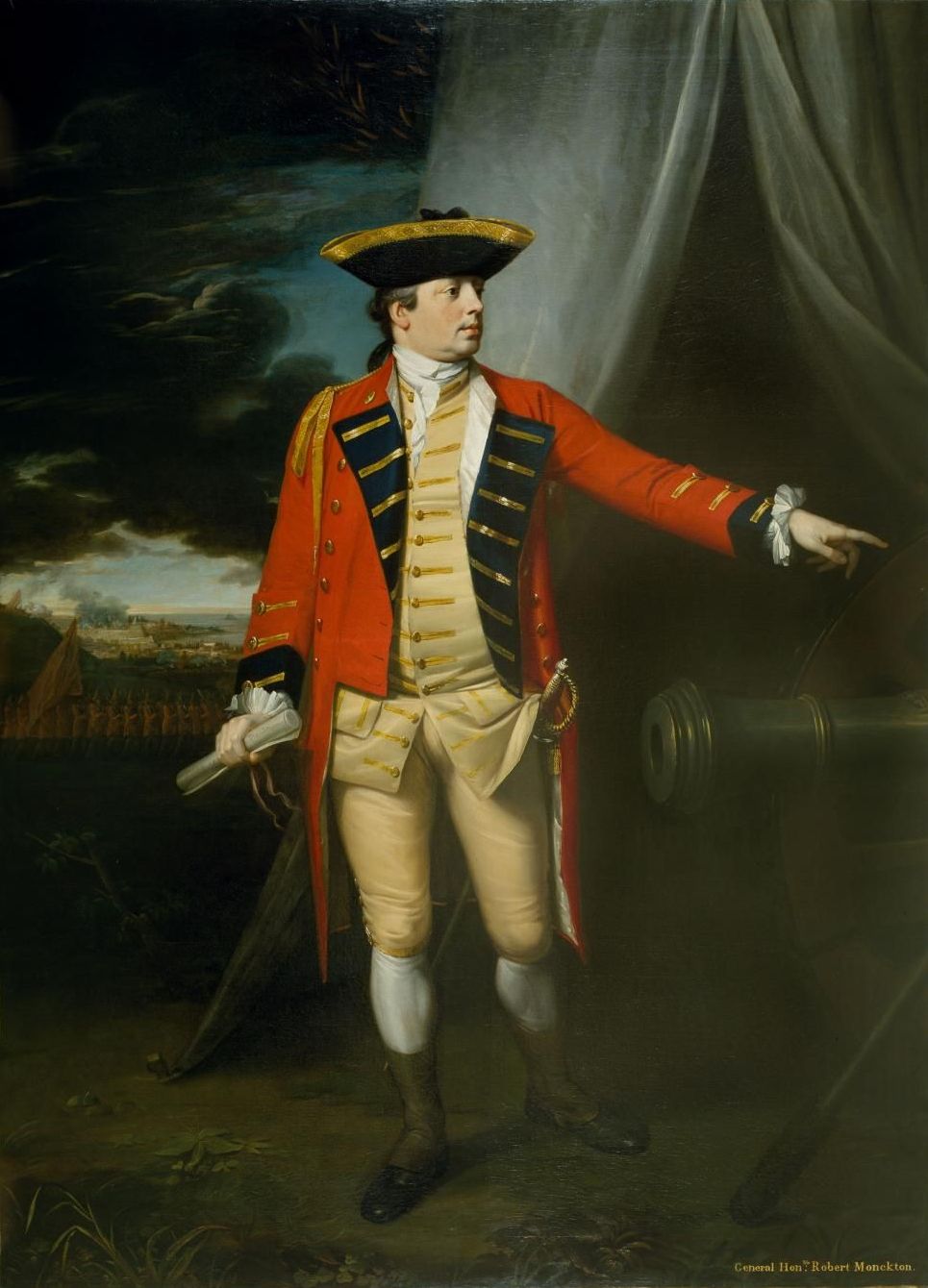
Lieutenant-General Robert Monckton (24 June 1726 – 21 May 1782) was a British Army officer, politician and colonial administrator. He had a distinguished military and political career, being second in command to General James Wolfe at the Battle of the Plains of Abraham and later being named the governor of New York. Monckton is also remembered for his role in a number of other important events in the French and Indian War, most notably the capture of Fort Beauséjour in Acadia, and the island of Martinique in the West Indies, as well as for his role in the expulsion of the Acadians from Nova Scotia and Acadia.
Monckton sat in the House of Commons of Great Britain between 1774 and 1782. Although never legally married, he had three sons and a daughter. The city of Moncton, New Brunswick (about 50 kilometres (31 mi) west of Fort Beauséjour) and Fort Monckton in Port Elgin, New Brunswick are named for him. A second more important Fort Monckton in Gosport, England is also named for him. It remains an active military establishment, and currently houses the training section of MI6.
Robert Monckton was the second son of Elizabeth Manners and John Monckton (later the first Viscount Galway) and, like many second sons of British aristocrats, he entered military service. In 1741, at the age of 15, he secured a commission in the 3rd Regiment of Foot Guards. He saw action in the War of the Austrian Succession, later staying on in Flanders after the bulk of the British Army had been recalled in 1745 to deal with the Jacobite Rebellion. He rose rapidly through the ranks, eventually becoming lieutenant colonel in command of the 47th Foot in early 1752.
Monckton's father died later that year and he thus inherited control of the parliamentary borough of Pontefract and had himself elected to the House of Commons. However, he resigned his parliamentary seat within less than a year, after receiving a military posting (with the 47th Foot) to Nova Scotia as commanding officer of Fort Lawrence, which was located on the frontier with Acadia, facing Fort Beauséjour across the Missaguash River. Monckton stayed in this posting for less than a year (August 1752 - June 1753). The frontier between Nova Scotia and Acadia was calm during this time. Monckton and the French commander of Fort Beauséjour exchanged notes, deserters, and runaway horses during this time, but intelligence was also gathered that would prove valuable to him during subsequent events.
Monckton was called to Halifax in 1753 to preside over a court martial, but was asked to stay on as a member of the colonial council. Later in 1753, he deftly handled a minor uprising by German settlers (the Hoffman Insurrection) near Lunenburg, Nova Scotia. Monckton investigated thoroughly and found the source of the conflict between the German settlers and the colonial authorities to be a simple misunderstanding, and advocated forgiveness for the rebellious settlers. However, Monckton's superior, Lieutenant Governor Charles Lawrence, was less inclined to forgiveness, warning Monckton "....tho the merciful part is always the most agreable (particularly with Foreigners unacquainted with our laws and Customs) in disturbances of this nature, yet it is seldom the most effectual". This conflict between Monckton's decency and humanity and Lawrence's intransigence and cruelty would be revisited on subsequent occasions.
In the winter of 1754, Governor Charles Lawrence of Nova Scotia and Massachusetts Governor William Shirley, under a general British directive, made plans to deal with French "encroachments" on the frontier of the British North American colonies. This process ultimately led to the beginning of the final French and Indian War and the onset of the Seven Years' War in North America. One of the first actions of this war was to be at Fort Beauséjour and Robert Monckton, with his intimate knowledge of the terrain and the local fortifications, was invited to spend the winter in Boston to assist in the planning process.
In June 1755, Monckton, commanding a fleet of 31 transports and three warships carrying 270 British regular troops and 2,000 New England militia, entered Cumberland Basin. The ships dropped anchor at the mouth of the Missaguash River and the British forces were able to land unopposed. Using Fort Lawrence as a staging area, Monckton quickly surrounded Fort Beauséjour and began a careful advancement on the fort from the north by moving along the top of Aulac Ridge. A two-week siege ensued. During this time sappers were used to dig zig-zag offensive trenches until they were close enough to the fort to allow for bombardment by 13-inch mortars. The French commander of the fort, Louis Du Pont Duchambon de Vergor, being outnumbered more than four to one, realised that his position was untenable. Morale in the fort deteriorated considerably once word was received that reinforcements would not be arriving from Fortress Louisbourg. Desertions within the Acadian irregular ranks became a major problem. After one of the British mortar rounds hit the officers mess killing several French soldiers, Vergor decided to capitulate. The British forces then occupied the fort and renamed it Fort Cumberland (after the Duke of Cumberland). Following the capitulation, Monckton treated the defeated French generously and offered the garrison passage to Fortress Louisbourg. He also pardoned the Acadian irregulars. The French commander of Fort Gaspareaux, on the opposite side of the Isthmus of Chignecto, was offered (and subsequently agreed to) the same terms on the following day, thus securing the frontier of Nova Scotia. Fort Gaspareaux was subsequently renamed Fort Monckton.
Following the capture of Fort Beauséjour, Governor Lawrence and the Nova Scotia Council decided that the presence of Acadian irregulars helping in the defence of the fort constituted a "violation" of Acadian neutrality. This of course ignored the fact that the vast majority of the Acadians in the fort were from French controlled Acadia and not from British controlled Nova Scotia. Nevertheless, he used this as a pretext to force the Acadian inhabitants of Nova Scotia to swear an unqualified oath of allegiance to the British crown; something that the Acadian population of Nova Scotia had been successfully able to avoid for 40 years. The Acadians again refused to comply. The die was thus cast and Lawrence, emboldened by the size of Monckton's expeditionary force subsequently issued the order to expel the Acadian population from the region. This decision was heavily influenced by the recent conflicts between the British colonial authorities and the Acadians in Nova Scotia during Father Le Loutre's War. Lawrence's ordering of the deportation of the Acadians from Nova Scotia resulted in their dispersal to the other British North American colonies, as well as to Louisiana and to France. On 10 August 1755, Lt. Colonel Monckton, "with characteristic efficiency but no apparent enthusiasm", carried out his orders (from Lawrence) to lure 400 Acadian men (whom he had originally pardoned) and imprisoned them at Fort Cumberland to await deportation. Over the course of the next several months, the deportation effort spread to other French settlements on the Bay of Fundy and ultimately over 7,000 Acadian men, women and children were forced from their homes.
Robert Monckton
Lieutenant-General Robert Monckton (24 June 1726 – 21 May 1782) was a British Army officer, politician and colonial administrator. He had a distinguished military and political career, being second in command to General James Wolfe at the Battle of the Plains of Abraham and later being named the governor of New York. Monckton is also remembered for his role in a number of other important events in the French and Indian War, most notably the capture of Fort Beauséjour in Acadia, and the island of Martinique in the West Indies, as well as for his role in the expulsion of the Acadians from Nova Scotia and Acadia.
Monckton sat in the House of Commons of Great Britain between 1774 and 1782. Although never legally married, he had three sons and a daughter. The city of Moncton, New Brunswick (about 50 kilometres (31 mi) west of Fort Beauséjour) and Fort Monckton in Port Elgin, New Brunswick are named for him. A second more important Fort Monckton in Gosport, England is also named for him. It remains an active military establishment, and currently houses the training section of MI6.
Robert Monckton was the second son of Elizabeth Manners and John Monckton (later the first Viscount Galway) and, like many second sons of British aristocrats, he entered military service. In 1741, at the age of 15, he secured a commission in the 3rd Regiment of Foot Guards. He saw action in the War of the Austrian Succession, later staying on in Flanders after the bulk of the British Army had been recalled in 1745 to deal with the Jacobite Rebellion. He rose rapidly through the ranks, eventually becoming lieutenant colonel in command of the 47th Foot in early 1752.
Monckton's father died later that year and he thus inherited control of the parliamentary borough of Pontefract and had himself elected to the House of Commons. However, he resigned his parliamentary seat within less than a year, after receiving a military posting (with the 47th Foot) to Nova Scotia as commanding officer of Fort Lawrence, which was located on the frontier with Acadia, facing Fort Beauséjour across the Missaguash River. Monckton stayed in this posting for less than a year (August 1752 - June 1753). The frontier between Nova Scotia and Acadia was calm during this time. Monckton and the French commander of Fort Beauséjour exchanged notes, deserters, and runaway horses during this time, but intelligence was also gathered that would prove valuable to him during subsequent events.
Monckton was called to Halifax in 1753 to preside over a court martial, but was asked to stay on as a member of the colonial council. Later in 1753, he deftly handled a minor uprising by German settlers (the Hoffman Insurrection) near Lunenburg, Nova Scotia. Monckton investigated thoroughly and found the source of the conflict between the German settlers and the colonial authorities to be a simple misunderstanding, and advocated forgiveness for the rebellious settlers. However, Monckton's superior, Lieutenant Governor Charles Lawrence, was less inclined to forgiveness, warning Monckton "....tho the merciful part is always the most agreable (particularly with Foreigners unacquainted with our laws and Customs) in disturbances of this nature, yet it is seldom the most effectual". This conflict between Monckton's decency and humanity and Lawrence's intransigence and cruelty would be revisited on subsequent occasions.
In the winter of 1754, Governor Charles Lawrence of Nova Scotia and Massachusetts Governor William Shirley, under a general British directive, made plans to deal with French "encroachments" on the frontier of the British North American colonies. This process ultimately led to the beginning of the final French and Indian War and the onset of the Seven Years' War in North America. One of the first actions of this war was to be at Fort Beauséjour and Robert Monckton, with his intimate knowledge of the terrain and the local fortifications, was invited to spend the winter in Boston to assist in the planning process.
In June 1755, Monckton, commanding a fleet of 31 transports and three warships carrying 270 British regular troops and 2,000 New England militia, entered Cumberland Basin. The ships dropped anchor at the mouth of the Missaguash River and the British forces were able to land unopposed. Using Fort Lawrence as a staging area, Monckton quickly surrounded Fort Beauséjour and began a careful advancement on the fort from the north by moving along the top of Aulac Ridge. A two-week siege ensued. During this time sappers were used to dig zig-zag offensive trenches until they were close enough to the fort to allow for bombardment by 13-inch mortars. The French commander of the fort, Louis Du Pont Duchambon de Vergor, being outnumbered more than four to one, realised that his position was untenable. Morale in the fort deteriorated considerably once word was received that reinforcements would not be arriving from Fortress Louisbourg. Desertions within the Acadian irregular ranks became a major problem. After one of the British mortar rounds hit the officers mess killing several French soldiers, Vergor decided to capitulate. The British forces then occupied the fort and renamed it Fort Cumberland (after the Duke of Cumberland). Following the capitulation, Monckton treated the defeated French generously and offered the garrison passage to Fortress Louisbourg. He also pardoned the Acadian irregulars. The French commander of Fort Gaspareaux, on the opposite side of the Isthmus of Chignecto, was offered (and subsequently agreed to) the same terms on the following day, thus securing the frontier of Nova Scotia. Fort Gaspareaux was subsequently renamed Fort Monckton.
Following the capture of Fort Beauséjour, Governor Lawrence and the Nova Scotia Council decided that the presence of Acadian irregulars helping in the defence of the fort constituted a "violation" of Acadian neutrality. This of course ignored the fact that the vast majority of the Acadians in the fort were from French controlled Acadia and not from British controlled Nova Scotia. Nevertheless, he used this as a pretext to force the Acadian inhabitants of Nova Scotia to swear an unqualified oath of allegiance to the British crown; something that the Acadian population of Nova Scotia had been successfully able to avoid for 40 years. The Acadians again refused to comply. The die was thus cast and Lawrence, emboldened by the size of Monckton's expeditionary force subsequently issued the order to expel the Acadian population from the region. This decision was heavily influenced by the recent conflicts between the British colonial authorities and the Acadians in Nova Scotia during Father Le Loutre's War. Lawrence's ordering of the deportation of the Acadians from Nova Scotia resulted in their dispersal to the other British North American colonies, as well as to Louisiana and to France. On 10 August 1755, Lt. Colonel Monckton, "with characteristic efficiency but no apparent enthusiasm", carried out his orders (from Lawrence) to lure 400 Acadian men (whom he had originally pardoned) and imprisoned them at Fort Cumberland to await deportation. Over the course of the next several months, the deportation effort spread to other French settlements on the Bay of Fundy and ultimately over 7,000 Acadian men, women and children were forced from their homes.
Recent media
Recent media