
Recent from talks
Robert T. Frederick
Knowledge base stats:
Talk channels stats:
Members stats:
Robert T. Frederick
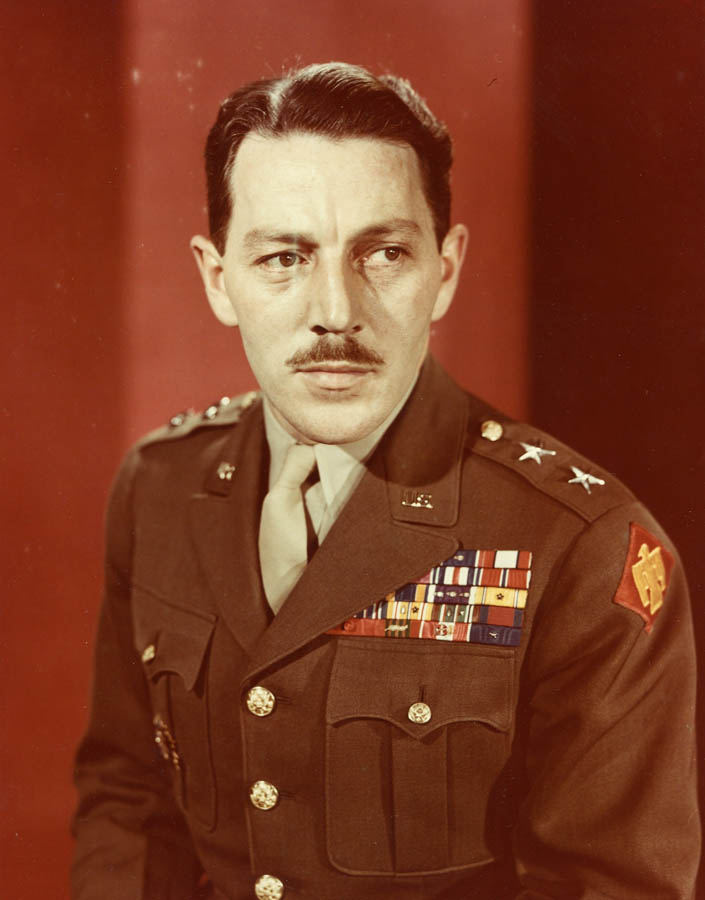
Major General Robert Tryon Frederick (March 14, 1907 – November 29, 1970) was a senior United States Army officer. During World War II, he commanded the 1st Special Service Force nicknamed the "Devil's Brigade", and the 1st Allied Airborne Task Force, an ad hoc division-sized airborne formation, commanding the task force as a Brigadier General during Operation Dragoon. As a Major general at 37 years old from December 3, 1944, until September 1945 he commanded the 45th Infantry Division during the Western Allied invasion of Germany and the Allied-occupied Germany that followed. He was twice awarded the Distinguished Service Cross (United States) and was a recipient of a remarkable eight Purple Hearts received from combat during World War II.
Frederick was born on March 14, 1907, in San Francisco, California. He attended Staunton Military Academy from 1923 to 1924 and the United States Military Academy (USMA) at West Point from 1924 to 1928. Upon graduation from West Point, New York, he was commissioned as a second lieutenant in the Coast Artillery Corps of the United States Army. He graduated from the U.S. Army Command and General Staff College at Fort Leavenworth, Kansas in 1939.
Frederick was serving as a staff officer in the War Department when the United States entered World War II following the Japanese attack on Pearl Harbor. In 1942 Frederick, then a lieutenant colonel, was tasked with raising a new U.S.-Canadian regiment size commando force, which became the 1st Special Service Force (later called the "Devil's Brigade"). The unit, activated on July 9, 1942, at Fort William Henry Harrison, Montana, was originally intended for commando operations in Norway, and trained extensively in winter and mountain warfare, as well as hand-to-hand combat and other infantry skills. In April 1943, the unit moved to Camp Bradford, Virginia for training, then to Fort Ethan Allen, Vermont. The Norway mission was cancelled, however, and the 1st Special Service Force was sent instead to the Aleutian Islands in July 1943. It returned to the contiguous United States in September, and then left in October for the European Theater of Operations (ETO).
Frederick's men arrived in Casablanca in French Morocco in November 1943 and quickly moved to the Italian front. Landing at Naples on November 19, 1943, the 1st Special Service Force went into the line. In December 1943 and January 1944, the 1st Special Service Force conducted a series of operations at Monte la Difensa, Monte la Remetanea, Monte Sammucro (Hill 720), Monte Vischiataro and Monte Majo. The 1st Special Service Force attacked and captured the enemy forces at the impregnable Monte la Difensa and at Monte Majo. Frederick was wounded three times at Monte Majo and was awarded the Distinguished Service Cross for his actions and leadership in the battle from 10-13 January, 1944. He was promoted to Brigadier General following Monte Majo.
On February 2, 1944, Frederick and his men landed at Anzio and went into action along the Mussolini Canal. They were the first Allied troops to enter the Italian capital of Rome on June 4, 1944. Frederick was decorated twice with the Distinguished Service Cross, the U.S. Army's second highest award for valor in combat. The first award was for Monte Majo, and the second award for actions on June 4, 1944, during the drive on Rome. While at Anzio he was wounded a number of times, including two separate wounds on a single day.
On June 23, 1944, Frederick announced he was leaving the unit. He was promoted to the one-star general officer rank of brigadier general effective 18 January, and was given command of the 1st Allied Airborne Task Force, an ad hoc division-sized airborne formation, for the Allied invasion of Southern France. The task force consisted of the British 2nd Independent Parachute Brigade and the American 509th and 551st Parachute Infantry Battalions, the 517th Parachute Regimental Combat Team, the 550th Glider Infantry Battalion, and the 460th and 463rd Parachute Field Artillery Battalions, along with various support units.
On August 15, under the code name Rugby Force, the unit jumped into the Argens Valley between Le Luc and Le Muy, behind the Massif des Maures, a key piece of terrain which overlooked the Allied landing beaches near St. Tropez and St. Raphaël. Having successfully blocked German forces from reaching the invasion beaches, the 1st Airborne Task Force linked up with the U.S. 36th Infantry Division on August 17, 1944. It then moved up the French Riviera coastline, taking Cannes unopposed on August 24, 1944, and linking up with Frederick's old unit, the 1st Special Service Force. The 1st Special Service Force had initially been tasked to seize several small islands off the French Riviera and then moved onshore, where it was attached to the 1st Airborne Task Force on August 22 (replacing the British 2nd Independent Parachute Brigade). The task force then fought on to the French-Italian border, where it took up defensive positions. The task force was dissolved on November 23, 1944 (and the 1st Special Service Force was disbanded on December 5).
Frederick was, at the age of just 37, promoted to the two-star rank of major general and given command of the 45th Infantry Division on December 3, 1944. Along with Major General James M. Gavin, then commanding the 82nd Airborne Division, this made both Frederick and Gavin (eight days older than Frederick) the two youngest division commanders in the U.S. Army during the war. He led the 45th Division until September 10, 1945. The 45th saw heavy combat in French Alsace from December 1944 through to February 1945, and was pulled from the line to rehabilitate on February 17. In mid-March, it was assigned to XV Corps for Operation Undertone, the final drive into Germany.
Hub AI
Robert T. Frederick AI simulator
(@Robert T. Frederick_simulator)
Robert T. Frederick
Major General Robert Tryon Frederick (March 14, 1907 – November 29, 1970) was a senior United States Army officer. During World War II, he commanded the 1st Special Service Force nicknamed the "Devil's Brigade", and the 1st Allied Airborne Task Force, an ad hoc division-sized airborne formation, commanding the task force as a Brigadier General during Operation Dragoon. As a Major general at 37 years old from December 3, 1944, until September 1945 he commanded the 45th Infantry Division during the Western Allied invasion of Germany and the Allied-occupied Germany that followed. He was twice awarded the Distinguished Service Cross (United States) and was a recipient of a remarkable eight Purple Hearts received from combat during World War II.
Frederick was born on March 14, 1907, in San Francisco, California. He attended Staunton Military Academy from 1923 to 1924 and the United States Military Academy (USMA) at West Point from 1924 to 1928. Upon graduation from West Point, New York, he was commissioned as a second lieutenant in the Coast Artillery Corps of the United States Army. He graduated from the U.S. Army Command and General Staff College at Fort Leavenworth, Kansas in 1939.
Frederick was serving as a staff officer in the War Department when the United States entered World War II following the Japanese attack on Pearl Harbor. In 1942 Frederick, then a lieutenant colonel, was tasked with raising a new U.S.-Canadian regiment size commando force, which became the 1st Special Service Force (later called the "Devil's Brigade"). The unit, activated on July 9, 1942, at Fort William Henry Harrison, Montana, was originally intended for commando operations in Norway, and trained extensively in winter and mountain warfare, as well as hand-to-hand combat and other infantry skills. In April 1943, the unit moved to Camp Bradford, Virginia for training, then to Fort Ethan Allen, Vermont. The Norway mission was cancelled, however, and the 1st Special Service Force was sent instead to the Aleutian Islands in July 1943. It returned to the contiguous United States in September, and then left in October for the European Theater of Operations (ETO).
Frederick's men arrived in Casablanca in French Morocco in November 1943 and quickly moved to the Italian front. Landing at Naples on November 19, 1943, the 1st Special Service Force went into the line. In December 1943 and January 1944, the 1st Special Service Force conducted a series of operations at Monte la Difensa, Monte la Remetanea, Monte Sammucro (Hill 720), Monte Vischiataro and Monte Majo. The 1st Special Service Force attacked and captured the enemy forces at the impregnable Monte la Difensa and at Monte Majo. Frederick was wounded three times at Monte Majo and was awarded the Distinguished Service Cross for his actions and leadership in the battle from 10-13 January, 1944. He was promoted to Brigadier General following Monte Majo.
On February 2, 1944, Frederick and his men landed at Anzio and went into action along the Mussolini Canal. They were the first Allied troops to enter the Italian capital of Rome on June 4, 1944. Frederick was decorated twice with the Distinguished Service Cross, the U.S. Army's second highest award for valor in combat. The first award was for Monte Majo, and the second award for actions on June 4, 1944, during the drive on Rome. While at Anzio he was wounded a number of times, including two separate wounds on a single day.
On June 23, 1944, Frederick announced he was leaving the unit. He was promoted to the one-star general officer rank of brigadier general effective 18 January, and was given command of the 1st Allied Airborne Task Force, an ad hoc division-sized airborne formation, for the Allied invasion of Southern France. The task force consisted of the British 2nd Independent Parachute Brigade and the American 509th and 551st Parachute Infantry Battalions, the 517th Parachute Regimental Combat Team, the 550th Glider Infantry Battalion, and the 460th and 463rd Parachute Field Artillery Battalions, along with various support units.
On August 15, under the code name Rugby Force, the unit jumped into the Argens Valley between Le Luc and Le Muy, behind the Massif des Maures, a key piece of terrain which overlooked the Allied landing beaches near St. Tropez and St. Raphaël. Having successfully blocked German forces from reaching the invasion beaches, the 1st Airborne Task Force linked up with the U.S. 36th Infantry Division on August 17, 1944. It then moved up the French Riviera coastline, taking Cannes unopposed on August 24, 1944, and linking up with Frederick's old unit, the 1st Special Service Force. The 1st Special Service Force had initially been tasked to seize several small islands off the French Riviera and then moved onshore, where it was attached to the 1st Airborne Task Force on August 22 (replacing the British 2nd Independent Parachute Brigade). The task force then fought on to the French-Italian border, where it took up defensive positions. The task force was dissolved on November 23, 1944 (and the 1st Special Service Force was disbanded on December 5).
Frederick was, at the age of just 37, promoted to the two-star rank of major general and given command of the 45th Infantry Division on December 3, 1944. Along with Major General James M. Gavin, then commanding the 82nd Airborne Division, this made both Frederick and Gavin (eight days older than Frederick) the two youngest division commanders in the U.S. Army during the war. He led the 45th Division until September 10, 1945. The 45th saw heavy combat in French Alsace from December 1944 through to February 1945, and was pulled from the line to rehabilitate on February 17. In mid-March, it was assigned to XV Corps for Operation Undertone, the final drive into Germany.
Recent media