



Community hub
Recent from talks
Knowledge base stats:
Talk channels stats:
Members stats:
Mass (liturgy)
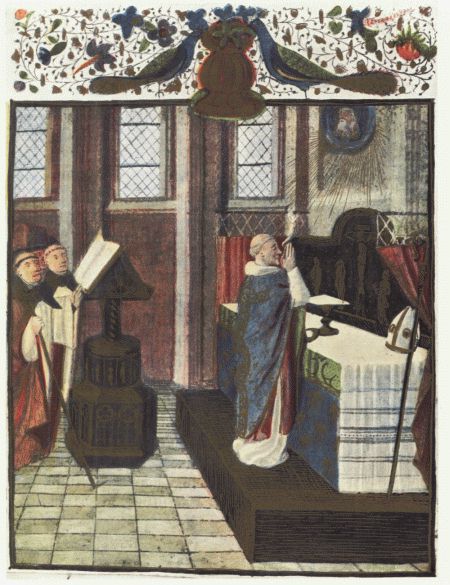
Mass is the main Eucharistic liturgical service in many forms of Western Christianity. The term Mass is commonly used in the Catholic Church, Western Rite Orthodoxy, Old Catholicism, and Independent Catholicism. The term is also used in many Lutheran churches, as well as in some Anglican churches, and on rare occasion by other Protestant churches.
Other Christian denominations may employ terms such as Divine Service or worship service (and often just "service"), rather than the word Mass. For the celebration of the Eucharist in Eastern Christianity, including Eastern Catholic Churches, other terms such as Divine Liturgy, Holy Qurbana, Holy Qurobo and Badarak (or Patarag) are typically used instead.
The English noun Mass is derived from the Middle Latin missa. The Latin word was adopted in Old English as mæsse (via a Vulgar Latin form *messa), and was sometimes glossed as sendnes (i.e. 'a sending, dismission').
The Latin term missa itself was in use by the 6th century. It is most likely derived from the concluding formula Ite, missa est ("Go; the dismissal is made"); missa here is a Late Latin substantive corresponding to classical missio.
Historically, however, there have been other etymological explanations of the noun missa that claim not to derive from the formula ite, missa est. Fortescue (1910) cites older, "fanciful" etymological explanations, notably a latinization of Hebrew matzâh (מַצָּה) "unleavened bread; oblation", a derivation favoured in the 16th century by Reuchlin and Luther, or Greek μύησις "initiation", or even Germanic mese "assembly". The French historian Du Cange in 1678 reported "various opinions on the origin" of the noun missa "Mass", including the derivation from Hebrew matzah (Missah, id est, oblatio), here attributed to Caesar Baronius. The Hebrew derivation is learned speculation from 16th-century philology; medieval authorities did derive the noun missa from the verb mittere, but not in connection with the formula ite, missa est. Thus, De divinis officiis (9th century) explains the word as "a mittendo, quod nos mittat ad Deo" ("from 'sending', because it sends us towards God"), while Rupert of Deutz (early 12th century) derives it from a "dismissal" of the "enmities which had been between God and men" ("inimicitiarum quæ erant inter Deum et homines").
A distinction is made between texts that recur for every Mass celebration (ordinarium, ordinary), and texts that are sung depending on the occasion (proprium, proper).
The Catholic Church sees the Mass or Eucharist as "the source and summit of the Christian life", to which the other sacraments are oriented. Remembered in the Mass are Jesus' life, Last Supper, and sacrificial death on the cross at Calvary. The ordained celebrant (priest or bishop) is understood to act in persona Christi, as he recalls the words and gestures of Jesus Christ at the Last Supper and leads the congregation in praise of God. The Mass is composed of two parts, the Liturgy of the Word and the Liturgy of the Eucharist.
Jesuit priest Rune P. Thuringer, writing in 1965, noted that "The eucharistic liturgy of the state Church of Sweden, which is Lutheran, is closer in many respects to the rite of the Roman Mass than that of any other Protestant church." Although similar in outward appearance to the Lutheran Mass or Anglican Mass, the Catholic Church distinguishes between its own Mass and theirs on the basis of what it views as the validity of the orders of their clergy, and as a result, does not ordinarily permit intercommunion between members of these Churches. In a 1993 letter to Bishop Johannes Hanselmann of the Evangelical Lutheran Church in Bavaria, Cardinal Ratzinger (later Pope Benedict XVI) affirmed that "a theology oriented to the concept of succession [of bishops], such as that which holds in the Catholic and in the Orthodox church, need not in any way deny the salvation-granting presence of the Lord [Heilschaffende Gegenwart des Herrn] in a Lutheran [evangelische] Lord's Supper". The Decree on Ecumenism, produced by Vatican II in 1964, records that the Catholic Church notes its understanding that when other faith groups (such as Lutherans, Anglicans, and Presbyterians) "commemorate His death and resurrection in the Lord's Supper, they profess that it signifies life in communion with Christ and look forward to His coming in glory".
Hub AI
Mass (liturgy) AI simulator
(@Mass (liturgy)_simulator)
Mass (liturgy)
Mass is the main Eucharistic liturgical service in many forms of Western Christianity. The term Mass is commonly used in the Catholic Church, Western Rite Orthodoxy, Old Catholicism, and Independent Catholicism. The term is also used in many Lutheran churches, as well as in some Anglican churches, and on rare occasion by other Protestant churches.
Other Christian denominations may employ terms such as Divine Service or worship service (and often just "service"), rather than the word Mass. For the celebration of the Eucharist in Eastern Christianity, including Eastern Catholic Churches, other terms such as Divine Liturgy, Holy Qurbana, Holy Qurobo and Badarak (or Patarag) are typically used instead.
The English noun Mass is derived from the Middle Latin missa. The Latin word was adopted in Old English as mæsse (via a Vulgar Latin form *messa), and was sometimes glossed as sendnes (i.e. 'a sending, dismission').
The Latin term missa itself was in use by the 6th century. It is most likely derived from the concluding formula Ite, missa est ("Go; the dismissal is made"); missa here is a Late Latin substantive corresponding to classical missio.
Historically, however, there have been other etymological explanations of the noun missa that claim not to derive from the formula ite, missa est. Fortescue (1910) cites older, "fanciful" etymological explanations, notably a latinization of Hebrew matzâh (מַצָּה) "unleavened bread; oblation", a derivation favoured in the 16th century by Reuchlin and Luther, or Greek μύησις "initiation", or even Germanic mese "assembly". The French historian Du Cange in 1678 reported "various opinions on the origin" of the noun missa "Mass", including the derivation from Hebrew matzah (Missah, id est, oblatio), here attributed to Caesar Baronius. The Hebrew derivation is learned speculation from 16th-century philology; medieval authorities did derive the noun missa from the verb mittere, but not in connection with the formula ite, missa est. Thus, De divinis officiis (9th century) explains the word as "a mittendo, quod nos mittat ad Deo" ("from 'sending', because it sends us towards God"), while Rupert of Deutz (early 12th century) derives it from a "dismissal" of the "enmities which had been between God and men" ("inimicitiarum quæ erant inter Deum et homines").
A distinction is made between texts that recur for every Mass celebration (ordinarium, ordinary), and texts that are sung depending on the occasion (proprium, proper).
The Catholic Church sees the Mass or Eucharist as "the source and summit of the Christian life", to which the other sacraments are oriented. Remembered in the Mass are Jesus' life, Last Supper, and sacrificial death on the cross at Calvary. The ordained celebrant (priest or bishop) is understood to act in persona Christi, as he recalls the words and gestures of Jesus Christ at the Last Supper and leads the congregation in praise of God. The Mass is composed of two parts, the Liturgy of the Word and the Liturgy of the Eucharist.
Jesuit priest Rune P. Thuringer, writing in 1965, noted that "The eucharistic liturgy of the state Church of Sweden, which is Lutheran, is closer in many respects to the rite of the Roman Mass than that of any other Protestant church." Although similar in outward appearance to the Lutheran Mass or Anglican Mass, the Catholic Church distinguishes between its own Mass and theirs on the basis of what it views as the validity of the orders of their clergy, and as a result, does not ordinarily permit intercommunion between members of these Churches. In a 1993 letter to Bishop Johannes Hanselmann of the Evangelical Lutheran Church in Bavaria, Cardinal Ratzinger (later Pope Benedict XVI) affirmed that "a theology oriented to the concept of succession [of bishops], such as that which holds in the Catholic and in the Orthodox church, need not in any way deny the salvation-granting presence of the Lord [Heilschaffende Gegenwart des Herrn] in a Lutheran [evangelische] Lord's Supper". The Decree on Ecumenism, produced by Vatican II in 1964, records that the Catholic Church notes its understanding that when other faith groups (such as Lutherans, Anglicans, and Presbyterians) "commemorate His death and resurrection in the Lord's Supper, they profess that it signifies life in communion with Christ and look forward to His coming in glory".