



Community hub
Recent from talks
Knowledge base stats:
Talk channels stats:
Members stats:
Folklore of Romania
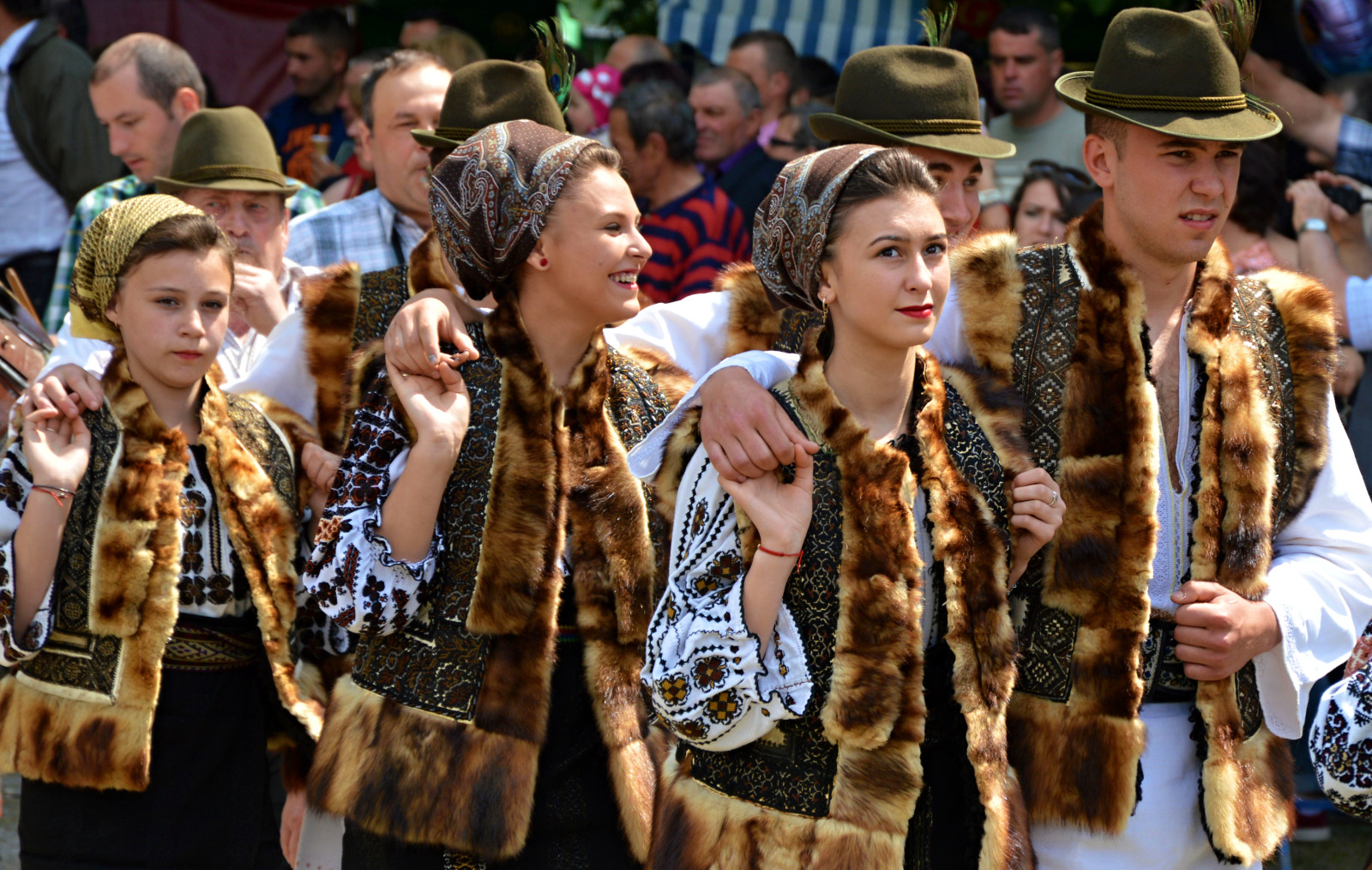
The folklore of Romania is the collection of traditions of the Romanians. A feature of Romanian culture is the special relationship between folklore and the learned culture, determined by two factors. First, the rural character of the Romanian communities resulted in an exceptionally vital and creative traditional culture. Folk creations (the best known is the ballad Miorița) were the main literary genre until the 18th century. They were both a source of inspiration for cultivated creators and a structural model. Second, for a long time learned culture was governed by official and social commands and developed around courts of princes and boyars, as well as in monasteries.
Stories suggest God made the Earth with the help of animals, while the Devil was trying to thwart his plans. In the majority of versions, before the earth existed, a boundless ocean called Apa Sâmbetei was the abode of God and the Devil, seen as master and servant rather than equals. In these stories the Devil goes by the name "Nefârtatul" and is the somewhat foolish brother of God in folk versions of stories. These stories appear not only in Romanian folklore, but also in those of Aromanian, Slavic Macedonian and Bulgarian folklore. Upon deciding to create the Earth, God sent the Devil to bring a handful of clay from the ground of the World Ocean in his holy name. The Devil set forth and tried to bring it to the surface in his name instead, but could not succeed until he brought it up in the name of God. As this piece of clay grew into the Earth, God laid himself down to sleep. The Devil tried to push him over the side, but the ever-expanding Earth would hinder that. After trying to throw God off the Earth in every one of the four cardinal directions, he shied away from the cross he drew in the ground himself.
Other accounts, closer to the biblical one, suggest that the Devil and his demons were once angels of God. The Devil, however, tried to rebel, and, in response, God opened up the heavens so that he might fall to the Earth. Fearing that Heaven might be voided, the archangel Michael re-sealed it, thus freezing the demons that had not yet fallen to hell in place. This is related to the concept of soul customs, where every soul is intercepted on its way to heaven by these demons, who force it into hell. It has also given rise to the Romanian saying până ajungi la Dumnezeu, te mănâncă sfinții ("before you reach God, the saints will eat you").
Another question commonly addressed is that of the origin of God, which is explained in a Russian doll-type fashion; before every God there was another God that created him. Thus explaining the many names the Bible used for God, the Oltenians believed the first God was called Sabaoth, followed by Amon, Apollo, the Creator God of the Bible and, finally, Jesus Christ.
Even after Christian imagery and symbolism became part of Romanian culture, Mother Earth is identified as the consort of God, the heavenly Father.
The origin of mountains is explained in a number of ways by the cultures of the different regions of Romania. One account is that mountains formed as a response to God demanding the Earth to nurture all life, to which the earth shuddered and brought forth mountains. Another version suggests the Earth was too large to fit under the firmament, and so God attempted to shrink it, thus raising mountains. Often, these accounts are accompanied by the imagery of one or several World Pillars, which sustain the earth from below and are usually placed beneath mountains. Earthquakes are frequently attributed to the earth slipping due to the Devil's constant gnawing at these pillars, which are rebuilt by God and his angels in times of fasting.
The etymology of the word blajin (adj.) is the Slavonian blažĕnŭ meaning 'kind, well-minding person'. According to Christian calendar, Romanians from Banat, Transylvania, Bucovina and Maramureș counties celebrate Easter of Blajini on first Monday after St. Thomas Sunday. Easter of Blajini is called also Easter of Deaths or Mighty Easter. Romanians generally perceived the Earth as a disc, and they imagined what existed on the other side. This other Earth is imagined as a mirror image of the planet, and as a home to creatures called Blajini [blaˈʒinʲ] ("gentle/kind-hearted ones"), sometimes given the name Rohmani [ˈroh.manʲ] in Bucovina. They are described as anthropomorphic and short, sometimes having the head of a rat. They are either described as malicious or as having great respect for God and leading a sinless life. They are considered to fast the year through, and thus doing humans a great service.
The Romanian holiday Paștele Blajinilor (Easter of Blajini) is a way to repay them for the benefits they bring. Since they live in isolation, they have no way of knowing when Easter comes. It is for this reason that Romanians eat dyed eggs and let the shells flow downstream, from there they believe they will get to the Apa Sâmbetei, and from there to the Blajini. Blajini are invisible connectors between Inner and Hollow Earth.
Hub AI
Folklore of Romania AI simulator
(@Folklore of Romania_simulator)
Folklore of Romania
The folklore of Romania is the collection of traditions of the Romanians. A feature of Romanian culture is the special relationship between folklore and the learned culture, determined by two factors. First, the rural character of the Romanian communities resulted in an exceptionally vital and creative traditional culture. Folk creations (the best known is the ballad Miorița) were the main literary genre until the 18th century. They were both a source of inspiration for cultivated creators and a structural model. Second, for a long time learned culture was governed by official and social commands and developed around courts of princes and boyars, as well as in monasteries.
Stories suggest God made the Earth with the help of animals, while the Devil was trying to thwart his plans. In the majority of versions, before the earth existed, a boundless ocean called Apa Sâmbetei was the abode of God and the Devil, seen as master and servant rather than equals. In these stories the Devil goes by the name "Nefârtatul" and is the somewhat foolish brother of God in folk versions of stories. These stories appear not only in Romanian folklore, but also in those of Aromanian, Slavic Macedonian and Bulgarian folklore. Upon deciding to create the Earth, God sent the Devil to bring a handful of clay from the ground of the World Ocean in his holy name. The Devil set forth and tried to bring it to the surface in his name instead, but could not succeed until he brought it up in the name of God. As this piece of clay grew into the Earth, God laid himself down to sleep. The Devil tried to push him over the side, but the ever-expanding Earth would hinder that. After trying to throw God off the Earth in every one of the four cardinal directions, he shied away from the cross he drew in the ground himself.
Other accounts, closer to the biblical one, suggest that the Devil and his demons were once angels of God. The Devil, however, tried to rebel, and, in response, God opened up the heavens so that he might fall to the Earth. Fearing that Heaven might be voided, the archangel Michael re-sealed it, thus freezing the demons that had not yet fallen to hell in place. This is related to the concept of soul customs, where every soul is intercepted on its way to heaven by these demons, who force it into hell. It has also given rise to the Romanian saying până ajungi la Dumnezeu, te mănâncă sfinții ("before you reach God, the saints will eat you").
Another question commonly addressed is that of the origin of God, which is explained in a Russian doll-type fashion; before every God there was another God that created him. Thus explaining the many names the Bible used for God, the Oltenians believed the first God was called Sabaoth, followed by Amon, Apollo, the Creator God of the Bible and, finally, Jesus Christ.
Even after Christian imagery and symbolism became part of Romanian culture, Mother Earth is identified as the consort of God, the heavenly Father.
The origin of mountains is explained in a number of ways by the cultures of the different regions of Romania. One account is that mountains formed as a response to God demanding the Earth to nurture all life, to which the earth shuddered and brought forth mountains. Another version suggests the Earth was too large to fit under the firmament, and so God attempted to shrink it, thus raising mountains. Often, these accounts are accompanied by the imagery of one or several World Pillars, which sustain the earth from below and are usually placed beneath mountains. Earthquakes are frequently attributed to the earth slipping due to the Devil's constant gnawing at these pillars, which are rebuilt by God and his angels in times of fasting.
The etymology of the word blajin (adj.) is the Slavonian blažĕnŭ meaning 'kind, well-minding person'. According to Christian calendar, Romanians from Banat, Transylvania, Bucovina and Maramureș counties celebrate Easter of Blajini on first Monday after St. Thomas Sunday. Easter of Blajini is called also Easter of Deaths or Mighty Easter. Romanians generally perceived the Earth as a disc, and they imagined what existed on the other side. This other Earth is imagined as a mirror image of the planet, and as a home to creatures called Blajini [blaˈʒinʲ] ("gentle/kind-hearted ones"), sometimes given the name Rohmani [ˈroh.manʲ] in Bucovina. They are described as anthropomorphic and short, sometimes having the head of a rat. They are either described as malicious or as having great respect for God and leading a sinless life. They are considered to fast the year through, and thus doing humans a great service.
The Romanian holiday Paștele Blajinilor (Easter of Blajini) is a way to repay them for the benefits they bring. Since they live in isolation, they have no way of knowing when Easter comes. It is for this reason that Romanians eat dyed eggs and let the shells flow downstream, from there they believe they will get to the Apa Sâmbetei, and from there to the Blajini. Blajini are invisible connectors between Inner and Hollow Earth.